WengYang Industrial Zone Yueqing Wenzhou 325000
근무 시간
월요일~금요일: 오전 7시~오후 7시
주말: 주말: 오전 10시 - 오후 5시
WengYang Industrial Zone Yueqing Wenzhou 325000
근무 시간
월요일~금요일: 오전 7시~오후 7시
주말: 주말: 오전 10시 - 오후 5시


As solar energy adoption accelerates across Southeast Asia, the demand for reliable, efficient, and safe photovoltaic infrastructure has never been greater. From residential rooftops in Thailand and Vietnam to large-scale commercial installations in Indonesia and the Philippines, solar power is transforming the region’s energy landscape. At the heart of every successful solar installation lies a critical component that often goes unnoticed but plays an indispensable role in system safety and performance: the PV 컴바이너 박스.
A solar combiner box is far more than a simple junction point. It is the central nervous system of your photovoltaic array, consolidating multiple solar panel strings into a single, manageable output while providing essential overcurrent protection, surge protection, and system monitoring capabilities. For installers, system integrators, and project developers working in Southeast Asia’s challenging tropical climate, selecting the right combiner box can mean the difference between a system that delivers decades of reliable service and one plagued by failures, downtime, and safety hazards.
KUANGYA Electrical brings over 25 years of expertise in electrical protection solutions to the solar industry. Our comprehensive range of PV combiner boxes is engineered specifically to withstand the harsh environmental conditions prevalent in Southeast Asia—high temperatures, extreme humidity, frequent thunderstorms, and corrosive coastal atmospheres. With certifications including IEC, CE, and RoHS compliance, and a proven track record in over 2,000 new energy projects worldwide, KUANGYA delivers the quality, reliability, and technical support that solar professionals demand.
In any solar photovoltaic system with multiple panel strings, the combiner box serves as the critical aggregation point where individual string outputs are consolidated before feeding into the inverter or charge controller. Each string of solar panels generates DC power independently, and without proper consolidation and protection, managing these multiple outputs would require excessive cabling, create voltage drop issues, and expose the system to serious safety risks.
The primary function of a solar combiner box is to combine the DC outputs from multiple solar panel strings into a single, higher-current output. This consolidation dramatically simplifies system wiring, reduces cable costs, and minimizes voltage losses that would otherwise occur with long cable runs. For a typical commercial rooftop installation with 12 to 24 strings, a properly designed combiner box can reduce the number of cables running to the inverter from dozens down to just one or two main feeders.
Beyond simple consolidation, modern PV combiner boxes provide multiple layers of protection that are essential for system safety and longevity. Each string input is equipped with overcurrent protection devices—typically DC fuses or miniature circuit breakers—that isolate faulty strings and prevent damage from short circuits or ground faults. Integrated surge protection devices (SPDs) guard against lightning-induced voltage spikes, which are particularly critical in Southeast Asia’s thunderstorm-prone climate. Many advanced combiner boxes also include string monitoring capabilities that allow real-time tracking of each string’s current and voltage, enabling rapid fault detection and simplified maintenance.
The importance of a quality combiner box becomes especially apparent in challenging installation environments. In Southeast Asia, solar installations must contend with ambient temperatures regularly exceeding 40°C, humidity levels above 90%, salt-laden coastal air, and intense UV exposure. A combiner box with inadequate IP rating, poor thermal management, or substandard components will quickly degrade, leading to connection failures, thermal runaway, or even fire hazards. KUANGYA combiner boxes are designed with IP65 or IP67 protection ratings, UV-resistant enclosures, and components rated for extended temperature ranges, ensuring reliable operation even in the most demanding conditions.
KUANGYA’s solar combiner box solutions are engineered with a comprehensive understanding of both electrical protection principles and the practical realities of field installation. Every design decision reflects our commitment to delivering products that installers can trust and that perform reliably throughout the system’s 25-year lifespan.
Each string input in a KUANGYA combiner box is protected by high-quality DC fuses or circuit breakers specifically rated for photovoltaic applications. These protection devices are carefully selected to match the maximum short-circuit current of the solar panels while providing reliable interruption capability at the system voltage—whether 600V, 1000V, or 1500V DC. The fuse holders feature touch-safe designs with LED indicators that provide instant visual confirmation of fuse status, eliminating guesswork during troubleshooting. For systems requiring more frequent switching or testing, our DC miniature circuit breakers offer the convenience of resettable protection without component replacement.
Lightning strikes and grid-induced transients pose one of the greatest threats to solar installations, particularly in tropical regions where thunderstorm frequency is high. KUANGYA combiner boxes integrate Type 2 surge protection devices with discharge currents rated up to 40kA per pole. These SPDs are connected between the positive and negative DC buses and between each pole and ground, providing multi-mode protection against both common-mode and differential-mode surges. The SPDs feature thermal disconnect mechanisms and visual status indicators, ensuring that protection remains effective throughout the system’s life and that any degradation is immediately apparent during routine inspections.
The enclosure is the first line of defense against environmental degradation. KUANGYA combiner boxes utilize either high-grade stainless steel (304 or 316) or UV-stabilized engineering plastics, depending on application requirements. Stainless steel enclosures offer maximum durability and are ideal for coastal installations where salt spray and corrosive atmospheres are concerns. Plastic enclosures provide excellent electrical isolation, lighter weight, and resistance to UV degradation. All enclosures meet IP65 or IP67 ingress protection standards, with sealed cable entry points using PG glands or MC4 connectors to prevent water and dust infiltration. Internal components are conformal-coated where appropriate to resist humidity and condensation.
Recognizing that no two solar installations are identical, KUANGYA offers combiner boxes in a wide range of configurations. Residential systems typically require 4-to-8 string inputs with a single output, while commercial installations may need 12, 16, or even 24 string inputs. Our modular design approach allows for easy customization of input/output counts, voltage ratings (600V to 1500V DC), and current ratings (up to 63A per string). For larger projects, we can provide custom-engineered solutions with integrated monitoring systems, remote communication capabilities, and specific mounting configurations to match your site requirements.
Advanced KUANGYA combiner boxes can be equipped with string monitoring modules that measure and report the current and voltage of each individual string. This monitoring capability transforms the combiner box from a passive protection device into an active diagnostic tool. By comparing string performance in real-time, operators can quickly identify underperforming panels, detect shading issues, spot degradation trends, and diagnose wiring faults—all without the need for manual testing with handheld instruments. Monitoring data can be transmitted via RS485, Ethernet, or wireless protocols to SCADA systems or cloud-based monitoring platforms, enabling remote oversight of distributed solar assets across multiple sites.
Every KUANGYA combiner box is manufactured under ISO 9001 quality management systems and tested to relevant international standards including IEC 61439, IEC 60947, and UL 1741 where applicable. Our DC protection components carry individual certifications from TUV, CE, and other recognized testing bodies. This comprehensive certification approach ensures that KUANGYA products meet the technical and safety requirements of projects worldwide, simplifying approval processes and providing assurance to engineers, insurers, and end customers.
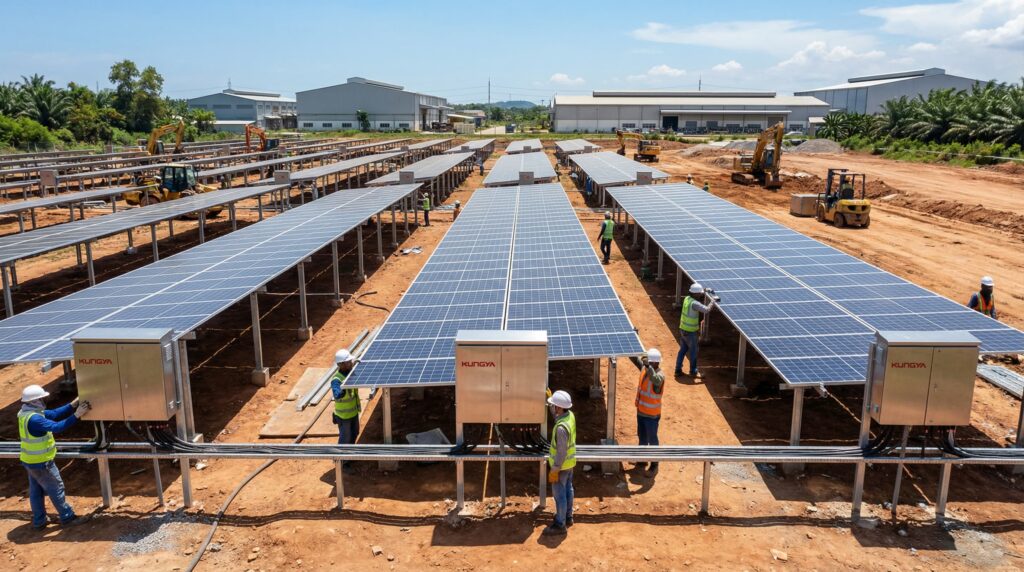
The versatility of KUANGYA PV combiner boxes makes them suitable for the full spectrum of solar applications, from small residential systems to multi-megawatt solar farms.
In residential applications, typically ranging from 5kW to 20kW, homeowners are increasingly investing in rooftop solar to reduce electricity bills and achieve energy independence. These systems usually consist of 2 to 6 strings of panels, and while the smallest installations may not require a combiner box, any system with 3 or more strings benefits significantly from proper combination and protection. KUANGYA’s compact 4-string and 6-string combiner boxes are ideal for residential use, offering all essential protection features in a space-efficient package that can be wall-mounted near the inverter or attached to the array mounting structure. The pre-wired, plug-and-play design reduces installation time and eliminates wiring errors, making them perfect for residential installers who need reliable, easy-to-install solutions.
For homeowners in Southeast Asia, where tropical storms and lightning are common, the integrated surge protection in KUANGYA combiner boxes provides invaluable peace of mind. The IP65-rated enclosures ensure that the equipment continues to function reliably despite heavy rain, high humidity, and temperature extremes. With KUANGYA’s residential combiner boxes, homeowners can be confident that their solar investment is protected and will deliver consistent performance for decades.
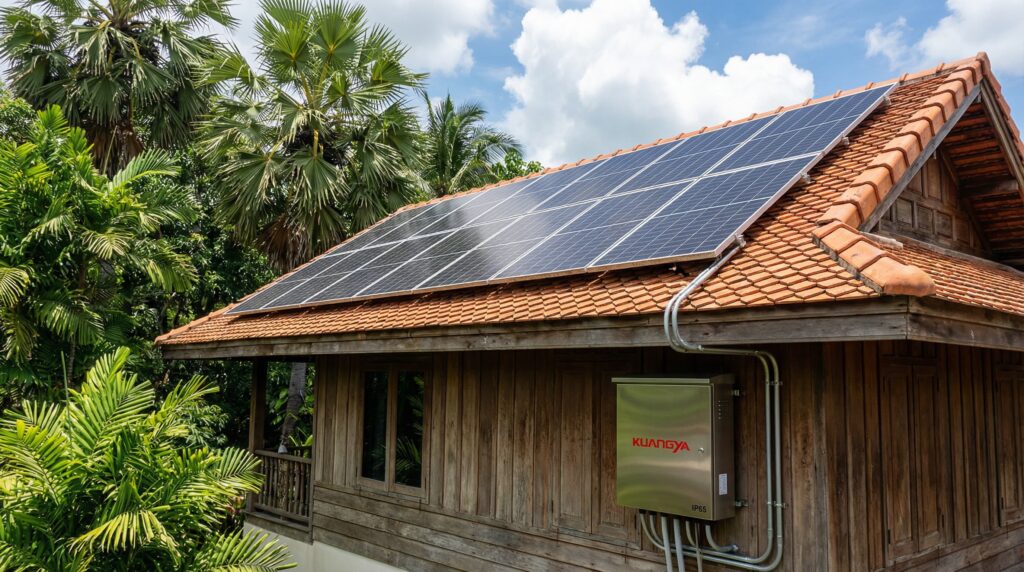
Commercial and industrial facilities represent one of the fastest-growing segments of the solar market in Southeast Asia. Factories, warehouses, shopping centers, and office buildings are installing 50kW to 1MW rooftop systems to offset daytime electricity consumption and reduce operating costs. These installations typically involve 10 to 30 strings or more, making proper combination and protection essential.
KUANGYA offers combiner boxes specifically designed for commercial applications, with configurations ranging from 8 to 24 string inputs. These units feature robust busbars and terminals capable of handling the higher currents involved in large systems, and they can be configured with multiple outputs to feed separate inverters or different sections of a distributed system. For facilities with multiple roof sections or complex layouts, KUANGYA can provide a hierarchical combining strategy using multiple smaller combiner boxes feeding into a recombiner or main junction box, optimizing cable routing and minimizing voltage drop.
The string monitoring capabilities available in KUANGYA’s commercial combiner boxes are particularly valuable for facility managers and energy service companies. Real-time performance data enables proactive maintenance, rapid fault response, and verification of energy production guarantees. When integrated with building management systems, this data can inform energy optimization strategies and provide visibility into the solar system’s contribution to overall facility operations.
Large-scale solar farms, ranging from 1MW to hundreds of megawatts, require combining solutions that can handle extreme currents, provide reliable protection across vast arrays, and withstand decades of outdoor exposure in harsh climates. KUANGYA’s utility-scale combiner boxes are engineered to meet these demanding requirements.
For ground-mounted installations, combiner boxes are typically distributed throughout the array, with each unit serving a specific section or “block” of panels. This distributed architecture minimizes DC cable runs, reduces losses, and simplifies maintenance by allowing individual array sections to be isolated for service without affecting the entire plant. KUANGYA’s large-capacity combiner boxes can accommodate 12 to 24 strings per unit, with current ratings up to 1500A on the output side when multiple units are paralleled.
In utility-scale applications, reliability is paramount. Unplanned downtime directly impacts revenue, and component failures can be costly to repair given the remote locations of many solar farms. KUANGYA combiner boxes for utility projects feature heavy-duty construction, redundant protection devices, and modular component layouts that facilitate rapid replacement of fuses, breakers, or SPDs without requiring specialized tools or extended outages. Our engineering team works closely with EPC contractors and system designers to develop custom solutions that integrate seamlessly with specific inverter platforms, monitoring systems, and site conditions.
In remote areas of Southeast Asia where grid connection is unavailable or unreliable, off-grid and hybrid solar systems provide essential electricity for homes, telecommunications infrastructure, agricultural operations, and community facilities. These systems typically combine solar panels with battery storage and backup generators, creating complex DC power management requirements.
KUANGYA combiner boxes are well-suited for off-grid applications, providing the same high-quality protection and consolidation functions while accommodating the unique characteristics of battery-based systems. For hybrid systems that switch between solar, battery, and generator sources, our combiner boxes can be integrated with automatic transfer switches and charge controllers to ensure seamless power management. The robust construction and wide operating temperature range make KUANGYA products ideal for remote installations where maintenance access is limited and reliability is critical.
Proper installation is just as important as product quality in ensuring long-term system performance. Southeast Asia’s tropical climate presents specific challenges that require careful attention during combiner box installation.
Whenever possible, combiner boxes should be mounted in shaded locations to minimize heat buildup and UV exposure. For rooftop installations, mounting on the back side of the array structure or on a shaded wall provides protection from direct sunlight while keeping cable runs short. Ground-mounted systems should position combiner boxes on the north side of array rows (in the northern hemisphere) or use purpose-built shelters or canopies. Pole mounting is common for ground-mounted arrays, with the combiner box elevated 1 to 2 meters above grade to prevent flood damage and facilitate access.
Ensure that the mounting surface is rigid and level, and use stainless steel hardware to prevent corrosion. In coastal areas, apply anti-corrosion coatings to mounting brackets and use marine-grade stainless steel (316) where possible. Verify that the enclosure door can open fully without obstruction and that there is adequate clearance for cable entry and service access.
Proper cable entry is critical to maintaining the IP rating of the enclosure. Use appropriately sized PG cable glands or MC4 connectors for all cable entries, ensuring that the cable diameter matches the gland specifications. Over-tightening can damage cables, while under-tightening will compromise the seal. For unused cable entry points, install blanking plugs to prevent water and insect ingress.
Route cables with drip loops before they enter the combiner box, ensuring that water runs away from the enclosure rather than along the cable toward the entry point. In areas prone to heavy rain, consider installing the combiner box with a slight forward tilt so that any water that does penetrate runs toward the bottom of the enclosure and exits through drain holes rather than pooling around components.
All electrical connections must be made according to the manufacturer’s torque specifications. Under-torqued connections will have high resistance, leading to heating, voltage drop, and eventual failure. Over-torqued connections can damage terminals or strip threads. Use a calibrated torque wrench or torque screwdriver for all terminal connections, and apply the specified torque values for DC busbars, fuse holders, breaker terminals, and SPD connections.
Strip cable insulation to the correct length—too much exposed conductor creates shock hazards, while too little prevents proper contact. Use ferrules on stranded wire to prevent strand breakage and ensure reliable contact. Apply anti-oxidant compound on aluminum conductors and use appropriate terminal lugs rated for the wire size and material.
Proper labeling is essential for safe operation and maintenance. Clearly label each string input with its corresponding array location or panel group identifier. Mark polarity on all DC terminals. Affix warning labels indicating DC voltage levels and shock hazards. Create a wiring diagram showing the connection of each string to its corresponding protection device and the routing to the output terminals.
Maintain detailed installation documentation including photos of the completed installation, torque records, test results, and as-built drawings. This documentation is invaluable for troubleshooting, future modifications, and warranty claims.
Before energizing the system, perform thorough pre-commissioning checks. Verify that all connections are tight and correctly polarized. Confirm that fuses and breakers are properly rated and installed. Test the continuity of grounding connections. Measure insulation resistance between DC positive, DC negative, and ground to ensure there are no ground faults or insulation breakdown.
During commissioning, measure the open-circuit voltage and short-circuit current of each string and compare to expected values. Verify that string currents are balanced and within normal ranges. Test the operation of SPDs by checking status indicators. If monitoring systems are installed, verify communication and data accuracy. Document all test results and retain them as part of the system commissioning record.
Regular maintenance is essential to ensure that your PV combiner box continues to provide reliable protection throughout the system’s life.
Establish a regular inspection schedule based on system size and environmental conditions. For residential systems in moderate climates, annual inspections are typically sufficient. Commercial and utility-scale installations, or systems in harsh environments, should be inspected semi-annually or quarterly. During each inspection, check for signs of overheating such as discolored terminals or melted insulation, verify that all connections remain tight, inspect seals and gaskets for degradation, and confirm that SPD status indicators show normal operation.
Look for evidence of water ingress, insect nests, or corrosion. Check that ventilation openings are clear and that the enclosure door seals properly. Review monitoring data for any anomalies in string performance that might indicate developing faults.
Blown Fuses or Tripped Breakers: If a single string’s protection device operates, the most likely causes are a short circuit in the string wiring, a ground fault in the panels, or a failed panel. Isolate the affected string and measure its insulation resistance and continuity. Inspect for damaged cables, water ingress in junction boxes, or cracked panels. Replace the protection device only after the fault has been identified and corrected.
SPD Failure Indication: If an SPD status indicator shows a fault condition (typically a red indicator or loss of green indicator), the SPD has likely absorbed a surge and may need replacement. Do not ignore SPD failures—a failed SPD provides no protection against future surges. Replace the SPD module according to the manufacturer’s instructions, ensuring that the replacement is correctly rated for the system voltage.
Unbalanced String Currents: If monitoring data shows that one or more strings are producing significantly less current than others under the same conditions, possible causes include shading, soiling, panel degradation, or wiring faults. Inspect the affected string for shading from vegetation, structures, or soiling. Measure the voltage and current of individual panels to identify underperforming units. Check for loose connections or damaged cables.
과열: If terminals or busbars show signs of overheating, the most common cause is loose connections. De-energize the system and re-torque all connections to specification. If overheating persists, verify that the conductor size is adequate for the current and that the ambient temperature is within the combiner box’s rating. Consider upgrading to a larger enclosure with better ventilation or relocating the combiner box to a cooler location.
When you select KUANGYA PV combiner boxes for your solar installation, you’re choosing more than just a product—you’re partnering with a company that has spent over 25 years perfecting electrical protection solutions and supporting customers worldwide.
Proven Quality and Reliability: KUANGYA’s commitment to quality begins in our ISO 9001-certified manufacturing facilities and extends through rigorous testing and certification processes. Every product is backed by comprehensive warranties and supported by detailed technical documentation. Our track record of over 2,000 successfully completed new energy projects demonstrates our ability to deliver solutions that perform reliably in real-world conditions.
Application Expertise: Our engineering team brings deep expertise in solar system design, electrical protection, and the specific challenges of tropical and subtropical climates. We don’t just sell products—we provide application support, helping you select the right configuration for your specific project requirements, optimize system design for performance and safety, and troubleshoot any issues that arise during installation or operation.
Customization Capabilities: We understand that standard products don’t always fit every application. KUANGYA offers extensive customization options, from simple configuration changes like input/output counts and voltage ratings to fully custom-engineered solutions with integrated monitoring, communication systems, and specialized mounting arrangements. Our flexible manufacturing approach allows us to accommodate both small custom orders and large-scale production runs.
Global Supply Chain and Support: With factory-direct supply, efficient logistics, and multilingual technical support, KUANGYA serves customers across Southeast Asia, the Middle East, Africa, Europe, and the Americas. Our regional distribution network ensures short lead times and local support, while our global experience means we understand the regulatory, technical, and practical requirements of projects in diverse markets.
Competitive Pricing: By combining efficient manufacturing, vertical integration of key components, and direct sales channels, KUANGYA delivers exceptional value without compromising quality. Our pricing structure is transparent and competitive, and we work with customers to develop solutions that meet both technical requirements and budget constraints.
The size of the combiner box you need depends on several factors: the number of panel strings in your array, the maximum current each string produces, and the system voltage. As a general rule, you need one protected input for each string. For example, if you have 8 strings of panels, you’ll need a combiner box with at least 8 input circuits. The current rating of each input protection device should be approximately 1.25 to 1.56 times the string’s short-circuit current, following NEC or IEC guidelines. The voltage rating must exceed the maximum system voltage—typically 600V, 1000V, or 1500V DC depending on your inverter and panel configuration.
For residential systems (5-20kW), a 4 to 8 string combiner box is typically sufficient. Commercial installations (50-500kW) usually require 12 to 24 string inputs. Larger utility-scale projects may use multiple combiner boxes distributed throughout the array. KUANGYA’s technical team can help you determine the optimal configuration based on your specific system design and requirements.
Regular maintenance is key to ensuring your combiner box provides reliable protection throughout your solar system’s 25-year lifespan. Establish an inspection schedule appropriate to your installation—annual inspections for residential systems, semi-annual for commercial installations, and quarterly for utility-scale projects or systems in harsh environments.
During each inspection, check for signs of overheating such as discolored terminals or melted insulation, verify that all electrical connections remain tight (re-torque if necessary), inspect seals and gaskets for degradation, confirm that SPD status indicators show normal operation, and look for evidence of water ingress, corrosion, or insect activity. If your combiner box includes monitoring capabilities, review string performance data regularly to identify any anomalies that might indicate developing faults.
Keep the area around the combiner box clear of vegetation and debris. Ensure that ventilation openings remain unobstructed. If you’re in a coastal environment, inspect more frequently for signs of corrosion and apply protective coatings to exposed metal surfaces as needed. Always follow lockout/tagout procedures and use appropriate personal protective equipment when servicing energized DC equipment.
Absolutely. KUANGYA combiner boxes are specifically engineered to perform reliably in the challenging environmental conditions prevalent throughout Southeast Asia. Our enclosures meet IP65 or IP67 ingress protection standards, providing complete protection against dust ingress and powerful water jets from any direction—essential for withstanding monsoon rains and high humidity.
The materials used in KUANGYA combiner boxes are selected for tropical durability. Stainless steel enclosures (304 or 316 grade) resist corrosion even in salt-laden coastal atmospheres. UV-stabilized plastic enclosures maintain their mechanical properties despite intense sunlight exposure. Internal components are rated for extended temperature ranges (typically -40°C to +85°C) and are conformal-coated where appropriate to resist humidity and condensation.
Our integrated surge protection devices are particularly important in Southeast Asia, where thunderstorm frequency is high. With discharge current ratings up to 40kA and multi-mode protection, KUANGYA SPDs provide robust defense against lightning-induced surges that could otherwise damage expensive inverters and other system components. We have successfully deployed thousands of combiner boxes across tropical and subtropical regions, with proven performance in Thailand, Vietnam, Indonesia, the Philippines, Malaysia, and throughout the Middle East and Africa.
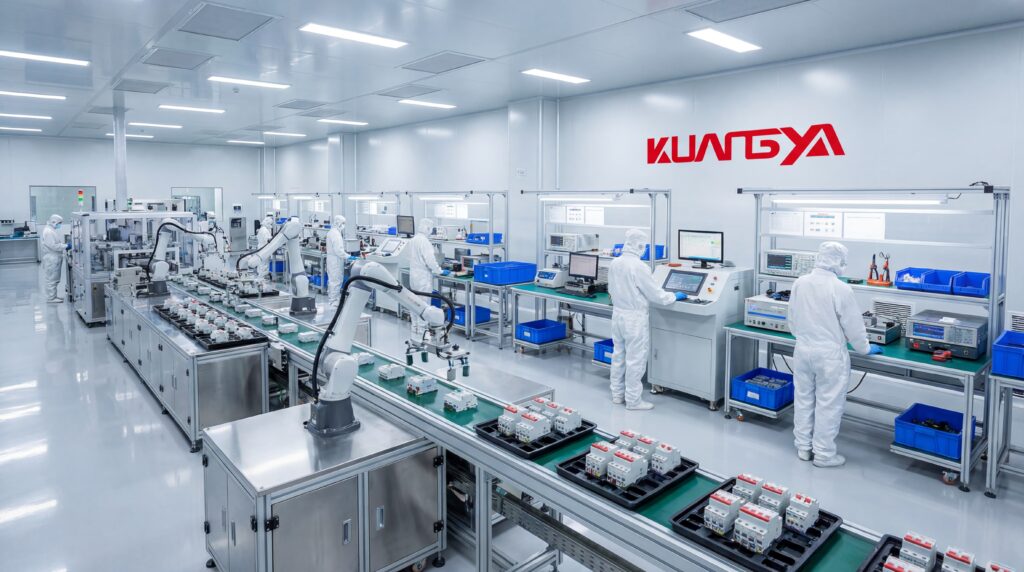
Your solar installation represents a significant investment in clean energy and long-term cost savings. Protecting that investment with a high-quality PV combiner box is not just a technical requirement—it’s a fundamental decision that will impact system safety, reliability, and performance for decades to come.
KUANGYA Electrical brings together the essential elements that solar professionals demand: proven product quality backed by international certifications, deep application expertise developed over 25 years and 2,000+ projects, flexible customization capabilities to match your specific requirements, comprehensive technical support throughout the project lifecycle, and competitive pricing that delivers exceptional value.
Whether you’re installing a residential rooftop system, a commercial solar array, or a utility-scale solar farm, KUANGYA has the combiner box solution that meets your needs. Our products are designed for the real world—engineered to withstand Southeast Asia’s tropical climate, built to provide reliable protection under the most demanding conditions, and supported by a team that understands your challenges and is committed to your success.
Don’t compromise on the component that protects your entire solar investment. Contact KUANGYA today to discuss your project requirements and discover how our PV combiner box solutions can deliver the safety, reliability, and performance your installation deserves.
광야 전기 장비 공급
Reliable electrical equipment, quality you can trust—serving global customers with safe and efficient solutions.
Contact us today for technical specifications, custom quotations, and application support.

