WengYang Industrial Zone Yueqing Wenzhou 325000
근무 시간
월요일~금요일: 오전 7시~오후 7시
주말: 주말: 오전 10시 - 오후 5시
WengYang Industrial Zone Yueqing Wenzhou 325000
근무 시간
월요일~금요일: 오전 7시~오후 7시
주말: 주말: 오전 10시 - 오후 5시

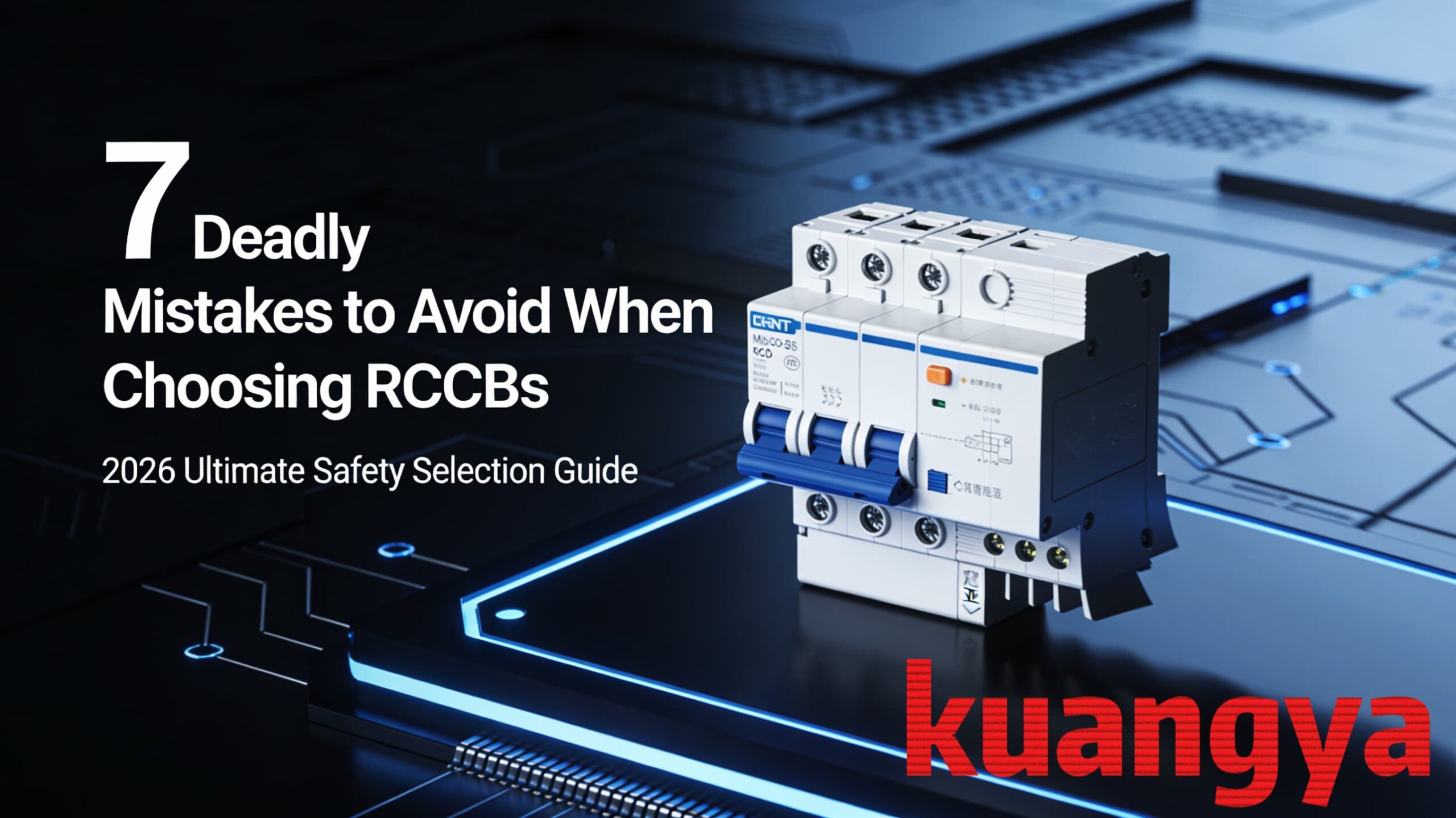
Every year, millions of electrical accidents happen worldwide because of wrong or low-quality residual current protection. RCCB is not just a small component in your distribution board—it is the last line of defense that guards lives, property, and continuous power supply. If you have ever felt confused about which device fits your system, worried about frequent nuisance tripping, or feared safety failures under voltage fluctuations, this complete 2026 buying guide is exactly what you need. We break down real-world challenges, international standards, practical selection steps, and reveal why more engineers and contractors trust 쿠앙야 for consistent performance and long-term reliability.
Electrical safety regulations are getting stricter across regions, and modern loads like EV chargers, solar inverters, and smart appliances create new leakage patterns that outdated devices cannot detect. A low-quality or mismatched RCCB leads to three catastrophic risks: fatal electric shock, unexpected electrical fires, and costly production downtime for industrial users. According to the latest data from IEC, nearly 60% of electrical protection failures can be traced back to incorrect device selection, not product defects. This means choosing the right model is more important than ever before, balancing safety compliance, operational stability, and cost efficiency.
In today’s distributed power systems, residential, commercial, and industrial scenarios demand different protection logics. A one‑size‑fits‑all approach no longer works. Whether you are an electrician, project contractor, facility manager, or homeowner, understanding core selection principles will help you avoid expensive regrets and ensure full compliance with IEC 61008‑1:2024, the latest global standard for this product.
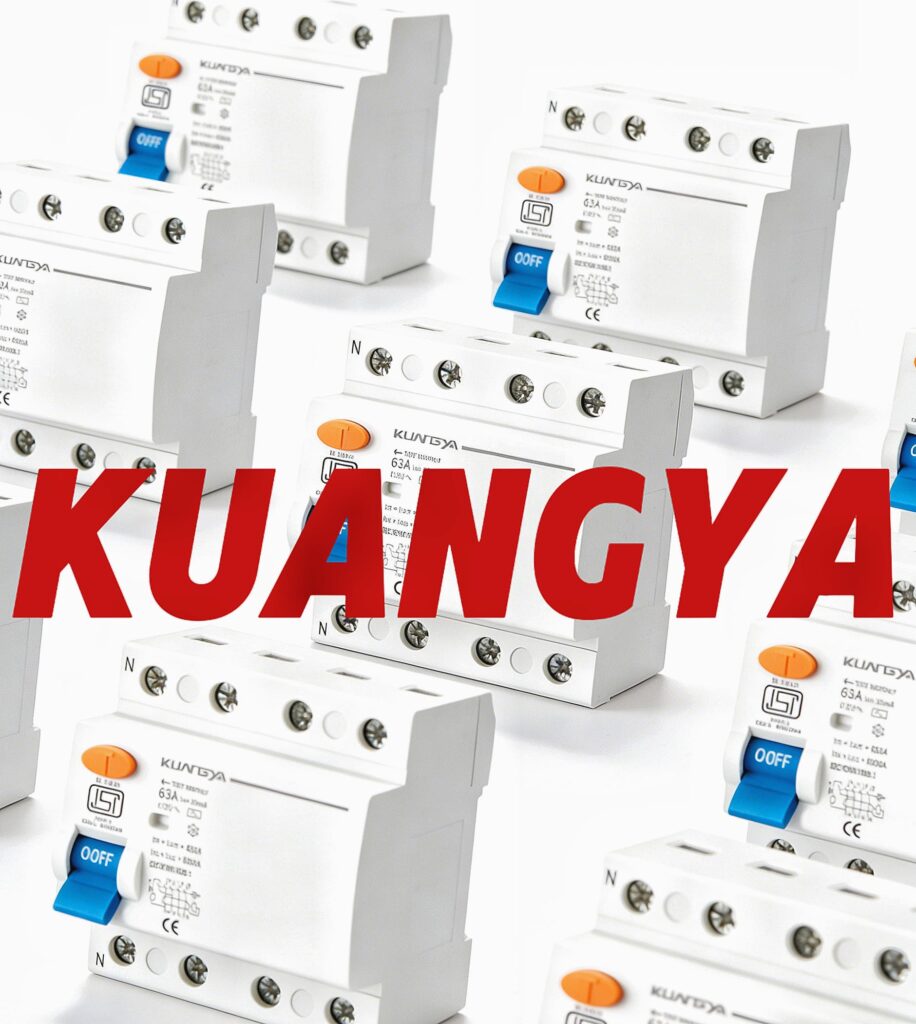
Selecting this device does not have to be complicated. By mastering 5 key parameters, you can make confident decisions for any application. These parameters align with global certification requirements and ensure compatibility with your electrical system.
Sensitivity determines how quickly the RCCB responds to leakage current and is the most critical setting for personal and equipment protection.
| Sensitivity Rating | Application Scene | Protection Goal |
|---|---|---|
| 10mA | High-risk areas (hospitals, bathrooms, swimming pools) | Extreme personal shock protection |
| 30mA | Residential, commercial buildings, general industry | Universal standard for human safety |
| 100mA | Main distribution boards, fire prevention | Equipment and cable fire protection |
| 300mA | Heavy industry, high inrush load circuits | Back‑up protection without nuisance tripping |
The global consensus standard, published on the IEC official website</a>, clearly states that 30mA RCCB is mandatory for all final circuits accessible to people. 쿠앙야 provides full sensitivity ranges with strict tolerance control, ensuring accurate tripping within 0.1 seconds under fault conditions.
Pole configuration must match your power system type to ensure full isolation and compliance.
Kuangya offers 2P and 4P models optimized for modular distribution boards, saving installation space while maintaining high breaking capacity.
Rated current must match the circuit load capacity to avoid overheating and premature failure. Common ratings: 16A, 25A, 40A, 63A. Always calculate total load before selection to avoid undersizing.
Modern loads require upgraded RCCB types:
Kuangya supports Type A and Type F to cover next‑generation electrical equipment, future‑proofing your installation.
Kuangya’s premium electromagnetic series maintains 100% tripping reliability even when grid voltage drops to 50%, a vital advantage for emerging markets and rural areas.
After supporting thousands of global projects, Kuangya engineering team summarizes the 7 most common selection mistakes that cause safety risks and project failures.
Cheap units often use inferior magnetic components and low‑grade flame‑retardant shells. They may pass initial tests but degrade rapidly, leading to failure when you need them most. Safety is never an area to cut costs.
As mentioned earlier, Type AC RCCB fails to protect modern electronic loads. Using it for EV chargers, solar systems, or smart buildings creates invisible safety hazards.
Using 100mA for household sockets exposes people to lethal risks, while 30mA on main circuits causes constant nuisance tripping. Match sensitivity to location and protection purpose.
Insufficient breaking capacity leads to device explosion or arc damage under short‑circuit faults. For 2026 installations, 6kA breaking capacity is the minimum acceptable standard.
Products without IEC, CE, or local national certifications may not meet safety inspections and can invalidate insurance claims in accident cases.
High temperature, humidity, dust, and vibration shorten service life. Industrial and outdoor installations need ruggedized designs.
This device requires periodic testing and maintenance. Brands without global support leave you without technical help when problems arise.
Follow this professional workflow to select the perfect RCCB for any project, guaranteed to reduce failure rates and improve safety compliance.
After comparing dozens of brands and testing real‑world performance, Kuangya RCCB has become a top choice for electrical professionals worldwide. Here’s why:
Every Kuangya unit is designed and tested according to the newest international standard, ensuring global market access and consistent safety performance.
Kuangya’s electromagnetic model works reliably under 50‑110% voltage fluctuation, eliminating failure risks in weak grids—an unmatched advantage for global projects.
From traditional to next‑gen loads, Kuangya provides full protection solutions, eliminating the need to mix brands for different circuits.
Housing materials withstand 850°C glow wire test, and mechanical life reaches 10,000 operations, twice the industry average.
CE, IEC, and multiple national approvals; support OEM/ODM, private labeling, and tailored technical solutions for distributors and contractors.
Kuangya provides on‑site guidance, selection software, and 24/7 online support to help you avoid selection errors and ensure smooth installation.
A shopping mall in Southeast Asia suffered daily tripping due to LED lighting and digital signage. After replacing old Type AC devices with Kuangya Type A RCCB, tripping issues stopped completely, and safety compliance passed inspection.
A rural electrification project in Africa faced frequent low voltage. Kuangya electromagnetic model maintained full protection function, reducing accident rates by 92% compared to previous electronic brands.
A European renewable energy project required Type F RCCB for EV chargers. Kuangya’s full series helped the customer pass TÜV certification and win multiple large‑scale contracts.
Before you place an order, double‑check these 10 points to ensure zero mistakes:
RCCB is the cornerstone of modern electrical safety, and choosing correctly is not optional—it is a responsibility to protect lives, property, and business continuity. In 2026, with smarter loads and stricter standards, compromise has no place in protection devices.
By following the guidelines in this article, you can avoid common mistakes, select the ideal model for any application, and achieve full compliance with international regulations. For reliable performance, durable quality, and professional support, 쿠앙야 RCCB is your strategic partner for global projects.
Don’t let poor selection put your safety at risk. Explore Kuangya’s full product lineup, request a free sample, or get a customized selection plan for your next project today.

