주소
304 북쪽 추기경
세인트 도체스터 센터, MA 02124
근무 시간
월요일~금요일: 오전 7시~오후 7시
주말: 주말: 오전 10시 - 오후 5시
주소
304 북쪽 추기경
세인트 도체스터 센터, MA 02124
근무 시간
월요일~금요일: 오전 7시~오후 7시
주말: 주말: 오전 10시 - 오후 5시

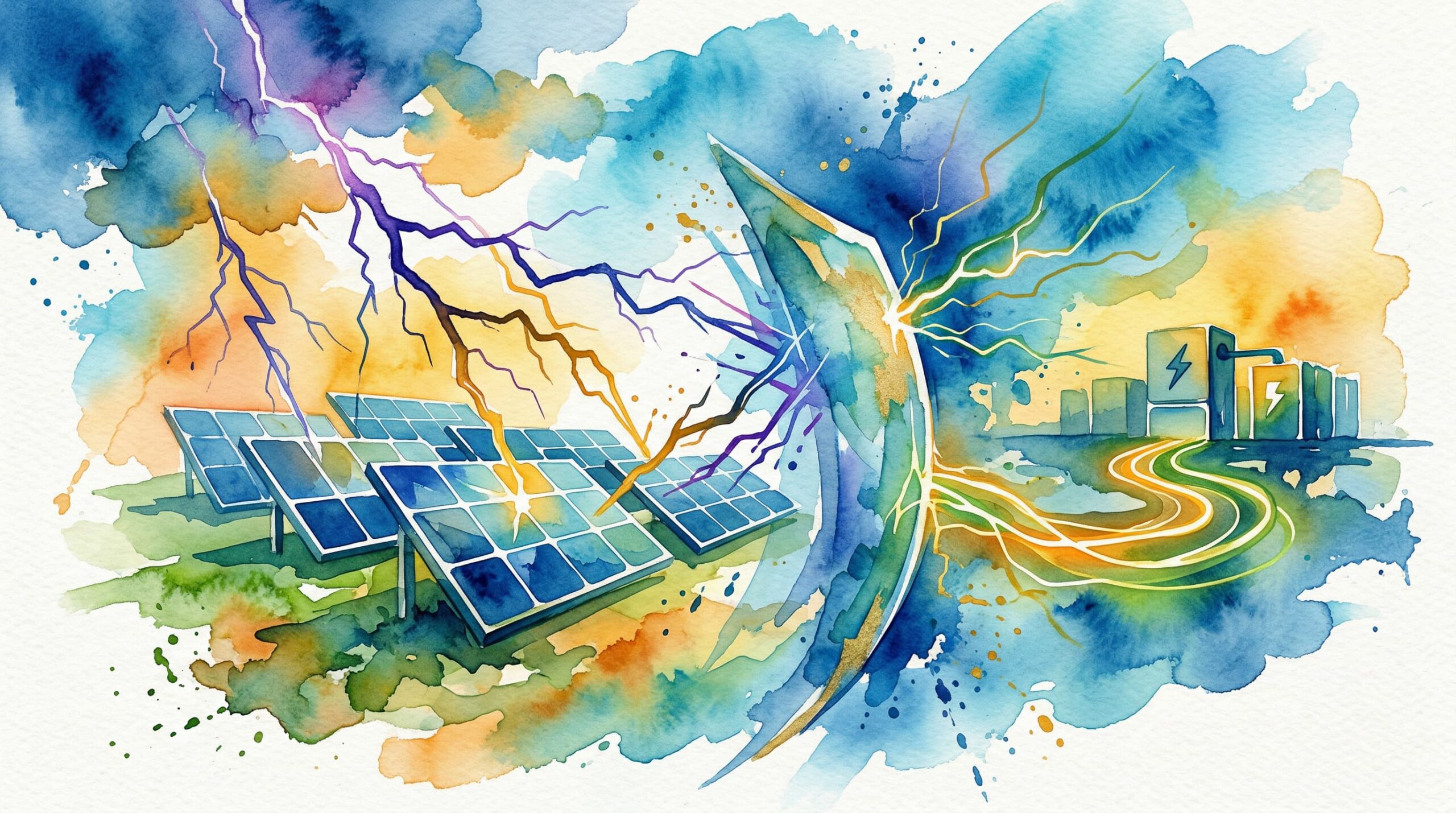
dc spd: Solar energy systems represent a significant financial investment, often requiring decades to deliver full returns. Yet many system owners overlook a critical component that can mean the difference between long-term profitability and catastrophic failure: the DC surge protection device for solar installations. As photovoltaic technology advances and system voltages increase, understanding and implementing proper surge protection has become not just recommended, but absolutely essential.
Solar panels sit exposed to the elements 24/7, making them prime targets for lightning strikes and electrical surges. A single lightning event can generate voltages exceeding millions of volts, while the delicate electronics in your PV system operate at much lower tolerances. Without adequate protection, this mismatch creates a recipe for disaster.
The financial implications are staggering. A typical residential solar installation costs between $15,000 and $30,000, while commercial systems can run into millions. When surge damage occurs, it rarely affects just one component. The cascading effect can destroy inverters, charge controllers, monitoring systems, and even the solar panels themselves. Insurance claims for lightning damage to solar systems have increased by 40% over the past five years, yet many of these losses could have been prevented with proper DC SPD implementation.
Beyond direct lightning strikes, solar systems face constant threats from switching surges, grid disturbances, and electromagnetic interference. These smaller but frequent events gradually degrade system components, reducing efficiency and shortening equipment lifespan. Studies show that unprotected systems experience up to 30% more component failures over their operational lifetime compared to properly protected installations.
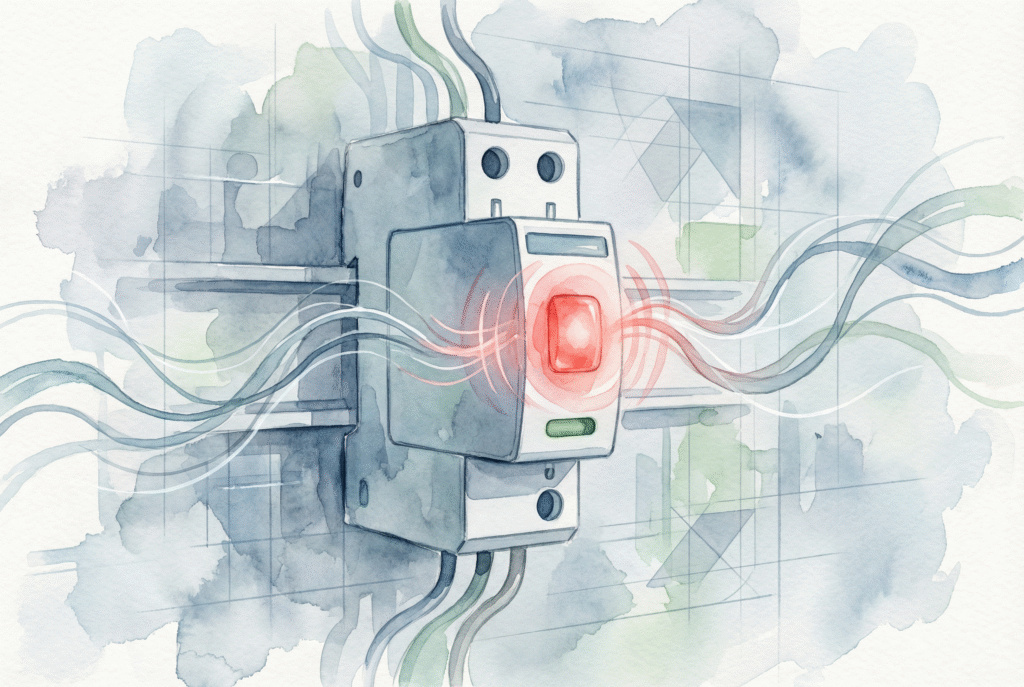
A DC surge protection device for solar applications functions as an intelligent guardian for your PV system. Unlike simple fuses or circuit breakers that merely interrupt current flow, a sophisticated PV system surge protector actively diverts dangerous surge currents away from sensitive equipment while allowing normal DC power to flow unimpeded.
The technology operates on a principle of controlled impedance. During normal operation, the SPD presents extremely high impedance, essentially invisible to the system. When a surge occurs, specialized components within the device instantly switch to low impedance, creating a preferential path for the surge current to flow harmlessly to ground. This response happens in nanoseconds—far faster than any mechanical protection device could react.
Modern DC SPDs utilize metal oxide varistors (MOVs), gas discharge tubes (GDTs), or hybrid combinations of these technologies. Each has specific characteristics suited to different protection scenarios. MOVs excel at clamping voltage spikes to safe levels, while GDTs handle high-energy surges with minimal degradation. Premium devices combine both technologies in staged configurations, providing comprehensive protection across the entire spectrum of surge events.
The voltage rating of your DC surge protection device for solar must match your system specifications. With modern PV systems operating at increasingly higher voltages for improved efficiency, selecting the appropriate protection level is crucial.
The solar industry has witnessed a significant shift toward higher voltage systems, driven by efficiency gains and reduced balance-of-system costs. This evolution makes understanding 1000V / 1500V DC SPD specifications essential for system designers and owners alike.
Traditional residential and small commercial systems typically operate at 600-1000V DC, making a 1000V DC SPD the appropriate choice. These devices provide robust protection for standard string inverter configurations and are widely available with proven track records. They offer excellent protection-to-cost ratios for systems where voltage requirements don’t exceed 1000V under all operating conditions.
However, utility-scale installations and advanced commercial systems increasingly operate at 1500V DC to minimize current levels and reduce conductor costs over long cable runs. For these applications, a 1500V DC SPD becomes mandatory. Operating a 1000V-rated device in a 1500V system creates dangerous gaps in protection and violates electrical codes in most jurisdictions.
The voltage rating isn’t merely about matching nominal system voltage. Solar panels generate higher voltages in cold weather and low-light conditions. A system with a nominal 1000V rating might experience open-circuit voltages approaching 1200V on a cold, clear morning. Your surge protection must accommodate these variations while maintaining adequate safety margins. Industry best practice recommends selecting SPDs rated at least 20% above maximum expected system voltage.
Beyond voltage ratings, consider the maximum discharge current capacity. A quality 1500V DC SPD should handle impulse currents of 40kA or higher, with total discharge capacity exceeding 100kA over the device lifetime. This ensures protection not just against a single catastrophic event, but against the cumulative effects of multiple surge incidents over years of operation.
The inverter represents the most expensive and vulnerable component in any PV system. This sophisticated power electronics package converts DC electricity from your panels into AC power for grid connection or local use. It’s also the point where surge damage most frequently occurs, making dedicated solar inverter protection absolutely critical.
Inverters contain sensitive microprocessors, IGBTs, and control circuits that can be destroyed by voltage spikes as small as a few hundred volts above their rated tolerance. Modern inverters incorporate some internal protection, but relying solely on these built-in features is insufficient. Manufacturers explicitly state in their warranties that external surge protection is required, and failure to install proper SPDs often voids warranty coverage.
The optimal protection strategy places DC SPD on both the input and output sides of the inverter. On the DC input side, surge protectors should be installed as close as possible to the inverter terminals, ideally within the same enclosure or immediately adjacent. This minimizes the length of unprotected conductor that could act as an antenna for induced surges.
For systems with multiple strings, individual string-level protection offers enhanced security. While more expensive than single-point protection, this approach prevents a surge on one string from affecting others and provides redundancy. In commercial installations where downtime costs thousands of dollars per hour, this investment pays for itself many times over.
The AC output side requires equally careful attention. Grid-connected systems face surge threats from both directions—from the solar array and from utility grid disturbances. Coordinated AC and DC surge protection creates a comprehensive shield around your inverter, dramatically extending its operational life and reducing maintenance costs.
When discussing lightning protection for solar panels, most people envision direct strikes—dramatic bolts hitting the array itself. While direct strikes certainly occur and cause spectacular damage, they represent only a fraction of lightning-related losses. Understanding the full spectrum of lightning threats reveals why comprehensive protection is essential.
Direct strikes generate enormous currents, often exceeding 200,000 amperes. No electronic device can survive such an event without proper protection. However, the probability of a direct strike on any specific structure remains relatively low. Far more common are nearby strikes—lightning hitting the ground, trees, or structures within several hundred meters of your solar installation.
These nearby strikes create powerful electromagnetic pulses that induce voltage surges in the long conductors of your PV system. The solar array acts as a large antenna, collecting this electromagnetic energy and channeling it directly toward your expensive inverter and control equipment. Studies show that induced surges from nearby lightning cause 80% of all lightning-related damage to solar systems.
Ground potential rise presents another insidious threat. When lightning strikes the earth, it creates a voltage gradient radiating outward from the strike point. If your solar array and inverter are separated by distance, they may experience different ground potentials during a lightning event. This potential difference appears as a voltage surge across your equipment, potentially causing catastrophic damage even though neither component was directly struck.
Effective lightning protection for solar panels requires a multi-layered approach. External lightning protection systems (LPS) with air terminals and down conductors provide the first line of defense, intercepting direct strikes and safely conducting them to ground. Proper grounding and bonding ensure all system components maintain the same electrical potential. Finally, 유형 1+2 DC SPD devices provide the critical last line of defense, clamping any residual surges to safe levels before they reach sensitive equipment.
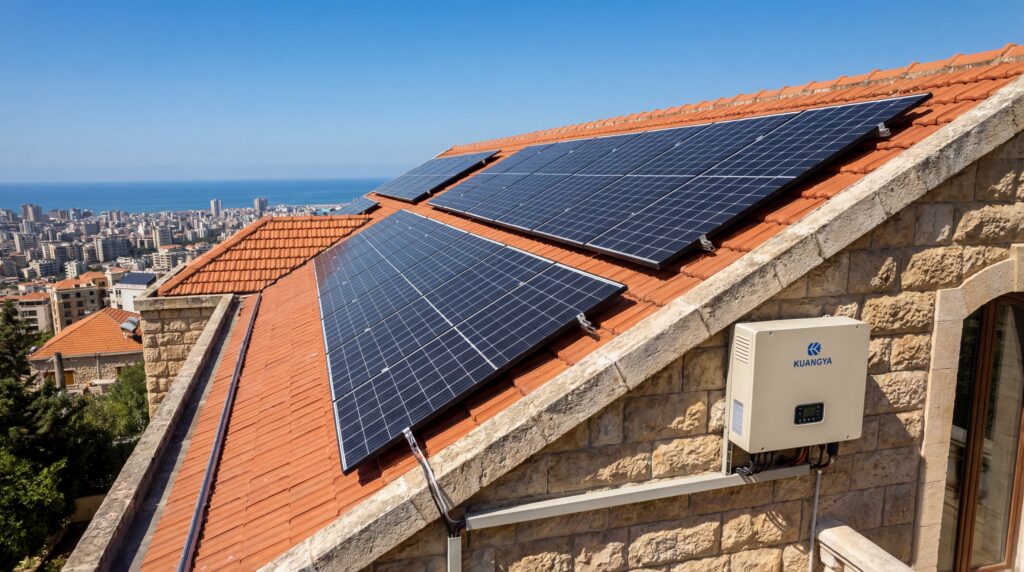
The classification of surge protection devices into Types 1, 2, and 3 reflects their intended application and performance characteristics. Understanding these distinctions helps explain why 유형 1+2 DC SPD devices have become the gold standard for solar installations.
Type 1 SPDs, also called Class I devices, are designed to handle the extreme energy of direct lightning strikes. They can discharge impulse currents up to 100kA and withstand the long-duration current flows characteristic of direct strikes. However, Type 1 devices alone may not adequately clamp residual voltages to levels safe for sensitive electronics.
Type 2 SPDs excel at voltage clamping, reducing surge voltages to levels that electronic equipment can tolerate. They’re optimized for induced surges and switching transients rather than direct strikes. In traditional protection schemes, Type 2 devices are installed downstream of Type 1 protection, creating a coordinated cascade.
유형 1+2 DC SPD devices combine both protection levels in a single, compact package. This hybrid approach offers several compelling advantages for solar applications. Installation complexity decreases significantly—one device instead of two means fewer connection points, less enclosure space, and simplified wiring. The integrated design ensures perfect coordination between protection stages, eliminating concerns about impedance matching and timing that can compromise separate devices.
For solar installers, 유형 1+2 DC SPD units streamline inventory management and reduce installation time. For system owners, they provide peace of mind knowing that comprehensive protection is in place without the complexity of multiple devices. The technology has matured to the point where quality Type 1+2 devices match or exceed the performance of separate Type 1 and Type 2 installations while offering superior reliability.
선택 시 유형 1+2 DC SPD for your PV system, verify that it carries appropriate certifications. Look for IEC 61643-31 compliance, which specifically addresses surge protection for photovoltaic installations. UL 1449 listing provides additional assurance for North American installations. These certifications confirm that the device has undergone rigorous testing and meets industry standards for performance and safety.
Even the highest-quality PV system surge protector will fail to provide adequate protection if improperly installed. The effectiveness of surge protection depends as much on installation technique as on device specifications. Following industry best practices ensures your investment in protection delivers maximum value.
Location, Location, Location: Install DC SPDs as close as possible to the equipment they protect. Every meter of conductor between the SPD and the protected device reduces protection effectiveness. Ideally, mount the surge protector within the same enclosure as the inverter or combiner box. If external mounting is necessary, keep conductor runs under one meter.
Conductor Sizing and Routing: Use appropriately sized conductors for SPD connections—typically 6 AWG (10mm²) minimum for the line conductors and ground. Route these conductors as directly as possible, avoiding loops or unnecessary bends. Long, looping conductors create inductance that impedes the SPD’s ability to quickly divert surge current.
Grounding is Critical: The effectiveness of any surge protection device depends entirely on the quality of the grounding system. Connect the SPD ground terminal to the system grounding electrode conductor using the shortest possible path. Verify that the grounding system resistance remains below 10 ohms, preferably below 5 ohms. Poor grounding doesn’t just reduce protection effectiveness—it can actually make surge damage worse by creating ground loops and potential differences.
Coordination with Other Protection: Ensure your DC surge protection device for solar coordinates properly with overcurrent protection devices (fuses or breakers). The SPD should operate faster than the overcurrent device during surge events, but the overcurrent device must protect the SPD from sustained overcurrent conditions. Consult manufacturer specifications for recommended fuse or breaker ratings.
Environmental Considerations: Solar installations face harsh environmental conditions—extreme temperatures, UV exposure, moisture, and dust. Select SPDs rated for outdoor use if they’ll be exposed to the elements. Verify that the operating temperature range matches your climate. In desert installations, ambient temperatures inside combiner boxes can exceed 70°C (158°F), requiring SPDs with extended temperature ratings.
The theoretical benefits of DC SPD protection become tangible when examining real-world case studies. A 2MW commercial solar installation in the southeastern United States experienced repeated inverter failures over its first two years of operation. Each failure required inverter replacement at a cost of $45,000, plus lost production revenue averaging $8,000 per incident. After the third failure, a comprehensive surge protection audit revealed that while basic SPDs had been installed, they were undersized and improperly grounded.
The retrofit solution included properly rated 1500V DC SPD devices with Type 1+2 protection, installed according to best practices with improved grounding. The investment totaled $18,000. In the three years following the upgrade, the facility experienced zero surge-related failures despite being located in a region with high lightning activity. The protection system paid for itself in avoided losses within six months.
Residential examples prove equally compelling. A homeowner in Florida installed a 10kW solar system without adequate surge protection, relying only on the inverter’s internal protection. After a nearby lightning strike, the inverter, charge controller, and monitoring system all failed. The replacement cost exceeded $8,000, and the homeowner’s insurance denied the claim, citing inadequate lightning protection. A $600 investment in proper DC surge protection devices for solar would have prevented the entire loss.
These cases illustrate a fundamental principle: surge protection isn’t an expense—it’s insurance with a guaranteed positive return. The question isn’t whether you can afford proper protection, but whether you can afford to operate without it.
Not all surge protection devices deliver equal performance. The market contains products ranging from premium, certified devices to cheap imports that provide minimal protection and may even create additional hazards. Distinguishing quality products requires understanding key indicators and certifications.
Certifications and Standards Compliance: Legitimate PV system surge protectors carry certifications from recognized testing laboratories. For solar applications, IEC 61643-31 certification is essential—this standard specifically addresses DC surge protection for photovoltaic systems. Additional certifications like UL 1449, TUV, or CE marking provide further assurance. Be wary of products claiming compliance without providing certification numbers or test reports.
기술 사양: Quality manufacturers provide detailed technical specifications including maximum continuous operating voltage (MCOV), voltage protection level (VPL), nominal discharge current (In), and maximum discharge current (Imax). These specifications should be clearly stated and verifiable. Vague claims like “industrial-grade protection” without supporting data are red flags.
Warranty and Service Life: Premium DC SPD typically carry warranties of 5-10 years, reflecting manufacturer confidence in their products. The warranty should cover both defects and protection failure. Additionally, quality devices include visual indicators or remote monitoring capabilities that signal when the device has degraded and requires replacement. This proactive approach prevents the false sense of security that comes from having a failed SPD still installed.
Manufacturer Reputation: Choose surge protection devices from established manufacturers with proven track records in the solar industry. Research the company’s history, read independent reviews, and verify their technical support capabilities. A quality manufacturer stands behind their products with responsive customer service and technical assistance.
Physical Construction: Examine the device’s physical construction. Quality units feature robust enclosures, clearly labeled terminals, and professional documentation. Internal components should be potted or sealed to prevent moisture ingress and environmental degradation. Cheap devices often use inferior materials that degrade rapidly under the thermal cycling and UV exposure typical of solar installations.
Today’s solar installations incorporate sophisticated monitoring, optimization, and control systems. Your DC surge protection device for solar must integrate seamlessly with these advanced features while providing protection. Modern SPDs have evolved to meet these requirements.
Smart SPDs include remote monitoring capabilities that integrate with system monitoring platforms. They report their operational status, surge event counts, and remaining protection capacity through standard communication protocols. This real-time visibility enables predictive maintenance—replacing SPDs before they fail rather than discovering protection loss after damage occurs.
For systems with DC optimizers or microinverters, protection requirements become more complex. Each optimizer represents a potential surge entry point, and the distributed architecture creates multiple paths for surge propagation. Comprehensive protection for these systems requires SPDs at both the array level and the inverter input, with careful attention to grounding and bonding throughout the distributed system.
Battery energy storage systems (BESS) add another layer of complexity and vulnerability. Batteries represent significant investments—often exceeding the cost of the solar array itself—and are particularly sensitive to surge damage. Proper solar inverter protection for battery-coupled systems requires SPDs on both the PV input and battery connection, with coordination to prevent surge energy from propagating through the battery bank.
Installing proper surge protection isn’t a set-and-forget proposition. Like all protective devices, DC SPD require periodic inspection and eventual replacement to maintain effectiveness. Developing a maintenance program ensures continuous protection throughout your system’s operational life.
육안 검사: Conduct quarterly visual inspections of all SPD installations. Check for physical damage, loose connections, corrosion, or signs of overheating. Verify that status indicators (if present) show normal operation. Document any anomalies and address them promptly.
Electrical Testing: Annual electrical testing verifies SPD functionality and grounding system integrity. Measure ground resistance to ensure it remains within specifications. Test SPD insulation resistance to verify internal components haven’t degraded. These tests require specialized equipment and are best performed by qualified technicians during regular system maintenance.
Event Monitoring: If your SPDs include event counters or data logging, review this information regularly. Multiple surge events may indicate grounding problems, nearby lightning activity, or grid disturbances that warrant investigation. Frequent events accelerate SPD degradation, potentially requiring earlier replacement.
Replacement Criteria: Most 유형 1+2 DC SPD devices include visual indicators that signal when replacement is necessary. Don’t ignore these warnings—a degraded SPD provides reduced protection or none at all. Even without indicator warnings, consider proactive replacement every 5-7 years in high-lightning-activity regions, or after any known nearby lightning strike.
Investing in comprehensive surge protection requires upfront capital, prompting many to question the return on investment. A thorough economic analysis reveals that proper DC surge protection devices for solar deliver exceptional value across multiple dimensions.
Direct Loss Prevention: The most obvious benefit is preventing equipment damage. A quality surge protection system for a residential installation costs $600-1,200, while inverter replacement runs $3,000-8,000. For commercial systems, the numbers scale proportionally—$5,000-15,000 for comprehensive protection versus $50,000-200,000 for major equipment replacement. The protection investment typically represents 2-5% of the cost of the equipment it protects.
Downtime Avoidance: For commercial and utility-scale installations, production losses during equipment replacement often exceed the hardware costs. A large commercial system generating $500 per day in revenue loses $15,000 during a month-long inverter replacement process. Proper protection prevents these losses entirely.
Insurance Implications: Many insurance policies require adequate surge protection as a condition of coverage. Even when not explicitly required, demonstrating proper protection can reduce premiums by 10-20%. Some insurers offer specific discounts for certified surge protection installations.
Extended Equipment Life: Beyond preventing catastrophic failures, quality surge protection extends the operational life of all system components. Inverters in properly protected systems typically exceed their rated lifespan by 20-30%, while unprotected systems often fail prematurely. This longevity improvement alone can justify the protection investment.
Warranty Preservation: Most equipment manufacturers require external surge protection to maintain warranty coverage. Operating without proper SPDs may void warranties worth thousands of dollars, creating enormous financial risk.
When viewed holistically, the question isn’t whether you can afford proper lightning protection for solar panels—it’s whether you can afford to operate without it. The return on investment typically exceeds 500% over the system lifetime, making surge protection one of the most cost-effective investments in any PV installation.
Beyond the economic and technical justifications, proper surge protection is increasingly mandated by electrical codes and standards. Understanding these requirements ensures compliance and avoids potential liability issues.
The National Electrical Code (NEC) in the United States includes specific requirements for surge protection in Article 690 (Solar Photovoltaic Systems). While not mandating SPDs in all cases, the code requires protection when systems are located in areas with high lightning activity or when specified by the authority having jurisdiction. Many local jurisdictions have adopted more stringent requirements, mandating surge protection for all PV installations regardless of location.
International standards like IEC 62305 provide comprehensive guidance on lightning protection for structures, including solar installations. These standards recommend risk assessment procedures to determine appropriate protection levels and specify technical requirements for SPD selection and installation.
Insurance underwriters increasingly require documented surge protection as a condition of coverage. Failure to install adequate protection may result in claim denials, leaving system owners fully liable for losses. From a liability perspective, professional installers who omit proper surge protection expose themselves to negligence claims if subsequent damage occurs.
Solar technology continues to evolve rapidly, with system voltages, power levels, and complexity all increasing. Selecting surge protection that accommodates future developments ensures long-term value and flexibility.
The industry trend toward higher DC voltages shows no signs of slowing. Systems operating at 1500V are becoming standard for commercial installations, and research into 2000V+ systems is underway. When installing 1500V DC SPD devices today, verify that they include adequate safety margins to accommodate potential system upgrades or reconfigurations.
Modular protection architectures offer flexibility for system expansion. Rather than installing a single large SPD, consider designs that allow adding protection capacity as the system grows. This approach proves particularly valuable for phased installations where the array expands over time.
Smart SPD technology with remote monitoring and diagnostics capabilities provides future-proof visibility and control. As solar systems become increasingly integrated with smart grid infrastructure and home energy management systems, having protection devices that communicate their status and performance becomes essential.
The question posed in this article’s title—why DC SPD is non-negotiable for PV systems—has a clear answer: because the risks of operating without proper protection far exceed the cost of implementing it. A DC surge protection device for solar installations isn’t an optional accessory or a luxury feature. It’s a fundamental requirement for any system designed to deliver reliable, long-term performance.
The evidence is overwhelming. Real-world data shows that properly protected systems experience 90% fewer surge-related failures than unprotected installations. Economic analysis reveals returns on investment exceeding 500% over system lifetimes. Regulatory trends increasingly mandate protection, and insurance requirements make it practically essential.
Whether you’re installing a small residential system or a utility-scale solar farm, comprehensive surge protection using properly rated 1000V / 1500V DC SPD devices should be a non-negotiable component of your design. The specific requirements vary based on system voltage, configuration, and location, but the fundamental principle remains constant: protecting your investment in solar energy requires protecting against surges.
For existing systems operating without adequate protection, retrofitting proper 유형 1+2 DC SPD devices should be a priority. The investment is modest compared to the potential losses, and the peace of mind knowing your system is properly protected is invaluable.
As solar energy continues its rapid growth, becoming the dominant source of new electrical generation worldwide, the importance of proper surge protection will only increase. Systems are getting larger, more complex, and more valuable. The electrical environment is becoming more challenging, with increasing grid instability and extreme weather events. In this context, comprehensive solar inverter protection 및 lightning protection for solar panels transitions from best practice to absolute necessity.
Don’t wait for a catastrophic failure to recognize the value of proper surge protection. Implement comprehensive PV system surge protector solutions from the outset, maintain them properly throughout the system life, and enjoy decades of reliable, profitable solar energy production. Your investment deserves nothing less than complete protection.
Q1: How do I know if my existing solar system has adequate surge protection?
A comprehensive evaluation should examine several factors. First, verify that DC SPDs are installed on both the array side and inverter input. Check the voltage rating—it should match or exceed your system’s maximum open-circuit voltage with appropriate safety margin. Confirm that the devices are rated as Type 1+2 or have separate coordinated Type 1 and Type 2 protection. Examine the installation quality, ensuring short conductor runs, proper grounding, and secure connections. Check for visual status indicators and verify they show normal operation. Review your system documentation to confirm the SPDs meet IEC 61643-31 standards. If any of these elements are missing or questionable, consult a qualified solar professional for a detailed protection audit. Many surge-related failures occur in systems that have some protection installed, but inadequate or improperly implemented.
Q2: Do surge protectors need to be replaced, and how often?
Yes, surge protection devices have finite lifespans and require eventual replacement. Each surge event degrades the internal components slightly, and even without surges, environmental factors cause gradual deterioration. Quality DC SPD include visual indicators (often LED lights or mechanical flags) that signal when the device has reached end-of-life and requires replacement. In high-lightning-activity regions, expect replacement every 5-7 years. Areas with less lightning activity may see 10+ year lifespans. After any known nearby lightning strike, have your SPDs inspected even if indicators show normal status. Modern smart SPDs with remote monitoring provide advance warning of degradation, enabling proactive replacement before protection is lost. Never ignore end-of-life indicators—a degraded SPD provides little or no protection while creating a false sense of security. Include SPD inspection and replacement in your regular system maintenance budget, typically $200-500 for residential systems every 5-10 years. This modest ongoing cost is insignificant compared to the protection value provided.

