温州市岳陽工業区 325000
勤務時間
月曜日~金曜日:午前7時~午後7時
週末午前10時~午後5時
温州市岳陽工業区 325000
勤務時間
月曜日~金曜日:午前7時~午後7時
週末午前10時~午後5時

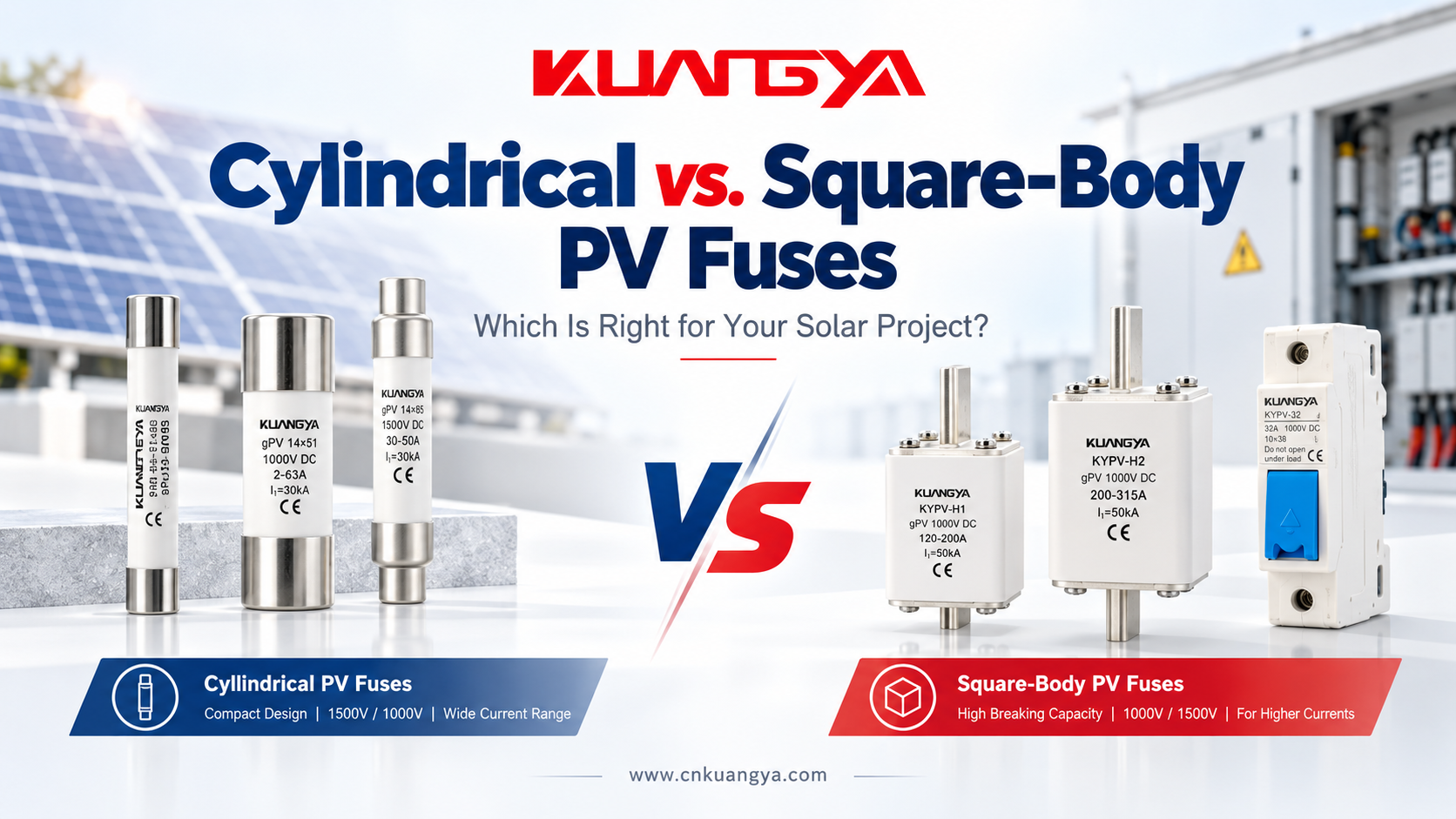
円筒形対角形PVヒューズは、太陽光発電システムのDC保護を選択する上で重要な比較対象です。どちらのタイプも太陽光発電用途向けに設計できますが、物理的な構造、取り付け方法、および一般的な用途が異なります。適切なヒューズを選択するには、定格電圧、電流、DC遮断容量、およびヒューズホルダーとの互換性を確認する必要があります。.
太陽光発電DC保護で一般的に使用される2つの形式は次のとおりです。 円筒形gPVヒューズ そして 角形gPVヒューズ. です。円筒形設計はコンパクトなストリング保護回路で一般的に使用されますが、角形設計は、コンバイナボックス出力、中央インバーター入力、およびDCバス保護などの高電流用途で選択されることがよくあります。.
ただし、どちらの形式も自動的に優れているわけではありません。正しい選択は、電気的要件、利用可能な設置スペース、機器の設計、および適用される規格によって異なります。.
このガイドでは、2つの形式を比較し、購入者が注文前に確認すべき点について説明します。.
円筒形および角形ボディのPVヒューズは、どちらも太陽光発電用DC回路向けに設計できます。主な違いは、物理的な構造と電気システムへの接続方法です。.
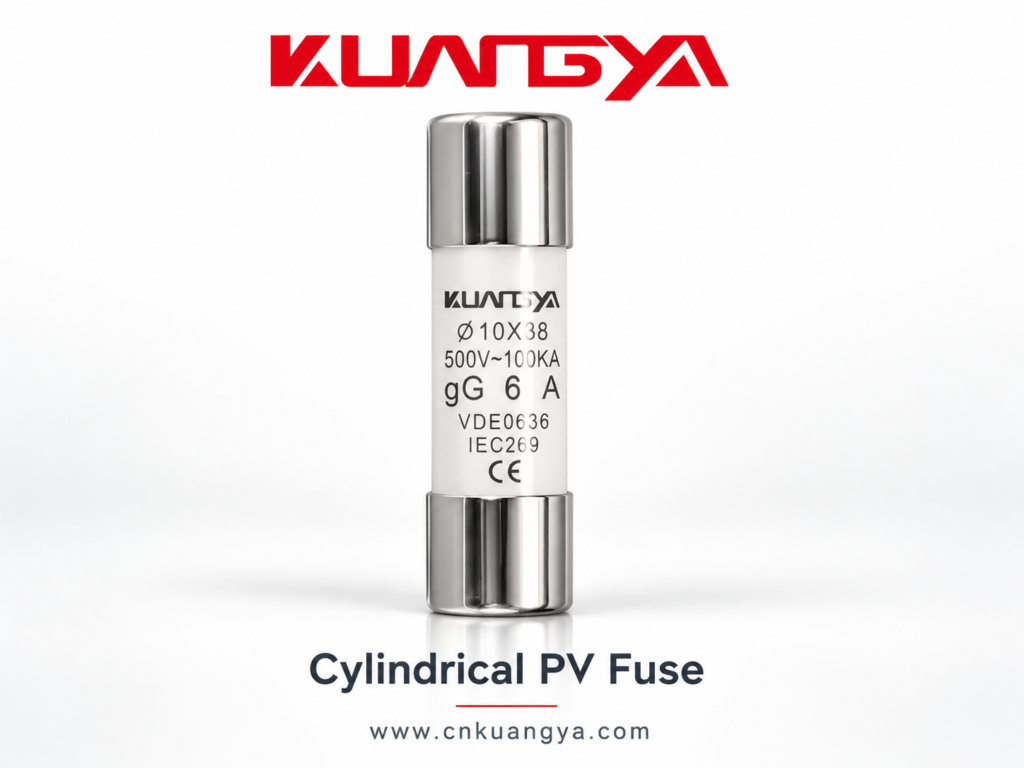
円筒形PVヒューズは、両端に金属接点を持つチューブ状のボディを備えています。一般的なサイズには、10×38 mm、14×51 mm、10×85 mm、14×85 mmがあります。.
これらは、PVストリング保護や、コンパクトなヒューズリンクが適しているその他の回路で頻繁に使用されます。モデルによっては、互換性のあるDINレールヒューズホルダーやその他の指定された取り付け構成に設置できます。.
代表的な用途は以下の通り:
正確な定格電圧、電流範囲、および遮断容量は、選択したヒューズモデルによって異なります。.
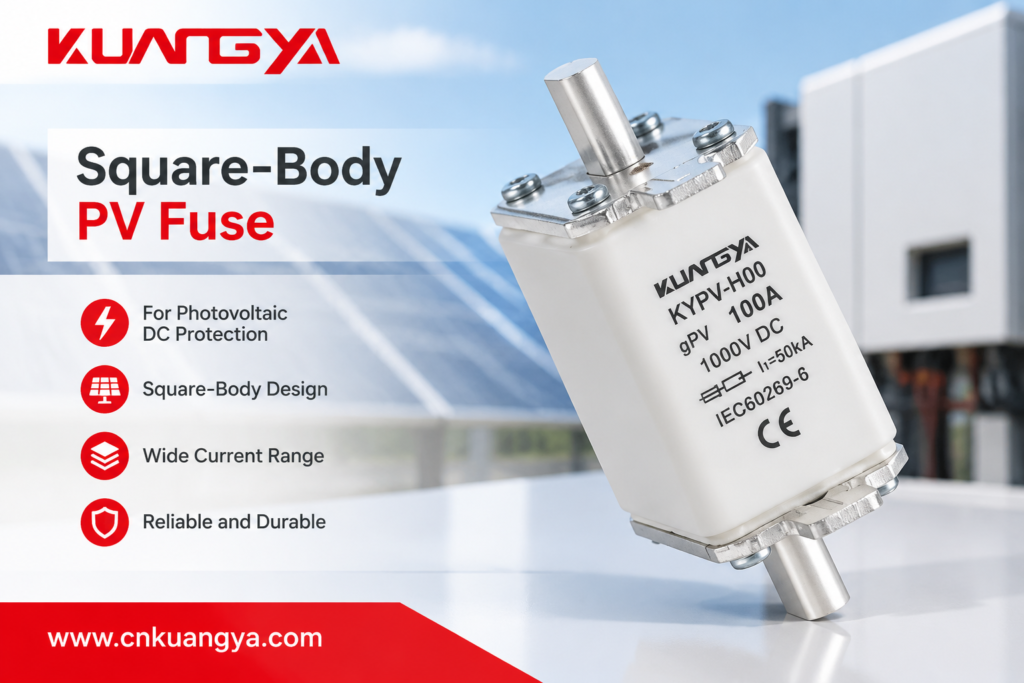
角型PVヒューズは、通常、ブレードコンタクトを備えたNHスタイルの設計を採用しています。一般的なフレーム指定にはH0、H1、H2、H3があり、特定の高電流アプリケーション向けにはXLバリエーションも存在します。.
これらのヒューズは、より大きな定格電流と、それに対応する高電流ヒューズベースを必要とする回路で一般的に使用されます。.
代表的な用途は以下の通り:
角形構造であっても、ヒューズの定格電圧や遮断容量が高いとは限りません。これらの値は、特定のモデルのデータシートで確認する必要があります。.
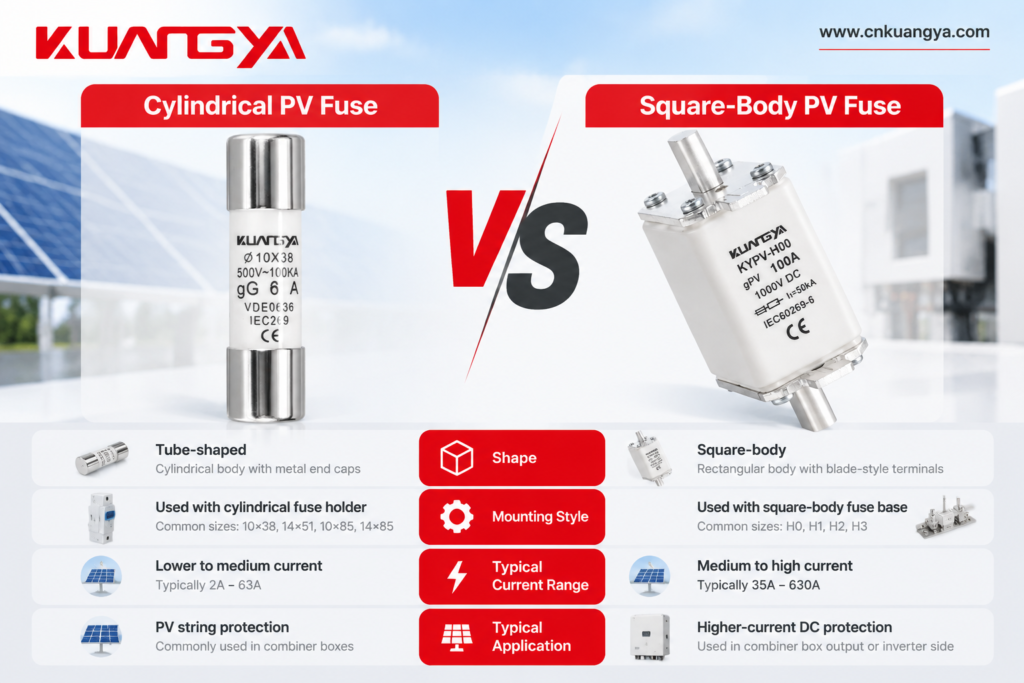
次の表は、購入者が考慮すべき主な要因をまとめたものです。.
| 比較要因 | 円筒形gPVヒューズ | 角形gPVヒューズ |
|---|---|---|
| 物理設計 | 端子付き管状ボディ | ブレード端子付き長方形ボディ |
| 一般的な形式 | 10×38、14×51、10×85、14×85 mm | H0~H3および選択されたXLフレーム |
| 一般的な電流用途 | 低電流ストリング回路でよく使用される | 高電流フィーダーおよびバス接続でよく使用される |
| インストール | 互換性のある円筒形ヒューズホルダーまたは指定された取り付けシステム | 互換性のあるNHスタイルヒューズベースまたは指定された取り付けシステム |
| スペースに関する考慮事項 | コンパクトでモジュラーなレイアウトに適していることが多い | ヒューズ本体、ベース、端子、およびメンテナンスアクセス用のスペースが必要 |
| 交換 | 円筒形の正確なサイズと電気定格に合わせる | フレーム、接点配置、寸法、および電気定格に合わせる |
| 標準的なシステム位置 | PVストリングおよび選択された分岐回路 | 高電流コンバイナ出力、インバータ入力、およびDC配電 |
| 選定優先度 | ストリング電流、電圧、ホルダー互換性、レイアウト | 回路電流、遮断容量、フレーム互換性、熱条件 |
重要: これらは一般的な適用パターンであり、普遍的な規則ではありません。一部の円筒形モデルは要求の厳しい用途に対応しており、角形ヒューズも異なる電気定格で利用可能です。常に製品データシートとシステム設計を確認してください。.
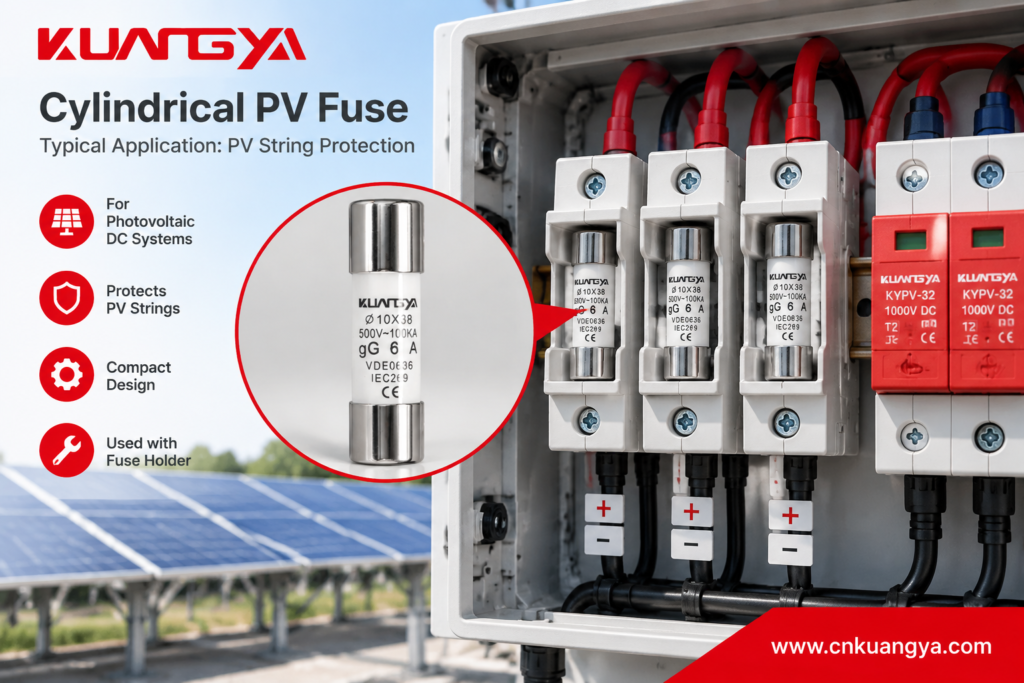
回路設計でコンパクトでモジュール式のヒューズ配置が必要とされる場合、円筒形gPVヒューズの検討に値します。.
円筒形ヒューズホルダーは、モジュラーDINレールレイアウトに適合します。これにより、コンバイナボックス内の複数の個別のストリング保護回路の配置を簡素化できます。.
ただし、完全な設置スペースには、ホルダー、配線、端子間クリアランス、放熱、および交換のためのアクセスが含まれる必要があります。.
円筒形gPVヒューズは、システム設計で個別の分岐保護が必要とされるPVストリング回路で一般的に使用されます。.
選択するヒューズは、ストリングの計算電流、PVモジュールメーカーの最大直列ヒューズ定格、ケーブルの許容電流、および予想される故障電流と協調させる必要があります。.
物理的なサイズだけでヒューズを選択しないでください。.
個別の回路に別個のヒューズホルダーを使用する場合、全体的な取り付け構成を変更せずに互換性のある円筒形ヒューズリンクを交換できます。.
交換品を注文する前に、正確な寸法、定格電圧、定格電流、DC遮断容量、およびヒューズホルダーとの互換性を確認してください。.
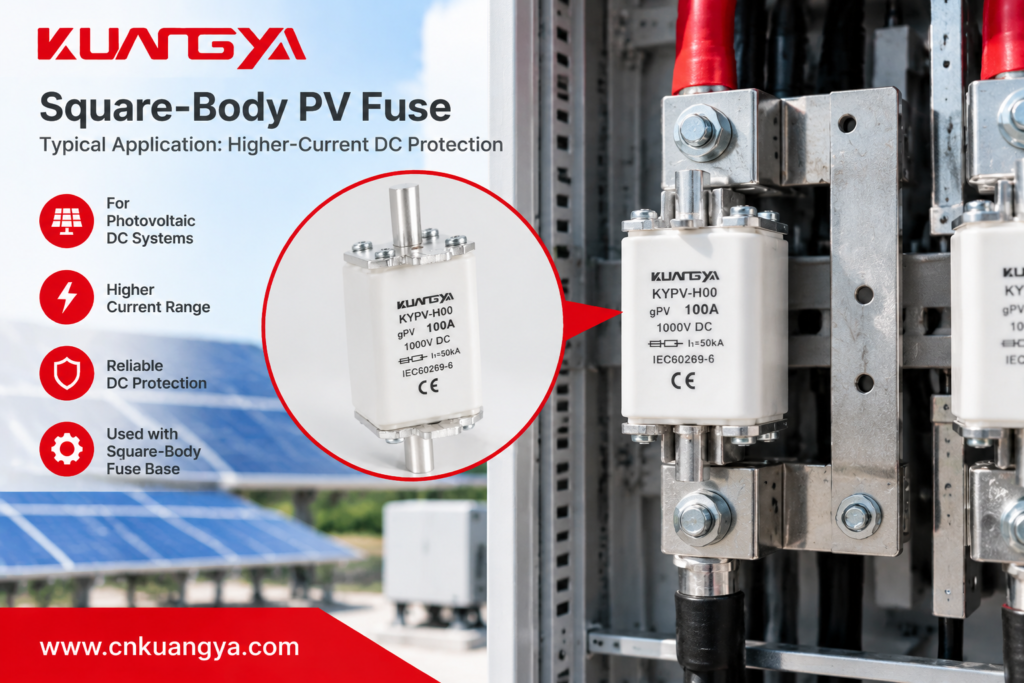
スクエアボディgPVヒューズは、ブレードコンタクト設計と互換性のあるヒューズベースが機器レイアウトに適している高電流回路で検討されることがよくあります。.
スクエアボディモデルは、選択されたコンバイナボックス出力回路、中央インバータDC入力、および主DC配電接続に一般的に使用されます。.
フレームサイズだけでは許容電流は決まりません。ヒューズの実際の電流定格、電圧定格、遮断容量、および動作条件はすべて回路に適している必要があります。.
一部の角形ヒューズベースは、大型電気アセンブリや母線配置との統合を考慮して設計されています。.
購入者は、交換品を選択する前に、取り付け寸法、端子配置、導体または母線接続要件、締め付けトルク、および保守クリアランスを確認する必要があります。.
角形gPVヒューズは、ユーティリティスケールの太陽光発電システムおよびエネルギー貯蔵システムにおける特定の高電流回路に適している場合があります。.
ただし、太陽光発電回路とバッテリー回路では、故障電流特性が異なる場合があります。太陽光発電アレイに適したヒューズが、必ずしもバッテリー回路に適しているとは限りません。ヒューズの意図された用途と定格を実際のシステム設計に対して検証してください。.
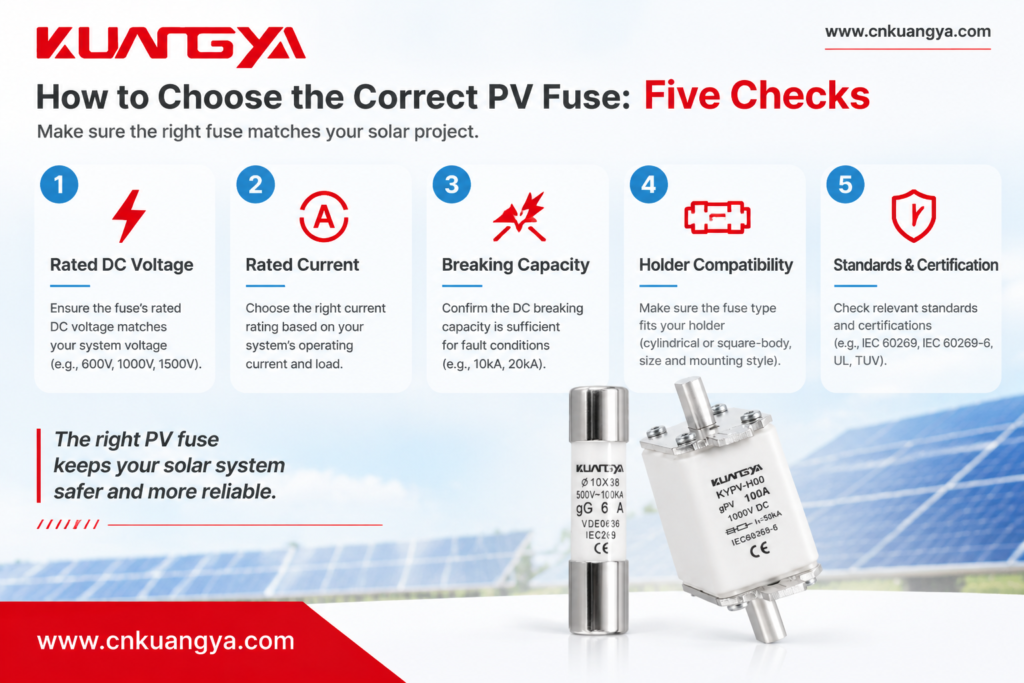
ヒューズ選定において、物理的な形状は一部に過ぎません。ご注文の前に、以下の5項目をご確認ください。.
ヒューズの定格DC電圧は、回路で発生しうる最大電圧に適している必要があります。.
PVアレイの場合、この計算ではモジュールの開放電圧と予想される最低動作温度を考慮する必要があります。公称システム電圧だけでは不十分です。.
KUANGYAは、1000V DCおよび1500V DCモデルを含む、さまざまな電圧クラスのPVヒューズ製品を提供しています。入手可能性と仕様は製品によって異なります。.
ヒューズの電流定格は、回路設計に従って選択する必要があります。これには以下が含まれます。
より高い電流定格が自動的に安全であるとは限りません。定格を超えると回路保護の効果が低下する可能性があり、定格を下回ると意図しないヒューズの作動を引き起こす可能性があります。.
遮断容量は、ヒューズが指定された条件下で遮断できる最大故障電流を示します。.
選択されたヒューズは、設置場所における予想故障電流に対して十分なDC遮断容量を持っている必要があります。.
適用電圧および試験条件を確認せずに遮断容量の数値を比較しないでください。.
A fuse link and its holder must be mechanically and electrically compatible.
For cylindrical models, verify the exact fuse dimensions and compatible holder. For square-body models, confirm the frame size, contact geometry, mounting arrangement, and compatible fuse base.
Also check terminal torque, conductor size, clearances, and installation instructions.
Never assume that two fuses are interchangeable simply because their rated current and voltage are the same.
For photovoltaic fuse links, IEC 60269-6 specifies supplementary requirements for fuses protecting PV strings and PV arrays in DC circuits up to 1500 V.
The IEC standard can be reviewed here:
IEC 60269-6 — Low-voltage fuses for photovoltaic applications
Buyers should request the relevant datasheet and applicable test or certification documents for the exact model being purchased. Confirm that the documentation covers the required product and rating rather than relying on a general statement about the manufacturer’s product range.
Two fuses with the same current rating may have different dimensions, DC breaking capacities, voltage ratings, and time-current characteristics.
Better approach: Compare the complete datasheets before approving a substitute.
A cylindrical fuse cannot be installed in an NH-style fuse base, and square-body fuse links require a compatible mounting arrangement.
Better approach: Confirm the existing holder model, fuse dimensions, and contact design before ordering replacement parts.
The gPV designation identifies a photovoltaic fuse category, but it does not mean every model has identical electrical ratings or interruption performance.
Better approach: Check the specific model’s voltage, current, breaking capacity, time-current characteristics, and applicable standards.
A fuse with a higher current rating may not provide the protection required by the cables, modules, or other connected equipment.
Better approach: Have the replacement reviewed against the circuit design and applicable requirements.
Enclosure temperature, adjacent components, terminal connections, and mounting conditions can affect the performance of a fuse assembly.
Better approach: Follow the manufacturer’s derating guidance, installation instructions, and terminal torque specifications.
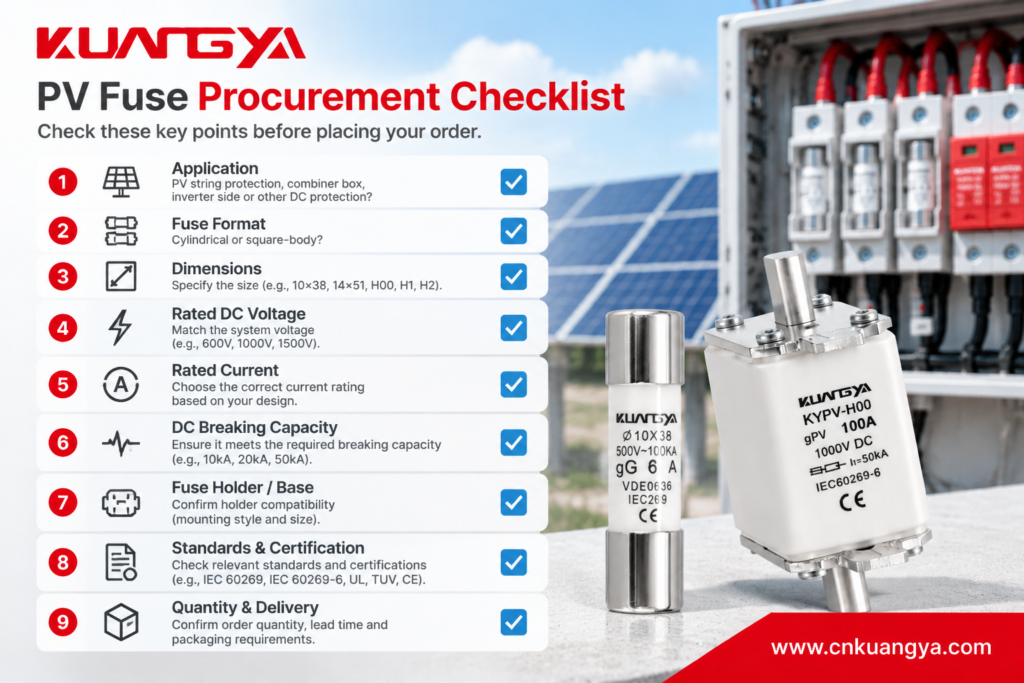
Before requesting a quotation, prepare the following information.
| 項目 | Information to Confirm |
|---|---|
| 申し込み | PV string, combiner output, inverter input, or DC bus |
| Fuse format | Cylindrical or square-body |
| 寸法 | Exact size or frame designation |
| 定格電圧 | Required DC voltage |
| 定格電流 | Required current based on engineering calculations |
| 破断能力 | Required DC fault-current interruption capability |
| Fuse holder | Existing model or required compatible base |
| 規格 | Applicable standard and required documentation |
| 数量 | Required quantity and expected order schedule |
| Custom requirements | Labeling, packaging, or other confirmed specifications |
Providing these details helps suppliers identify a suitable model and reduces the risk of ordering an incompatible replacement.
KUANGYA supplies photovoltaic DC fuse links and compatible fuse holders for different solar protection applications.
The product range includes cylindrical gPV formats such as 10×38 mm and 14×51 mm, as well as selected high-voltage cylindrical formats. Square-body options include H0–H3 and selected XL series.
The suitable model depends on the required voltage, current, breaking capacity, physical dimensions, and installation arrangement.
Explore the product range:
For OEM requirements or project-specific selections, provide the circuit ratings, existing fuse or holder model, and intended application so the specifications can be reviewed before ordering.
Neither format is universally better. Cylindrical designs are commonly used in compact string-protection circuits, while square-body designs are often selected for higher-current circuits. The correct format depends on the system requirements and compatible mounting arrangement.
Not as a direct physical replacement. The two formats use different mounting and contact arrangements. Any change requires a compatible fuse base and an engineering review of the electrical ratings and equipment design.
No. Square-body models are commonly available for higher-current applications, but ratings vary by model. Check the manufacturer’s datasheet rather than assuming performance from the body shape alone.
Only if its rated DC voltage and other specifications are suitable for the application. A fuse rated for 1000 V DC should not be assumed suitable for a 1500 V DC circuit.
IEC 60269-6 specifies supplementary requirements for fuse links used to protect photovoltaic strings and arrays. Other standards or certifications may be required depending on the destination market and project specifications.
Provide the application, rated DC voltage, required current, breaking-capacity requirement, fuse dimensions or frame size, compatible holder, quantity, and any required standards or documentation.
Choosing between cylindrical and square-body PV fuses is not simply a matter of selecting the smaller or larger design. Both formats serve useful roles in photovoltaic DC protection, but they differ in physical construction, installation requirements, and typical applications.
For a reliable selection, verify the electrical ratings, breaking capacity, holder compatibility, thermal conditions, and applicable standards before ordering.
Need help selecting a PV fuse for your project? Contact KUANGYA with your system requirements and existing fuse or holder model to discuss a suitable product configuration.

