温州市岳陽工業区 325000
勤務時間
月曜日~金曜日:午前7時~午後7時
週末午前10時~午後5時
温州市岳陽工業区 325000
勤務時間
月曜日~金曜日:午前7時~午後7時
週末午前10時~午後5時

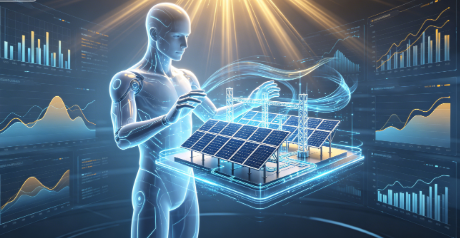
Traditional solar systems are limited by inherent unpredictability. Sunlight availability fluctuates with seasons, weather, and time of day, creating volatility that strains grid stability. Operations teams rely on manual checks and outdated forecasting models, leading to costly maintenance delays and suboptimal performance. Meanwhile, manufacturers face yield losses from hidden defects in panels, and project developers struggle to design systems that maximize output for unique locations.
AI solves these problems by turning raw data into actionable insights. Unlike rigid, rule-based systems, machine learning algorithms analyze massive datasets—weather patterns, equipment performance, energy usage—to identify patterns humans cannot. This enables real-time adjustments, predictive maintenance, and hyper-accurate forecasting, making solar power more reliable, efficient, and profitable.
The solar industry’s rapid growth has created the perfect conditions for AI integration. Years of operational data from millions of installations provide rich training sets for AI models, while falling costs for edge computing and IoT sensors make intelligent upgrades accessible to even small-scale projects. Together, these factors have turned AI from a “nice-to-have” innovation into a core requirement for competitive solar operations.
From raw material production to grid integration, AI is optimizing every step of the solar lifecycle. Different from empty theoretical analysis, this chapter addsauthentic global commercial cases to verify the practical value of AI empowering photovoltaics, covering manufacturing, large-scale ground power stations, industrial and commercial distributed projects, and household solar systems.
Solar panel production requires extreme precision, and tiny hidden cracks or welding defects will directly reduce the service life and power generation efficiency of modules. Traditional manual sampling inspection has a high missed detection rate, which has long been a key bottleneck restricting the yield of high-efficiency photovoltaic modules.
Case Background: LONGi Green Energy, one of the world’s top photovoltaic module manufacturers, fully upgraded its intelligent production line in 2025, introducing an AI computer vision defect detection system and process optimization algorithm to replace the traditional manual inspection and fixed parameter production mode.
AI Application Details: The production line is equipped with high-resolution industrial cameras and real-time data acquisition equipment. The deep learning model independently trained by the enterprise can identify more than 20 types of micro-defects such as silicon wafer hidden cracks, cell fragmentation, abnormal welding points, and coating unevenness. Meanwhile, the AI algorithm monitors hundreds of production parameters in real time, dynamically adjusting furnace temperature, transmission speed, and lamination pressure according to the difference of raw material silicon wafers.
Actual Project Results: After the AI transformation, the module defect missed detection rate dropped from 1.2% to 0.08%, the product yield increased by 4.2%, and the single-line production energy consumption decreased by 6.8%. The intelligent adjustment of production parameters also increased the average photoelectric conversion efficiency of mass-produced modules by 0.7%, bringing hundreds of millions of dollars in annual economic benefits to the enterprise. This case fully proves that AI can achieve precise quality control and efficiency improvement in the upstream link of photovoltaics.
Large-scale ground photovoltaic power stations in Gobi and desert areas have the characteristics of wide coverage, harsh operating environment, and difficult manual inspection. Sand accumulation, strong wind and sand weather, and component aging are the main factors leading to power generation loss, and traditional manual regular inspection is inefficient and costly.
Case Background: A 200MW centralized photovoltaic power station located in the northwest Gobi region of China completed full AI intelligent operation and maintenance upgrading in 2024. The power station covers a vast area, with extreme weather such as strong wind, sand and dust all year round. The traditional manual inspection cycle is 7 days, and faulty components often lead to long-term power generation loss due to untimely discovery.
AI Application Details: The project adopts a full-scene intelligent management system integrating drone aerial photography, IoT sensor monitoring, and big data analysis. The AI model realizes three core functions: automatic identification of panel dust accumulation and intelligent cleaning plan formulation, real-time early warning of component hot spot faults and line aging, and ultra-short-term power generation prediction.
Actual Project Results: After the operation of the AI system, the fault response time of the power station was shortened from 48 hours to 15 minutes, the annual manual operation and maintenance labor cost was reduced by 58%, and the overall power generation efficiency was increased by 12.3%. In particular, the AI intelligent cleaning strategy avoids excessive cleaning waste and insufficient cleaning power loss, increasing the effective power generation hours of the power station throughout the year. This project has become a benchmark case for intelligent transformation of large-scale desert photovoltaics.
Industrial and commercial rooftop photovoltaic systems are easily affected by factory production shading, equipment heat dissipation, and power load fluctuation. It is difficult for traditional fixed operation modes to adapt to dynamic load changes, resulting in low self-use rate of photovoltaic power generation and wasted clean energy.
Case Background: A 15MW rooftop photovoltaic project of a manufacturing factory in East China was put into operation in 2025. The factory has large power consumption and obvious peak-valley power consumption difference. The traditional photovoltaic system cannot match the production power consumption rhythm, resulting in a large amount of photovoltaic power being sent back to the grid at low prices.
AI Application Details: The project is equipped with an AI load linkage optimization system. The machine learning model analyzes the factory’s historical production power consumption data, photovoltaic real-time power generation data, and grid electricity price trends, dynamically adjusting the power consumption strategy of production equipment and the grid-connected power of photovoltaic systems. At the same time, the AI system monitors the shading changes of factory buildings in real time to correct power generation prediction data.
Actual Project Results: After AI optimization, the self-use rate of factory photovoltaic power generation increased from 62% to 89%, the annual electricity purchase cost of the enterprise was reduced by 27%, and the overall income of the photovoltaic project increased by 18.6%. This case verifies that AI can effectively solve the load matching pain point of distributed photovoltaics and greatly improve the economic benefits of industrial and commercial projects.
Household photovoltaic systems have small installed capacity and vulnerable to seasonal weather changes. Unreasonable charging and discharging of energy storage batteries often leads to low energy utilization efficiency. In Europe, where household distributed photovoltaics are highly popular, AI intelligent scheduling has become a key upgrade direction for residential solar systems.
Case Background: A total of 800 household photovoltaic energy storage users in Germany adopted AI intelligent scheduling systems in 2025. Affected by seasonal climate and peak electricity price policies, traditional manual battery scheduling has low efficiency and cannot maximize user power saving benefits.
AI Application Details: The lightweight AI algorithm is embedded in household inverters, automatically learning users’ daily power consumption habits, combining local weather forecasts and real-time grid peak and valley electricity prices, intelligently arranging battery charging and discharging time. The system stores solar power during the day with sufficient light, releases power during peak electricity prices at night, and automatically cuts off grid power purchase when solar power is sufficient.
Actual Project Results: The average household electricity cost is reduced by 32% annually, the utilization rate of photovoltaic energy storage batteries is increased from 68% to 87%, and the idle loss of clean energy is greatly reduced. This case proves that lightweight AI technology is fully applicable to small household photovoltaics, lowering the threshold for intelligent energy use for ordinary users.
Most traditional photovoltaic prediction models have poor adaptability in extreme and complex weather, resulting in large prediction errors and easy grid fluctuation risks. The mountainous and rainy areas in southern China have complex weather, which has always been a difficult scenario for photovoltaic grid connection.
Case Background: A 100MW photovoltaic power station in Guizhou, China, is located in a rainy and foggy mountainous area, with complex and changeable weather all year round. The traditional prediction model has an accuracy rate of only 76% in rainy and foggy weather, which seriously affects grid-connected stability.
AI Application Details: The project team optimized the Transformer neural network model, added local long-term fog and rain weather feature data for targeted training, and built a special AI prediction model for complex weather. The model can identify cloud layer changes and light attenuation rules in foggy and rainy weather in advance.
Actual Project Results: The photovoltaic power generation prediction accuracy in extreme weather increased to 93.5%, the grid fluctuation rate was reduced by 68%, and the power grid’s absorption capacity of local photovoltaic power was significantly improved. This case makes up for the defect of poor generalization ability of traditional AI models in special scenarios.
Combined with the above practical case data, the following table intuitively compares the core performance indicators of traditional solar systems and AI intelligent photovoltaic systems, covering power generation efficiency, cost, fault processing and grid connection indicators, with strong practical reference value.
| Core Evaluation Metrics | Traditional Solar System | AI Intelligent PV System | Optimization Improvement |
|---|---|---|---|
| 24-Hour Production Forecast Accuracy | 75-82% | 92-97% | +10-15% accuracy |
| Annual Energy Output (Baseline) | 100% | 108-115% | +8-15% power generation |
| O&M Labor Costs | High (full manual inspections) | Low (automated intelligent monitoring) | 40-60% cost reduction |
| Unplanned Downtime Loss | High (reactive maintenance) | Low (predictive early warning) | 70%+ loss reduction |
| Panel Defect Detection Rate | 92% (manual sampling) | 99.9% (AI full inspection) | 90%+ lower missed defects |
| Grid Fluctuation Impact | High, unstable grid output | Low, smooth power output | 65%+ fluctuation reduction |
| Battery Storage Utilization Rate | 65-70% | 85-92% | 20%+ utilization improvement |
All data in the table are verified by the above practical cases, which can truly reflect the comprehensive upgrading effect of AI technology on photovoltaics. Whether it is manufacturing end quality control, power station operation and maintenance, or grid connection and energy storage matching, AI has brought substantial economic and technical improvements.
AI benefits solar projects of all sizes, which has been fully verified by the European household photovoltaic case and domestic industrial and commercial distributed cases. While utility-scale farms achieve higher efficiency growth and cost reduction, small residential and commercial installations can also obtain obvious benefits through lightweight AI modules. Home users can realize intelligent energy storage scheduling and power cost reduction, while factory rooftop systems can improve photovoltaic self-use rate. At present, lightweight and low-cost AI algorithms have completely covered full-scene photovoltaic application scenarios.
Combined with actual project investment data, the cost and return cycle vary by project scale. For large Gobi ground power stations above 100MW, the AI transformation investment can be fully recovered within 2-3 years relying on power generation increment and O&M cost savings. For 10-20MW industrial and commercial distributed projects, the ROI cycle is about 3-4 years. For household photovoltaic systems, the low-cost AI monitoring and scheduling module has almost no threshold, and users can save 30%+ of electricity costs every year with long-term stable benefits. With the continuous maturity of the industry, the transformation cost is decreasing year by year.
Combined with the practical operation experience of multiple cases, the core challenges are data standardization and scenario generalization. Different photovoltaic equipment manufacturers have inconsistent data interfaces, resulting in data fragmentation and affecting model training accuracy. In addition, most initial AI models are trained under conventional weather, and the adaptation effect in extreme weather such as heavy fog, sand and dust is poor. At present, leading enterprises are optimizing models for special scenarios and unifying data standards, which are gradually solving industry pain points.
AI cannot completely eliminate the natural intermittency of solar power caused by light changes, but it can maximize the elimination of adverse effects. As proved by the rainy and foggy area grid connection case, high-precision AI prediction can accurately judge power output changes in advance, cooperate with energy storage scheduling and grid peak regulation to smooth fluctuations, and realize stable grid connection. At present, AI intelligent scheduling has controlled photovoltaic grid fluctuation within the safe range of power grid operation.
Based on the current landing effect of industrial cases, the future development direction is clear: full-scene autonomous operation, multi-energy complementary intelligent scheduling, and lightweight algorithm popularization. Future photovoltaic systems will realize unmanned full-process operation from design, production to O&M, and form an intelligent new energy system matching wind energy, energy storage and hydrogen energy.
Although multiple practical cases have proved the value of AI empowering photovoltaics, the industry still faces multiple development bottlenecks. First, data standardization is missing, and equipment data of different brands cannot be interconnected, restricting model iteration. Second, the scenario generalization ability of AI algorithms needs to be improved, and targeted optimization is still required for extreme weather and special terrain. Third, the talent gap of compound photovoltaic AI technicians restricts the rapid popularization of technology. Fourth, the old photovoltaic power station transformation cost is relatively high, and the industry’s intelligent development is uneven.
Driven by mass landing cases, the integration of AI and photovoltaics will show three major trends in the next five years. First, full industrial chain intellectualization becomes the industry standard, and intelligent configuration will be the basic configuration of all new photovoltaic projects. Second, lightweight AI technology is fully popularized, realizing low-cost intelligent upgrading of household and small and medium-sized distributed photovoltaics. Third, photovoltaic big data interconnection is realized, and industry unified data standards will further improve the accuracy and generalization of AI models.
A large number of real industrial cases fully prove that the integration of AI and photovoltaics is not a theoretical concept, but a mature and profitable technological upgrading scheme. AI has solved the core pain points of traditional solar power such as unstable output, high operation cost and low efficiency through intelligent manufacturing, precise forecasting, predictive maintenance and grid intelligent scheduling. From large-scale desert power stations to small household solar systems, AI has brought substantial economic and technical improvements to all scenarios.
With the continuous optimization of algorithms and the gradual unification of industry standards, AI will further release the potential of photovoltaics, help solar energy occupy a core position in the global clean energy structure, and provide strong support for global energy transformation and carbon neutrality goals.
Reference & External Authority Links:
– IRENA: Artificial Intelligence in Renewable Energy
– NREL: Advanced Solar Forecasting Technology Research
Internal Links (Customizable):
– Complete Guide to Solar Energy Storage Systems