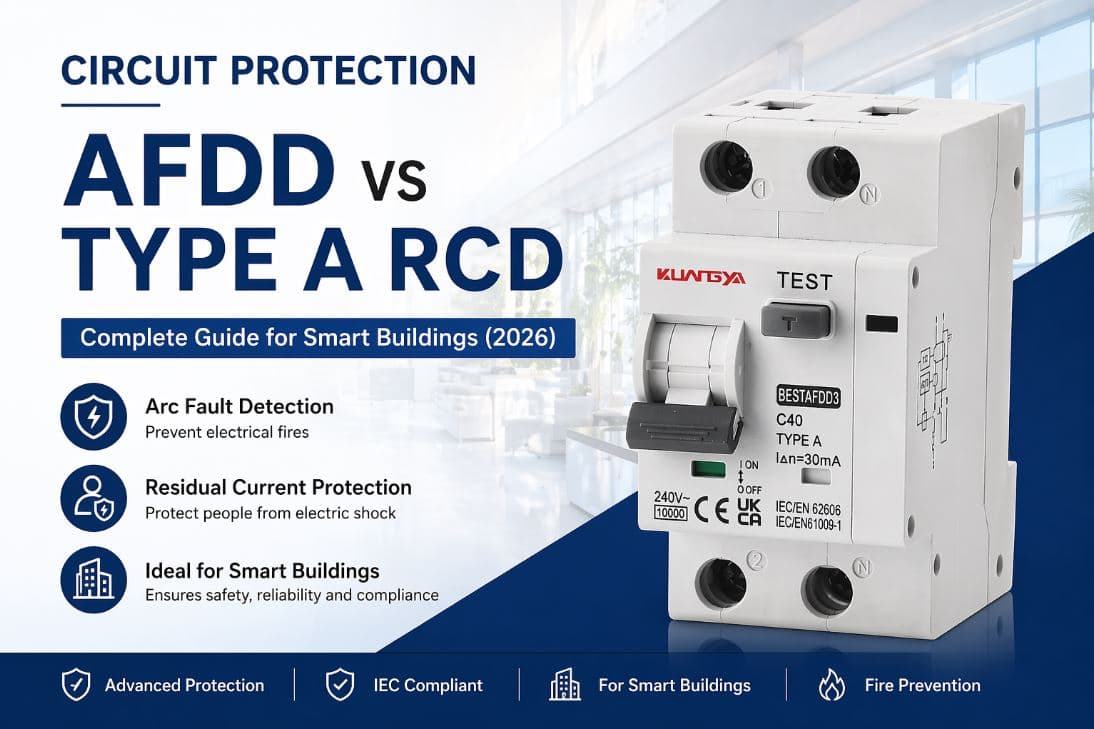
The Perfect Partnership: 5 Ways AFDDs and Type A RCDs Are Redefining Electrical Safety

Understanding the New Safety Power Couple

In today’s smart buildings, where technology evolves at lightning speed, electrical safety can’t rely on yesterday’s solutions. Enter the dynamic duo of modern protection: the Type A Residual Current Device (RCD)​ and the Arc Fault Detection Device (エーエフディー). While Type A RCDs have solidified their position as the global standard against earth leakage, AFDDs are emerging as the critical innovation for preventing electrical fires. Together, they’re creating a safety net that addresses what the National Fire Protection Association (NFPA) identifies as the leading causes of electrical incidents: shock hazards and arc faults.

Q1: What exactly do AFDDs and Type A RCDs protect against, and how are they different?

A:​ Think of them as specialists in different but equally critical areas of electrical safety:

Protection DevicePrimary Threat Addressed仕組みWhat It PreventsGlobal Standard
Type A RCDEarth Leakage CurrentDetects an imbalance between live and neutral conductors, indicating current is leaking to earth (e.g., through a person).Electric shock, electrocution, and some fire risks from insulation failure to earth.IEC 61008/61009; mandatory in EU, UK, AU, and many other regions.
エーエフディーDangerous Arc FaultsAnalyzes the current waveform for unique high-frequency “noise” signatures characteristic of series (loose connection) or parallel (insulation breakdown) arcs.Electrical fires that can start behind walls, in damaged cords, or at faulty connections without tripping standard breakers.IEC 62606; increasingly mandated or recommended in building codes worldwide.

The Key Difference:​ A Type A RCD acts like a guardian against current going where it shouldn’t​ (to earth, possibly through you). An AFDD acts like a detective listening for the unique “sound” of a spark​ that could start a fire, even if no current is leaking.


The Global Regulatory Landscape: 4 Key Regional Approaches

The drive for integrating both devices is fueled by a global trend toward stricter safety codes. The move isn’t uniform, but the direction is clear: a layered defense is becoming the benchmark for quality electrical installations.

Q2: How are different regions approaching the integration of these devices?

A:​ Adoption varies, but a clear trend towards mandatory or highly recommended use in specific high-risk areas is evident worldwide.

地域Type A RCD StatusAFDD StatusKey Driver & Application Focus
Europe (e.g., Germany, France)Long mandatory for most final circuits.Becoming mandatory in new residential buildings and renovations (per national amendments to IEC 60364).Stringent building safety culture. Focus on life safety in homes.
United KingdomMandatory for years under Wiring Regulations (BS 7671).Required in certain high-risk residential accommodations (e.g., houses of multiple occupancy, care homes) since Amendment 2 (2022).Fire safety post-Grenfell. Protecting vulnerable occupants.
北米GFCI (similar function) required in wet locations.AFCI (US term for AFDD) required in most living areas of new homes per NEC.Strong focus on preventing residential electrical fires.
Australia / New ZealandMandatory (RCDs) for all power and lighting circuits.Not yet mandated in wiring rules but recommended for high-risk situations.Proactive safety standards; likely future inclusion.

The Smart Building Imperative: 3 Critical Reasons for Integration

Smart buildings, with their dense networks of sensitive electronics, variable-speed drives, and constant connectivity, present unique challenges that make the エーエフディー+Type A RCD combination not just beneficial, but essential.

Q3: Why are smart buildings particularly in need of this combined protection?

A:​ Smart buildings intensify the very risks these devices are designed to mitigate. Here are the top 3 reasons:

ReasonRisk AmplifiedProtection Solution
1. Proliferation of Power ElectronicsIncreased harmonic noise and DC leakage currents from devices like servers, IoT sensors, and LED drivers can mask faults or blind traditional protectors.Type A RCDs detect DC leakage; advanced AFDDs filter harmonics to identify true arcs.
2. High Cost of DowntimeA single electrical fault in a data center or automated facility can halt operations, causing massive financial and reputational loss.The dual-layer system provides preventive protection, stopping faults before they cause catastrophic failure.
3. Insurance & Compliance PremiumsInsurers and regulators are increasingly mandating or incentivizing the highest levels of proven safety technology.Installing both AFDDs and Type A RCDs can lower premiums and ensure compliance with evolving codes.

Implementation Guide: 5-Step Design Strategy

Successfully integrating these technologies requires thoughtful design, not just box-ticking.

Q4: How should specifiers and contractors approach system design with both devices?

A:​ Follow a risk-based, layered approach. This 5-step strategy ensures comprehensive protection:

ステップAction主な検討事項
1. Risk AssessmentIdentify high-risk circuits: data centers, kitchens, EV chargers, aged wiring.Prioritize protection where failure consequences are highest.
2. Device SelectionChoose combined AFDD+RCCB units for space efficiency, or separate devices for flexibility.Ensure devices meet IEC 62606 (AFDD) and IEC 61008/9 (Type A RCD).
3. System CoordinationConfigure selective tripping so the nearest device to a fault operates first.Prevents unnecessary whole-system shutdowns.
4. Installation & WiringFollow manufacturer guidelines strictly, especially for neutral conductor handling.Proper installation is critical for reliable operation.
5. Testing & CommissioningUse certified testers to verify both arc fault and leakage current detection.Document all tests for compliance and maintenance records.

The Future of Protection: 3 Emerging Trends

The future lies not just in having both devices, but in their seamless integration into the building’s intelligence.

  1. Integrated Smart Devices:​ Next-generation units combine Type A RCD, MCB, and AFDD protection with communication chips, creating an “all-in-one” intelligent protection module.
  2. Predictive Analytics:​ Connected devices will monitor leakage current trends and arc signatures over time, alerting facility managers to deteriorating conditions beforea fault occurs.
  3. Global Standard Convergence:​ The 2026-2028 revisions of key IEC standards are expected to further harmonize requirements, making AFDD+Type A RCD combinations the baseline for quality electrical installations worldwide.

Conclusion: Building a Safer Future, One Circuit at a Time

The evidence is overwhelming: in our electrically complex modern world, Type A RCDs and AFDDs are complementary, not competitive. One guards against the hidden danger of shock; the other sniffs out the spark before it becomes a blaze. For engineers, architects, and building owners committed to true resilience, specifying this dual-layer protection is no longer an optional upgrade—it’s the new standard of care. By embracing this perfect partnership today, we’re not just complying with codes; we’re building a fundamentally safer, more reliable electrical future.

チンクアンヤ
チンクアンヤ
記事本文: 2