Zona industriale di WengYang Yueqing Wenzhou 325000
Orario di lavoro
Da lunedì a venerdì: dalle 7.00 alle 19.00
Fine settimana: 10.00 - 17.00
Zona industriale di WengYang Yueqing Wenzhou 325000
Orario di lavoro
Da lunedì a venerdì: dalle 7.00 alle 19.00
Fine settimana: 10.00 - 17.00

In un'epoca in cui la sicurezza elettrica è diventata fondamentale nei settori residenziale, commerciale e industriale, gli interruttori differenziali (RCCB) sono la prima linea di difesa contro i rischi elettrici. Mentre attraversiamo il 2025 e guardiamo al 2026, la RCCB Il mercato degli RCCB sta vivendo una trasformazione senza precedenti, guidata dall'innovazione tecnologica, dai cambiamenti normativi e dalla spinta globale verso infrastrutture elettriche più intelligenti e sicure. Quest'analisi completa esplora le tendenze più calde che caratterizzano il settore degli RCCB e il loro significato per i professionisti della sicurezza elettrica, gli appaltatori e gli utenti finali di tutto il mondo.
Il mercato globale degli RCCB sta registrando un notevole slancio di crescita. Secondo una recente ricerca di mercato, il settore dovrebbe passare da circa $2,55 miliardi nel 2025 a $2,71 miliardi nel 2026, con un robusto tasso di crescita annuale composto (CAGR) di 6,3%. citazione Questa traiettoria di crescita riflette non solo l'aumento della domanda, ma anche un cambiamento fondamentale nell'approccio alla sicurezza elettrica in un mondo sempre più elettrificato.
L'impressionante storia di crescita del mercato RCCB è supportata da dati convincenti forniti da diversi analisti del settore. Sebbene le proiezioni varino leggermente a seconda della metodologia e dell'orientamento regionale, il consenso indica un'espansione sostenuta per il resto di questo decennio. Secondo alcune società di ricerche di mercato, il mercato globale dei sistemi di controllo centralizzato potrebbe raggiungere $$4,71 miliardi entro il 2030, con un CAGR compreso tra 6,1% e 7,1% a seconda dei tassi di adozione regionali e della velocità di avanzamento tecnologico. citazione citazione
Ciò che rende questi numeri particolarmente significativi è il modello di accelerazione. Il mercato, valutato a circa $4,54 miliardi di euro nel 2024, secondo alcuni analisti sta aumentando fino a $4,89 miliardi di euro nel 2025, il che indica che la crescita non è lineare, ma in accelerazione grazie alla convergenza simultanea di più catalizzatori. Questa accelerazione riflette l'effetto combinato di mandati normativi, progressi tecnologici e maggiore consapevolezza della sicurezza sia nei mercati sviluppati che in quelli emergenti.
La crescita varia in modo significativo a seconda delle regioni geografiche, con l'Asia-Pacifico in testa grazie alla rapida urbanizzazione e allo sviluppo delle infrastrutture in paesi come la Cina, l'India e le nazioni del Sud-Est asiatico. L'Europa mantiene una forte domanda grazie alle severe norme di sicurezza e alla sostituzione delle infrastrutture elettriche obsolete. Il Nord America mostra una crescita costante, spinta dalle iniziative di smart building e dall'integrazione delle energie rinnovabili. Nel frattempo, i mercati emergenti dell'America Latina, del Medio Oriente e dell'Africa rappresentano i segmenti in più rapida crescita, in quanto gli standard di sicurezza elettrica sono in linea con i parametri internazionali.
L'industria globale delle costruzioni è il motore principale dell'espansione del mercato degli RCCB. Con l'accelerazione dell'urbanizzazione in tutto il mondo, i nuovi complessi residenziali, gli edifici commerciali, gli impianti industriali e i progetti infrastrutturali richiedono sistemi di sicurezza elettrica completi fin dal primo giorno. Ogni nuovo edificio rappresenta decine o centinaia di punti di protezione dei circuiti, ognuno dei quali richiede un'installazione adeguata di RCCB per soddisfare i moderni codici di sicurezza.
Il fattore costruttivo va oltre il semplice volume. Le moderne normative edilizie impongono sempre più spesso la protezione RCCB per circuiti specifici, in particolare nelle aree umide come bagni e cucine, nelle installazioni esterne e nei circuiti che servono apparecchiature sensibili. La 18a edizione delle norme di cablaggio BS7671 nel Regno Unito, ad esempio, ha ampliato in modo significativo i requisiti degli RCCB, una tendenza che si riflette nei codici elettrici di tutto il mondo. citazione
Lo spostamento globale verso pratiche di edilizia sostenibile è emerso come un inaspettato ma potente motore del mercato dei sistemi RCCB. Le certificazioni di bioedilizia come LEED, BREEAM ed equivalenti locali incorporano sempre più spesso criteri di sicurezza elettrica ed efficienza energetica. Gli RCCB svolgono un duplice ruolo in questi sistemi: forniscono una protezione di sicurezza essenziale e contribuiscono al contempo alla gestione dell'energia, prevenendo gli sprechi di corrente di dispersione e consentendo l'integrazione con i sistemi di gestione intelligente degli edifici. citazione
Gli edifici che perseguono obiettivi di energia netta zero richiedono sistemi elettrici sofisticati che riducano al minimo le perdite e massimizzino l'efficienza. I moderni RCCB, con un consumo energetico ridotto e una maggiore sensibilità, contribuiscono direttamente a questi obiettivi di sostenibilità, mantenendo al contempo standard di sicurezza senza compromessi.
Forse nessuna tendenza ha avuto un impatto più profondo sullo sviluppo della tecnologia RCCB rispetto alla crescita esplosiva dei veicoli elettrici (EV). L'infrastruttura di ricarica dei veicoli elettrici presenta sfide di sicurezza elettrica uniche che i tradizionali interruttori differenziali di tipo AC non sono in grado di affrontare. Le correnti di dispersione in corrente continua prodotte dai caricabatterie EV possono “accecare” gli RCCB tradizionali, creando situazioni pericolose in cui le correnti di guasto non vengono rilevate.
Questa sfida ha catalizzato lo sviluppo e l'adozione di tipi di RCCB specializzati. Gli RCCB di tipo B, in grado di rilevare correnti di guasto continue fino a 6 mA, sono diventati essenziali per le installazioni di ricarica EV. Più recentemente, gli RCCB di tipo EV conformi agli standard IEC 62955 offrono una protezione ottimizzata specificamente progettata per le apparecchiature di alimentazione dei veicoli elettrici (EVSE). La rapida espansione delle reti di ricarica dei veicoli elettrici, dai caricatori domestici residenziali alle stazioni di ricarica rapida commerciali, sta creando una domanda sostenuta di questi dispositivi di protezione avanzati.
La transizione globale verso le fonti di energia rinnovabili rappresenta un altro importante driver del mercato dei regolatori di corrente continua. Gli impianti solari fotovoltaici (PV), le turbine eoliche e i sistemi di accumulo dell'energia a batteria generano tutti correnti in corrente continua e utilizzano un'elettronica di potenza che crea caratteristiche uniche di corrente di dispersione. Gli RCCB standard di tipo AC sono inadeguati per queste applicazioni e richiedono dispositivi di protezione di tipo B o F.
Mentre i paesi di tutto il mondo accelerano la diffusione delle energie rinnovabili per rispettare gli impegni climatici, la domanda di RCCB specializzati continua a crescere. Le sole installazioni solari residenziali sono milioni in tutto il mondo e ogni sistema richiede un'adeguata protezione sensibile alla corrente continua. I parchi solari e gli impianti eolici su larga scala moltiplicano questa domanda per ordini di grandezza. citazione
L'integrazione della tecnologia intelligente negli RCCB rappresenta forse la tendenza più innovativa del settore. Gli RCCB intelligenti vanno ben oltre i semplici meccanismi di intervento, incorporando microprocessori, interfacce di comunicazione e diagnostica avanzata per creare dispositivi di protezione veramente intelligenti.
I moderni RCCB intelligenti offrono funzionalità che sarebbero sembrate futuristiche solo un decennio fa. Il monitoraggio in tempo reale consente di tenere costantemente traccia delle correnti di dispersione, delle condizioni di carico e dello stato di salute del dispositivo. La funzionalità di controllo remoto consente la gestione del circuito da smartphone o da sistemi di gestione degli edifici. La diagnostica predittiva analizza gli schemi per identificare il deterioramento dell'isolamento o lo sviluppo di guasti prima che diventino pericolosi. La registrazione degli eventi fornisce registrazioni dettagliate per la risoluzione dei problemi e la documentazione di conformità.
Produttori leader come Schneider Electric e ABB hanno aperto la strada allo sviluppo di RCCB intelligenti, con prodotti dotati di connettività IoT che consentono agli utenti di monitorare e gestire i sistemi elettrici attraverso applicazioni mobili. citazione Questa connettività trasforma gli RCCB da dispositivi di sicurezza passivi a partecipanti attivi in ecosistemi completi di gestione degli edifici.
La convergenza degli RCCB con le piattaforme IoT rappresenta un cambio di paradigma fondamentale nella filosofia della protezione elettrica. Gli RCCB tradizionali operano in modo isolato, rispondendo solo a condizioni di guasto immediate. Gli RCCB abilitati all'IoT diventano nodi di reti di sicurezza interconnesse, comunicando con altri dispositivi, piattaforme cloud e sistemi di controllo per consentire strategie di protezione sofisticate.
L'integrazione dell'IoT consente diverse potenti funzionalità. Il monitoraggio remoto consente ai responsabili delle strutture di controllare la sicurezza elettrica di più edifici o addirittura di località geografiche da dashboard centralizzati. Gli avvisi automatici notificano immediatamente ai team di manutenzione i guasti, riducendo i tempi di inattività e consentendo una risposta più rapida. L'integrazione con i sistemi di gestione degli edifici (BMS) consente di reagire in modo coordinato agli eventi elettrici, ad esempio passando automaticamente all'alimentazione di riserva o avvisando i servizi di emergenza.
I dati generati dagli RCCB abilitati all'IoT forniscono informazioni senza precedenti sulla salute e sulle prestazioni del sistema elettrico. Le piattaforme analitiche possono identificare schemi che indicano lo sviluppo di problemi, ottimizzare i programmi di manutenzione e persino prevedere i guasti delle apparecchiature prima che si verifichino. Questo passaggio da una gestione della sicurezza reattiva a una proattiva rappresenta un salto di qualità nell'efficacia della protezione elettrica.
L'intelligenza artificiale (AI) sta iniziando a rivoluzionare le funzionalità degli interruttori differenziali e, più in generale, la gestione della sicurezza elettrica. Gli interruttori automatici di distribuzione e i sistemi di controllo associati utilizzano algoritmi di apprendimento automatico per distinguere tra interventi di disturbo e pericoli reali, riducendo drasticamente i falsi positivi e mantenendo la sensibilità ai guasti reali.
La sicurezza predittiva rappresenta l'applicazione più promettente dell'IA nella tecnologia RCCB. Analizzando i dati storici, le condizioni ambientali, i modelli di utilizzo e gli input dei sensori in tempo reale, i sistemi di intelligenza artificiale possono valutare i livelli di rischio per i diversi circuiti e zone all'interno di un impianto. Questo approccio basato sul rischio consente di dare priorità alle risorse di manutenzione e di intervenire in modo proattivo prima che si sviluppino condizioni pericolose.
La manutenzione predittiva guidata dall'intelligenza artificiale per gli RCCB stessi rappresenta un altro progresso significativo. Invece di affidarsi a programmi di manutenzione fissi o di aspettare un guasto del dispositivo, gli algoritmi di intelligenza artificiale analizzano i dati sulle prestazioni per prevedere quando specifici RCCB potrebbero richiedere test, calibrazione o sostituzione. Questo approccio alla manutenzione basato sulle condizioni ottimizza i costi e massimizza la sicurezza e l'affidabilità.
Man mano che gli RCCB diventano sempre più connessi e intelligenti, la sicurezza informatica emerge come una considerazione critica. I sistemi di protezione elettrica intelligenti rappresentano potenziali bersagli di attacchi informatici, sia da parte di soggetti malintenzionati che cercano di interrompere le operazioni, sia come punti di ingresso involontari in compromissioni di rete più ampie.
L'industria sta rispondendo con circuiti RCCB e sistemi di controllo che incorporano solide funzioni di cybersecurity. I protocolli di comunicazione criptati proteggono la trasmissione dei dati tra i dispositivi e i sistemi di controllo. L'autenticazione sicura impedisce l'accesso non autorizzato ai controlli del dispositivo. Aggiornamenti regolari del firmware affrontano le vulnerabilità emergenti. La segmentazione della rete isola i sistemi di sicurezza critici dalle reti IT generali.
Lo sviluppo di RCCB con funzionalità integrate di cybersecurity sta diventando un fattore di differenziazione competitiva, in quanto i gestori degli impianti e gli appaltatori elettrici riconoscono che i dispositivi di sicurezza connessi richiedono lo stesso rigore di sicurezza di qualsiasi altro sistema in rete. Questa tendenza si intensificherà con l'espansione delle reti intelligenti e con l'integrazione sempre più profonda dei sistemi elettrici con l'infrastruttura digitale.
L'evoluzione dei carichi elettrici ha reso necessaria una corrispondente evoluzione dei tipi di RCCB. Ciò che è iniziato con semplici dispositivi di tipo CA progettati per correnti di dispersione CA sinusoidali si è ampliato in una sofisticata gerarchia di tipi di protezione, ciascuno ottimizzato per applicazioni e caratteristiche di corrente di guasto specifiche.
Tipo AC RCCBs rappresentano lo standard tradizionale, progettato per rilevare correnti residue sinusoidali alternate. Sebbene siano ancora adeguati per i carichi CA di base, come l'illuminazione a incandescenza e il semplice riscaldamento resistivo, i dispositivi di tipo CA sono diventati sempre più inadeguati per le moderne installazioni elettriche dominate da apparecchiature elettroniche.
RCCB di tipo A estendono la protezione alle correnti residue pulsanti in corrente continua, rendendoli adatti alla maggior parte degli apparecchi moderni che contengono circuiti raddrizzatori. Lavatrici, computer, illuminazione a LED e azionamenti a velocità variabile producono tutti dispersioni di corrente continua pulsante che i dispositivi di tipo AC potrebbero non rilevare in modo affidabile. Il tipo A è diventato lo standard minimo per la maggior parte delle installazioni residenziali e commerciali nelle regioni con codici elettrici in vigore.
RCCB di tipo F aggiungono l'immunità alle interferenze ad alta frequenza e un intervento più rapido per le correnti residue a frequenza mista. Questi dispositivi sono particolarmente adatti per le installazioni con azionamenti a frequenza variabile, inverter e altri dispositivi elettronici di potenza che generano componenti ad alta frequenza. Gli RCCB di tipo F offrono anche una maggiore resistenza agli interventi di disturbo dovuti a correnti transitorie.
RCCB di tipo B forniscono una protezione completa che include correnti residue continue fino a 6 mA, rendendoli essenziali per applicazioni come la ricarica di veicoli elettrici, impianti fotovoltaici solari, apparecchiature mediche e macchinari industriali con componenti in corrente continua. Il tipo B rappresenta lo standard di riferimento per le installazioni che richiedono la massima protezione per tutti i tipi di corrente di guasto. citazione
Tipo EV RCCBs rappresentano l'ultima evoluzione, progettata e testata specificamente per le applicazioni di ricarica dei veicoli elettrici secondo gli standard IEC 62955. Questi dispositivi offrono una protezione ottimizzata per gli EVSE e potenzialmente offrono vantaggi in termini di costi rispetto ai dispositivi generici di tipo B per i circuiti di ricarica dedicati ai veicoli elettrici. citazione
Oltre alle classificazioni di tipo base, gli RCCB sono disponibili in varianti con ritardo (tipo S per selettivo, tipo G per generale) che consentono un coordinamento selettivo nei sistemi di distribuzione a più livelli. Gli interruttori differenziali di tipo S incorporano ritardi intenzionali prima dell'intervento, consentendo ai dispositivi a valle di eliminare i guasti per primi. Questa selettività riduce al minimo le interruzioni di corrente non necessarie e semplifica la localizzazione dei guasti.
L'applicazione corretta del coordinamento selettivo migliora l'affidabilità del sistema e riduce le interruzioni operative. Un RCCB di tipo S sul quadro di distribuzione principale lavora di concerto con gli RCCB istantanei sui circuiti secondari, assicurando che durante un evento di guasto intervenga solo il circuito interessato, anziché disalimentare intere sezioni dell'impianto.
I dispositivi di rilevamento dei guasti ad arco rappresentano una categoria emergente di protezione che integra le funzionalità tradizionali degli RCCB. Mentre gli interruttori differenziali proteggono dai rischi di scossa dovuti a guasti a terra, gli AFDD affrontano i rischi di incendio dovuti a guasti ad arco in serie e in parallelo che non producono necessariamente correnti di dispersione a terra.
I guasti da arco elettrico si verificano quando i collegamenti elettrici si allentano, si danneggiano o si corrodono, creando contatti intermittenti ad alta resistenza che generano pericolosi archi elettrici. Queste condizioni sono responsabili di migliaia di incendi elettrici ogni anno, ma spesso non vengono rilevate dai tradizionali dispositivi di sovracorrente e corrente residua.
I moderni AFDD impiegano una sofisticata elaborazione del segnale per distinguere i segnali di arco pericoloso dai normali transitori di commutazione e dalle caratteristiche del carico. Molti produttori offrono oggi dispositivi combinati (RCBO+AFDD) che forniscono protezione da sovracorrente, corrente residua e guasto d'arco in un'unica unità compatta. citazione
La 18a edizione della BS7671 e codici analoghi aggiornati in altre giurisdizioni impongono sempre più spesso la protezione AFDD per circuiti specifici, in particolare nelle abitazioni dove il rischio di incendio è più elevato. Questa spinta normativa sta portando a una rapida adozione degli AFDD e stimola l'innovazione nei dispositivi di protezione combinati che massimizzano la sicurezza riducendo al minimo i requisiti di spazio nei quadri.
Il mercato globale degli RCCB è caratterizzato da diversi attori dominanti, i cui sforzi di ricerca e sviluppo guidano l'innovazione del settore. Schneider Electric, con prodotti come la serie Acti9 iC60, continua a spingersi oltre i confini della tecnologia RCCB intelligente e dell'integrazione IoT. ABB sfrutta la sua vasta esperienza nei sistemi di alimentazione per sviluppare dispositivi di protezione avanzati per applicazioni industriali e di pubblica utilità. Siemens combina la sua leadership nell'automazione degli edifici con la protezione elettrica per creare soluzioni di sicurezza integrate.
Mitsubishi Electric apporta allo sviluppo di RCCB una forte presenza nei mercati asiatici e un'esperienza nell'elettronica di potenza. Eaton (che in precedenza comprendeva i marchi Cutler-Hammer e Moeller) offre un portafoglio completo di prodotti per la protezione che spazia dalle applicazioni residenziali a quelle industriali. Legrand si concentra su un design facile da usare e su un'ampia gamma di prodotti per gli appaltatori e gli installatori elettrici.
Questi leader del settore competono non solo per le prestazioni dei prodotti, ma anche per l'integrazione dell'ecosistema: ognuno offre piattaforme proprietarie per la configurazione, il monitoraggio e la gestione dei dispositivi. Le acquisizioni e le partnership strategiche sono comuni, in quanto i produttori cercano di espandere le capacità tecnologiche e la portata geografica.
Mentre i giganti globali dominano la quota di mercato, numerosi produttori regionali e attori emergenti contribuiscono al dinamismo del mercato. Aziende come CHINT, Delixi e altri produttori cinesi si sono espansi dai mercati nazionali alla presenza internazionale, spesso competendo sui prezzi convenienti e migliorando costantemente la qualità e le caratteristiche.
Gli specialisti europei, come Doepke, si concentrano sui segmenti premium con prodotti altamente specializzati per applicazioni impegnative. I produttori giapponesi offrono ingegneria di precisione e affidabilità ai dispositivi di protezione per applicazioni industriali e infrastrutturali. Questa diversità competitiva avvantaggia i clienti grazie all'ampliamento delle scelte e all'accelerazione dei cicli di innovazione.
L'Europa mantiene la sua posizione di leader negli standard di sicurezza elettrica e nell'adozione degli RCCB. Gli standard IEC (International Electrotechnical Commission), sviluppati con un forte contributo europeo, fungono da riferimento a livello mondiale. Le normative nazionali, come gli standard VDE della Germania, BS7671 del Regno Unito e NF C 15-100 della Francia, si evolvono continuamente per affrontare le tecnologie emergenti e le sfide della sicurezza.
Il mercato europeo mostra una domanda particolarmente forte di RCCB di tipo B e di tipo F, grazie all'elevata adozione di energie rinnovabili e ai tassi di penetrazione dei veicoli elettrici. Le iniziative di smart building e i mandati di efficienza energetica accelerano ulteriormente la diffusione degli RCCB avanzati. La sostituzione dell'infrastruttura obsoleta nei mercati maturi fornisce una domanda sostenuta anche al di là delle nuove costruzioni.
La regione Asia-Pacifico rappresenta il mercato degli RCCB più grande e in più rapida crescita per volume. La massiccia attività edilizia della Cina, lo sviluppo delle infrastrutture dell'India e l'urbanizzazione del Sud-Est asiatico creano un'enorme domanda di dispositivi di protezione elettrica. Il miglioramento degli standard di sicurezza e l'applicazione delle norme in questi mercati spingono a passare da una protezione di base a tipi di interruttori automatici di protezione più sofisticati.
Giappone e Corea del Sud rappresentano mercati maturi con standard di sicurezza elevati e una forte domanda di tecnologie di protezione avanzate. L'Australia e la Nuova Zelanda seguono normative di tipo europeo con requisiti completi di RCCB. La diversità della regione fa sì che le dinamiche di mercato varino in modo significativo da paese a paese, ma la traiettoria generale punta a tassi di crescita elevati e sostenuti.
Il mercato nordamericano degli interruttori differenziali (i cui dispositivi sono tipicamente chiamati GFCI o RCD) mostra una crescita costante, trainata dall'adozione di edifici intelligenti, dall'integrazione delle energie rinnovabili e dalla graduale espansione dei requisiti normativi. Sebbene storicamente meno esaustivi rispetto ai requisiti degli RCCB europei, i codici elettrici nordamericani si stanno evolvendo per richiedere la protezione di un maggior numero di circuiti e applicazioni.
La forte attenzione della regione alla tecnologia delle case intelligenti e all'automazione degli edifici crea una particolare domanda di dispositivi di protezione abilitati all'IoT. I settori commerciale e industriale spingono l'adozione di tipi di RCCB avanzati per applicazioni specializzate come la ricarica dei veicoli elettrici e gli impianti solari.
Le applicazioni residenziali continuano a rappresentare il più grande segmento di mercato degli RCCB per volume di unità. Le case moderne richiedono RCCB per i circuiti di bagno e cucina, per le prese esterne, per le installazioni in garage e, sempre più spesso, per la protezione dell'intera abitazione. Le tendenze della casa intelligente stanno trasformando le specifiche degli RCCB residenziali, con i proprietari di casa che cercano dispositivi che si integrino con le piattaforme di automazione domestica e forniscano il monitoraggio tramite smartphone.
Il mercato dei caricabatterie EV residenziali rappresenta un segmento particolarmente dinamico. Con l'accelerazione dell'adozione dei veicoli elettrici, milioni di case stanno aggiungendo apparecchiature di ricarica di livello 2 che richiedono una protezione RCCB di tipo B o EV. Questa singola applicazione sta guidando l'adozione della tecnologia e la crescita del mercato nel segmento residenziale.
Gli edifici commerciali danno priorità all'affidabilità degli RCCB, al coordinamento selettivo e alle capacità di monitoraggio complete. Edifici adibiti a uffici, centri commerciali, hotel e strutture istituzionali richiedono strategie di protezione che riducano al minimo le interruzioni di corrente non necessarie, pur mantenendo rigorosi standard di sicurezza. Gli RCCB intelligenti con monitoraggio e diagnostica remoti rispondono a queste esigenze e semplificano la documentazione di conformità.
I centri dati rappresentano un segmento commerciale specializzato con requisiti di affidabilità estremi. Queste strutture utilizzano sofisticati schemi di coordinamento degli RCCB e spesso specificano dispositivi con una maggiore immunità agli interventi di disturbo. La possibilità di monitorare lo stato e le prestazioni degli RCCB da remoto è particolarmente preziosa nelle applicazioni dei data center, dove l'accesso del personale alle apparecchiature elettriche può essere limitato.
Le applicazioni industriali presentano sfide uniche per gli RCCB, tra cui condizioni ambientali difficili, livelli elevati di corrente di guasto e carichi speciali come gli azionamenti a frequenza variabile e i sistemi a corrente continua. Gli RCCB di tipo industriale sono caratterizzati da una struttura robusta, capacità di interruzione più elevate e spesso caratteristiche di tipo B o F per gestire profili di carico complessi.
Gli impianti di produzione utilizzano sempre più spesso approcci di manutenzione predittiva per i sistemi elettrici, creando una domanda di RCCB intelligenti che forniscono dati dettagliati sulle prestazioni e sulla diagnostica. L'integrazione con i sistemi di controllo industriale e le piattaforme SCADA consente strategie di protezione coordinate e una risposta rapida ai guasti.
Le applicazioni per le utility e le infrastrutture rappresentano un segmento di mercato RCCB in crescita, spinto dall'implementazione delle smart grid e dall'integrazione delle energie rinnovabili. Le sottostazioni elettriche, le reti di distribuzione e gli impianti di energia rinnovabile richiedono dispositivi di protezione specializzati in grado di gestire livelli di potenza elevati e scenari di guasto complessi.
I sistemi di accumulo di batterie su scala di rete, i parchi solari e gli impianti eolici richiedono tutti una protezione completa dalle correnti residue. Le caratteristiche uniche di queste applicazioni richiedono spesso soluzioni personalizzate basate su piattaforme RCCB standard ma ottimizzate per condizioni operative specifiche.
| Metrico | 2025 | 2026 | 2030 (proiezione) | CAGR |
|---|---|---|---|---|
| Valore del mercato globale degli RCCB | $2.55B - $4.89B | $2.71B - $5.2B | $4.71B - $8.0B | 6.1% - 7.1% |
| Quota di mercato dell'Asia-Pacifico | ~45% | ~47% | ~50% | 7.5% - 8.5% |
| Tasso di crescita dell'RCCB di tipo B | – | – | – | 9,2% - 11,5% |
| Tasso di adozione degli RCCB intelligenti | ~18% | ~23% | ~45% | 15% - 18% |
| Domanda legata alla ricarica dei veicoli elettrici | ~8% di mercato | ~11% di mercato | ~22% di mercato | 18% - 22% |
Nota: gli intervalli dei valori di mercato riflettono le diverse metodologie di analisi e la concentrazione regionale. Fonti: Molteplici rapporti di ricerca di mercato 2024-2025.
| Tipo RCCB | Rileva i guasti CA | Rileva la corrente continua pulsante | Rileva la corrente continua regolare | Applicazioni tipiche | Costo relativo |
|---|---|---|---|---|---|
| Tipo AC | ✓ | ✗ | ✗ | Carichi CA di base, impianti vecchi | $ |
| Tipo A | ✓ | ✓ | ✗ | Elettrodomestici moderni, residenziale/commerciale generale | $$ |
| Tipo F | ✓ | ✓ | Limitato | Azionamenti a frequenza variabile, inverter | $$$ |
| Tipo B | ✓ | ✓ | ✓ (fino a 6mA) | Caricabatterie per veicoli elettrici, fotovoltaico, apparecchiature mediche e industriali. | $$ |
| Tipo EV | ✓ | ✓ | ✓ (ottimizzato per EVSE) | Circuiti di ricarica dedicati ai veicoli elettrici | $$$ |
| Tipo S/G | Varia in base al tipo di base | Varia in base al tipo di base | Varia in base al tipo di base | Coordinamento selettivo, distribuzione principale | Variabile |
L'interruttore differenziale (RCCB) è un dispositivo di sicurezza elettrica salvavita che monitora continuamente la corrente che scorre nei conduttori sotto tensione di un circuito e la confronta con la corrente di ritorno attraverso il conduttore neutro. In condizioni normali, queste correnti sono uguali. Quando si verifica un guasto a terra, ad esempio quando qualcuno tocca un conduttore sotto tensione o quando l'isolamento si guasta, una parte della corrente passa a terra invece di tornare attraverso il neutro. L'interruttore differenziale rileva questo squilibrio (corrente residua) e fa scattare il circuito entro pochi millisecondi, con una sensibilità tipica di 30 mA per la protezione dalle scosse, prevenendo scosse elettriche potenzialmente fatali o incendi elettrici.
Gli RCCB sono fondamentali perché forniscono una protezione che gli interruttori e i fusibili tradizionali non possono offrire. I dispositivi di sovracorrente standard rispondono solo ai sovraccarichi e ai cortocircuiti, non ai guasti a terra che possono comportare correnti troppo piccole per far scattare un interruttore ma abbastanza grandi da essere letali per le persone. Secondo la Commissione Elettrotecnica Internazionale (IEC), i guasti elettrici contribuiscono a circa 30% di tutti gli incidenti di incendio, evidenziando l'importanza critica di una protezione efficace degli interruttori automatici di protezione.
I diversi tipi di RCCB sono progettati per rilevare le diverse caratteristiche delle correnti di guasto prodotte dai moderni carichi elettrici:
RCCB di tipo A Rileva sia le correnti residue sinusoidali alternate (come quelle di tipo CA) sia le correnti residue pulsanti in corrente continua. La corrente continua pulsante è prodotta dalla maggior parte degli apparecchi moderni che contengono circuiti raddrizzatori, tra cui computer, illuminazione a LED, lavatrici e apparecchi a velocità variabile. Il tipo A è diventato lo standard minimo raccomandato per le installazioni contemporanee, poiché i dispositivi di tipo AC possono non rilevare i guasti provenienti da apparecchiature con alimentatori raddrizzati.
RCCB di tipo B forniscono la protezione più completa, rilevando correnti residue CA, CC pulsanti e CC lisce fino a 6 mA. Le correnti di guasto continue sono prodotte da apparecchiature come caricabatterie per veicoli elettrici, inverter fotovoltaici, sistemi di accumulo di batterie, apparecchiature mediche e macchinari industriali con componenti in corrente continua. Il tipo B è essenziale per queste applicazioni perché la corrente continua regolare può saturare il nucleo magnetico dei dispositivi di tipo A, rendendoli incapaci di rilevare i guasti, una condizione pericolosa chiamata “accecamento”.”
Tipo EV RCCBs sono progettati e testati specificamente per le applicazioni di ricarica dei veicoli elettrici secondo gli standard IEC 62955. Pur essendo funzionalmente simili al tipo B per quanto riguarda la capacità di rilevare la corrente continua regolare, i dispositivi di tipo EV sono ottimizzati per le caratteristiche specifiche della corrente di guasto degli EVSE (Electric Vehicle Supply Equipment). Possono offrire vantaggi in termini di costi rispetto ai dispositivi di tipo B per uso generale per i circuiti di ricarica dedicati ai veicoli elettrici, fornendo al contempo una protezione equivalente per questa specifica applicazione.
Per la maggior parte delle installazioni di ricarica EV, la protezione RCCB di tipo B o EV è essenziale per la sicurezza. I caricabatterie per veicoli elettrici producono correnti di dispersione continue che gli RCCB standard di tipo A o di tipo AC non sono in grado di rilevare in modo affidabile. Ciò crea una situazione potenzialmente pericolosa in cui le correnti di guasto potrebbero passare inosservate, con rischi di scosse e incendi.
Tuttavia, il requisito specifico dipende dal progetto del caricabatterie e dai codici elettrici locali. Alcuni caricabatterie EV moderni incorporano un rilevamento interno dei guasti CC (dispositivi RDC-DD conformi alla norma IEC 62955) che, se correttamente implementato, può consentire l'uso di un interruttore differenziale di tipo A sul quadro di distribuzione. Il manuale di installazione del caricabatterie deve specificare il tipo di protezione esterna richiesta.
In caso di dubbio, la scelta di un RCCB di tipo B o EV offre una protezione completa, indipendentemente dalle caratteristiche di protezione interne del caricabatterie. Questo approccio offre una sicurezza di tipo difensivo e garantisce la conformità ai codici elettrici in evoluzione. Molte giurisdizioni stanno aggiornando le normative per richiedere esplicitamente la protezione di tipo B per i circuiti di ricarica EV, rendendo questa la scelta di specifica più sicura.
Gli RCCB intelligenti integrano microprocessori, interfacce di comunicazione e diagnostica avanzata nei tradizionali dispositivi di protezione dalle correnti residue. Questi dispositivi intelligenti vanno ben oltre i semplici meccanismi di intervento per fornire funzionalità complete di monitoraggio, controllo e previsione.
I principali vantaggi degli RCCB intelligenti includono: Monitoraggio in tempo reale delle correnti di dispersione, delle condizioni di carico e dello stato di salute dei dispositivi, accessibili tramite app per smartphone o sistemi di gestione degli edifici; Telecomando che consente di attivare o disattivare i circuiti senza accedere fisicamente al quadro di distribuzione; Diagnostica predittiva che analizzano gli schemi per identificare il deterioramento dell'isolamento o lo sviluppo di guasti prima che diventino pericolosi; Registrazione degli eventi fornire registrazioni dettagliate dei viaggi, dei profili di carico e delle condizioni operative per la risoluzione dei problemi e la conformità; Integrazione con piattaforme IoT e sistemi di edifici intelligenti per strategie di protezione coordinate; e Avvisi automatici che avvisano immediatamente i responsabili della struttura o le squadre di manutenzione quando si verificano interventi o vengono rilevate condizioni anomale.
Per i gestori di impianti, gli RCCB intelligenti trasformano la sicurezza elettrica da reattiva a proattiva, riducendo i tempi di inattività, ottimizzando i programmi di manutenzione e fornendo una visibilità senza precedenti sulla salute dell'impianto elettrico. Per i proprietari di casa, offrono tranquillità grazie al monitoraggio remoto e alla capacità di identificare e rispondere rapidamente ai problemi elettrici anche quando sono fuori casa.
I test regolari sono essenziali per garantire che gli interruttori automatici di protezione rimangano funzionanti e forniscano una protezione affidabile. La maggior parte dei codici elettrici e le raccomandazioni dei produttori prevedono test mensili utilizzando il pulsante di prova incorporato presente su tutti gli interruttori automatici di protezione. Questo pulsante di prova crea una piccola corrente di dispersione artificiale che dovrebbe far scattare immediatamente il dispositivo, verificando che il meccanismo di rilevamento e la funzione di scatto funzionino correttamente.
La procedura di prova è semplice: premere il pulsante di prova; l'interruttore differenziale dovrebbe scattare immediatamente, interrompendo l'alimentazione del circuito protetto. Ripristinare il dispositivo riportando l'interruttore in posizione “on”. Se l'interruttore differenziale non scatta quando viene testato, o se non può essere resettato, il dispositivo deve essere sostituito immediatamente perché non fornisce protezione.
Oltre alla verifica mensile da parte dell'utente, l'ispezione e la verifica professionale devono essere eseguite durante la manutenzione ordinaria dell'impianto elettrico, in genere ogni anno per le installazioni commerciali e industriali. I test professionali possono includere la misurazione della corrente e del tempo di intervento effettivi per verificare che il dispositivo sia conforme alle specifiche. I dispositivi RCCB utilizzati in ambienti difficili o in applicazioni critiche possono richiedere test professionali più frequenti.
Vale la pena notare che gli RCCB intelligenti con capacità di autodiagnosi possono monitorare continuamente le proprie funzionalità e avvisare gli utenti dei problemi, riducendo potenzialmente la necessità di test manuali e fornendo una maggiore garanzia di protezione continua.
Sì, è possibile sostituire un interruttore differenziale di tipo AC con un dispositivo di tipo A o B. Anzi, questa soluzione è spesso consigliata quando si tratta di aggiornare vecchie installazioni per adattarle ai moderni carichi elettrici. Gli interruttori automatici di protezione di tipo A e B offrono tutte le funzionalità di protezione del tipo AC, con in più il rilevamento delle correnti residue pulsanti e continue.
Quando si sostituiscono gli RCCB, assicurarsi che il dispositivo sostitutivo abbia una corrente nominale (In) uguale o superiore e la stessa sensibilità (in genere 30 mA per la protezione dalle scosse). Anche le dimensioni fisiche e il metodo di montaggio devono essere compatibili con il quadro di distribuzione esistente, anche se questo aspetto è generalmente standardizzato per i dispositivi dei principali produttori.
L'aggiornamento dal tipo AC al tipo A è particolarmente consigliabile nelle installazioni con elettrodomestici moderni, illuminazione a LED e apparecchiature elettroniche. L'aggiornamento al tipo B è essenziale se si sono aggiunte o si prevede di aggiungere apparecchiature come caricabatterie per veicoli elettrici, impianti solari fotovoltaici o batterie di accumulo che producono correnti di dispersione continue e uniformi.
La considerazione principale è il costo: i dispositivi di tipo B sono molto più costosi di quelli di tipo A, che a loro volta sono più costosi di quelli di tipo AC. Tuttavia, la maggiore protezione e la sicurezza per il futuro spesso giustificano l'investimento, in particolare per i circuiti critici o per le installazioni che possono incorporare apparecchiature che producono corrente continua.
Un dispositivo di rilevamento dei guasti ad arco (AFDD) è un dispositivo di protezione avanzato che rileva condizioni di arco elettrico pericolose che possono causare incendi. Mentre gli interruttori differenziali proteggono dai rischi di scossa dovuti ai guasti a terra, gli AFDD affrontano una minaccia diversa: i guasti ad arco in serie e in parallelo causati da cavi danneggiati, connessioni allentate o isolamento deteriorato.
I guasti ad arco creano archi di plasma ad alta temperatura che possono incendiare i materiali circostanti, causando incendi elettrici. Queste condizioni pericolose spesso non producono una corrente sufficiente a far scattare gli interruttori convenzionali o una dispersione a terra sufficiente a far scattare gli interruttori differenziali, consentendo così di persistere senza essere rilevati. Gli AFDD utilizzano una sofisticata elaborazione del segnale per distinguere le firme degli archi pericolosi dai normali transitori di commutazione.
La necessità di un AFDD dipende dal codice elettrico locale e dall'applicazione specifica. La 18a edizione della BS7671 nel Regno Unito e codici analoghi aggiornati in altre giurisdizioni richiedono sempre più spesso la protezione AFDD per alcuni circuiti, in particolare nelle abitazioni dove il rischio di incendio è più elevato. Anche se non sono strettamente richiesti, gli AFDD forniscono una valida protezione aggiuntiva, in particolare per i circuiti che servono camere da letto, aree abitative e altri spazi in cui gli incendi rappresentano un rischio significativo per la sicurezza della vita.
Molti produttori offrono oggi dispositivi combinati (RCBO+AFDD) che forniscono protezione contro le sovracorrenti, le correnti residue e i guasti d'arco in un'unica unità compatta, facilitando l'integrazione di una protezione completa senza richiedere uno spazio eccessivo nel quadro.
Gli RCCB abilitati all'IoT trasformano la protezione elettrica da dispositivi reattivi isolati in nodi di reti di sicurezza connesse. Questa connettività abilita diverse potenti funzionalità che migliorano significativamente la sicurezza:
Notifica immediata: Quando un RCCB interviene, i responsabili dell'impianto o i proprietari di casa ricevono avvisi istantanei sui loro smartphone, consentendo una risposta rapida anche quando sono fuori sede. Questo riduce al minimo i tempi di inattività e consente una rapida indagine della causa.
Monitoraggio continuo: Gli RCCB IoT tengono traccia delle correnti di dispersione, dei profili di carico e delle condizioni operative in modo continuo. Un aumento graduale della corrente di dispersione può indicare il deterioramento dell'isolamento, consentendo un intervento proattivo prima che si sviluppi un guasto pericoloso.
Manutenzione predittiva: Analizzando i dati sulle prestazioni nel tempo, i sistemi IoT possono prevedere quando gli RCCB possono richiedere test, calibrazioni o sostituzioni in base alle condizioni operative effettive piuttosto che a programmi arbitrari.
Visibilità a livello di sistema: Per le strutture con più RCCB, le piattaforme IoT forniscono dashboard centralizzati che mostrano lo stato di tutti i dispositivi di protezione contemporaneamente, facilitando l'identificazione di schemi o problemi in tutto il sistema elettrico.
Integrazione con i sistemi dell'edificio: Gli RCCB IoT possono coordinarsi con altri sistemi dell'edificio, ad esempio passando automaticamente all'alimentazione di riserva quando un circuito primario si interrompe o integrandosi con i sistemi di allarme antincendio per una gestione completa della sicurezza.
Questo passaggio da una gestione della sicurezza reattiva a una proattiva rappresenta un miglioramento fondamentale dell'efficacia della protezione elettrica, riducendo sia i rischi per la sicurezza che i costi operativi.
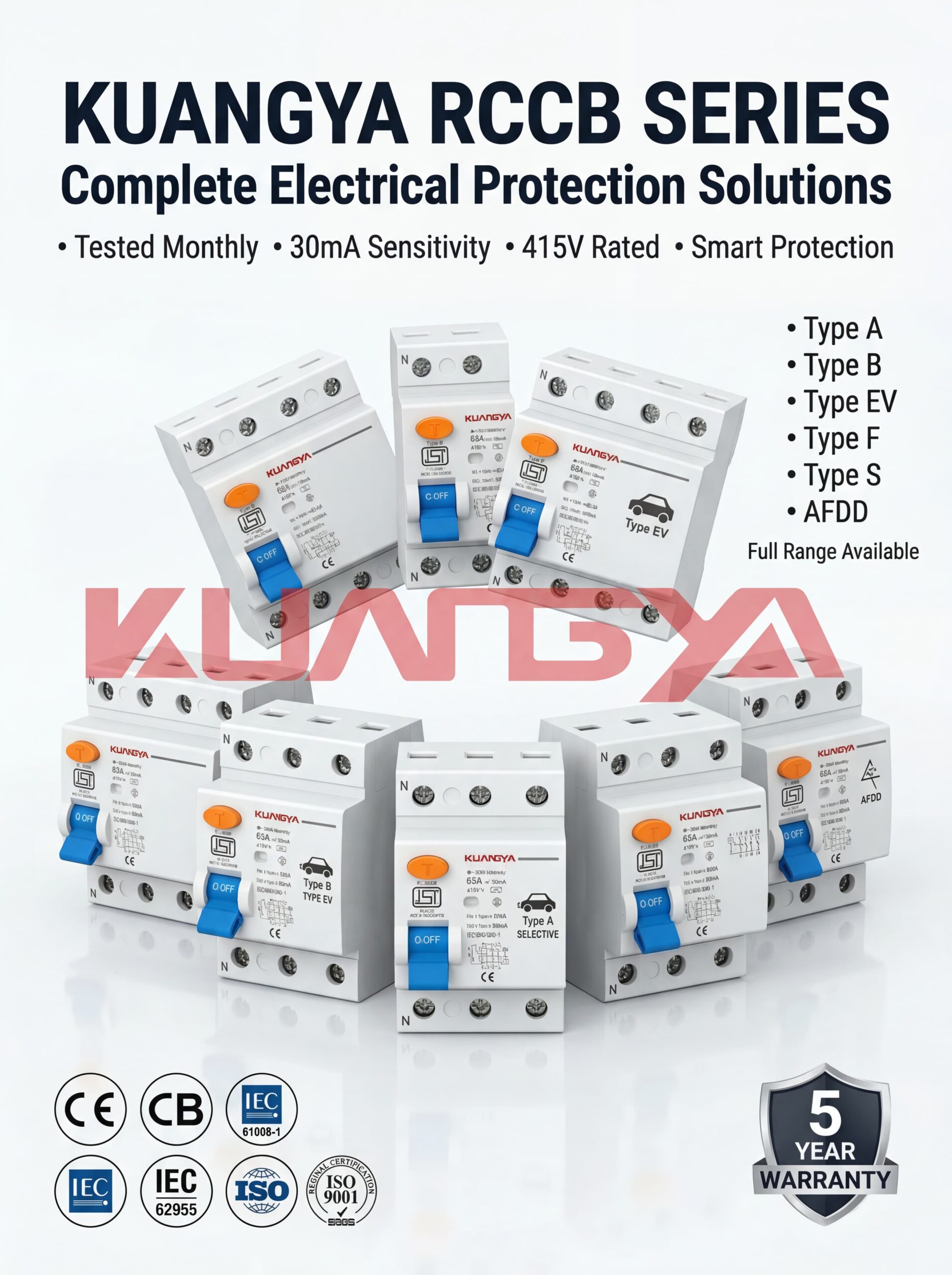
In un mercato caratterizzato da una rapida evoluzione tecnologica e da requisiti di protezione sempre più sofisticati, la scelta del giusto partner RCCB è fondamentale per gli appaltatori elettrici, i gestori di impianti e i professionisti della sicurezza. CNKuangya si distingue come fornitore di soluzioni complete che offrono l'intera gamma di tipi di RCCB e tecnologie di protezione per soddisfare ogni esigenza applicativa.
L'ampia gamma di RCCB di CNKuangya assicura che troverete il dispositivo di protezione giusto per qualsiasi installazione, dai circuiti residenziali di base alle applicazioni industriali più esigenti:
RCCB di tipo A: Gamma completa per le moderne installazioni residenziali e commerciali, che fornisce una protezione affidabile contro le correnti residue CA e CC pulsanti. Disponibile in diverse correnti nominali e configurazioni per soddisfare qualsiasi esigenza di circuito.
Tipo EV RCCBs: Protezione specializzata ottimizzata per le applicazioni di ricarica dei veicoli elettrici, conforme agli standard IEC 62955. Questi dispositivi forniscono il rilevamento dei guasti CC essenziale per la sicurezza degli EVSE, offrendo al contempo soluzioni economicamente vantaggiose per i circuiti di ricarica dedicati ai veicoli elettrici.
RCCB di tipo B: Protezione di qualità superiore per le applicazioni che richiedono il rilevamento di correnti residue CC uniformi, tra cui gli impianti fotovoltaici, l'accumulo di batterie, le apparecchiature mediche e i macchinari industriali. I dispositivi di tipo B di CNKuangya forniscono una protezione completa per tutti i tipi di corrente di guasto.
RCCB di tipo S (selettivo): Dispositivi a tempo che consentono il coordinamento selettivo nei sistemi di distribuzione multilivello, disponibili nelle varianti di tipo A e B. Questi dispositivi riducono al minimo le interruzioni di corrente non necessarie, pur mantenendo rigorosi standard di sicurezza.
RCCB di tipo F: Protezione specializzata per installazioni con azionamenti a frequenza variabile e inverter, che offre una maggiore immunità alle interferenze ad alta frequenza e una riduzione degli interventi di disturbo.
AFDD (Dispositivi di rilevamento dei guasti da arco elettrico): Dispositivi antincendio avanzati e unità combinate RCBO+AFDD che offrono una protezione completa contro i rischi di sovracorrente, corrente residua e guasto d'arco in singoli dispositivi compatti.
I prodotti CNKuangya sono progettati e realizzati per soddisfare o superare gli standard internazionali, tra cui IEC 61008, IEC 61009, IEC 62423 e IEC 62955. Rigorosi test e processi di controllo della qualità assicurano che ogni dispositivo fornisca una protezione affidabile e duratura. Le certificazioni complete, tra cui CE, CB e le approvazioni regionali, facilitano le specifiche e l'installazione nei mercati globali.
La selezione del tipo e della configurazione di RCCB appropriati per applicazioni specifiche può essere complessa, soprattutto nel caso di tecnologie emergenti come la ricarica dei veicoli elettrici e i sistemi di energia rinnovabile. CNKuangya fornisce un supporto tecnico esperto e un'assistenza tecnica applicativa per aiutare gli appaltatori elettrici, i consulenti e i gestori di impianti a specificare la soluzione di protezione ottimale per ogni progetto.
Con l'evoluzione del settore degli RCCB verso dispositivi di protezione intelligenti e connessi, CNKuangya continua a investire in tecnologie di nuova generazione. La nostra tabella di marcia prevede RCCB intelligenti abilitati all'IoT con monitoraggio e diagnostica a distanza, funzionalità di manutenzione predittiva basate sull'AI e una maggiore integrazione con le piattaforme di gestione degli edifici e delle case intelligenti.
Il settore degli interruttori differenziali si trova a un punto di inflessione in cui i dispositivi di protezione tradizionali si stanno evolvendo in sistemi di sicurezza intelligenti e connessi. La convergenza di tecnologie intelligenti, connettività IoT, analisi AI e requisiti di protezione sempre più sofisticati sta ridisegnando ciò che ci aspettiamo dalla protezione delle correnti residue.
Le proiezioni di crescita del mercato che riflettono un'espansione annua di 6-7% fino al 2030 e oltre sottolineano l'importanza fondamentale degli RCCB nelle moderne infrastrutture elettriche. I fattori chiave, tra cui l'attività edilizia globale, l'adozione dei veicoli elettrici, l'integrazione delle energie rinnovabili e le iniziative di smart building, assicurano una domanda sostenuta, spingendo al contempo i confini tecnologici.
Per i professionisti del settore elettrico, rimanere aggiornati sulle tendenze della tecnologia RCCB è essenziale. La comprensione delle differenze tra Tipo A, Tipo B, Tipo EV e altre varianti di RCCB consente di ottenere specifiche adeguate per diverse applicazioni. La familiarità con le funzionalità degli RCCB intelligenti e le opportunità di integrazione dell'IoT consente agli appaltatori e ai gestori di impianti di offrire ai clienti un valore e una sicurezza maggiori.
L'evoluzione dal tipo AC al tipo A al tipo B e alle varianti specializzate riflette la natura mutevole dei carichi elettrici nel 21° secolo. Man mano che l'elettronica di potenza, i sistemi a corrente continua e le apparecchiature sofisticate diventano onnipresenti, i dispositivi di protezione devono evolversi di conseguenza. La nascita degli AFDD affronta i rischi di incendio che i tradizionali dispositivi di sovracorrente e corrente residua non sono in grado di rilevare, fornendo un ulteriore livello di protezione completa.
In prospettiva, l'integrazione dell'intelligenza artificiale e dell'analisi predittiva promette di trasformare la sicurezza elettrica da reattiva a proattiva. Anziché limitarsi a rispondere ai guasti dopo che si sono verificati, i sistemi futuri prevederanno e preverranno le condizioni di pericolo prima che si sviluppino. Questo cambiamento di paradigma ha profonde implicazioni per la sicurezza, l'affidabilità e l'efficienza operativa in tutti i segmenti di mercato.
Per le organizzazioni che desiderano implementare una protezione elettrica all'avanguardia, la collaborazione con fornitori di soluzioni complete come CNKuangya garantisce l'accesso all'intera gamma di tecnologie RCCB, dai dispositivi standard di tipo A per applicazioni generiche alle protezioni specializzate di tipo B ed EV per installazioni complesse, oltre agli AFDD avanzati per la protezione antincendio. I portafogli di prodotti completi, le competenze tecniche e l'impegno per l'innovazione fanno di questi partner delle risorse preziose per orientarsi nel panorama complesso e in rapida evoluzione degli RCCB.
Nel corso del 2025 e verso il 2026, la sicurezza elettrica continuerà la sua evoluzione da semplice protezione dei circuiti a sistemi intelligenti e connessi che gestiscono attivamente i rischi e ottimizzano le prestazioni. Gli RCCB si trovano al centro di questa trasformazione, proteggendo vite e beni e consentendo al contempo di realizzare l'infrastruttura elettrica intelligente e sostenibile del futuro.
Informazioni su CNKuangya: CNKuangya è un produttore leader di soluzioni complete di protezione elettrica, che offre gamme complete di interruttori automatici di protezione di tipo A, tipo EV, tipo B, tipo S, tipo F e AFDD. Grazie all'impegno per la qualità, l'innovazione e l'assistenza ai clienti, CNKuangya fornisce i dispositivi di protezione e l'esperienza tecnica di cui i professionisti del settore elettrico hanno bisogno per progetti che vanno da installazioni residenziali a complessi impianti industriali. Contattateci per scoprire come il nostro portafoglio completo di interruttori differenziali può soddisfare le vostre esigenze di protezione.
Parole chiave: RCCB, interruttore differenziale, RCCB di tipo A, RCCB di tipo B, RCCB di tipo EV, AFDD, rilevamento del guasto ad arco, RCCB intelligente, sicurezza elettrica IoT, protezione della ricarica EV, dispositivi di sicurezza elettrica, tecnologia degli interruttori, RCD, GFCI, interruttore differenziale, sistemi di protezione elettrica, sicurezza degli edifici intelligenti, manutenzione elettrica predittiva, RCCB di tipo F, RCCB selettivo, standard di sicurezza elettrica, IEC 61008, IEC 62955