Zone industrielle WengYang Yueqing Wenzhou 325000
Heures de travail
Du lundi au vendredi : de 7h00 à 19h00
Le week-end : 10H00 - 17H00
Zone industrielle WengYang Yueqing Wenzhou 325000
Heures de travail
Du lundi au vendredi : de 7h00 à 19h00
Le week-end : 10H00 - 17H00

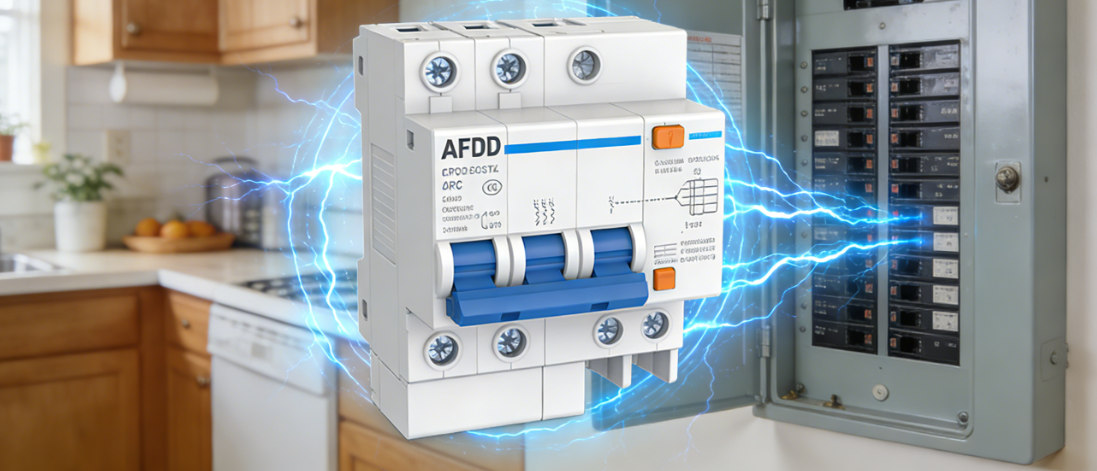
Arc Fault Protection has become one of the most important safety measures in modern electrical systems, addressing a dangerous risk that traditional breakers and leakage protectors cannot detect. Each year, many residential and commercial fires start from small, invisible arc faults inside walls, loose sockets, aging wires, or damaged cables. These arcs generate high temperatures over time, igniting insulation, plastics, and building materials without triggering standard protection devices.
To close this safety gap, dedicated detection and interruption technology is essential. The most common and effective device used to deliver reliable Protection is the AFDD, or Arc Fault Detection Device. This article explains the core principles, real-world applications, common electrical problems solved, installation methods, maintenance tips, and frequently asked questions about Arc Protection supported by AFDD equipment. By applying this protection correctly, families and businesses can greatly reduce fire risks and ensure safer daily electricity use.
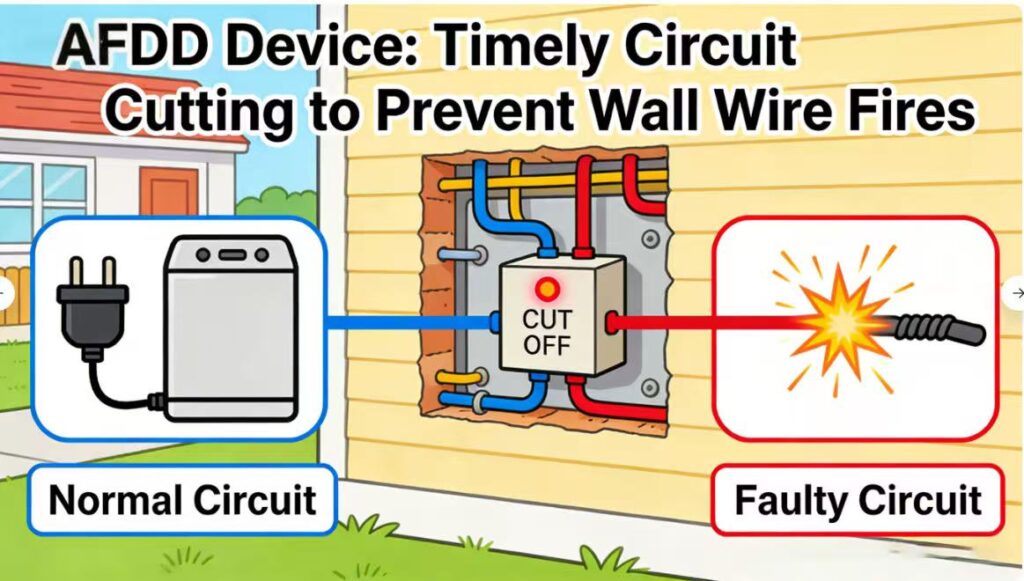
Arc Fault Protection is a specialized safety function that identifies dangerous arc faults in circuits and quickly cuts power to prevent fires. Unlike regular protective equipment that responds to overloads, short circuits, or electric leakage, this system focuses on abnormal electrical discharges that develop silently and pose serious fire hazards. Many people are unaware that harmless sparks during daily use are very different from dangerous arcs. Plugging in a phone charger, turning on a lamp, or disconnecting a small appliance may create a brief, safe spark. However, when wires deteriorate, contacts loosen, or cables become damaged, continuous high-energy arcs can form and remain undetected for a long time.
This is where Arc Fault Protection becomes critical. Traditional circuit breakers cannot recognize these low-energy but high-risk arcs, leaving a major blind spot in home and building safety. The AFDD device was developed to solve this problem by providing accurate and responsive Arc Fault Protection through advanced signal monitoring and intelligent recognition. It acts as an early warning system that intervenes long before a fire can start.
In modern construction and renovation projects, Protection is increasingly recommended or required by electrical safety standards. With more electrical appliances in use and higher circuit loads, old wiring and hidden damage have become common threats. Whether in family homes, offices, shops, or public buildings, the protection helps prevent avoidable disasters and protects lives and property.
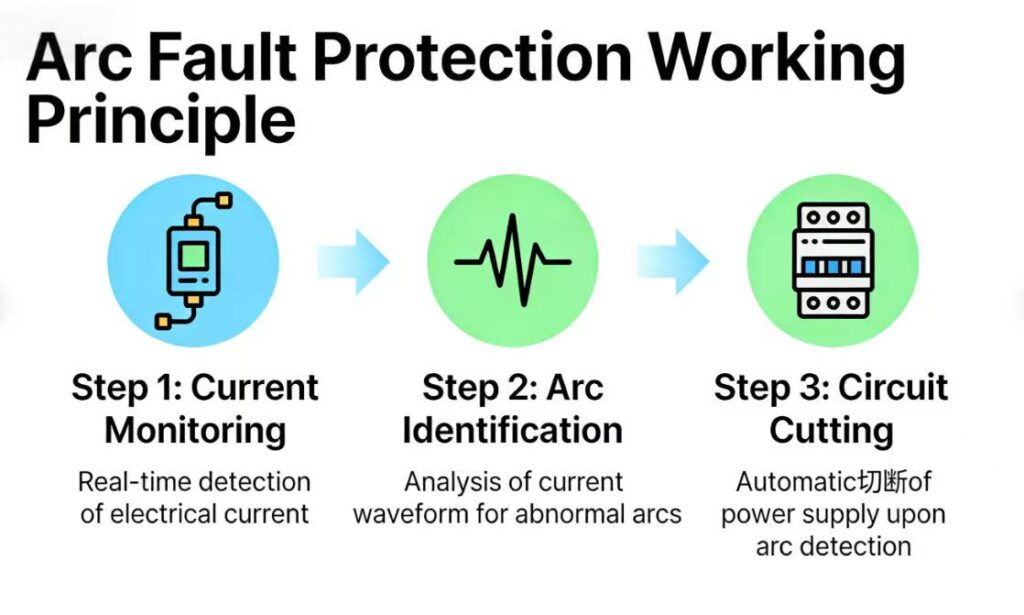
Arc Fault Protection operates through real-time monitoring and analysis of electrical current waveforms. Under normal operating conditions, current flows in a steady, predictable pattern. When an arc fault appears, the current becomes distorted and produces unique high-frequency characteristics that signal danger. The AFDD device captures these changes instantly using sensitive internal sensors.
The core advantage of AFDD in delivering the protection is its ability to distinguish between normal operation and genuine hazards. The device uses a built-in algorithm to filter out safe sparks while responding rapidly to dangerous arcs. Once a harmful fault is confirmed, the AFDD triggers a trip mechanism to break the circuit within milliseconds. This speed ensures that the arc cannot generate enough heat to ignite surrounding materials.
It is important to understand that the protection does not replace conventional protective devices. Instead, AFDD-based protection works alongside miniature circuit breakers and residual current devices to form a complete safety system. Breakers handle overloads and short circuits, leakage devices prevent electric shocks, and Arc Fault Protection stops arc-related fires. Together, they provide full-circle defense for modern electrical environments.
Many small, easily overlooked electrical issues in daily life can lead to severe fires, and the protection effectively addresses these hidden risks.
In older buildings, long-used wiring suffers from degraded insulation, brittleness, and moisture damage. Lines hidden inside walls or under floors are especially difficult to inspect. Even minor damage can create continuous arcs that slowly burn structural materials. the protection detects these early signals and disconnects power before a fire begins.
Sockets used for many years often develop loose internal contacts, leading to unstable connections and repeated arcing. This causes overheating, melting, and potential fire ignition. Traditional breakers rarely react to such conditions, but Arc Fault Protection provided by AFDD identifies the problem immediately.
Charger cables, kitchen appliance wires, and extension cords are frequently bent, twisted, or crushed. Internal wire breakage may not stop the appliance from working but creates a serious arc hazard. The protection offers 24-hour monitoring to prevent these hidden dangers from causing disasters.
Offices, retail spaces, and construction sites often use messy wiring, multi-socket adapters, and high-power devices simultaneously. Long-term overload accelerates wire aging and encourages arc formation. The protection stabilizes the circuit and reduces accident probability in high-risk environments.
Kitchens involve high-power devices, humidity, oil, and heat, all of which speed up insulation damage and contact deterioration. Arc Fault Protection provides reliable defense in these high-risk zones where fires can spread rapidly.
Arc Fault Protection supports a wide range of daily and professional environments. The following table shows typical scenarios, common risks, and how AFDD delivers effective protection.
表格
| Scénario d'application | Common Electrical Risks | How Arc Fault Protection Helps | Recommended Configuration |
|---|---|---|---|
| Residential Homes | Aging wires, loose sockets, damaged cords | Early arc detection and fast circuit interruption | Install in main distribution board |
| Old Community Renovation | Hidden line damage, insufficient load capacity | Reduces fire risk without full rewiring | Cover living room, bedroom and kitchen circuits |
| Office Buildings | Dense equipment, messy wiring, long operating hours | Protects devices and avoids business downtime | Apply to office and server room circuits |
| Retail & Commercial Spaces | High-power machines, extended operation | Prevents fire-related financial losses | Protect main power branches and high-load circuits |
| Schools & Kindergartens | High socket usage, heavy load, public safety | Ensures student safety and code compliance | Full coverage in classrooms and activity areas |
| Hotels & Guesthouses | Frequent plug-in use, night-time electricity | Meets fire safety standards for public accommodation | Independent protection for each guest room |
| Kitchens & Wet Areas | High humidity, oil, heat, heavy load | Reduces fire risks in harsh environments | Dedicated protected circuits for high-risk zones |
This versatility makes Arc Fault Protection suitable for new construction, old house retrofits, rental properties, and public buildings. Its relatively low cost and high safety benefits make it one of the most valuable upgrades in modern electrical management.
To ensure reliable long-term performance, proper installation and routine maintenance of Arc Fault Protection devices are essential.
AFDD units used for Arc Fault Protection feature a modular design that fits standard distribution boxes. A qualified electrician can complete installation efficiently. For best results, focus on high-risk areas including bedrooms, living rooms, kitchens, and air conditioning circuits.
Arc Fault Protection systems are highly stable and require minimal upkeep. It is recommended to press the test button every three to six months to verify normal operation. Regular testing ensures the device remains sensitive to real arc faults.
Under normal environmental conditions, AFDD devices providing Arc Fault Protection typically last 8 to 10 years. Replacing units at the appropriate interval maintains consistent protection performance.
When choosing equipment for Arc Fault Protection, always select certified, standard-compliant products. Reliable manufacturers offer stable performance, low false tripping rates, and strong technical support.
A: Arc Fault Protection is a safety system that detects dangerous arc faults in circuits and cuts power quickly to prevent electrical fires, usually using AFDD devices.
A: Yes. Circuit breakers cannot detect arc faults. Arc Fault Protection fills a critical safety gap and reduces hidden fire risks.
A: No. AFDD devices use intelligent recognition to distinguish safe sparks from dangerous arcs, ensuring stable daily use.
A: Yes. It provides effective and reliable protection in high-humidity, high-load environments.
A: You can choose certified and reliable devices from professional suppliers. For trusted products and support, visit www.cnkuangya.com. Additionally, you can refer to industry standards from IEC (International Electrotechnical Commission) for more technical guidance on AFDD selection.
A: Yes. It works effectively in new decoration projects and old house safety renovations.
A: The system interrupts the circuit within milliseconds, preventing arcs from igniting nearby materials.
A: According to fire safety data, proper installation of Arc Fault Protection can significantly reduce the probability of arc-related electrical fires.
Electrical safety is a fundamental requirement of modern living. As household and commercial power consumption increases, so do the risks associated with arc faults. Traditional protection systems are not designed to address this specific hazard, making Arc Fault Protection an essential part of safe electrical design.
For families, Arc Fault Protection protects loved ones and personal property. For businesses, it reduces financial losses and operational downtime. For public facilities, it ensures compliance with safety regulations and protects visitors and staff. The AFDD device operates automatically, requires little user intervention, and provides continuous 24/7 protection.
As global safety standards continue to evolve, Arc Fault Protection has become a standard recommendation in residential and commercial construction. By understanding its function and implementing it properly, users can create a safer environment for daily life and work.
For more information about AFDD models, technical specifications, installation plans, and customized solutions, please visit professional suppliers cnkuangya.com to access full support and expert guidance. You can also check NFPA (National Fire Protection Association) for the latest safety standards related to arc fault protection.