Zone industrielle WengYang Yueqing Wenzhou 325000
Heures de travail
Du lundi au vendredi : de 7h00 à 19h00
Le week-end : 10H00 - 17H00
Zone industrielle WengYang Yueqing Wenzhou 325000
Heures de travail
Du lundi au vendredi : de 7h00 à 19h00
Le week-end : 10H00 - 17H00

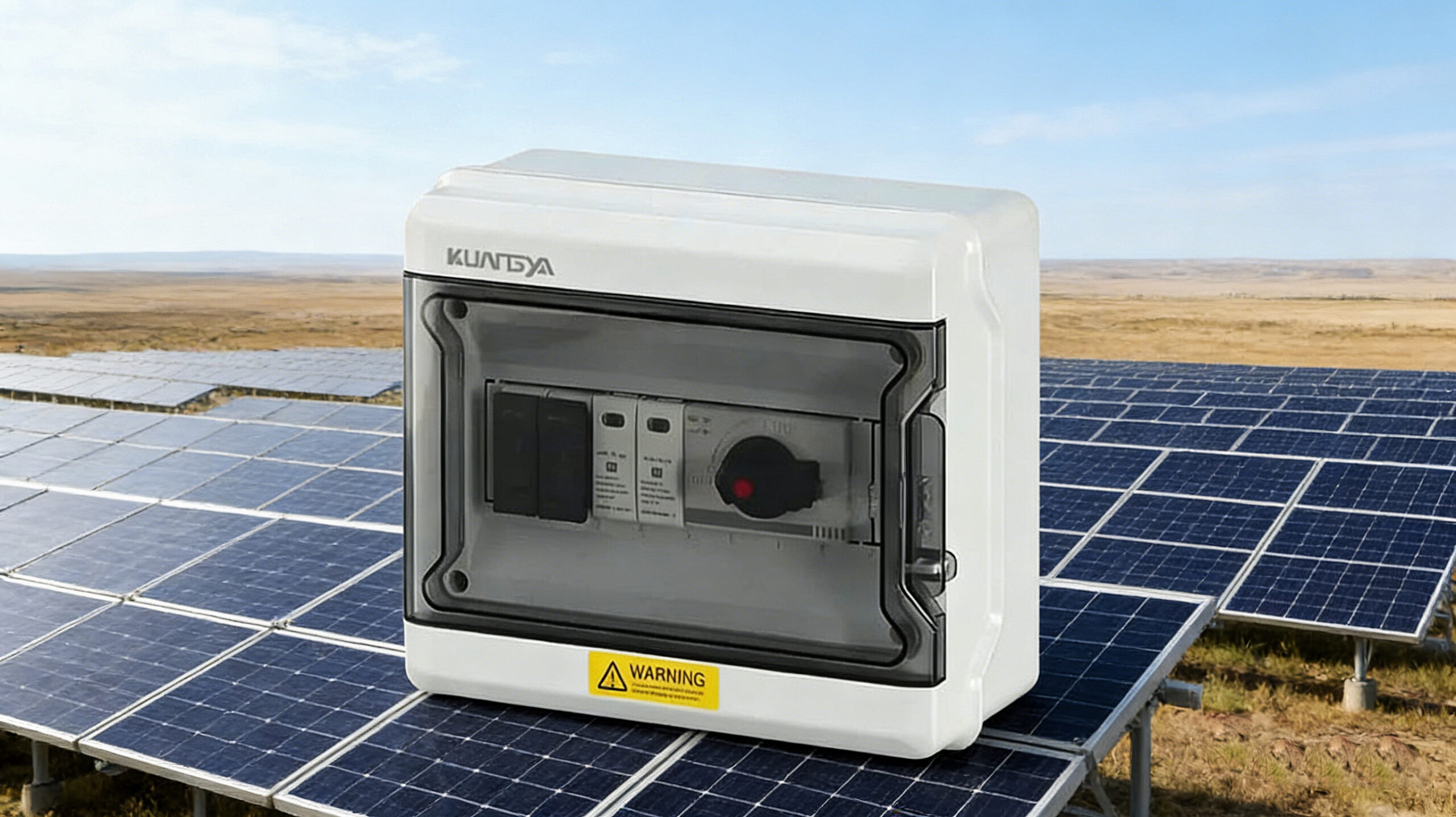
Dans le monde en pleine expansion de l'énergie solaire photovoltaïque (PV), chaque composant joue un rôle essentiel pour garantir l'efficacité, la sécurité et la fiabilité de l'ensemble du système. Si les panneaux solaires et les onduleurs occupent souvent le devant de la scène, il existe un composant plus petit mais indispensable qui agit comme le “système nerveux central” de nombreuses installations photovoltaïques : le boîtier de raccordement. Il s'agit d'une pierre angulaire du fonctionnement efficace d'un système photovoltaïque, souvent négligée mais essentielle à la performance.
Que vous soyez un propriétaire souhaitant installer un système solaire résidentiel, un chef d'entreprise planifiant un projet photovoltaïque commercial ou un professionnel de l'industrie travaillant sur des fermes solaires à grande échelle, il est essentiel de comprendre ce qu'est un boîtier de raccordement et comment il fonctionne pour prendre des décisions éclairées concernant votre investissement solaire. Son rôle dans la consolidation de l'énergie solaire en fait un composant non négociable pour la plupart des installations photovoltaïques.
Ce guide présente tout ce que vous devez savoir sur la boîte de raccordement, depuis sa définition de base et ses fonctions principales jusqu'à ses composants, ses types, ses applications et son importance sur le marché mondial. À la fin, vous comprendrez clairement pourquoi il est essentiel pour tout système photovoltaïque solaire efficace.
Également appelé boîtier de raccordement PV ou boîtier de raccordement solaire, il s'agit d'un dispositif de jonction électrique conçu pour rassembler et consolider le courant continu (CC) généré par plusieurs chaînes de panneaux solaires en une seule sortie unifiée. Son rôle principal est de rationaliser le flux d'énergie, ce qui rend le système solaire plus efficace et plus facile à gérer.
Dans un système photovoltaïque classique, les panneaux solaires sont connectés en série pour former des “chaînes” - chaque chaîne se compose de plusieurs panneaux câblés ensemble pour produire une tension spécifique.
Il agit comme un centre où convergent ces multiples branches, combinant leur courant continu en un circuit principal qui est ensuite envoyé à un onduleur. C'est cette centralisation qui en fait un composant essentiel : sans elle, le câblage serait chaotique et inefficace.
À la base, il sert deux objectifs principaux : simplifier le câblage du système solaire et améliorer sa sécurité et son efficacité. Sans lui, un système solaire composé de plusieurs chaînes de panneaux nécessiterait des dizaines de câbles distincts reliés directement à l'onduleur, ce qui créerait une installation désordonnée, inefficace et à haut risque. Il rationalise ce processus en centralisant les connexions, en réduisant le nombre de câbles nécessaires et en fournissant une protection essentielle contre les défauts électriques - autant de raisons essentielles pour lesquelles il est indispensable à la plupart des systèmes photovoltaïques.
Bien qu'il soit relativement petit - il représente souvent moins de 1% du coût total d'un projet solaire - il constitue un point critique de défaillance s'il n'est pas conçu ou installé correctement. Les recherches montrent que les unités mal conçues ou mal entretenues sont l'une des principales causes d'épuisement du système, d'endommagement de l'équipement et même d'incendie dans les systèmes solaires photovoltaïques, ce qui souligne à quel point elles sont importantes pour les performances globales et la sécurité du système.
Il est essentiel de comprendre le fonctionnement interne de la boîte de raccordement pour apprécier son rôle dans un système solaire photovoltaïque. Le processus est simple mais essentiel, et il peut être décomposé en quatre étapes clés qui illustrent son fonctionnement.
Pour visualiser ce processus, imaginez un système photovoltaïque solaire comme un réseau de routes : chaque chaîne de panneaux solaires est une petite route, et le boîtier de couplage est un rond-point qui relie toutes ces petites routes en une autoroute principale (l'onduleur). De la même manière qu'un rond-point fluidifie le trafic et réduit les embouteillages, il simplifie le flux de courant continu, ce qui rend l'ensemble du système plus efficace et plus facile à gérer, ce qui constitue un autre avantage essentiel.
La boîte de raccordement est plus qu'un simple boîtier en métal ou en plastique - elle contient plusieurs composants clés qui fonctionnent ensemble pour assurer sa fonctionnalité, sa sécurité et sa fiabilité. Les composants exacts peuvent varier en fonction du type (par exemple, basique ou intelligent) et de l'application prévue, mais les composants suivants sont les plus courants dans la plupart des unités.
| Composant | Fonction | Importance |
|---|---|---|
| Enceinte | Boîtier étanche et résistant à la corrosion qui protège les composants internes de la poussière, de l'humidité, de la lumière du soleil et des dommages physiques. Les boîtiers sont classés selon les normes IP (Ingress Protection) et NEMA (National Electrical Manufacturers Association). | Évite d'endommager les composants internes, ce qui garantit une fiabilité à long terme, en particulier pour les installations extérieures. |
| Bornes d'entrée | Points de connexion pour les chaînes de panneaux solaires, permettant un câblage facile et sûr de chaque chaîne à l'unité. | Assure une connexion stable entre les panneaux solaires et l'unité, minimisant les pertes d'énergie et les erreurs de connexion. |
| Fusibles/disjoncteurs | Dispositifs de protection qui interrompent le flux de courant s'il dépasse les niveaux de sécurité (surintensité) ou si un court-circuit se produit. Les fusibles sont à usage unique, tandis que les disjoncteurs peuvent être réinitialisés. | Prévient les dommages aux équipements, les surchauffes et les incendies en empêchant le courant excessif de circuler dans le système. |
| Barre collectrice | Une barre métallique épaisse (généralement en cuivre ou en aluminium) qui recueille le courant continu de toutes les chaînes d'entrée et le combine en une seule sortie. | Permet de combiner efficacement la puissance avec une perte d'énergie minimale, ce qui garantit que le système fonctionne avec une efficacité maximale. |
| Dispositif de protection contre les surtensions (SPD) | Dévie les surtensions (dues par exemple à la foudre ou aux fluctuations du réseau) vers la terre, protégeant ainsi l'appareil et les autres composants du système qui y sont raccordés. | Prévient les dommages coûteux aux composants électriques sensibles, en particulier dans les zones sujettes à la foudre. |
| Interrupteur de déconnexion | Un interrupteur qui permet d'arrêter l'unité en toute sécurité pour l'entretien, les réparations ou les urgences, ajoutant ainsi un élément de sécurité essentiel. | Assure la sécurité des techniciens qui travaillent sur le système en coupant l'alimentation de l'unité, ce qui est une considération essentielle en matière de sécurité. |
| Capteurs de surveillance (modèles intelligents) | Capteurs qui suivent la tension, le courant et la température de chaque branche solaire, fournissant des données en temps réel sur les performances du système. | Permet la détection précoce des défaillances, la maintenance prédictive et l'optimisation de l'efficacité du système. |
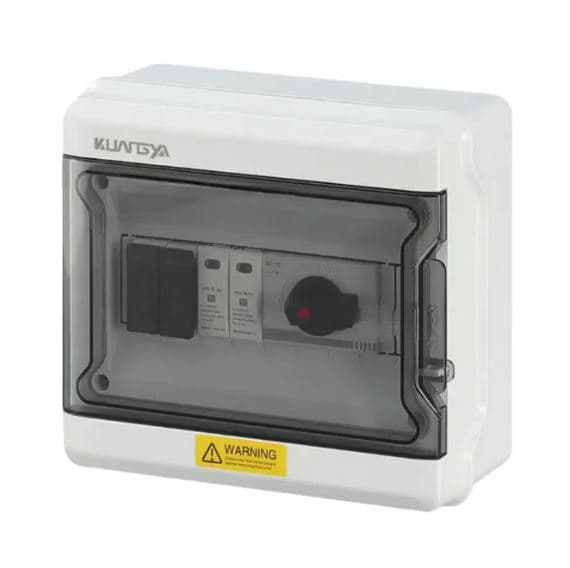
Il existe plusieurs types de boîtiers combinés, chacun étant conçu pour des applications, des tailles de système et des exigences de performance spécifiques. Il est essentiel de choisir le bon boîtier pour maximiser l'efficacité de votre système solaire, car chaque type a une fonction unique.
Les types les plus courants sont classés en fonction de leur fonctionnalité, de leur tension nominale et de leur application. Chaque type possède des caractéristiques distinctes qui le rendent adapté à différentes installations photovoltaïques.
Il est essentiel de comprendre les différences entre les différents types pour choisir celui qui convient le mieux à votre projet solaire, afin de garantir des performances et une sécurité optimales.
La distinction la plus fondamentale est celle entre les types DC et AC, qui sont utilisés à différents stades du système solaire photovoltaïque et remplissent des rôles différents :
Une autre distinction essentielle est celle entre les types de base et les types intelligents, qui diffèrent par leurs fonctionnalités et leurs capacités de surveillance, ce qui influe sur la manière dont ils fonctionnent et apportent une valeur ajoutée au système photovoltaïque :
Ils sont également classés en fonction de leur tension nominale, qui doit correspondre à la tension des chaînes de panneaux solaires et de l'onduleur. La tension nominale est une caractéristique essentielle de tout appareil, car elle détermine sa compatibilité avec le système photovoltaïque.
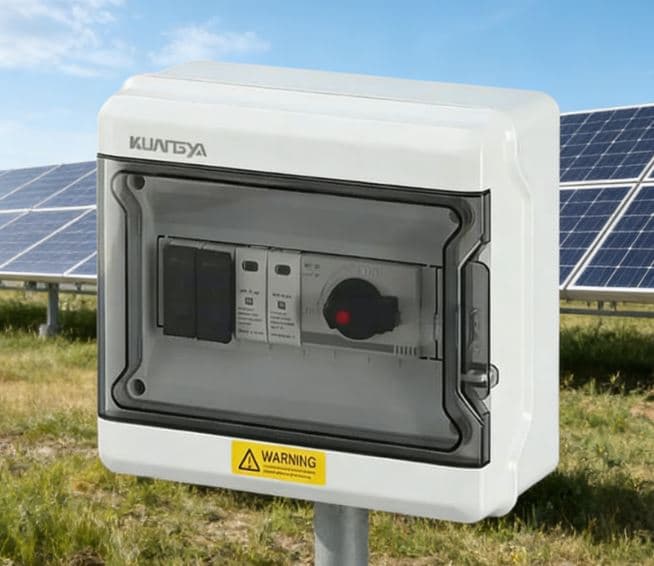
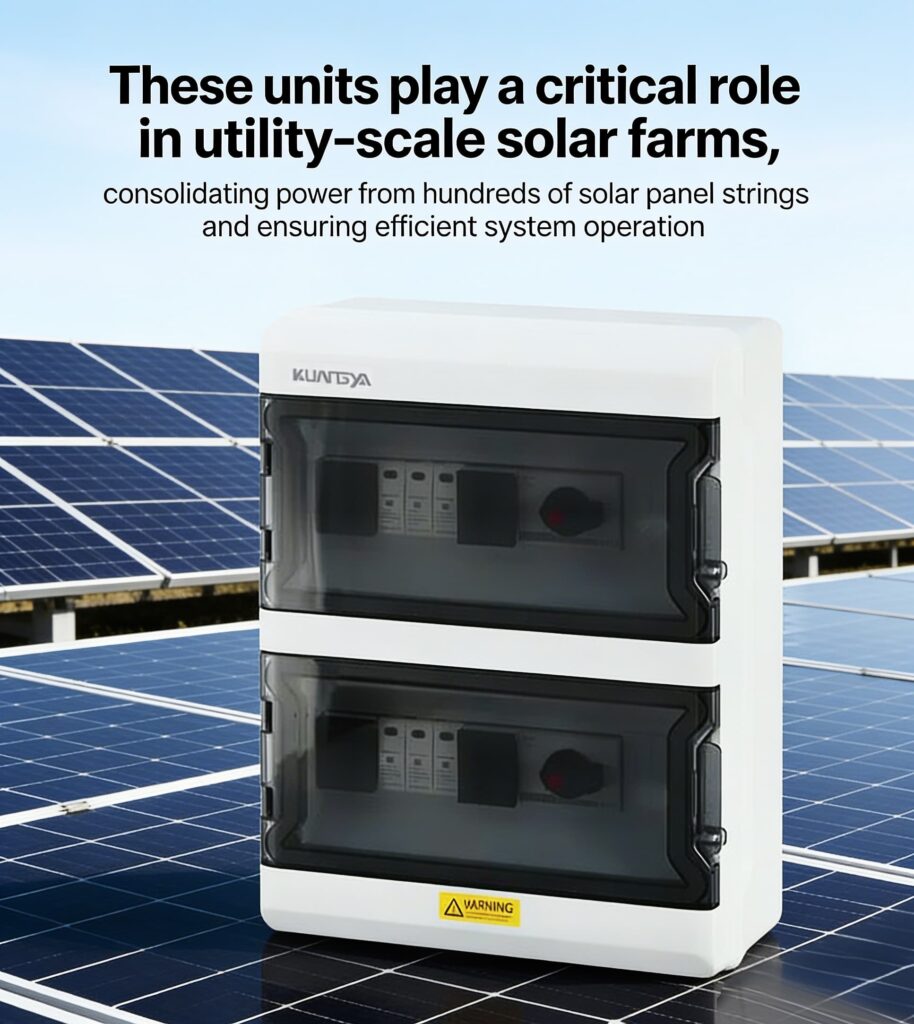
Les répartiteurs sont utilisés dans un large éventail d'applications solaires photovoltaïques, depuis les petits toits résidentiels jusqu'aux grandes fermes solaires. Leur polyvalence et leur fonctionnalité en font un composant essentiel de tout système solaire comportant plusieurs chaînes de panneaux, car ils assurent une consolidation efficace de l'énergie.
Vous trouverez ci-dessous les applications les plus courantes, chacune adaptée à des tailles de système et à des besoins différents.
Dans les systèmes solaires résidentiels (généralement de 2 à 10 kW), ils sont utilisés pour consolider l'énergie provenant de 2 à 4 chaînes de panneaux solaires. Pour les petits systèmes (par exemple, 1 à 2 chaînes), une unité peut être facultative, mais elle est toujours recommandée pour des raisons de sécurité et d'évolutivité future. Les unités intelligentes de base ou d'entrée de gamme sont idéales pour les applications résidentielles, car elles fournissent une protection essentielle et peuvent être facilement intégrées aux systèmes de surveillance de l'énergie domestique. Les systèmes résidentiels utilisent souvent des unités de 600V ou 1000V, en fonction du nombre de panneaux et de la tension nominale de l'onduleur.
Les systèmes solaires commerciaux (10-100 kW) - tels que ceux installés sur des immeubles de bureaux, des entrepôts ou des magasins de détail - comportent généralement 5 à 20 chaînes de panneaux solaires. Ces systèmes nécessitent des unités plus robustes, souvent des modèles intelligents dotés de capacités de surveillance, afin de garantir des performances efficaces et une maintenance aisée. Les systèmes commerciaux utilisent souvent des unités de 1000 ou 1500 V, et ils peuvent inclure plusieurs unités (une par groupe de panneaux) pour gérer le système plus efficacement. Selon les données du marché, les applications commerciales dominent le marché avec une part de 41,0%, grâce à l'adoption croissante de l'énergie solaire par les entreprises dans le monde entier.
Les fermes solaires à grande échelle (100 kW et plus) sont les plus gros utilisateurs, avec des centaines, voire des milliers de chaînes de panneaux solaires. Ces fermes nécessitent des unités intelligentes de grande capacité, capables de supporter une tension de 1 500 V CC, de s'intégrer à des systèmes de surveillance avancés et de fournir une protection fiable pour de grandes quantités d'énergie. Dans les fermes à grande échelle, les unités sont souvent regroupées dans des “stations de couplage” pour gérer l'énergie provenant de plusieurs réseaux de panneaux. La demande mondiale d'unités pour les projets à grande échelle croît rapidement, avec plus de 64% de demande pour les fermes solaires à grande échelle.
Les systèmes solaires hors réseau (utilisés dans les zones reculées sans accès au réseau électrique) s'appuient également sur eux pour consolider l'énergie produite par les chaînes de panneaux solaires avant qu'elle ne soit stockée dans les batteries. Dans les systèmes hors réseau, ils sont souvent associés à des régulateurs de charge pour réguler la tension et le courant entrant dans les batteries, afin d'éviter que celles-ci ne soient surchargées ou endommagées. Les unités de base ou intelligentes dotées d'une protection contre les surtensions sont essentielles pour les systèmes hors réseau, car elles protègent les batteries et les autres composants contre les pannes électriques.
Le marché mondial connaît une croissance significative, stimulée par l'expansion rapide des installations solaires photovoltaïques dans le monde entier, la demande croissante de systèmes de surveillance intelligents et l'importance accrue accordée à la sécurité et à l'efficacité des centrales solaires. Son rôle dans les systèmes photovoltaïques en fait un acteur clé du marché mondial des énergies renouvelables.
Vous trouverez ci-dessous des tendances et des informations clés sur le marché mondial, soulignant l'importance croissante des unités de haute qualité dans les systèmes solaires modernes.
Pour obtenir des informations plus détaillées sur le marché, vous pouvez consulter les rapports sectoriels suivantsPerspectives du marché et Aperçu de la croissance mondiale, qui fournissent une analyse complète du marché mondial et de son rôle dans l'énergie solaire.
Pour vous aider à mieux comprendre les boîtiers de raccordement, nous avons répondu aux questions les plus fréquemment posées à leur sujet et à leur rôle dans les systèmes solaires photovoltaïques :
R : Non, tous les systèmes solaires n'en ont pas besoin. Les petits systèmes comportant une ou deux chaînes de panneaux solaires peuvent se connecter directement à l'onduleur sans en avoir besoin. En revanche, les systèmes comportant 3 branches ou plus en bénéficient largement, car ils simplifient le câblage, réduisent les pertes d'énergie et assurent une protection essentielle. Pour les systèmes commerciaux et à grande échelle, un onduleur est indispensable.
R : La durée de vie typique est de 15 à 25 ans, en fonction de la qualité des composants, de l'environnement (par exemple, extérieur ou intérieur) et de l'entretien. Les unités de haute qualité dotées de boîtiers étanches et de composants durables peuvent durer jusqu'à 25 ans, ce qui correspond à la durée de vie de la plupart des panneaux solaires.
R : Oui, la plupart sont conçus pour être installés à l'extérieur. Les unités extérieures ont des boîtiers étanches avec des indices IP (généralement IP65-IP67) et des indices NEMA (NEMA 3R/4X) pour les protéger de la pluie, de la poussière, du soleil et de la corrosion. Il est important de choisir un appareil dont l'indice de protection IP est adapté à l'environnement dans lequel il est installé.
R : Les deux connectent des fils électriques, mais ils ont des fonctions différentes. Une boîte de jonction est un dispositif simple qui connecte deux fils ou plus ensemble, sans aucun composant de protection. Un boîtier de raccordement, en revanche, est conçu spécifiquement pour les systèmes photovoltaïques solaires afin de combiner le courant continu provenant de plusieurs chaînes, et il comprend des composants de protection (fusibles, disjoncteurs, SPD) pour garantir la sécurité et l'efficacité.
R : Oui, ils nécessitent un entretien régulier pour garantir des performances et une sécurité optimales. Les tâches d'entretien recommandées comprennent l'inspection du boîtier pour vérifier qu'il n'est pas endommagé ou humide, que les fusibles et les disjoncteurs ne présentent pas de signes d'usure, que les bornes sont nettoyées pour éviter la corrosion et que les systèmes de surveillance sont performants (pour les modèles intelligents). Il est recommandé de procéder à une inspection au moins une ou deux fois par an.
R : Oui, dans la plupart des cas, il est possible d'installer un système de surveillance dans une unité existante. De nombreux fabricants proposent des modules de surveillance rétrofittables qui peuvent être installés dans les unités de base pour ajouter des capacités de surveillance en temps réel. Toutefois, il est important de s'assurer que le module installé ultérieurement est compatible avec la tension et l'intensité nominales de l'appareil.
R : Si l'un d'entre eux tombe en panne, le système solaire peut cesser de produire de l'énergie ou entraîner des problèmes plus graves tels que des dommages à l'équipement ou des incendies. Les signes courants de défaillance sont l'absence de production d'électricité par le système, le déclenchement des fusibles ou des disjoncteurs, la surchauffe ou des dommages visibles sur le boîtier. Si vous soupçonnez une défaillance, vous devez arrêter le système et contacter un technicien solaire qualifié pour qu'il le répare ou le remplace.
R : Oui, ils doivent être conformes à diverses normes de sécurité internationales afin de garantir leur fiabilité et leur sécurité. Les normes les plus courantes sont UL 1741 (Underwriters Laboratories), IEC 62548 (International Electrotechnical Commission) et NEC (National Electrical Code). Ces normes spécifient les exigences en matière de sécurité électrique, de protection des boîtiers et de performances, garantissant que les appareils répondent à des directives de sécurité strictes.
Le boîtier de raccordement est peut-être petit dans un système solaire photovoltaïque, mais son rôle est indispensable. Il sert de plaque tournante pour consolider l'alimentation en courant continu provenant de plusieurs chaînes de panneaux solaires, simplifier le câblage et fournir une protection essentielle contre les pannes électriques.
Dans les modèles intelligents, il permet également une surveillance et une optimisation en temps réel, ce qui le rend encore plus précieux pour les systèmes solaires modernes.
Qu'il s'agisse d'un petit système résidentiel ou d'une grande ferme solaire, le choix du bon appareil est essentiel pour garantir l'efficacité, la sécurité et la fiabilité à long terme de votre investissement solaire, ce qui en fait un élément clé de tout système photovoltaïque réussi.
L'industrie solaire mondiale continuant à se développer, la demande d'unités efficaces et de haute qualité ne fera qu'augmenter. Grâce aux progrès de la technologie intelligente, ils sont de plus en plus sophistiqués et offrent plus de valeur que jamais.
Ils offrent désormais des caractéristiques telles que la maintenance prédictive, la surveillance à distance et l'intégration avec des systèmes de gestion des énergies renouvelables, ce qui améliore leur fonctionnalité et en fait un composant encore plus essentiel.
En comprenant ce qu'est un boîtier de raccordement, comment il fonctionne et quel type convient à votre système, vous pouvez prendre des décisions éclairées qui maximiseront les performances et la durée de vie de votre système solaire photovoltaïque, tout cela grâce à cette unité humble mais puissante.
Si vous souhaitez obtenir plus d'informations à leur sujet, ou si vous avez besoin d'aide pour choisir la bonne unité pour votre projet solaire, n'hésitez pas à contacter Kuangya. Nous pouvons vous fournir des conseils personnalisés en fonction de la taille de votre système, de votre application et de votre budget, afin que vous choisissiez l'unité la mieux adaptée à vos besoins.