Dirección
304 North Cardinal
Dorchester Center, MA 02124
Horas de trabajo
De lunes a viernes: de 7.00 a 19.00 horas
Fin de semana: 10.00 A 17.00 HORAS
Dirección
304 North Cardinal
Dorchester Center, MA 02124
Horas de trabajo
De lunes a viernes: de 7.00 a 19.00 horas
Fin de semana: 10.00 A 17.00 HORAS

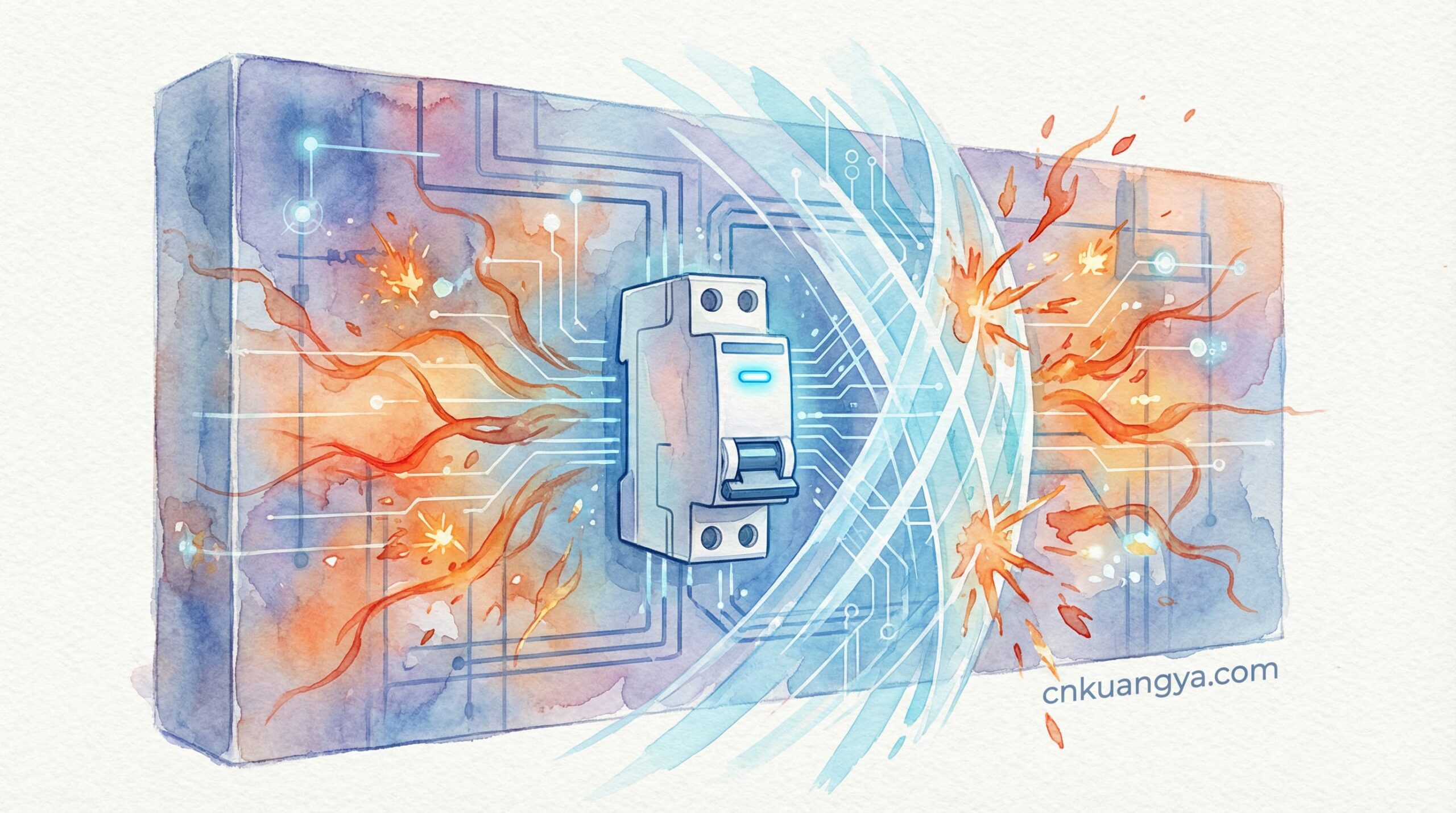

Every year, a silent hazard lurking within the walls of our homes and businesses causes devastating consequences. This threat isn’t a gas leak or a structural failure; it’s a malfunction in the very systems that power our modern lives. In the United States alone, dangerous electrical arc faults are responsible for more than 30,000 home fires annually, leading to hundreds of deaths, thousands of injuries, and over $750 million in property damage [12]. According to the U.S. Fire Administration, electrical fires in residential buildings account for approximately 24,000 incidents, 295 deaths, 900 injuries, and a staggering $1.2 billion in property loss each year

The culprit is often a phenomenon known as an “arc fault”—a dangerous electrical spark that most people have never heard of, yet it is a primary cause of electrical fires. Traditional circuit breakers, the steadfast guardians of our electrical panels for decades, are not designed to detect them. They protect against overloads and short circuits, but they are blind to the subtle, menacing signature of a hazardous arc. This creates a critical gap in safety, leaving properties vulnerable.
Thankfully, technology has evolved to close this gap. A new era of electrical fire prevention has dawned with the advent of the Arc Fault Detection Device (AFDD). This intelligent device acts as a vigilant, 24/7 guardian, constantly monitoring your circuits for the specific signs of a dangerous arc. It is the missing piece in the electrical safety puzzle, designed to stop electrical fires before they can even start. This is not just an upgrade; it is an essential layer of modern circuit protection for any home or business that values safety above all else.
What exactly is this invisible threat? An electrical arc fault is essentially a tiny lightning storm happening inside your walls or electrical equipment. It occurs when an electrical current deviates from its intended path, jumping through the air from one conductor to another or to a grounded object. This uncontrolled discharge generates intense heat, often reaching thousands of degrees, which can instantly ignite surrounding materials like wood, insulation, or dust [10].
These dangerous arcs are distinct from the harmless sparks you might see when plugging in an appliance or flipping a light switch. An arc fault circuit interrupter is smart enough to tell the difference. The danger lies in persistent, high-energy arcs caused by underlying problems in your wiring.
Arc faults are insidious because they often stem from common, everyday situations and the slow degradation of materials. Key triggers for these seguridad eléctrica hazards include:
This is the most critical question in modern seguridad eléctrica. For decades, we’ve trusted Miniature Circuit Breakers (MCBs) and Residual Current Devices (RCDs) to protect us. While they are vital, they each have a specific job, and neither is designed to stop arc faults.
The dangerous truth is that a hazardous arc fault can operate indefinitely without ever triggering a traditional MCB or RCD. It exists in the blind spot of conventional protection, silently carbonizing insulation and building up heat until a fire erupts. This is the safety gap that only an AFDD can fill.
The cnkuangya Dispositivo de detección de fallos de arco (AFDD) is the definitive answer to this hidden danger. It is the only device engineered specifically for electrical fire prevention by targeting the root cause: the arc fault itself. It represents the crucial third pillar of modern electrical protection, working alongside MCBs and RCDs to create a truly comprehensive safety system.
The genius of the AFDD lies in its advanced digital brain. Unlike older devices that simply measure the amount of current, the cnkuangya AFDD acts like an oscilloscope, continuously analyzing the very shape of the electrical wave. It performs extensive data analysis in real-time, looking for the tell-tale “fingerprints” of a hazardous arc—characteristic, persistent deformations of the current and voltage waveforms that are unique to dangerous arcing conditions [4].
An AFDD’s sophisticated algorithms can distinguish these dangerous patterns from the thousands of harmless arcs that occur in a typical home or office every day, such as the flick of a switch, the operation of a brushed motor in a vacuum cleaner, or the plugging in of a device. This intelligence is key to preventing nuisance trips while ensuring that real threats are neutralized instantly. When a dangerous arc is identified, the AFDD immediately trips the circuit—often in less than 120 milliseconds—cutting off the power long before the arc’s intense heat can ignite a fire [10].
To understand the comprehensive protection our AFDD offers, this mindmap illustrates its core features, benefits, and the peace of mind it delivers.
[INSERT MINDMAP IMAGE HERE]
The cnkuangya AFDD monitors for two primary types of arc faults:
By detecting both series and parallel arcs, our device provides total protection. Its advanced filtering ensures that the normal, operational noise of modern electronics does not trigger a false alarm. It is a silent, ever-watchful sentinel, bringing a level of proactive circuit protection that was previously unavailable.
When it comes to the safety of your family, property, or business operations, there can be no compromise on quality. At cnkuangya.com, we stand behind our technology with an unwavering commitment to reliability and performance, backed by an industry-leading warranty and globally recognized certifications. This is our promise of absolute peace of mind.
In an industry where a 12 or 24-month warranty is standard, our 5-year warranty electrical device guarantee is a bold statement. This 60-month warranty is far more than a simple promise of replacement; it is a testament to our confidence in the superior engineering, premium component quality, and rigorous testing that goes into every single cnkuangya AFDD.
For a homeowner (B2C), this means five years of guaranteed safety and security, knowing your investment is protected for the long term. For our commercial and industrial clients (B2B), the 5-year warranty represents a superior return on investment (ROI). It signifies a product built for durability and long-term reliability, minimizing maintenance costs, reducing the risk of downtime, and ensuring consistent operational safety. It’s a clear indicator that you are investing in a product designed to perform flawlessly, not just to meet a minimum standard. This extended warranty underscores our belief in the longevity and flawless performance of our Dispositivo de detección de fallos de arco.
Electrical safety standards are not universal. A device that is compliant in one country may not meet the stringent requirements of another. The cnkuangya AFDD is built for a global market and carries multiple, independent, third-party certifications, proving its quality and safety on an international stage. This is a critical factor for engineers, contractors, and facility managers who demand proof of compliance.
Our key certifications include:
These certifications are not just logos on a box. They are your guarantee that the cnkuangya AFDD has been scrutinized by the world’s leading safety authorities and has passed with flying colors. For our B2B clients, this simplifies compliance, de-risks projects, and provides the trusted documentation needed for any commercial or industrial installation.
The true value of an AFDD is measured not in technical specifications, but in the disasters it silently prevents. It works in the background, making it easy to forget the crucial role it plays. The following scenarios, based on real-life events and customer experiences, illustrate the devastating potential of arc faults and how a cnkuangya AFDD turns a potential catastrophe into a non-event [6].
Imagine a typical family home. In a child’s bedroom, the bed frame has been pushed against the wall for years, slowly pinching the power cord of a bedside lamp. The pressure has frayed the internal conductors, but there are no visible signs of damage. One night, as the family sleeps, a series arc begins to form in the damaged cord. The current is too low to trip the main circuit breaker. The arc generates intense heat, carbonizing the wire’s insulation and slowly charring the wallpaper behind it. Within minutes, the wallpaper could ignite, spreading fire to the curtains and bedding.
Without an AFDD: The outcome is a house fire, starting in the most vulnerable of places—a child’s room at night. The potential for tragedy, alongside the loss of the home and cherished memories, is immense.
With a cnkuangya AFDD: The moment the dangerous arc signature is detected, the AFDD instantly cuts power to the bedroom circuit. The light goes out. The family wakes up, puzzled but safe. An electrician is called the next day and quickly discovers the damaged cord. A potential disaster was completely prevented, with the only inconvenience being a tripped circuit. This is the essence of electrical fire prevention.
Consider a small e-commerce business with its critical servers housed in a small IT closet. Over time, vibrations from the cooling fans have caused a terminal connection in an old power distribution unit to become slightly loose. A high-resistance connection forms, creating an arc fault. The plastic casing of the PDU begins to overheat and melt, emitting a toxic smell and preparing to burst into flames. The standard circuit breaker doesn’t trip because the overall current load hasn’t changed significantly.
Without an AFDD: The fire starts in the server closet. The fire suppression system may or may not activate in time, but the damage is done. The servers are destroyed, leading to catastrophic data loss, crippling business interruption, costly replacement of equipment, and severe reputational damage.
With a cnkuangya AFDD: The AFDD guarding the IT circuit detects the characteristic waveform of the arc fault. It immediately de-energizes the circuit. The servers shut down unexpectedly. The IT manager investigates and finds the overheating PDU, smelling the hot plastic. The faulty unit is replaced, the data is safe, and the business is back online within an hour. The AFDD ensured commercial electrical safety and business continuity, saving the company from financial ruin.
The following flowchart visualizes exactly how an AFDD acts as an automatic firefighter, stopping these scenarios before they can begin.
[INSERT FLOWCHART IMAGE HERE]
To truly appreciate the necessity of an AFDD, it’s vital to see how it fits into the complete electrical safety ecosystem. While we’ve discussed the different roles of protective devices, a direct comparison makes their unique functions crystal clear. No single device does it all; modern safety relies on a layered defense.
This chart provides an at-a-glance comparison of the unique dangers each type of circuit protection device is designed to prevent.
[INSERT COMPARISON CHART IMAGE HERE]
As the chart illustrates, relying on just one or two of these devices leaves you exposed. An MCB won’t stop a low-current arc fault. An RCD won’t stop an arc between a line and neutral conductor. An AFDD is not primarily designed to protect against large overloads.
The modern standard for comprehensive protection is a combination of these technologies. For ultimate safety against both fire and shock, an RCBO (which combines MCB and RCD functions) paired with an AFDD is the best-in-class solution. However, adding a cnkuangya AFDD to any existing panel with MCBs and RCDs immediately elevates its safety profile, specifically targeting the widely under-appreciated risk of electrical fire prevention. It is the crucial upgrade every property needs.
The risk of arc faults is not confined to a specific type of building or room; it exists wherever electricity flows. That’s why the cnkuangya AFDD is designed for universal application, providing critical circuit protection in a wide array of environments. Its installation is recommended by international standards like IEC 60364-4-42 in any location with a heightened risk of fire or containing irreplaceable goods [4].
For homeowners and landlords, the priority is the safety of family and tenants. Arc faults are a particular threat in areas where we are most vulnerable or where wiring is stressed. We strongly recommend installing AFDDs in circuits supplying:
For electricians, contractors, and facility managers, the cnkuangya AFDD is a tool for delivering superior commercial electrical safety, ensuring compliance, and protecting critical assets. The business case is just as strong as the safety case. Key applications include:
The evidence is undeniable: electrical fires caused by arc faults are a real, prevalent, and life-threatening danger. Yet, they are also entirely preventable. For too long, this hidden hazard has existed in the blind spot of traditional circuit breakers, leaving homes and businesses across the globe unnecessarily vulnerable. The solution is here, and it is proven.
The cnkuangya Dispositivo de detección de fallos de arco (AFDD) provides the 24/7 automated protection needed to stop electrical fires before they start. By intelligently identifying the unique signature of a dangerous arc, it acts instantly to neutralize the threat, offering a level of proactive safety that no other single device can match. Backed by an industry-leading 5-year warranty and trusted global certifications like IEC 62606, it is the definitive choice for anyone serious about seguridad eléctrica.
Don’t wait for a spark to become a flame. The time to upgrade your protection is now.
Primary CTA: Explore the cnkuangya AFDD today to view detailed specifications, browse our product line, and secure your property against the hidden risk of arc faults.
Secondary CTA: For commercial inquiries, bulk pricing, or to discuss a custom solution for your facility, contact our electrical safety experts for a free consultation.

