Zona industrial de WengYang Yueqing Wenzhou 325000
Horas de trabajo
De lunes a viernes: de 7.00 a 19.00 horas
Fin de semana: 10.00 A 17.00 HORAS
Zona industrial de WengYang Yueqing Wenzhou 325000
Horas de trabajo
De lunes a viernes: de 7.00 a 19.00 horas
Fin de semana: 10.00 A 17.00 HORAS

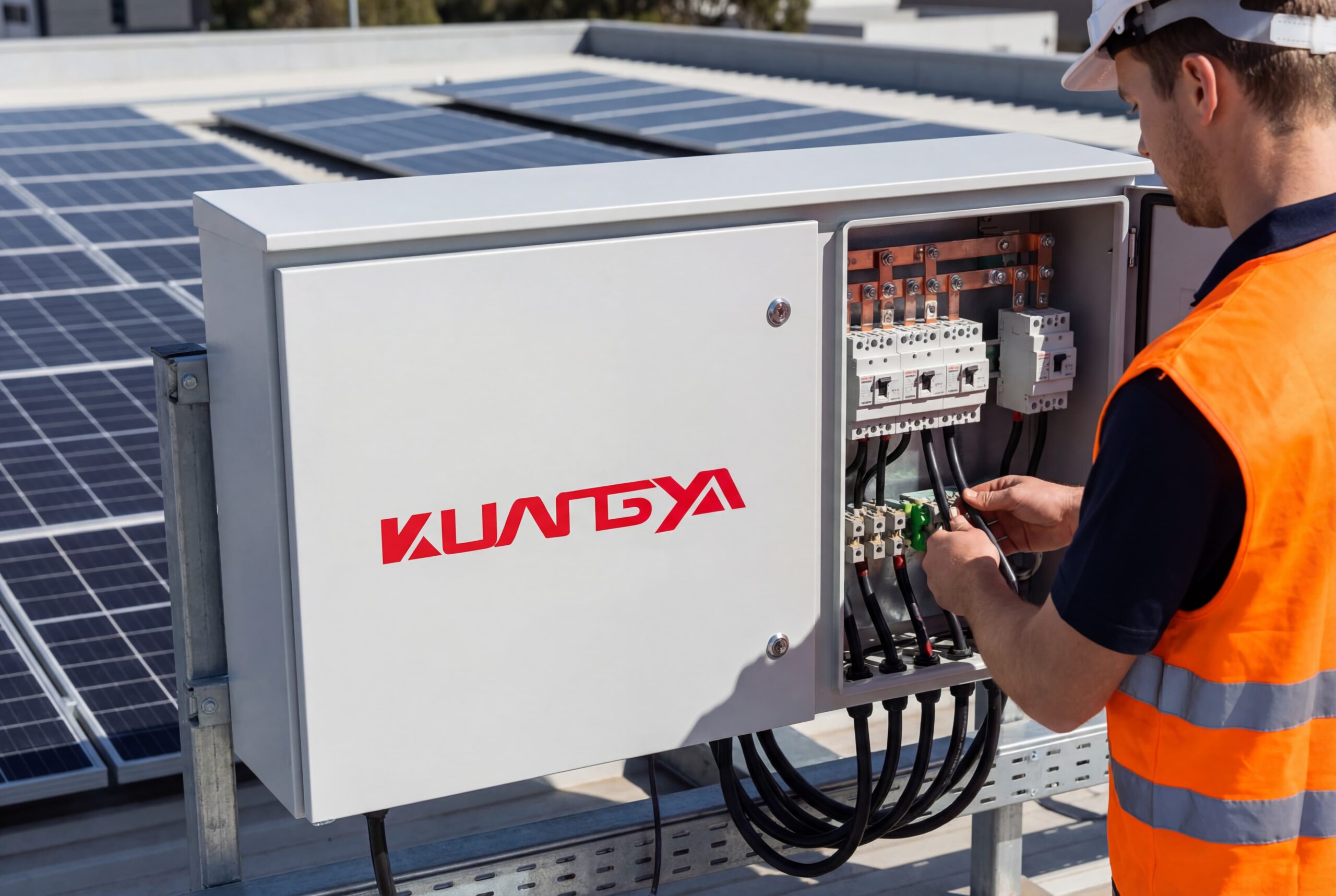
Por Michael Zhang, Ingeniero Senior de Framework en cnkuangya
Como caja del combinador solar fabricante Al operar en mercados internacionales, en cnkuangya navegamos a diario por un complejo panorama de normas y certificaciones. El mercado mundial de la energía solar, que según las previsiones alcanzará los $373.000 millones en 2029, exige que los equipos cumplan diversos requisitos normativos en todos los continentes. Comprender estas normas no es sólo cumplirlas: es garantizar la seguridad, la fiabilidad y el acceso al mercado.
En mis 15 años diseñando sistemas de protección para aplicaciones fotovoltaicas, he sido testigo de cómo una certificación adecuada separa a los fabricantes de calidad de los proveedores de productos básicos. Esta guía desmitificará los tres marcos de certificación clave que rigen las cajas de conexiones solares en todo el mundo.
En referencia mundial para equipos eléctricos, las normas CEI representan el consenso internacional entre comités técnicos de más de 60 países.
En Autoridad norteamericana, En los Estados Unidos y Canadá, las normas suelen ser adoptadas por las autoridades locales competentes.
En Marca de conformidad obligatoria de la Unión Europea, que indica el cumplimiento de las directivas de la UE sobre salud, seguridad y protección del medio ambiente.
Tabla 1: Normas clave para las cajas de conexiones solares
| Estándar | Región | Alcance | Requisitos clave | Enfoque de las pruebas | Periodo de validez |
|---|---|---|---|---|---|
| IEC 60947-7-2 | Global | Aparamenta de baja tensión - Regletas de bornes | Integridad de la conexión, rendimiento térmico | Resistencia mecánica, aumento de temperatura | Sin caducidad (versión específica) |
| IEC 60529 | Global | Grados de protección (Código IP) | Grados de protección contra la penetración | Pruebas de penetración de polvo/agua | Sin caducidad |
| UL 508A | Norteamérica | Cuadros de control industrial | Reconocimiento de componentes, cableado, distancias | Protección contra sobrecorriente, conexión a tierra | Requiere servicio de seguimiento |
| UL 1741 | Norteamérica | Inversores, convertidores, controladores | Seguridad de interconexión a la red | Antirretorno, regulación de tensión | Requiere una reevaluación periódica |
| EN 50539-11 | Europa | Protección contra sobretensiones para sistemas fotovoltaicos | Requisitos del DOCUP de CC | Tensión de apriete, gestión de la energía | Parte de la certificación CE |
| IEC 61730 | Global | Cualificación de la seguridad de los módulos fotovoltaicos | Requisitos generales de seguridad | Resistencia al fuego, tensión mecánica | Recertificación típica de 5 años |
IEC 60947-7-2: Sistemas de conexión
Esta norma regula los bloques de terminales dentro de las cajas combinadoras, especificando:
Conocimientos de ingeniería: “Muchos fabricantes pasan por alto el anexo ZB de la norma IEC 60947-7-2, que especifica requisitos adicionales para aplicaciones fotovoltaicas. Nuestros diseños cnkuangya superan estos mínimos en 30% para mejorar la fiabilidad”.”
IEC 60529: grados de protección IP
El código IP (Ingress Protection) consta de dos dígitos:
Tabla 2: Requisitos de clasificación IP por entorno de instalación
| Medio ambiente | Clasificación IP mínima | Condiciones de la prueba | cnkuangya Estándar | Justificación |
|---|---|---|---|---|
| Salas eléctricas interiores | IP20 | Sonda esférica de 12,5 mm | IP54 | Mayor protección contra el polvo |
| Exterior general | IP54 | Alambre de 1 mm, salpicaduras de agua | IP65 | Protección total contra el polvo, chorros de baja presión |
| Zonas costeras (<5km) | IP65 | Alambre de 1 mm, chorros de agua | IP66 | Protección contra chorros potentes |
| Directo costero/offshore | IP66 | Alambre de 1 mm, chorros potentes | IP68 | Protección continua contra la inmersión |
| Entornos desérticos | IP54 | Alambre de 1 mm, salpicaduras | IP65 con filtros | Filtración de arena adicional |
UL 508A: Paneles de control industrial
Esta norma exige:
Brecha de cumplimiento común: “Aproximadamente 40% de las cajas combinadoras importadas no pasan la UL 508A debido a cálculos incorrectos de SCCR. Nuestro equipo de ingeniería utiliza software especializado para garantizar clasificaciones precisas para cada configuración.”
UL 1741 Suplemento SB: Apagado rápido
Crítico para el cumplimiento de NEC 2017/2020:
El marcado CE implica múltiples directivas:
Cuadro 3: Requisitos de la documentación CE
| Tipo de documento | Contenidos obligatorios | Período de conservación | Método de verificación |
|---|---|---|---|
| Ficha técnica | Planos de diseño, cálculos, informes de pruebas | 10 años después de la última producción | Revisión del organismo notificado |
| Declaración de conformidad | Datos del fabricante, normas aplicadas, organismo notificado | Incluido con el producto | Vigilancia del mercado |
| Manual del usuario | Instrucciones de instalación, funcionamiento y mantenimiento | Por vida útil del producto | Opinión del cliente |
| Certificado de examen UE de tipo | Para los productos de mayor riesgo | Válido para el modelo de producto | Verificación de certificados |
Integramos el cumplimiento en nuestro proceso de diseño:
Nuestras pruebas internas superan los mínimos de certificación:
Cuadro 4: Pruebas mejoradas más allá de las normas
| Tipo de prueba | Requisito estándar | Protocolo cnkuangya | Beneficio |
|---|---|---|---|
| Ciclos de temperatura | IEC 60068-2-14: 25 ciclos | 200 ciclos (-40°C a +85°C) | 300% mayor vida útil |
| Congelación por humedad | IEC 61215: 10 ciclos | 50 ciclos (85% RH, -40°C a +85°C) | Mayor resistencia a la humedad |
| Spray salino | IEC 60068-2-52: 96 horas | 1000 horas según ASTM B117 | Confianza en las aplicaciones costeras |
| Choque mecánico | IEC 60068-2-27: 18 choques | 50 choques a 100 g de aceleración | Durabilidad del transporte |
| Exposición UV | IEC 61345: 15 kWh/m². | 1000 horas a 0,76 W/m² @ 340 nm | Mayor vida útil en exteriores |
Cada caja combinadora cnkuangya incluye:
Cuadro 5: Resumen de la certificación regional
| Región | Certificaciones obligatorias | Tiempo típico de aprobación | Impacto en los costes | Consideraciones clave |
|---|---|---|---|---|
| Norteamérica | UL 508A, UL 1741 (si con RSD) | 12-16 semanas | 8-12% del coste del producto | Cumplimiento NEC, aceptación AHJ local |
| Unión Europea | Marcado CE (LVD, EMC, RoHS) | 8-12 semanas | 5-8% del coste del producto | Participación del organismo notificado, expediente técnico |
| Australia/NZ | AS/NZS 5033, marca RCM | 10-14 semanas | 6-9% del coste del producto | Pruebas adicionales de niebla salina |
| China | Normas GB/T, certificación CQC | 6-10 semanas | 4-7% del coste del producto | Requisitos locales de ensayo |
| Oriente Próximo | Basado en IEC + homologaciones locales | 14-20 semanas | 10-15% del coste del producto | Pruebas a temperaturas extremas |
| Proyecto global | CEI + específico de la región | 16-24 semanas | 12-18% del coste del producto | Múltiples certificaciones paralelas |
Contesta: Siga esta lista de comprobación:
Paso 1: Autenticación de certificados
Paso 2: Validación del alcance
Paso 3: Auditoría del fabricante
Señales de alarma:
cnkuangya Práctica de transparencia: Ofrecemos verificación de certificados en tiempo real a través de nuestro portal del cliente, incluidos certificados escaneados con firmas digitales y enlaces a entradas de bases de datos oficiales.
Contesta: Esta distinción es crucial para el cumplimiento del sistema:
Guía de clasificación de componentes:
| Clasificación | Definición | Aplicación | Alcance de las pruebas | Etiquetado |
|---|---|---|---|---|
| Certificación UL | Evaluación completa del producto | Productos finales | Evaluación completa de la seguridad | Marca UL Listed |
| Reconocido por UL | Evaluación de los componentes | Piezas para la incorporación | Limitado al uso previsto | Marca UL Recognized |
| Clasificado UL | Evaluación específica de la propiedad | Características especiales | Centrado en las propiedades reclamadas | Marca UL Classified |
Por qué es importante en la fabricación de cajas combinadoras:
Malentendidos comunes:
cnkuangya Enfoque: Mantenemos una base de datos de componentes aprobados con más de 500 componentes reconocidos y listados por UL, lo que garantiza que cada caja combinadora cumple los requisitos UL 508A para los mercados norteamericanos.
Contesta: Las certificaciones estándar suelen necesitar complementos para entornos extremos:
Requisitos de extensión medioambiental:
| Medio ambiente | Pruebas adicionales más allá de las normas | Impacto de la certificación | Datos de rendimiento sobre el terreno |
|---|---|---|---|
| Desierto/Arida | Exposición prolongada a los rayos UV, entrada de arena/polvo, ciclos térmicos | +20-30% tiempo de prueba | El estándar IP65 falla 3,2 veces más rápido |
| Costero/Marino | Corrosión por niebla salina, ciclos de humedad, resistencia a los hongos | Coste de las pruebas +30-40% | Se requiere IP68 para una vida útil <8 años |
| Ártico/Subcero | Capacidad de arranque en frío, fragilidad del material, formación de hielo | Complejidad de la certificación +25-35% | Los componentes estándar fallan por debajo de -25°C |
| Gran altitud | Reducción de la densidad del aire, aumento de los rayos UV, gestión térmica | +15-25% esfuerzo de diseño | Reducción necesaria por encima de 2000 m |
| Tropical | Combinación de temperatura y humedad, crecimiento de moho, resistencia a los insectos | Coste del material +20-30% | Los materiales estándar degradan 60% más rápido |
Certificaciones especializadas para entornos extremos:
cnkuangya Soluciones para entornos extremos: Nuestras líneas de productos especializados incluyen:
Estrategia de certificación: “Para entornos extremos, recomendamos la certificación específica del proyecto en lugar de confiar únicamente en las marcas estándar. Nuestro enfoque incluye protocolos de ensayo ampliados y la validación por terceros de las declaraciones medioambientales.”
Para un fabricante de combinadores solares, En cnkuangya, las normas internacionales representan algo más que obstáculos al cumplimiento: son marcos para la excelencia. En cnkuangya, no vemos las certificaciones como costes, sino como inversiones en calidad, seguridad y acceso al mercado.
Principales conclusiones:
Perspectiva final de ingeniería:
“El diseño más sofisticado fracasa si no puede navegar por la compleja red de normas internacionales. Nuestro enfoque en cnkuangya es diseñar para cumplir las normas internacionales desde el concepto hasta la producción. Esta postura proactiva no solo garantiza el acceso al mercado, sino que ofrece ventajas cuantificables en cuanto a fiabilidad sobre el terreno: nuestros productos certificados demuestran unos índices de fallo 40% inferiores a los de las alternativas mínimamente conformes.”
Sobre el autor:
Michael Zhang es Ingeniero Marco Senior en cnkuangya, con 15 años de experiencia en diseño de protección de sistemas fotovoltaicos. Ha contribuido a comités técnicos de IEC y UL y es titular de patentes en tecnologías de detección de arco de CC y protección contra sobretensiones.
Palabras clave: fabricante de combinadores solares, Normas IEC, certificación UL, marcado CE, caja combinadora fotovoltaica, conformidad internacional, certificación de equipos solares, normas de cajas combinadoras