Adresse
304 Nord Kardinal
St. Dorchester Center, MA 02124
Arbeitszeiten
Montag bis Freitag: 7AM - 7PM
Am Wochenende: 10AM - 5PM
Adresse
304 Nord Kardinal
St. Dorchester Center, MA 02124
Arbeitszeiten
Montag bis Freitag: 7AM - 7PM
Am Wochenende: 10AM - 5PM

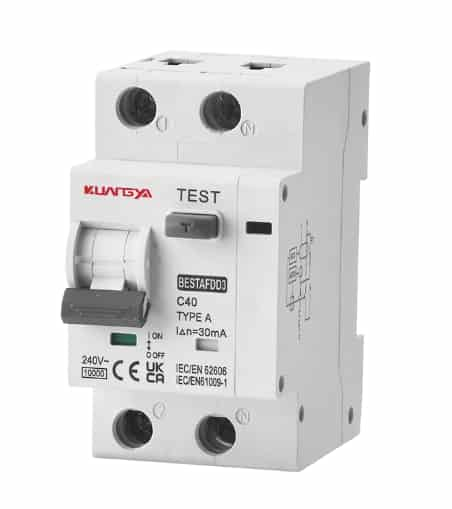
Eine Störlichtbogen-Erkennungsgerät is an intelligent, microprocessor-controlled electrical safety component built to IEC 62606 (general requirements for arc fault detection equipment), engineered exclusively to detect and interrupt dangerous fault arcs that standard Miniature Circuit Breakers (MCBs) and Residual Current Devices (RCDs) cannot identify. Unlike basic overcurrent or leakage protection devices, this specialized unit performs real-time high-frequency waveform analysis to distinguish harmless operational arcing (from motors, dimmer switches, or power tools) from life-threatening, fire-causing fault arcs.
Fault arcs generate extreme heat — often exceeding 10,000°C — with no significant overcurrent or earth leakage, meaning they go undetected by conventional protection until flammable materials ignite. This universal safety gap is closed by arc fault detection technology, making such devices mandatory or strongly recommended in modern wiring codes across the UK, EU, and global markets, as outlined in IEC 60364-4-42 (low-voltage electrical installations) and BS 7671:2018+A2 (UK 18th Edition Wiring Regulations).
Fault arcs generate extreme heat — often exceeding 10,000°C — with no significant overcurrent or earth leakage, meaning they go undetected by conventional protection until flammable materials ignite. AFDDs address this universal safety gap, making them mandatory or strongly recommended in modern wiring codes across the UK, EU, and global markets, as outlined in IEC 60364-4-42 (low-voltage electrical installations) and BS 7671:2018+A2 (UK 18th Edition Wiring Regulations).
Most modern arc fault detection solutions are available in two core configurations, matching industry-leading designs from Siemens, ABB and Eaton:
•Arc Fault Detection Device + MCB Combination: Integrates arc fault protection with overcurrent and short-circuit protection, ideal for standard final circuits
•Arc Fault Detection Device + RCBO Combination: Adds 30mA residual current protection (electric shock protection) to arc fault and overcurrent coverage, delivering full-spectrum protection in a single modular unit
•AFDD + MCB Combination: Integrates arc fault protection with overcurrent and short-circuit protection, ideal for standard final circuits
AFDD + RCBO Combination: Adds 30mA residual current protection (electric shock protection) to arc fault and overcurrent coverage, delivering full-spectrum protection in a single modular unit
To understand the functionality of arc fault detection equipment, it’s essential to define the three primary dangerous arc faults targeted by certified models — a key distinction emphasized by all global electrical safety manufacturers:
2.1 Series Arc Faults
Occur along a single conductor when insulation is damaged, cables are crushed, wires are broken, or connections are loose. This is the most common hidden arc fault, as it does not create a short circuit and draws normal operating current, making it completely invisible to MCBs. Common causes include pinched cables in door frames, rodent damage, aging wiring, and poorly secured terminal connections.
2.2 Parallel Arc Faults
Happen between phase and neutral conductors, or phase and protective earth conductors, due to insulation breakdown. While similar to a short circuit, parallel arcs often have high resistance, meaning current levels stay below MCB trip thresholds, allowing sustained heat buildup that ignites insulation and building materials.
2.3 Earth Arc Faults
Form between a live conductor and earth/ground, typically with low leakage current. Standard RCDs (30mA) may not detect low-level earth arcs, but dedicated arc fault detection units identify the unique waveform signature and interrupt the circuit before fire develops.
💡Key Professional Distinction: RCDs only protect against electric shock and earth leakage-related fires; they CANNOT detect series or parallel arc faults. MCBs only respond to overcurrent and short circuits. Certified arc fault detection devices are the only solution that covers all three arc fault types, closing the industry’s long-standing safety gap.
Industry data from the IEC and national fire safety agencies confirms that arc faults cause 30–40% of all residential and commercial electrical fires in developed economies. These fires are often fatal and cause catastrophic property loss, as they start hidden within walls, ceilings or junction boxes and spread rapidly before smoke alarms activate.
Core Global Safety & Compliance Drivers:
•Regulatory Mandates: UK’s BS 7671 requires arc fault detection devices in all sleeping areas, living rooms and high-risk spaces; EU member states (including Spain, Germany, France) are updating national codes (REBT in Spain, VDE in Germany) to mandate this equipment in new builds and renovations by 2027
•Proven Risk Reduction: Independent testing certified under IEC 62606 shows certified arc fault detectors reduce arc-related fire risk by up to 85%, a statistic cited by Siemens, ABB and NFPA (National Fire Protection Association)
•Insurance & Liability Protection: Commercial and residential properties fitted with certified arc fault detection systems qualify for lower insurance premiums, while non-compliance can lead to voided coverage and legal liability
•Retrofit Compatibility: Modern arc fault detection units fit standard DIN-rail enclosures, matching the footprint of standard MCBs/RCBOs, making them suitable for both new construction and existing building upgrades
Core Global Safety & Compliance Drivers:
•Regulatory Mandates: UK’s BS 7671 requires AFDDs in all sleeping areas, living rooms and high-risk spaces; EU member states (including Spain, Germany, France) are updating national codes (REBT in Spain, VDE in Germany) to mandate AFDDs in new builds and renovations by 2027
•Proven Risk Reduction: Independent testing certified under IEC 62606 shows AFDDs reduce arc-related fire risk by up to 85%, a statistic cited by Siemens, ABB and NFPA (National Fire Protection Association)
•Insurance & Liability Protection: Commercial and residential properties with AFDD installations qualify for lower insurance premiums, while non-compliance can lead to voided coverage and legal liability
•Retrofit Compatibility: Modern AFDDs fit standard DIN-rail enclosures, matching the footprint of standard MCBs/RCBOs, making them suitable for both new construction and existing building upgrades
Top-tier arc fault detection units (including KUANGYA’s CE/UKCA-certified range) use advanced digital signal processing and arc signature recognition, matching the technology used by industry leaders:
1.Continuous Waveform Monitoring: Built-in microcontrollers monitor current and voltage waveforms 24/7, capturing high-frequency noise unique to fault arcs
2.Smart Signature Analysis: Proprietary algorithms filter out normal operational arcing (from household appliances, power tools) and only trigger on dangerous fault arc patterns
3.Rapid Circuit Interruption: Within milliseconds of detecting a confirmed fault arc, the device trips and disconnects the affected circuit, preventing heat buildup and ignition
4.Self-Monitoring & Visual Feedback: Premium AFDDs include built-in self-testing and clear LED indicators (green for normal, red for arc fault trip) to simplify diagnostics for installers and end-users
This advanced technology eliminates false tripping — a common misconception about older arc fault detection models — a key selling point highlighted in YouTube product demos and manufacturer technical documentation worldwide.
5. Global Adoption of Arc Fault Detection Technology & Regional Regulatory Standards
5.1 United Kingdom Governed byBS 7671:2018+A2 (18th Edition Wiring Regulations), arc fault detection devices are strongly recommended for all final circuits in sleeping areas, living rooms, kitchens and communal spaces. UKCA-certified arc fault detectors are mandatory for new builds and major renovations, with local authorities and housing associations enforcing strict compliance. KUANGYA’s arc fault detection range is fully UKCA-certified to align with these requirements.
5.2 European Union
Rooted in IEC 60364-4-42 und IEC 62606, EU countries are rolling out mandatory rules for arc fault detection equipment: Spain’s REBT code requires these devices in all residential and commercial new builds by 2027; Germany’s VDE guidelines mandate arc fault detection units in high-risk and wooden structures. All compliant models carry CE marking and meet strict EN standards for cross-border use.
5.3 North America & Global Precedent
Known as AFCIs (Arc Fault Circuit Interrupters) in the US and Canada, these devices have been mandatory in residential construction for over 20 years, providing long-term data that shaped European arc fault detection standards. While North American models operate at 120V, EU/UK arc fault detection units are engineered for 230V systems, ensuring regional performance compatibility.
Reference official global standards: IEC 60364 Low-Voltage Installations | IET BS 7671 Wiring Regulations
6. Key Selection Criteria for Professional Arc Fault Detection Installations
When specifying arc fault detection equipment for global markets, follow these industry-standard criteria (used by electrical contractors and specifiers worldwide):
•Certification First: Only select CE, UKCA and IEC 62606-certified arc fault detection devices; uncertified models fail safety tests and violate building codes
•Protection Configuration: Choose arc fault detector + MCB for basic circuits, arc fault detector + RCBO for living spaces and wet areas requiring shock protection
•Modular Size: Opt for 1-2 module width units to save distribution board space, matching Siemens and ABB compact designs
•Fault Indication: Prioritize models with clear trip cause indicators (arc fault vs overcurrent vs leakage) to speed up troubleshooting
•False Trip Resistance: Look for advanced waveform filtering to avoid nuisance tripping from normal appliances
Explore our full compliant range: KUANGYA CE/UKCA-Certified Arc Fault Detection Devices
Arc Fault Detection Device vs MCB vs RCD: Core Protection Comparison Table
To clarify the unique role of dedicated arc fault detection equipment in a complete electrical safety system, the table below outlines the core functions, protection scope, applicable standards and ideal use cases of arc fault detectors, standard MCBs and RCDs — a reference widely used by professional electricians, specifiers and building code officials worldwide.
| Gerätetyp | Core Protection Scope | Detects Arc Faults (Series/Parallel/Earth) | Applicable International Standards | Ideal Installation Scenarios |
| AFDD (Arc Fault Detection Device) | Dangerous arc fault protection, full arc waveform monitoring, fire prevention for hidden wiring faults | ✅ Full Detection (all three arc fault types) | IEC 62606, IEC 60364-4-42, BS 7671 (UK), CE/UKCA Certified | Bedrooms, living rooms, offices, kitchens, wooden structures, high-fire-risk areas, new builds & retrofits |
| MCB (Miniatur-Leitungsschutzschalter) | Overcurrent protection, short-circuit protection, circuit overload prevention | ❌ No Detection (cannot identify low-current arc faults) | IEC 60898, EN 60898 | General power circuits, lighting circuits, basic overcurrent protection only |
| RCD (Fehlerstrom-Schutzeinrichtung) | Earth leakage current protection, electric shock prevention, leakage-related fire protection | ❌ No Detection (only detects earth leakage, not series/parallel arcs) | IEC 61008, IEC 61009, BS 7671 | Bathrooms, kitchens, outdoor circuits, wet areas, shock-prone spaces |
| AFDD+RCBO Combined Unit | Arc fault protection + overcurrent protection + 30mA leakage protection (full-spectrum safety) | ✅ Full Detection | IEC 62606, IEC 61009, CE/UKCA | All residential spaces, commercial areas, high-risk mixed-use circuits |
This table highlights the irreplaceable role of certified arc fault detection units in modern electrical safety setups. While MCBs and RCDs cover essential shock and overload risks, they leave a critical gap for arc fault-induced fires — a gap only dedicated arc fault detection technology can fill, which is why global regulatory bodies are mandating their widespread use.
7. Professional Installation & Maintenance Best Practices for Arc Fault Detection Devices
The performance of arc fault detection equipment depends entirely on correct installation and routine maintenance, per IEC and manufacturer guidelines:
•Qualified Installation Only: Must be installed by a licensed electrician, following local codes (BS 7671, REBT, VDE) and manufacturer wiring diagrams
•Circuit Targeting: Fit arc fault detection devices on all final circuits in bedrooms, living areas, offices, kitchens and wooden structures
•Monthly Testing: Test using the built-in test button to verify arc detection functionality; this is a mandatory maintenance step for compliance
•Replacement Schedule: Replace arc fault detection units every 10–12 years (per IEC recommendations), as internal microprocessor components degrade over time
•Documentation: Keep installation and testing records for insurance and regulatory inspections
8. Common Arc Fault Detection Myths (Debunked with Professional Facts)
Myth 1: “RCDs and MCBs are enough — arc fault detection devices are unnecessary”
Fact: RCDs detect leakage current only; MCBs detect overcurrent only. Neither can identify series or parallel arc faults, the top cause of hidden electrical fires. AFDDs are the only solution for this gap.
Myth 2: “AFDDs cause constant false tripping”
Fact: Modern IEC 62606-certified AFDDs use smart filtering to distinguish normal operational arcing from dangerous faults. Premium models (like KUANGYA’s) have near-zero nuisance tripping, matching industry leader performance.
Myth 3: “Old buildings can’t retrofit AFDDs”
Fact: AFDDs fit standard DIN rails and match MCB/RCBO dimensions, making retrofits simple without full rewiring — a cost-effective safety upgrade for older properties.
9. The Future of AFDD Technology: Smart & Connected Safety
The next generation of AFDDs aligns with smart building and IoT trends, as showcased in YouTube tech demos and industry whitepapers:
•Remote Monitoring & Alerts: Smart AFDDs send real-time mobile notifications for arc fault trips, even when the property is unoccupied
•Predictive Maintenance: Industrial models track arc fault patterns to identify wiring wear or faulty appliances before a critical failure
•Integrated Fire Safety Ecosystems: Connect with smoke detectors and building management systems for automated emergency responses
Arc faults are a universal, hidden electrical hazard — and certified arc fault detection devices are the only proven, code-compliant solution to prevent catastrophic electrical fires. Designed to strict IEC 62606 and regional standards, this equipment fills the critical safety gap left by conventional protection, making it essential for modern residential, commercial and industrial installations worldwide.
For contractors, specifiers and property owners, choosing a certified arc fault detection unit (like KUANGYA’s CE/UKCA-compliant range) ensures full regulatory compliance, maximum fire protection, and long-term reliability. As global safety standards tighten, arc fault detection technology will remain the cornerstone of electrical fire prevention, protecting lives, assets and critical infrastructure across every continent.

