Adresse
304 Nord Kardinal
St. Dorchester Center, MA 02124
Arbeitszeiten
Montag bis Freitag: 7AM - 7PM
Am Wochenende: 10AM - 5PM

Adresse
304 Nord Kardinal
St. Dorchester Center, MA 02124
Arbeitszeiten
Montag bis Freitag: 7AM - 7PM
Am Wochenende: 10AM - 5PM
Discover 2026’s must-have AFDD technology to block dangerous electrical arcs & prevent fires. Learn new global standards, top use cases, and how to pick the right AFDD for your property.

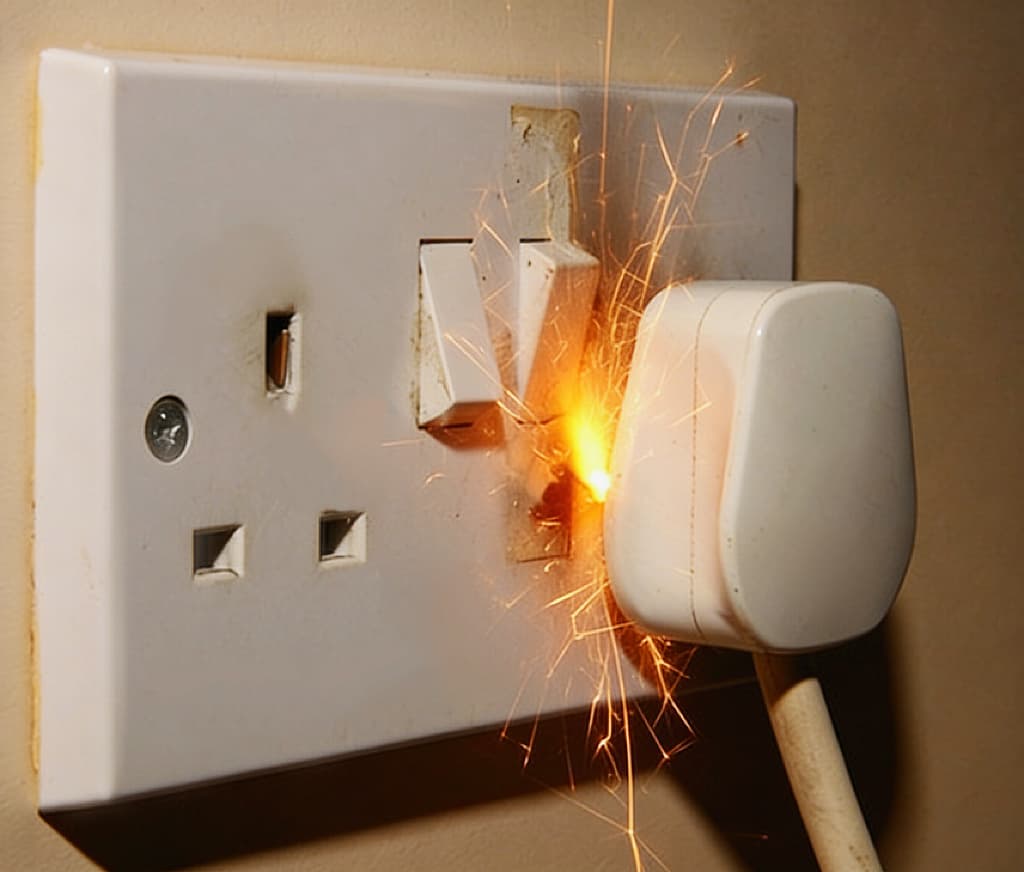
Every year, millions of homes, commercial buildings, and renewable energy systems face a silent, invisible threat: hazardous electrical arcs that spark devastating fires. These hidden dangers lurk in aging wiring, loose connections, damaged cables, and high-voltage DC setups, slipping past standard circuit breakers and leakage protection devices that were never designed to detect them. The result? Billions in property damage, avoidable injuries, and total system failures that no one wants to face. That’s where AFDD (Arc Fault Detection Device) technology steps in – the ultimate life-saving, property-protecting solution reshaping electrical safety in 2026. If you’re a homeowner, business owner, electrical contractor, or renewable energy operator, ignoring AFDD isn’t just risky – it’s a costly mistake you can’t afford to make this year.

First, let’s break down the basics: AFDD stands for Arc Fault Detection Device, a cutting-edge electrical safety component engineered to detect, identify, and interrupt dangerous fault arcs before they ignite fires. Unlike conventional breakers that only address overloads and short circuits, or RCDs/RCBOs focused on leakage protection, AFDD targets the unique waveform of harmful arcs – both series arcs from damaged wiring and parallel arcs from crossed circuits – the leading cause of unexplained electrical fires worldwide.
In 2026, AFDD has evolved from a “nice-to-have” accessory to a critical safety staple, driven by stricter global standards, surging renewable energy adoption, and a widespread push to eliminate preventable electrical disasters. What makes AFDD so revolutionary is its precision: it distinguishes between harmless operational arcs (from motors, appliances, or tool startup) and life-threatening fault arcs, eliminating false trips while delivering 24/7 protection you can trust.
This isn’t just theoretical safety – it’s proven protection. Independent safety audits show that properties equipped with compliant AFDD devices reduce electrical fire risks by up to 85%, a statistic that’s making AFDD a top priority for builders, facility managers, and homeowners across the globe.
This year marks a pivotal milestone for AFDD technology: the official rollout of the updated GB/T 31143-2025 standard, set to take full effect in May 2026, replacing the outdated 2014 version and aligning with international IEC 62606:2022 guidelines. This new standard isn’t just a minor tweak – it’s a complete overhaul that raises the bar for AFDD performance, reliability, and real-world usability.
The revised AFDD standard introduces three critical upgrades that directly impact safety and compliance: enhanced arc detection accuracy for both AC and DC applications, stronger anti-interference capabilities to prevent false triggers in busy electrical systems, and expanded compatibility with modern smart grids and renewable setups. For businesses and homeowners, this means only 2026-compliant AFDD devices deliver the full protection you need – older, non-compliant models simply can’t meet today’s safety demands or regulatory requirements.
To clearly illustrate the value of the 2026 update, below is a side-by-side comparison of the old and new GB/T 31143 standards, and their real-world impact for users:
Core Differences Between GB/T 31143-2014 (Old) and GB/T 31143-2025 (2026 New) AFDD Standards
| Comparison Dimension | GB/T 31143-2014 (Old Version) | GB/T 31143-2025 (2026 New Version) | Real-World Impact for Users |
|---|---|---|---|
| Application Scope | Only covers AC (alternating current) circuits | Covers both AC and DC (direct current) circuits | Adds compliant protection for solar, energy storage, and other DC systems, fully adapting to new energy scenarios |
| Detection Accuracy | Basic arc waveform recognition with high false tripping rates | Multi-dimensional waveform + spectrum analysis, accurately distinguishes harmful/harmless arcs | Significantly reduces false tripping, avoids power outages, and improves user experience |
| Anti-Interference Capability | Basic anti-interference, prone to false triggers in complex environments | Enhanced EMC (Electromagnetic Compatibility) design, compatible with smart grids, inverters, and other complex systems | Stable operation in high-load industrial and commercial scenarios, no frequent false alarms |
| Kompatibilität | Only adapts to traditional power distribution systems | Supports smart grids, BMS (Battery Management Systems), solar inverters, and other new energy equipment | Meets full-scenario compliance requirements for both new energy and traditional buildings in 2026 |
| Global Alignment | Domestic-only standard, not fully aligned with international norms | Fully aligned with IEC 62606:2022 international standard | Exported equipment and cross-border projects can be directly compliant without secondary certification |
| Testing Requirements | Basic arc fault testing | Added rigorous testing for extreme environments, aging wiring, high-impedance arcs, and more | Greatly improved product reliability, with more guaranteed fire protection performance |
Across North America, Europe, and Asia, regulatory bodies are following suit, mandating AFDD installation in new construction, retrofitting projects, and high-risk spaces like schools, hospitals, data centers, and senior living facilities. Even if local codes don’t yet require AFDD, investing in 2026-compliant devices future-proofs your property and avoids costly retrofits down the line.
While AFDD is transforming residential and commercial AC safety, the fastest-growing segment of the AFDD market is DC AFDD technology, tailored specifically for solar photovoltaic (PV) arrays and battery energy storage systems (BESS). This surge in demand isn’t accidental – it’s a response to a growing crisis: DC arc faults are the top fire hazard in solar and storage setups, and standard protection devices fail to detect them.
Solar panels and battery banks operate on low-voltage DC power, which produces faint, hard-to-spot arcs that can smolder for hours before igniting a fire. These arcs often occur in hidden wiring, junction boxes, or battery connections, making them nearly impossible to spot with the naked eye. DC AFDD solves this crisis by monitoring DC circuits in real time, identifying hazardous arcs instantly, and cutting power before a small fault becomes a catastrophic fire.
In 2026, as global solar and storage installations hit record highs, DC AFDD has become a non-negotiable component for residential solar setups, commercial solar farms, and industrial energy storage facilities. Operators who skip DC AFDD risk not only property loss but also liability for preventable accidents – a risk no smart business or homeowner can take.
AFDD’s versatility makes it suitable for nearly every space that relies on electricity, but these four categories see the most life-changing and cost-saving benefits from AFDD integration this year:
With the AFDD market expanding rapidly, choosing the perfect device can feel overwhelming – but it doesn’t have to be. Many users struggle to distinguish between AC and DC AFDD for their specific projects, so below is a clear comparison to guide your selection:
AC AFDD vs. DC AFDD Selection Comparison & Application Guide
| Selection Dimension | AC AFDD (Alternating Current Arc Fault Detection Device) | DC AFDD (Direct Current Arc Fault Detection Device) |
|---|---|---|
| Core Application Scenarios | Traditional AC power distribution systems for residential, commercial, and industrial buildings | Solar PV arrays, battery energy storage systems (BESS), DC EV chargers, new energy DC power distribution |
| Protected Hazards | Series/parallel arcs caused by aging AC wiring, loose connections, and damaged cables | Hidden DC arcs in solar PV cables, battery terminals, and junction boxes |
| Core Technical Differences | Based on 50/60Hz power frequency AC waveform recognition | Based on high-frequency spectrum analysis for DC (no power frequency), adapted to low-voltage DC weak arcs |
| Einhaltung der Normen | GB/T 31143-2025, IEC 62606:2022, UL 1699B (North America) | GB/T 31143-2025, IEC 62606:2022, UL 1699B (Solar-specific) |
| Wichtige Auswahlkriterien | Match line rated current, integrated RCBO leakage protection, high anti-interference rating | Match solar/storage system voltage class (1500V/1000V), support string-level monitoring, fast tripping |
| Typical Installation Locations | Residential distribution panels, commercial floor distribution cabinets, industrial power cabinets | Solar string combiner boxes, front-end of PCS (Power Conversion System), DC distribution cabinets |
| Core Value | Prevent traditional building electrical fires, meet compliance for new construction/retrofit projects | Solve the top fire hazard in new energy systems, protect solar/storage investment security |
Follow these additional key criteria to select an AFDD that aligns with your safety goals, application, and compliance needs:
Electrical fires don’t wait for a convenient time – they strike without warning, and the damage is often irreversible. In 2026, AFDD isn’t just another safety product; it’s the most effective way to stop arc-fueled fires before they start, protecting the people, property, and investments that matter most.
Whether you’re building a new home, retrofitting an older property, launching a solar installation, or managing a commercial facility, AFDD delivers unbeatable protection that standard devices simply can’t match. The small upfront cost of AFDD pales in comparison to the expense of fire damage, repairs, legal liability, and lost peace of mind.
As we move deeper into 2026, AFDD technology is redefining electrical safety across residential, commercial, and renewable energy spaces. The new global standards, surging demand for DC arc protection, and proven fire-prevention benefits make AFDD an essential upgrade for anyone who values safety and security.
Don’t let a hidden arc fault put your property or loved ones in danger. Explore our full range of 2026-compliant AC and DC AFDD solutions today, and take the first step toward total electrical fire protection. Our team of electrical safety experts is here to help you find the perfect AFDD product for your unique needs, answer your questions, and guide you through a seamless installation process.
Ready to Secure Your Property with AFDD? Browse our premium AFDD product lineup,