WengYang Industrial Zone Yueqing Wenzhou 325000
Work Hours
Monday to Friday: 7AM - 7PM
Weekend: 10AM - 5PM
WengYang Industrial Zone Yueqing Wenzhou 325000
Work Hours
Monday to Friday: 7AM - 7PM
Weekend: 10AM - 5PM

A practical guide to PV string current mismatch alarms: compare similar strings, rule out shade and sensor faults, and plan safe combiner-box checks.
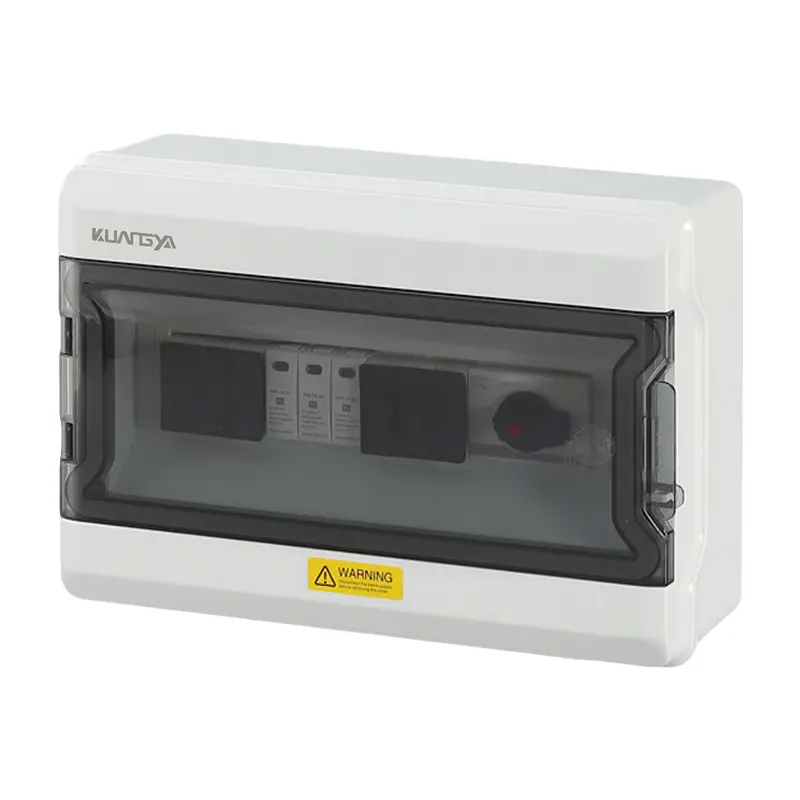
A low-current alarm on one PV string is a prompt to investigate, not proof that a fuse or module has failed. String current monitoring can narrow the search within a combiner box, but readings must be compared under similar irradiance, module orientation and operating conditions. This guide explains how to interpret a mismatch and plan a safe follow-up.
A monitoring unit at a PV combiner box can measure the operating current of separate string inputs before they join the output. This is current under the inverter’s operating point, not the short-circuit current Isc measured during a commissioning test. IEA PVPS operation and maintenance guidance says individual string current measurements should be considered where the inverter does not provide them, because string-level data supports more precise troubleshooting than inverter-level totals.
The alarm logic, sensor location, accuracy and communications are project-specific. Do not assume every combiner box includes monitoring or that one alarm threshold suits every array.
Compare strings with the same module type and count, tilt, azimuth and exposure, at the same time. A shaded or soiled string may legitimately produce less current. Fast-moving clouds can also make sequential readings misleading. Record irradiance and the inverter state before treating a difference as an electrical fault. NREL notes that identical, unshaded strings in the same plane should produce similar, though not exactly equal, current.
One symptom can have several causes. A normal-looking voltage does not necessarily prove a healthy string: NREL warns that an open circuit can still present a misleading floating voltage reading. Use the approved test plan rather than diagnosing from a dashboard screenshot alone.
Use the plant design, expected string differences, sensor specifications and site operating history. Avoid a universal percentage copied from another installation. A threshold that is too tight can create weather-driven false alarms; one that is too loose may miss a persistent underperforming string. The monitoring supplier and plant operator should agree on the comparison window, persistence time and escalation process.
No. The inverter may be stopped, the string may be shaded, the circuit may be open, or the sensor or communications channel may be faulty. Check context and follow the approved diagnostic procedure.
Usually not by raw current alone. Orientation and exposure can differ materially. Compare each string with a suitable reference or expected model for its own conditions.
No. Monitoring helps detect operating changes; polarity, insulation, protection ratings and other commissioning checks still require their own procedures.

