WengYang Industrial Zone Yueqing Wenzhou 325000
Work Hours
Monday to Friday: 7AM - 7PM
Weekend: 10AM - 5PM
WengYang Industrial Zone Yueqing Wenzhou 325000
Work Hours
Monday to Friday: 7AM - 7PM
Weekend: 10AM - 5PM

After heavy rain or flooding, inspect PV combiner box seals, cable entries and internal components before restart. A qualified technician should verify safety and document repairs.
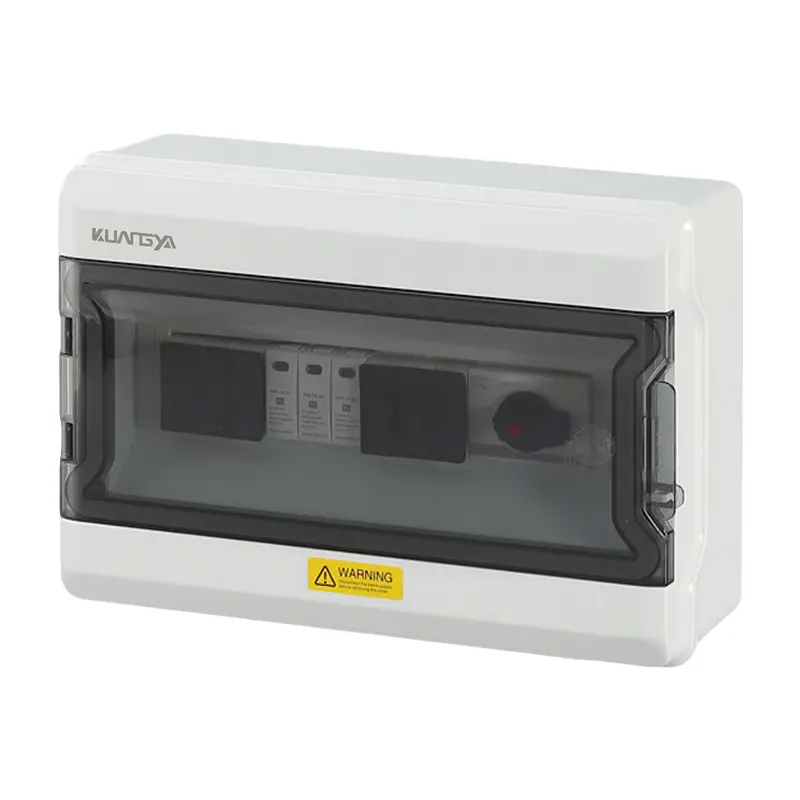
Water found inside a PV combiner box after heavy rain is a reason to stop and investigate before restarting the circuit. A dry exterior or a normal monitoring screen does not establish that terminals, fuses, surge protection or insulation remain sound. This guide gives plant operators a practical inspection sequence and explains where a qualified technician must take over.
Record what happened: wind-driven rain, standing water, flooding, a roof leak or condensation may leave different evidence. Photograph the enclosure, cable entries, gasket, spare openings and water line before cleaning. Note which strings, inverter inputs and alarms were affected. The site drawing and the combiner-box configuration identify the circuits to isolate and test.
An enclosure IP rating describes tested resistance to specified ingress conditions. It does not guarantee protection against every installation error, damaged seal, prolonged immersion or internal condensation. For rating selection, see our separate IP65/IP66/IP67 guide.
The IEA PVPS operation and maintenance guidance emphasizes qualified personnel, approved isolation procedures and correct DC switching practices. A switch must be identified as suitable for load breaking before it is used to interrupt current.
The inspection plan depends on the enclosure design and the extent of water exposure. A qualified technician should use the manufacturer’s instructions and site procedure to isolate, verify and document the condition before opening the box. Check:
Do not assume that drying the enclosure restores its original safety or protection rating. If contamination or corrosion is present, replace affected parts as directed by the equipment manufacturer and document the decision.
Correct the identified entry path, then confirm that replacement glands, seals and enclosure parts are compatible with the actual cable sizes and installation. Recheck unused openings and cover fastening. Review whether the enclosure location exposes it to splash, roof runoff or temporary flooding. A higher IP number alone will not cure a poorly routed cable or damaged gasket.
After repair and approved tests, return circuits to service under the site’s commissioning procedure. Watch for recurring insulation alarms, unusual string-current differences or thermal anomalies under comparable operating conditions.
Not on that observation alone. The source of moisture and the condition of insulation and components must be assessed under the site procedure.
No. The installed assembly, cable entries, exposure duration and actual test conditions all matter. Inspect any enclosure that has been submerged or shows internal moisture.
Follow the manufacturer’s instructions and the qualified assessment. Contamination, corrosion, tracking and damage can make reuse unsafe even when a part still operates.

