WengYang Industrial Zone Yueqing Wenzhou 325000
Work Hours
Monday to Friday: 7AM - 7PM
Weekend: 10AM - 5PM
WengYang Industrial Zone Yueqing Wenzhou 325000
Work Hours
Monday to Friday: 7AM - 7PM
Weekend: 10AM - 5PM

What a PV string Isc test at the combiner can show, how to record comparable readings, and why current alone cannot prove PV safety or power output.
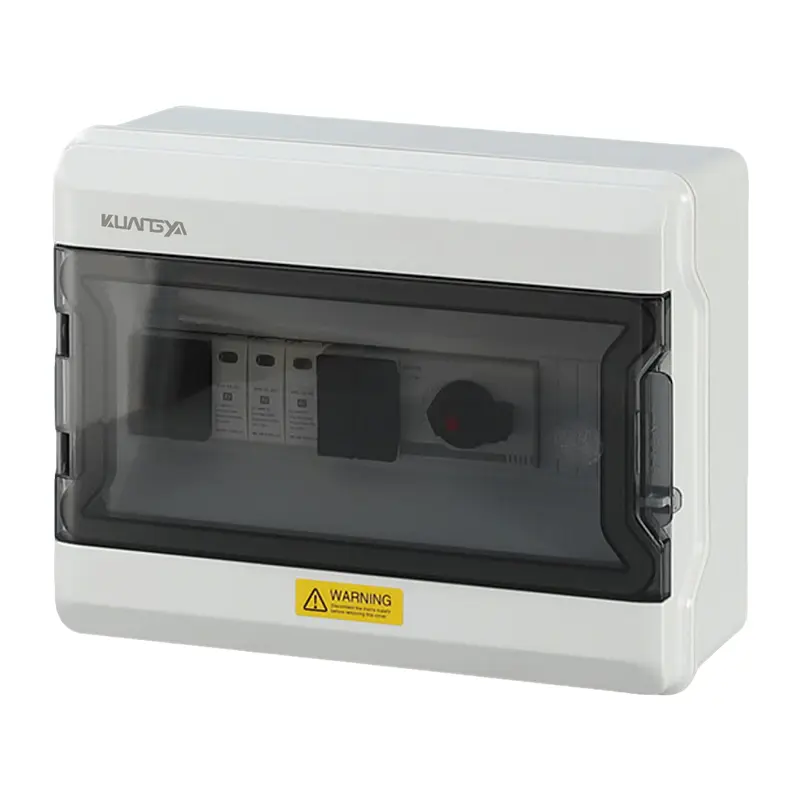
A PV string short-circuit current (Isc) test checks whether a string delivers the expected current under the conditions at the time of testing. At a combiner box, it can help identify a string that differs from its peers before the circuits are paralleled. It is a commissioning and troubleshooting check, not a direct measurement of module power or annual energy yield.
The module datasheet gives an Isc value at standard test conditions (STC). Field irradiance and module temperature are usually different, so a raw field reading should not be treated as an automatic pass or fail against the datasheet. Fluke’s PV tester manual describes the string current check as a way to verify operation and detect major wiring faults, while cautioning that it is not a module or array performance measurement. Record the conditions and use the project test plan to interpret the result.
Also distinguish Isc from operating current. Isc is measured with a purpose-rated test circuit that temporarily places the string in a short-circuit condition; operating current is measured while the string is supplying a load. The methods and instrument connections are different. A string can show a plausible Isc and still have an insulation, polarity or connection problem.
The PV combiner box identifies separate string inputs and a common output. Individual string readings are most useful before the strings are combined, but the enclosure is not automatically a safe test point. The qualified tester must confirm the circuit drawing, accessible terminals, fuse or switch arrangement, ratings and the manufacturer’s instructions. Connected inverters, monitoring electronics and parallel strings change the test boundary.
Do not use an improvised jumper or an ordinary meter outside its PV voltage and current ratings. Do not open a fuse holder or connector under load merely to take a reading. Follow the site’s isolation and verification procedure and the test instrument’s instructions; sunlight can leave PV conductors energized even when the inverter is off.
A measured difference is a reason to investigate, not proof of a particular failed component. Shade, soiling, weather changes during testing, module mismatch, a damaged connector, wiring issues or an instrument setup error can affect interpretation. Compare readings only after accounting for those conditions. Seaward notes that irradiance, temperature and spectral conditions matter when comparing field measurements with STC specifications.
Stop commissioning that circuit and verify the string identification, test boundary and instrument setup. Check the design records and investigate shading, connectors, cable condition and fuse status under the approved procedure. A fuse that repeatedly operates needs fault investigation; replacing it without finding the cause is not a test result. Repeat the current measurement only after corrective work is complete and conditions are documented.
Use the polarity check and insulation resistance test as separate commissioning checks. Isc alone cannot establish that a string is safe to connect to the inverter.
No. The datasheet value is specified at STC. Interpret field readings with the measured conditions, module data, instrument instructions and project acceptance criteria.
The output combines circuits, so it does not identify which string caused a difference. Whether an output measurement is appropriate depends on the design, instrument rating and approved test method.
No. A current check does not replace an I-V curve or a performance assessment under controlled, documented conditions.

