WengYang Industrial Zone Yueqing Wenzhou 325000
Work Hours
Monday to Friday: 7AM - 7PM
Weekend: 10AM - 5PM
WengYang Industrial Zone Yueqing Wenzhou 325000
Work Hours
Monday to Friday: 7AM - 7PM
Weekend: 10AM - 5PM

Before commissioning a PV combiner box, verify each string's polarity and open-circuit voltage. Learn what to record, what a fuse or SPD cannot correct, and when to stop.
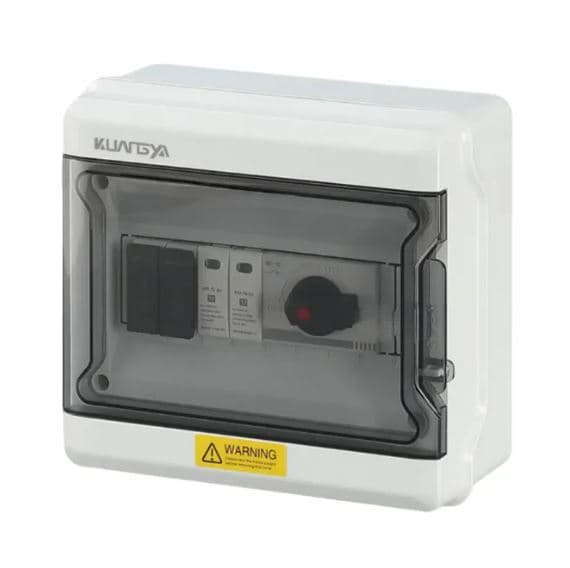
Before connecting PV strings to a combiner box, verify the polarity of each identified string at its intended input. A label or cable color is a useful clue, but it is not an electrical test. A qualified person should follow the project commissioning plan, use instruments rated for the installation, record the open-circuit voltage (Voc) and polarity, and resolve any unexpected result before combining strings or energizing the inverter.
A combiner brings separate strings onto common conductors. A reversed connection may be harder to trace after strings are combined and can expose equipment or other strings to unintended conditions. Fluke’s PV commissioning guidance specifically calls for voltage and polarity checks before connection and warns about reversed strings at a combiner. The required commissioning documentation and tests should follow the applicable edition of IEC 62446-1 and local rules.
PV conductors can remain live in daylight even when the AC supply or inverter is off. Only competent personnel should perform electrical tests with appropriate PPE and correctly rated instruments. Never unplug or swap connectors under load to “try” a different polarity.
No. These devices have separate protective functions and must be selected and wired according to their manufacturers’ instructions. A PV string fuse addresses reverse-current hazards under specified conditions; it does not identify or correct a swapped pair. A combiner box wiring diagram helps map the intended terminals, but the actual installation still needs testing. Cable entries and labeling also affect traceability and installation quality.
Stop before combining or energizing the affected string. Check the drawing, module and connector identification, test leads, meter settings and expected Voc calculation. Investigate a negative polarity indication, zero or unusually low voltage, or a reading outside the project-specific expected range. A zero reading alone does not prove a circuit is safe. Correct the root cause under the approved isolation procedure, then retest and update the commissioning record.
For each input, keep the string identifier, module count and model, expected Voc range for the conditions, measured Voc, polarity result, date, weather or irradiance context where required, instrument identification, and sign-off. Retain the record with the as-built PV combiner box documentation.
No. Verify against the drawing and measure the actual circuit before connection.
A combined reading can conceal which input is wrong. The commissioning plan should identify and test individual strings before parallel connection.
No. Voc and polarity are only part of commissioning. The applicable project standard and manufacturer instructions may require further inspection and tests.

