WengYang Industrial Zone Yueqing Wenzhou 325000
Work Hours
Monday to Friday: 7AM - 7PM
Weekend: 10AM - 5PM
WengYang Industrial Zone Yueqing Wenzhou 325000
Work Hours
Monday to Friday: 7AM - 7PM
Weekend: 10AM - 5PM

Last Updated: July 2026
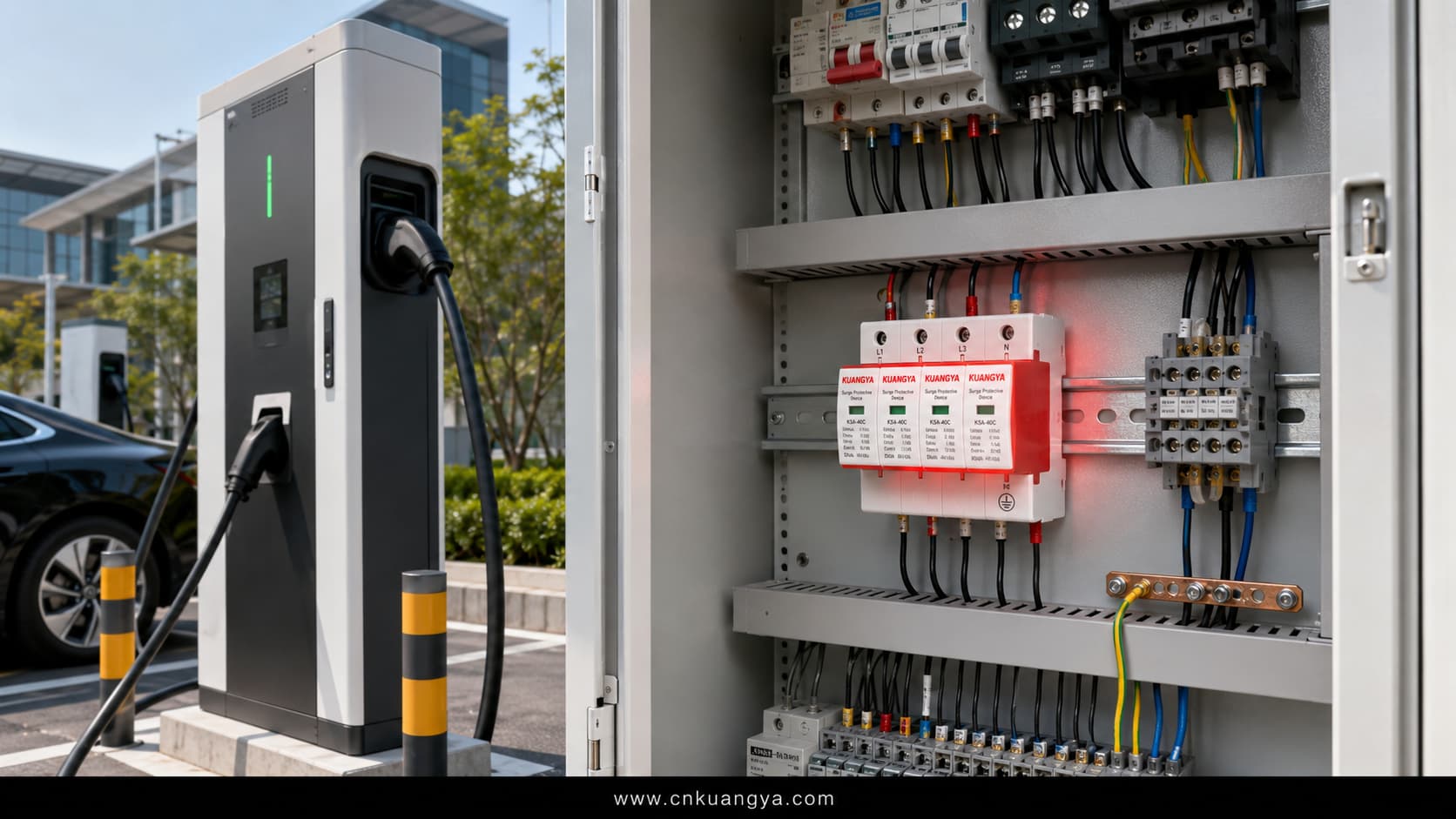
EV charging stations need surge protection devices because chargers are exposed to lightning surges, grid switching, transient overvoltage, outdoor cable risks, and sensitive electronic failures.
An EV charger SPD helps reduce voltage spikes before they damage power modules, control boards, communication systems, payment modules, and charging equipment.
For a complete protection design, surge protection should work together with fuse protection, grounding, cable protection, cabinet safety, and regular maintenance.
For a full system-level guide, read our article on EV Charging Station Electrical Protection.
EV charging stations are not simple power outlets. A modern charger includes power conversion modules, AC input circuits, DC output circuits, control boards, communication modules, display screens, payment systems, cooling fans, cables, and protection components.
EV charging equipment should also be understood within the framework of IEC 61851-1, which covers EV conductive charging equipment up to 1,000 V AC or 1,500 V DC.
This means a charging station is both a power device and an electronic system.
That is why surge protection for EV charging stations is important.
A short voltage spike may last only microseconds, but it can still damage sensitive components inside the charger. In many cases, the charger does not burn immediately. Instead, the damage appears later as unstable charging, communication errors, failed modules, screen faults, or unexpected shutdowns.
For charging station operators, this means more maintenance cost, more downtime, and more customer complaints.
For EPC contractors and electrical engineers, this means surge protection should be considered during the design stage, not after repeated failures happen.
An EV charger SPD is one of the most practical protection devices for reducing transient overvoltage risk.
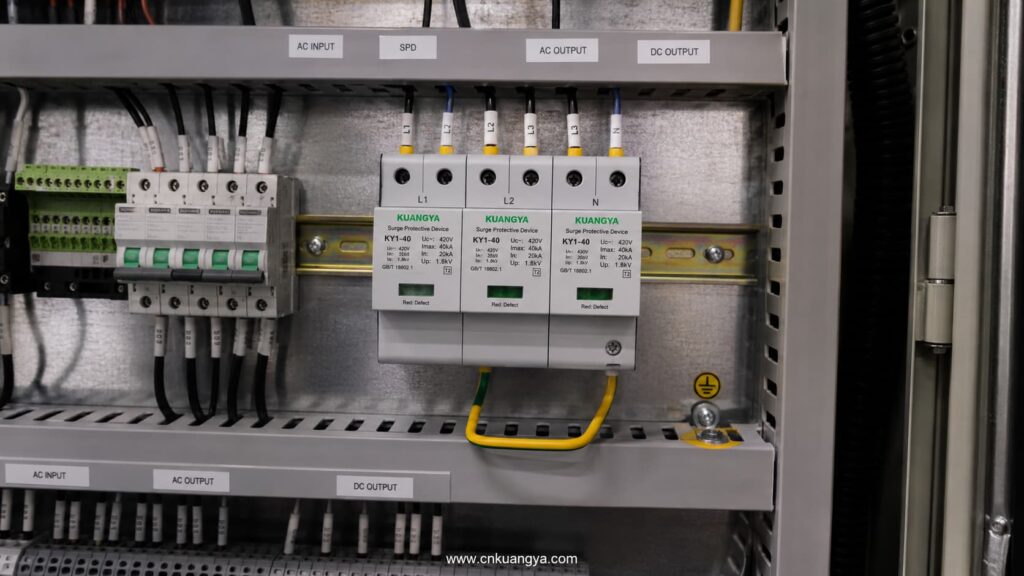
An EV charger SPD is a surge protective device used in EV charging equipment or its related power distribution system.
Its purpose is to limit transient overvoltage and divert surge current away from protected equipment.
In normal operation, the SPD stays in a high-impedance state. When a surge occurs, the SPD provides a low-impedance path and helps discharge the surge energy through the grounding system.
In simple words:
The SPD gives surge energy a safer path before it reaches expensive charger components.
For a more technical explanation, this DC SPD working principle guide explains how surge protective devices detect voltage spikes and divert surge energy away from sensitive equipment.
SPD selection should also be reviewed with reference to IEC 61643-11, which applies to surge protective devices used against indirect and direct effects of lightning and other transient overvoltages.
An EV charger SPD can be used in:
However, not every SPD is suitable for every charging project. The correct SPD depends on voltage, installation location, earthing system, surge risk, and whether the circuit is AC or DC.
For product selection, KUANGYA provides DC surge protective device solutions for high-voltage electrical and renewable energy applications.
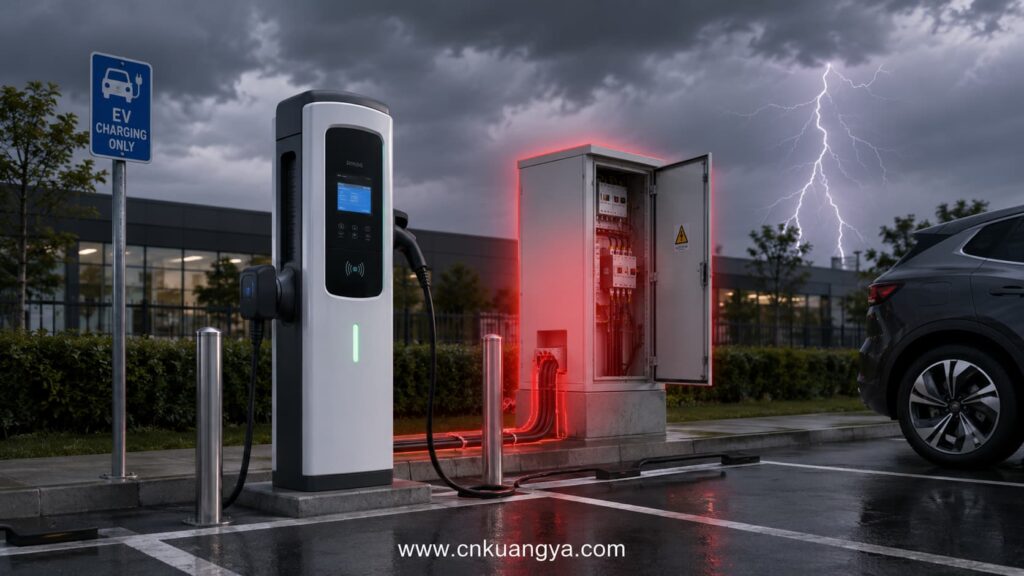
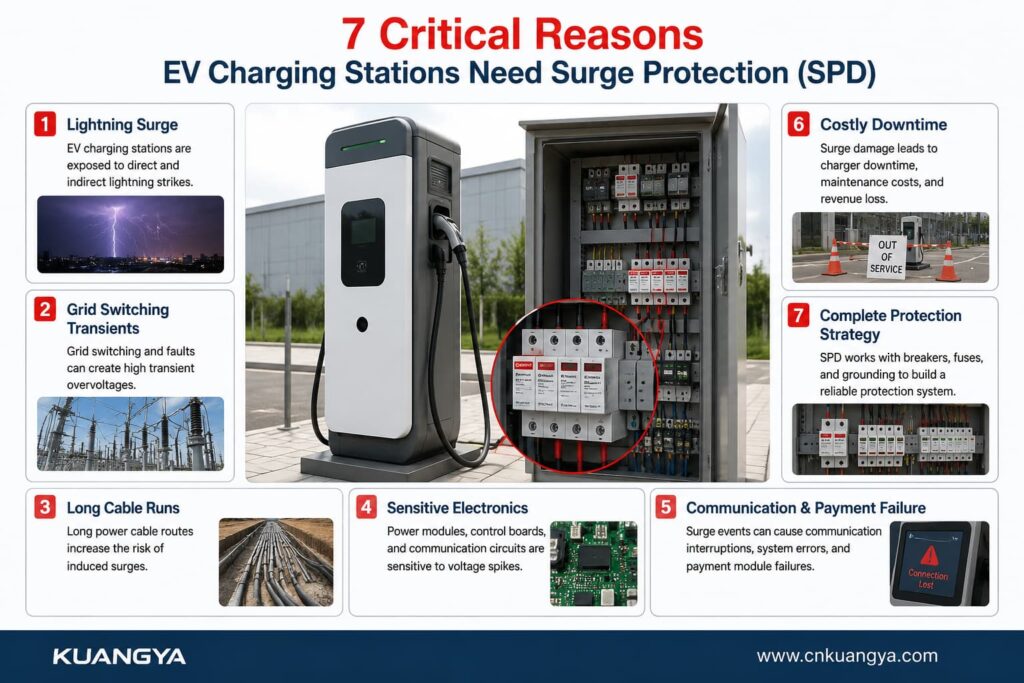
EV charging stations may experience surge events from several directions.
Outdoor charging stations are often installed in parking lots, highways, service areas, shopping centers, industrial parks, and open commercial spaces.
These environments may be exposed to direct or nearby lightning activity.
Even when lightning does not directly hit the charger, nearby strikes can induce surge voltage into power cables, grounding systems, or communication lines.
Utility grid switching, transformer switching, capacitor bank switching, and nearby industrial loads can create transient overvoltage.
These surges may travel through the AC input side and affect the charger cabinet.
Many EV charging sites use long cable routes between the transformer, distribution cabinet, charger cabinet, and parking area.
Long cables can pick up induced voltage during lightning or switching events.
Outdoor chargers face heat, humidity, rain, dust, vibration, and corrosion. These conditions do not directly create surge voltage, but they can weaken insulation, grounding, terminals, and protection reliability over time.
Modern EV chargers usually connect to network systems for payment, remote monitoring, OCPP communication, and charger management.
Surge damage can also enter through signal lines, not only power lines.
This is why EV charging surge protection should review both power and communication paths.
Without proper surge protection for EV charging stations, several problems may occur.
| Problem | Possible Result |
|---|---|
| Power module damage | Charger cannot deliver stable output |
| Control board failure | Charger stops working or reports errors |
| Communication failure | Remote monitoring or payment system fails |
| Display screen damage | User interface becomes unavailable |
| Insulation stress | Long-term reliability decreases |
| Repeated downtime | Maintenance cost increases |
| Component aging | Protection and control devices fail earlier |
Research on EV charging station reliability also shows that charger uptime, resilience, codes, standards, and deployment conditions directly affect charging infrastructure performance.
A surge event does not always create visible fire or explosion. More commonly, it causes hidden electronic damage.
That hidden damage is dangerous for operators because the charger may look normal from the outside, but internal components may already be weakened.
For this reason, an EV charger SPD is not only a safety component. It is also a reliability component.
EV charging stations may need different surge protection designs depending on system structure.
The AC side is connected to the utility grid or site distribution system.
AC-side SPDs are commonly installed at:
AC surge protection helps reduce grid-side transient overvoltage before it enters the charger.
For many EV charging projects, AC-side SPD protection is the first surge protection layer.
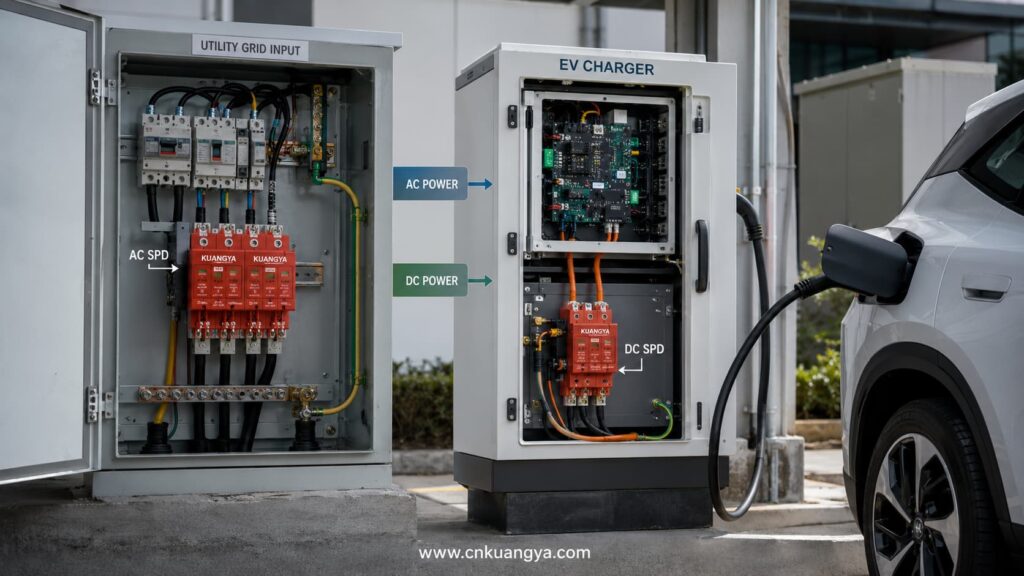
DC fast chargers involve high-power DC output circuits and power conversion modules.
DC-side SPD protection may be considered when:
DC SPDs must be selected for DC applications. Do not use a normal AC SPD in a DC circuit unless the product is specifically designed and rated for that application.
The best SPD location depends on the project design. However, common installation points include:
This protects the charging site from incoming grid-side surge events.
This protects the EV charger from surges entering through the AC input side.
For DC fast charging equipment, surge protection may be reviewed near sensitive power conversion or DC output circuits.
If the EV charging station is connected to solar PV, then PV-side DC SPD and inverter-side SPD protection should also be reviewed.
For chargers using remote monitoring, payment systems, or network communication, signal line surge protection may be considered where required.
The key principle is simple:
Install surge protection before surge energy reaches sensitive equipment.
For installation design, engineers should also review NEC Article 625 for EV charger installations, especially when evaluating conductors, equipment, and site-level electrical safety.
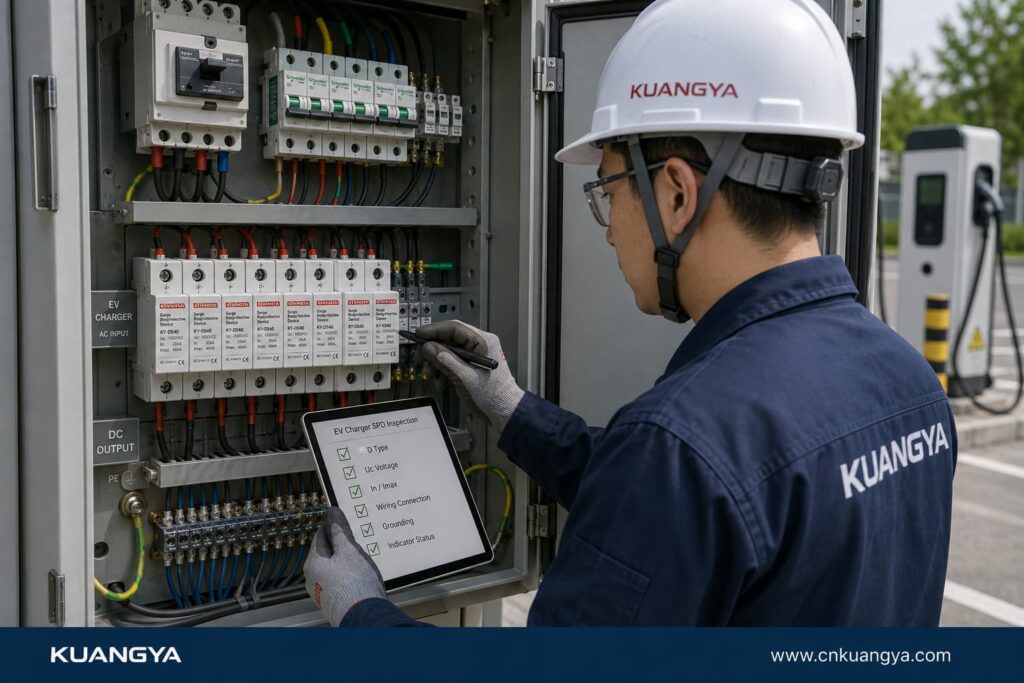
When selecting an EV charger SPD, engineers should not only look at price.
The following factors should be confirmed first.
Confirm whether the circuit is AC or DC and what the rated voltage is.
For example:
The SPD voltage rating must match the real system.
Common SPD types include Type 1, Type 2, and Type 3.
Type 2 SPD is widely used in distribution cabinets and equipment cabinets. Type 1 or Type 1+2 SPD may be considered for higher lightning risk or main entrance protection.
Engineers who need a deeper standard reference can read our IEC 61643 guide for surge protective devices to understand SPD types, testing, AC/DC applications, and selection logic.
If you are not sure whether the project needs Type 1, Type 2, or Type 3 surge protection, this Type 1, Type 2, and Type 3 SPD placement guide explains how different SPD levels are used in solar PV and EV charging protection.
The SPD should have suitable discharge current capacity for the project risk level.
Do not select only by the biggest number. The correct rating depends on installation location, lightning exposure, and system design.
DC fast charger protection
The voltage protection level should be suitable for the protected equipment.
A lower protection level can help protect sensitive electronics, but installation wiring and grounding also affect real protection performance.
An SPD needs a good grounding path to discharge surge current.
Poor grounding can reduce SPD performance.
For public charging stations or remote sites, SPD status monitoring can be useful. A remote signal contact allows maintenance teams to know when an SPD module needs replacement.
A replaceable SPD module can reduce maintenance time and improve service efficiency.
For a clear comparison of protection functions, read this DC Fuse vs DC SPD guide to understand why fuses protect against overcurrent while SPDs protect against transient overvoltage.
A circuit breaker protects against overcurrent and short circuit. It does not replace surge protection.
An SPD is needed for transient overvoltage protection.
Some projects only install AC-side protection. For DC fast charging or solar + EV systems, DC-side risks should also be reviewed.
An SPD with the wrong voltage rating may fail early or fail to protect equipment properly.
Even a good SPD cannot work well if grounding is poor.
SPDs can age after repeated surge events. Visual indicators and remote signal contacts help maintenance teams identify failed modules.
A small AC charger and a high-power DC fast charging station do not have the same protection needs.
The protection design should match the charger type and site risk.
Surge protection is important, but it is only one part of EV charging safety.
A complete protection solution should include:
For a full guide, read our main article:
EV Charging Station Electrical Protection: SPD, Fuse and Fire Safety Guide
That article explains how SPD, fuse protection, cabinet fire safety, and EPC design work together in EV charging station projects.
KUANGYA provides surge protective devices for electrical protection applications such as solar PV systems, EV charging stations, BESS, industrial control cabinets, telecom cabinets, and commercial distribution systems.
For EV charging projects, KUANGYA can support:
For high-voltage EV charging and renewable energy infrastructure, a properly selected DC surge protective device can help reduce surge-related downtime and protect sensitive electrical equipment.
An EV charger SPD is a surge protective device used to reduce transient overvoltage risk in EV charging equipment. It helps protect charger power modules, control boards, communication systems, and electrical circuits from surge damage.
EV charging stations need surge protection because they are exposed to lightning, grid switching, long cable runs, outdoor installation conditions, and sensitive electronic components.
Requirements depend on local electrical rules, project design, installation environment, and risk level. However, SPD protection is strongly recommended for outdoor EV chargers, DC fast chargers, and high-value charging infrastructure.
An EV charger SPD may be installed at the main distribution board, charger input cabinet, DC fast charger cabinet, or communication line entrance depending on the system design.
No. A circuit breaker protects against overcurrent and short circuit. An SPD protects against transient overvoltage. They perform different functions and should not replace each other.
Many EV charging projects use Type 2 SPD protection at distribution or charger cabinet level. Type 1 or Type 1+2 SPD may be considered for main entrance protection or high lightning-risk sites.
DC SPD protection may be required or recommended depending on charger design, voltage level, cable length, site exposure, and system risk. DC circuits should use SPDs designed for DC applications.
SPD status should be checked during regular electrical maintenance. Visual indicators, remote signal contacts, terminal tightness, and grounding condition should be inspected.
EV charging stations need surge protection devices because modern chargers contain sensitive power electronics, communication systems, control boards, and high-value electrical components.
An EV charger SPD helps reduce transient overvoltage risk caused by lightning, grid switching, long cable routes, and outdoor electrical exposure.
However, SPD protection should not work alone. A reliable EV charging station should combine surge protection, fuse protection, circuit breakers, grounding, cable protection, cabinet safety, and maintenance planning.
For EV charger manufacturers, EPC contractors, charging operators, and procurement teams, correct SPD selection can help improve reliability, reduce downtime, and protect project investment.
KUANGYA provides SPD solutions for EV charging stations, solar PV systems, BESS, telecom cabinets, industrial control panels, and other electrical protection applications.
For technical selection or quotation support, contact KUANGYA for EV charger SPD and electrical protection solutions.

