WengYang Industrial Zone Yueqing Wenzhou 325000
Work Hours
Monday to Friday: 7AM - 7PM
Weekend: 10AM - 5PM
WengYang Industrial Zone Yueqing Wenzhou 325000
Work Hours
Monday to Friday: 7AM - 7PM
Weekend: 10AM - 5PM

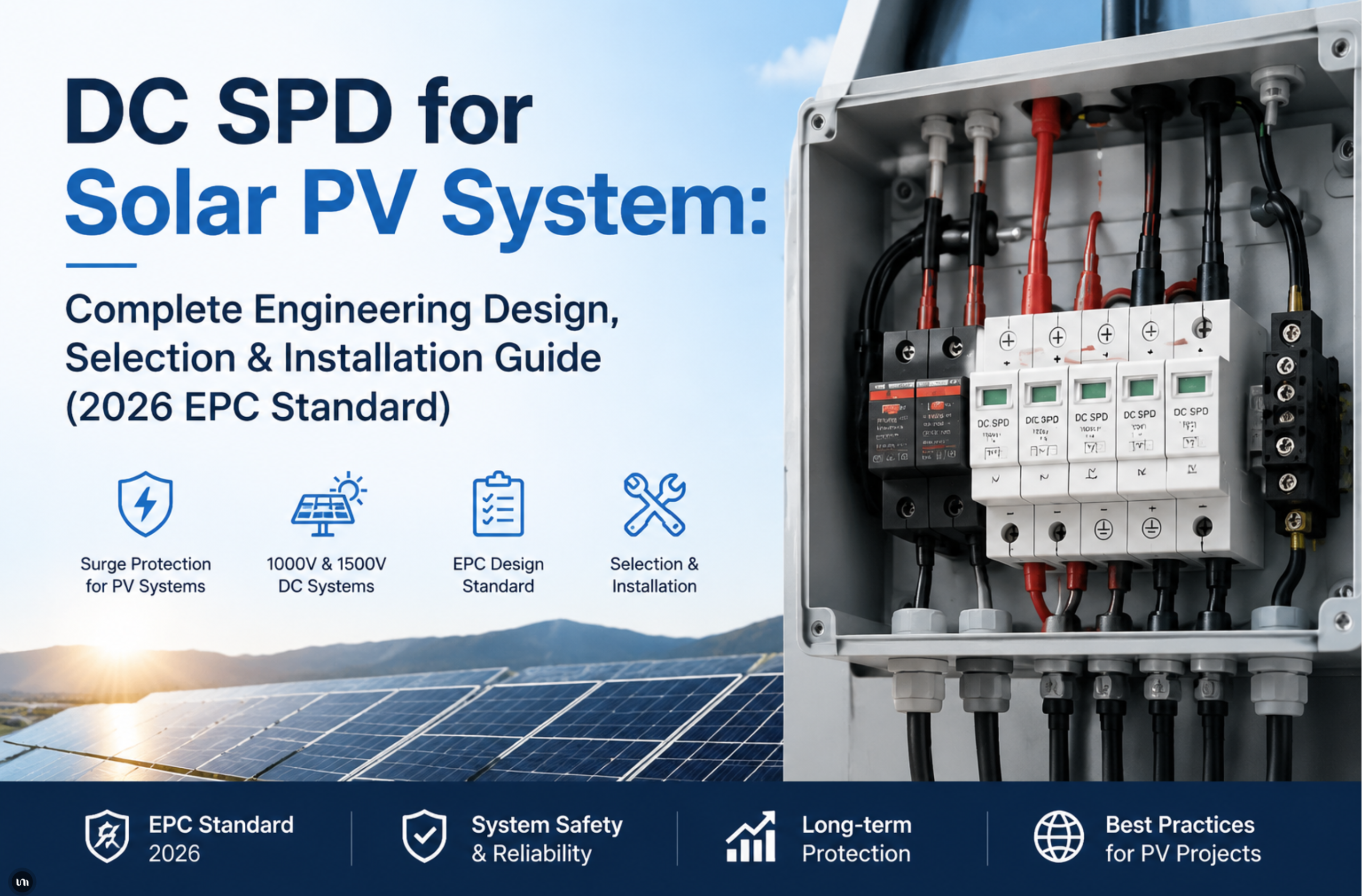
A DC SPD for solar PV system (DC Surge Protection Device) is a critical electrical protection device designed to protect photovoltaic systems from lightning strikes, switching surges, and transient overvoltage conditions.
In modern EPC solar projects, especially 1000V and 1500V DC photovoltaic systems, the role of a DC SPD for solar PV system is no longer optional. It is a mandatory protection component that ensures inverter safety, combiner box reliability, and long-term system stability.
Without a properly engineered DC SPD for solar PV system, even a minor surge event can cause inverter damage, DC bus failure, or complete system shutdown, leading to significant financial losses in utility-scale solar projects.
This article provides a complete engineering-level explanation of how a DC SPD for solar PV system works, how to select it, how to install it correctly, and how EPC contractors design surge protection architecture in real-world photovoltaic plants.
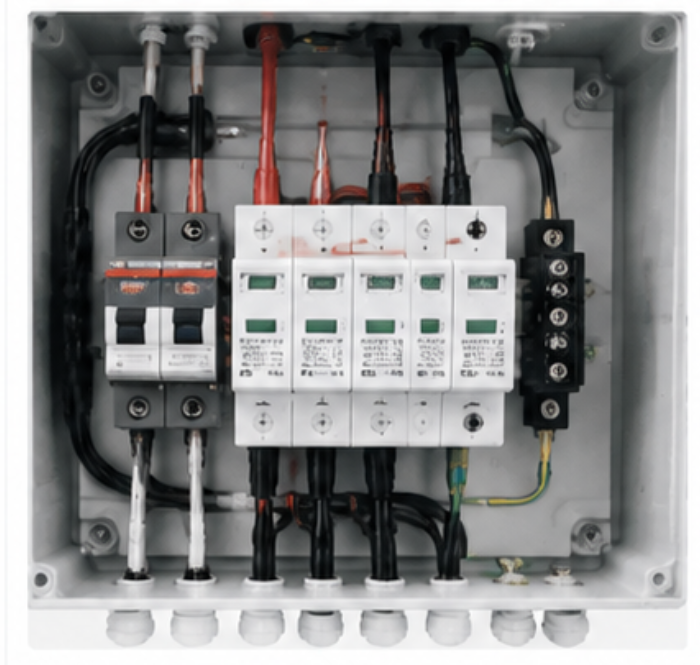
A DC SPD for solar PV system is a protective device that limits transient overvoltage and safely discharges surge current into the grounding system.
It operates as a high-speed switching protection element that reacts within nanoseconds when voltage exceeds safe levels.
The main functions include:
A typical PV system uses multiple SPD points:
👉 External reference:
https://en.wikipedia.org/wiki/Surge_protector
Solar PV systems operate in harsh outdoor environments and are highly exposed to lightning risk due to long cable runs and large installation areas.
PV arrays act like large antennas, collecting:
Field engineering data shows:
60%–75% of inverter failures in solar plants are related to surge events or grounding problems.
A properly designed DC SPD for solar PV system significantly reduces this failure rate.
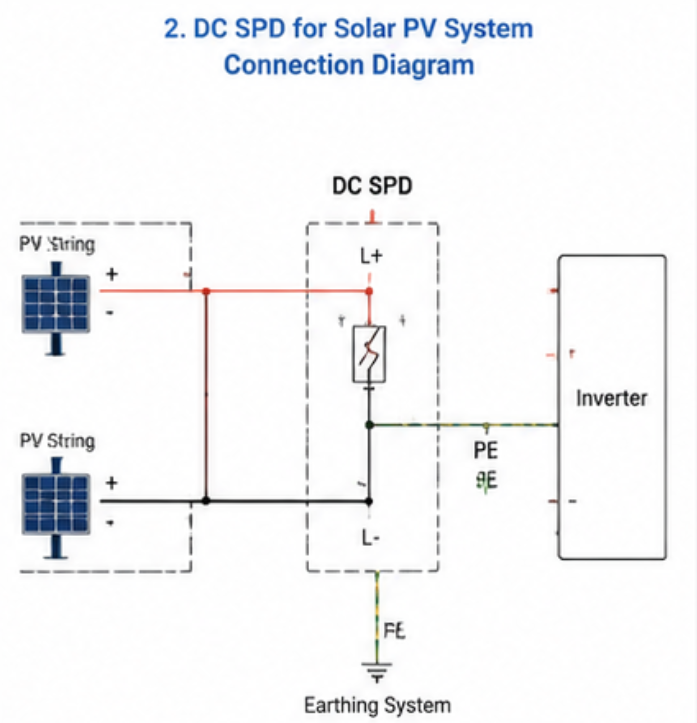
A DC SPD for solar PV system uses MOV (Metal Oxide Varistor) technology.
Unlike AC systems:
This makes DC SPD for solar PV system design more critical than AC protection systems.
| Parameter | Typical Value | Function |
|---|---|---|
| System Voltage | 600V / 1000V / 1500V | PV compatibility |
| Nominal Discharge Current (In) | 20kA–40kA | Standard surge handling |
| Max Discharge Current (Imax) | 40kA–80kA | Extreme surge protection |
| Response Time | <25ns | Fast protection |
| Protection Mode | L+/L- to PE | Grounding protection |
| Condition | Requirement |
|---|---|
| Temperature | -40°C to +85°C |
| Humidity | ≤95% |
| UV Resistance | Required |
| IP Rating | IP65–IP66 |
Used for direct lightning current protection in utility-scale PV plants.
Most widely used in PV combiner boxes and commercial systems.
Combined protection for lightning + switching surges, widely used in 1500V solar farms.
Incorrect voltage selection reduces lifespan of DC SPD for solar PV system.
High-risk regions require:
Proper grounding is critical:
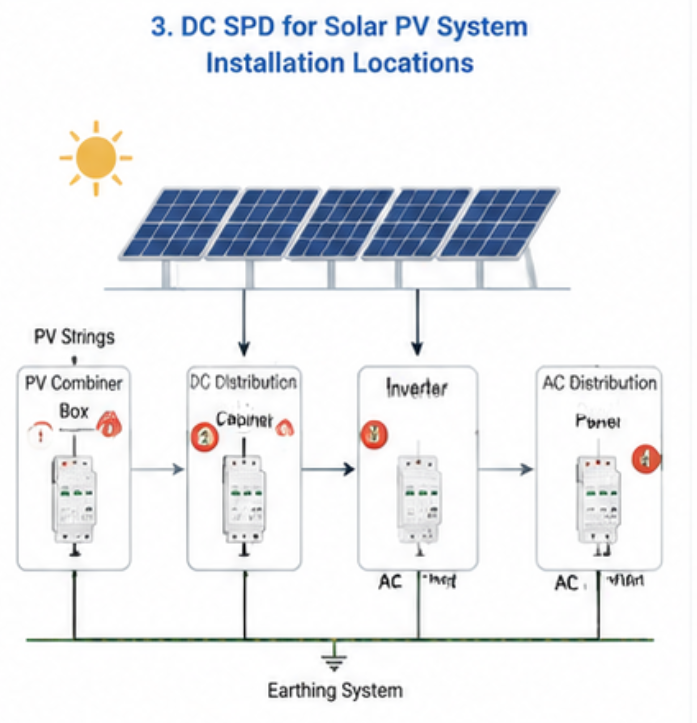
A DC SPD for solar PV system should be installed at:
| Device | Function | Protection Type |
|---|---|---|
| SPD | Surge protection | Lightning / overvoltage |
| Fuse | Overcurrent | Short circuit |
| Breaker | Isolation | Maintenance |
All three must work together in EPC PV systems.
Repeated surges degrade MOV structure inside DC SPD for solar PV system.
1000V SPD used in 1500V system leads to breakdown.
High resistance grounding reduces discharge efficiency.
Long grounding wires increase surge voltage.
Repeated strikes shorten SPD lifespan.
Loose terminals or long cable loops reduce protection performance.
Must comply with:
👉 External reference:
https://www.iec.ch/
KUANGYA provides complete SPD solutions for EPC solar projects:
👉 Internal links:
DC SPD (Solar DC Surge Protective Device) | Kuangya
DC SPD Selection Guide: 7 Critical Factors for Solar Systems
A device that protects PV systems from lightning and surge overvoltage.
In combiner boxes, DC cabinets, and inverter inputs.
Type 2 for standard PV, Type 1+2 for utility PV.
3–10 years depending on surge exposure.
It reduces risk but must work with grounding and fuse systems.
Thermal aging, grounding issues, voltage mismatch.
Yes, required in most IEC-compliant designs.
Less than 0.5 meters.
No, depends on condition indicator.
Yes, but must be DC-rated SPD.
Yes, especially for 1500V systems.
Typically 3–10 years.
A properly engineered DC SPD for solar PV system is essential for protecting photovoltaic systems, ensuring EPC reliability, and preventing inverter failure.
In modern 1500V solar PV plants, SPD design is a core engineering requirement rather than an optional component.

