Zona industriale di WengYang Yueqing Wenzhou 325000
Orario di lavoro
Da lunedì a venerdì: dalle 7.00 alle 19.00
Fine settimana: 10.00 - 17.00
Zona industriale di WengYang Yueqing Wenzhou 325000
Orario di lavoro
Da lunedì a venerdì: dalle 7.00 alle 19.00
Fine settimana: 10.00 - 17.00

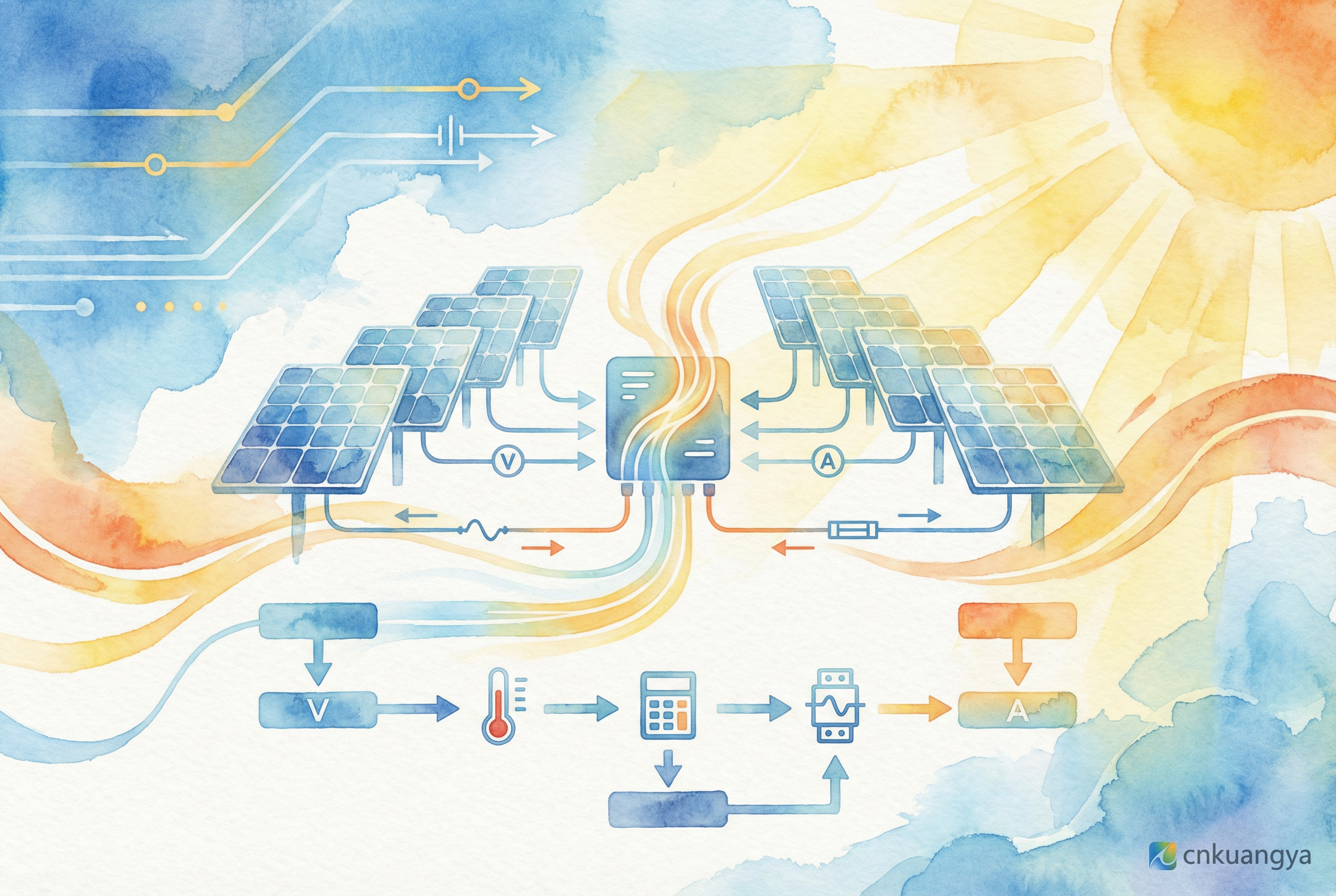
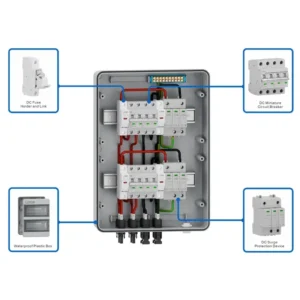
In un impianto solare fotovoltaico (FV), il combinatore svolge un ruolo centrale nel consolidare la potenza e garantire la sicurezza. È una scatola di giunzione in cui le uscite di più stringhe solari sono collegate in parallelo, combinando la loro corrente prima di inviarla all'inverter. Inoltre, ospita i dispositivi critici di protezione dalle sovracorrenti (fusibili o interruttori automatici) che proteggono il cablaggio e i componenti dell'impianto da guasti potenzialmente pericolosi.
Dimensionare correttamente il vostro Scatola combinatore FV e dei suoi componenti interni non è solo una buona pratica, ma un requisito fondamentale per un'installazione sicura, affidabile e conforme alle norme. Un componente sottodimensionato può causare rischi di incendio, mentre uno sovradimensionato può non fornire una protezione adeguata.
Questa guida illustra i passaggi essenziali per adattare la tensione e la corrente nominale del combinatore al vostro impianto solare specifico, con particolare attenzione ai requisiti del National Electrical Code (NEC). Verranno trattati i seguenti argomenti:
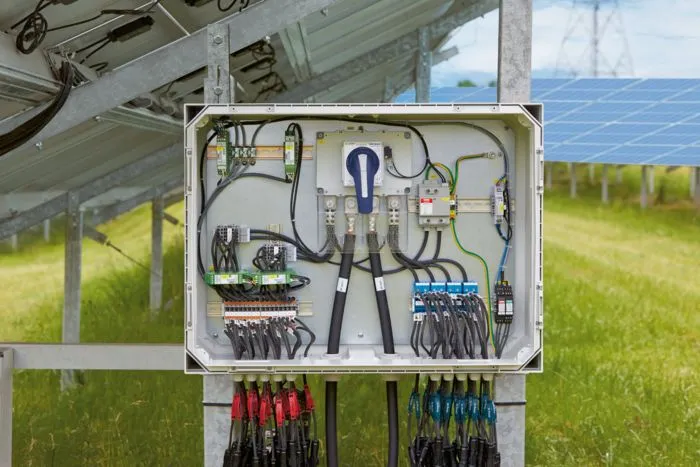
Per qualsiasi installazione fotovoltaica negli Stati Uniti, l'articolo 690 del NEC è l'autorità principale. Questa sezione del codice è dedicata specificamente agli impianti fotovoltaici, affrontando le caratteristiche uniche e i potenziali rischi della generazione di energia in corrente continua. Fornisce il quadro di riferimento per tutto ciò che riguarda il cablaggio e la messa a terra, i mezzi di disconnessione e la protezione dalle sovracorrenti. L'osservanza dell'articolo 690 è essenziale per garantire che il sistema sia sicuro e superi le ispezioni.
Il primo e più importante parametro da determinare è la tensione massima del sistema. Tutti i componenti di un circuito, dai cavi ai fusibili, fino al combinatore stesso, devono avere una tensione nominale pari o superiore alla tensione massima che potrebbero sperimentare.
In un sistema fotovoltaico, la tensione massima è determinata dal numero di moduli in una stringa in serie e dalla loro tensione a circuito aperto (Voc), riportata sulla scheda tecnica del modulo. Tuttavia, la tensione è inversamente proporzionale alla temperatura; la tensione di un pannello solare è massima nel giorno più freddo. La NEC richiede di calcolare la tensione massima per la temperatura ambiente più bassa prevista nel sito.
Come calcolare la tensione massima del sistema:
Voc corretta = Voc × [1 + (temperatura più bassa °C - 25°C) × (coefficiente di temperatura Voc %/°C)].Tensione massima del sistema = Voc corretta × Numero di moduli in serieEsempio:
48.5V × [1 + (-10 - 25) × (-0.0028)] = 48.5V × [1 + (-35 × -0.0028)] = 48.5V × 1.098 = 53.25V53.25V × 12 = 639VIn questo caso, il sistema richiede una scatola combinatore, fusibili e interruttori da almeno 639V. Pertanto, è necessario scegliere componenti di classe standard da 1000 V CC, in quanto i componenti da 600 V sarebbero insufficienti.
Dopo aver determinato la tensione nominale, il passo successivo consiste nel dimensionare i dispositivi di protezione dalle sovracorrenti (OCPD), che in genere sono fusibili. Lo scopo principale dei fusibili di stringa è quello di proteggere dalla corrente inversa. Un guasto in una stringa può provocare l'alimentazione inversa di altre stringhe, creando una condizione di sovracorrente pericolosa.
Secondo la norma NEC 690.9, il fusibile a livello di stringa è necessario ogni volta che si hanno tre o più stringhe in parallelo. Con due sole stringhe, il potenziale di corrente inversa non è abbastanza alto da superare il valore nominale del fusibile del modulo, quindi i fusibili non sono richiesti dal codice (anche se a volte sono ancora utilizzati come mezzo di disconnessione).
Come dimensionare i fusibili di stringa:
Il NEC richiede che il fusibile sia dimensionato per gestire il servizio continuo e i potenziali picchi di irraggiamento. Ciò si ottiene moltiplicando la corrente di cortocircuito (Isc) del modulo per un fattore di 1,56.
1.25 × 1.25 = 1.56Formula di valutazione dei fusibili: Fusibile minimo nominale ≥ Modulo Isc × 1,56
Dopo aver calcolato questo minimo, si seleziona la taglia di fusibile standard successiva.
Limitazione cruciale: Massimo valore del fusibile in serie\
Ogni modulo solare ha un “valore nominale massimo del fusibile in serie” indicato sulla scheda tecnica. Questo valore è un limite assoluto. La dimensione calcolata del fusibile non deve superare questo valore. Se lo fa, il progetto del sistema è difettoso, il che significa che il modulo scelto non può essere utilizzato con un numero così elevato di stringhe in parallelo.
Esempio:
10.5A × 1.56 = 16.38AIn base a questo calcolo, si sceglierebbe la taglia standard superiore, ovvero una 20A fusibile. Poiché 20A è pari alla portata massima del fusibile di serie del modulo, si tratta di una scelta valida. Se il calcolo avesse dato come risultato 21A, non sarebbe stato possibile utilizzare un fusibile da 25A e il progetto avrebbe dovuto essere rivalutato.
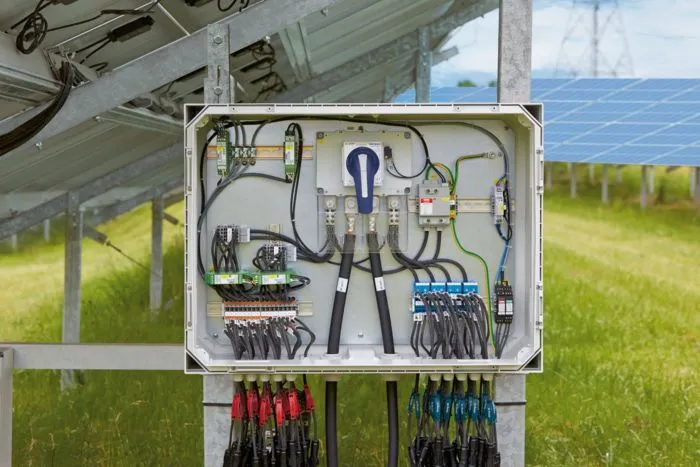
Il coordinamento della protezione assicura che in caso di guasto si apra per primo l'OCPD corretto. In caso di guasto all'interno di una singola stringa, si desidera che il fusibile della singola stringa si attivi, isolando solo quella stringa senza mettere offline l'intero array. L'OCPD principale all'uscita della scatola del combinatore deve intervenire solo in caso di guasto grave sui conduttori principali che portano all'inverter.
Ciò si ottiene assicurandosi che il dispositivo a valle abbia un rating inferiore a quello del dispositivo a monte.
| Componente | Scopo | Regola empirica di dimensionamento | Riferimento NEC |
|---|---|---|---|
| Fusibile per stringhe | Protegge le singole stringhe da guasti da corrente inversa provenienti da altre stringhe. | Isc × 1,56 (e deve essere ≤ al valore massimo del fusibile del modulo) | 690.9(A) |
| Combinatore principale OCPD | Protegge il cavo di uscita principale dalla scatola del combinatore all'inverter. | Somma di tutti i valori nominali dei fusibili di stringa, arrotondati per difetto alla dimensione dell'interruttore standard più vicina. Oppure (Isc totale × 1,25) e selezionare la taglia OCPD standard successiva. | 690.9(A) & 240.4 |
Sono necessari i fusibili per due sole stringhe in parallelo?\
No. Secondo la norma NEC 690.9, la protezione da sovracorrente è necessaria solo quando ci sono tre o più stringhe in parallelo. Con due stringhe, la corrente di guasto massima che una stringa può fornire all'altra è limitata all'Isc di una stringa, che è inferiore alla portata massima del fusibile del modulo.
È possibile utilizzare fusibili o interruttori in corrente alternata per i circuiti in corrente continua?\
No, è necessario utilizzare componenti specifici per i circuiti CC. Gli archi in corrente continua sono molto più difficili da estinguere rispetto a quelli in corrente alternata. Un dispositivo classificato per la corrente alternata probabilmente non riuscirà a interrompere in modo sicuro un guasto in corrente continua, causando un grave rischio di incendio e di sicurezza.
Cosa succede se installo un fusibile di dimensioni sbagliate?
Perché si utilizza il moltiplicatore 1,56 per il dimensionamento?\
Si tratta di un fattore di sicurezza combinato richiesto dal NEC. Consiste in due moltiplicatori separati di 1,25: uno per tenere conto del fatto che i circuiti solari sono considerati “carichi continui” (funzionano a corrente massima per più di 3 ore), e un secondo per tenere conto dei livelli di irraggiamento che possono superare le condizioni di prova standard, causando un aumento temporaneo della corrente oltre l'Isc nominale. (1.25 x 1.25 = 1.56).
Qual è la “portata massima del fusibile in serie” di un modulo?\
È un indice di sicurezza determinato dal produttore del modulo e certificato da UL. Indica la corrente massima che il modulo può sopportare senza subire danni se sottoposto a una corrente inversa. Non installare mai un fusibile o un OCPD con un valore superiore a questo.
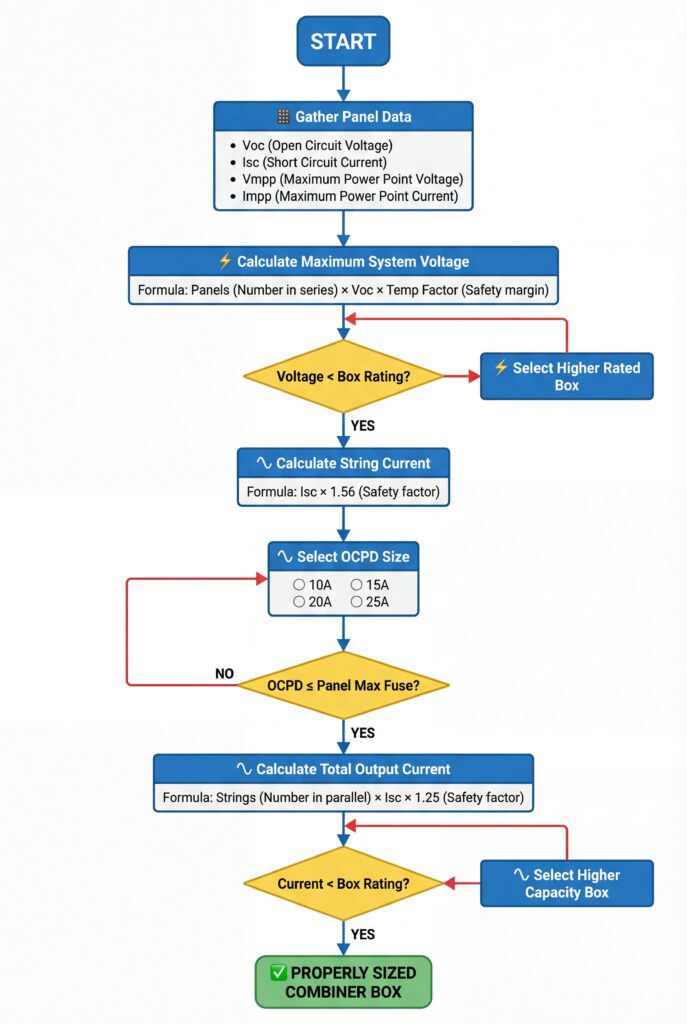
L'adattamento dei valori nominali di corrente e tensione di un combinatore fotovoltaico è un processo sistematico guidato da principi ingegneristici e dai severi standard di sicurezza del NEC. I punti fondamentali da cui partire sono:
Seguendo queste linee guida, potrete assicurarvi che il box di combinatore del vostro impianto solare sia dimensionato in modo sicuro, affidabile e professionale, costituendo una solida base per l'intero sistema fotovoltaico.

