Zona industriale di WengYang Yueqing Wenzhou 325000
Orario di lavoro
Da lunedì a venerdì: dalle 7.00 alle 19.00
Fine settimana: 10.00 - 17.00
Zona industriale di WengYang Yueqing Wenzhou 325000
Orario di lavoro
Da lunedì a venerdì: dalle 7.00 alle 19.00
Fine settimana: 10.00 - 17.00

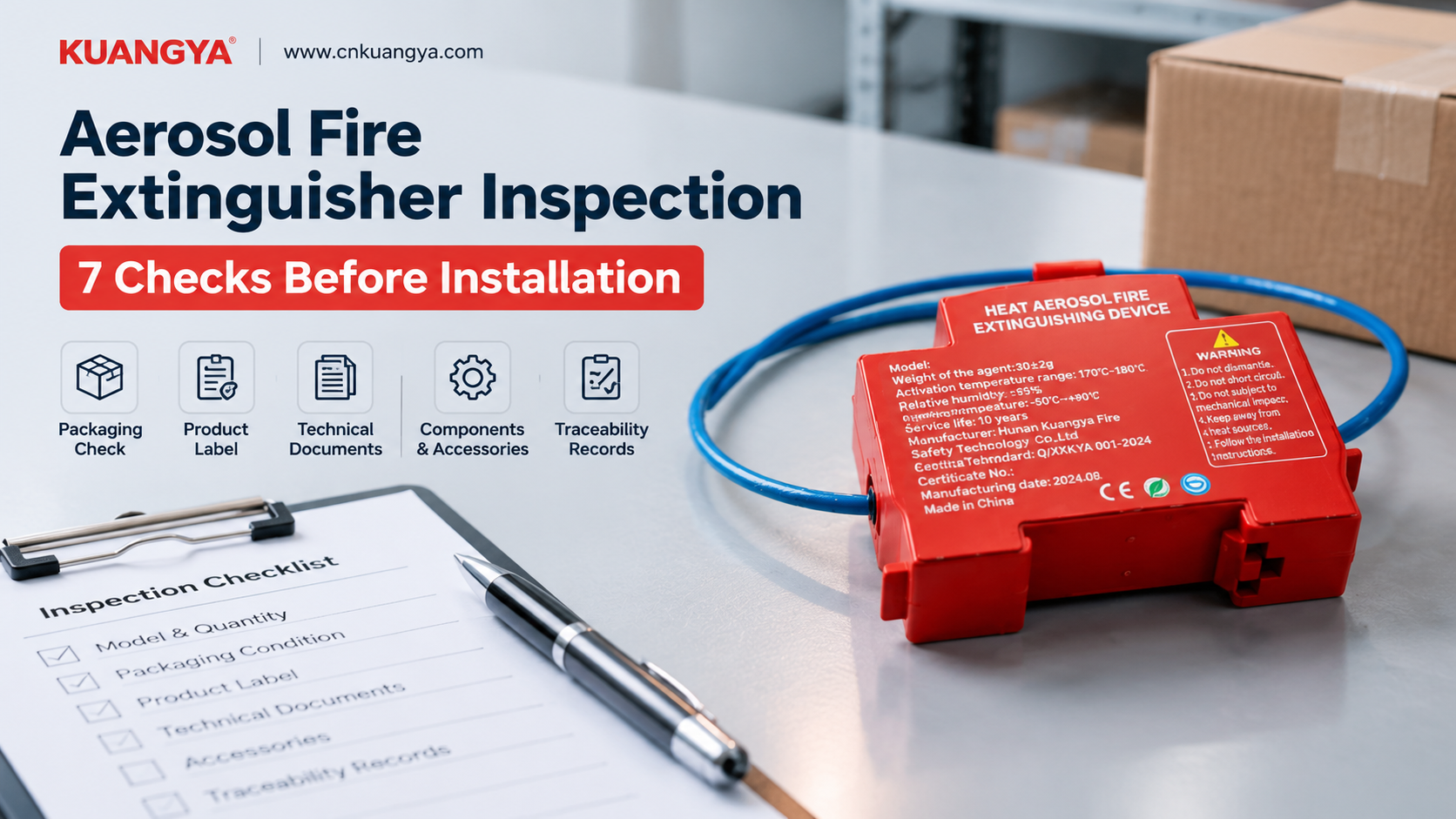
Aerosol fire extinguisher inspection is an important step before installing a fire suppression device inside an electrical cabinet, control panel, or other protected enclosure. Before installation, buyers and installers should verify that the delivered product matches the purchase order, arrives in acceptable condition, and is supported by the required technical documentation.
A missing accessory, incorrect model, damaged housing, or inconsistent product label can create unnecessary delays during installation and commissioning. These issues are easier to identify before the device is installed.
For electrical cabinet manufacturers, system integrators, EPC contractors, and industrial distributors, a structured incoming inspection process helps improve procurement control and product traceability.
This guide explains seven practical checks to perform when receiving an aerosol fire extinguisher, with a checklist that purchasing and quality control teams can use before installation.
The first step is to confirm that the delivered products match the order and approved product specifications.
Do not rely on the appearance of the device alone. Aerosol generators with similar housings may have different capacities, activation methods, dimensions, or application requirements.
Check the following information against the purchase order, approved drawings, and supplier confirmation:
For example, if a project specifies a particular 30g aerosol fire extinguishing device, verify the exact model and its approved technical specifications rather than accepting a visually similar product.
What if the model does not match?
Separate the affected products from the accepted batch and contact the supplier before installation. Record the model shown on the product label, the ordered model, the quantity affected, and any relevant photographs.
For additional background on matching an aerosol device to its intended application, see our guide to aerosol fire extinguishers for electrical cabinets.
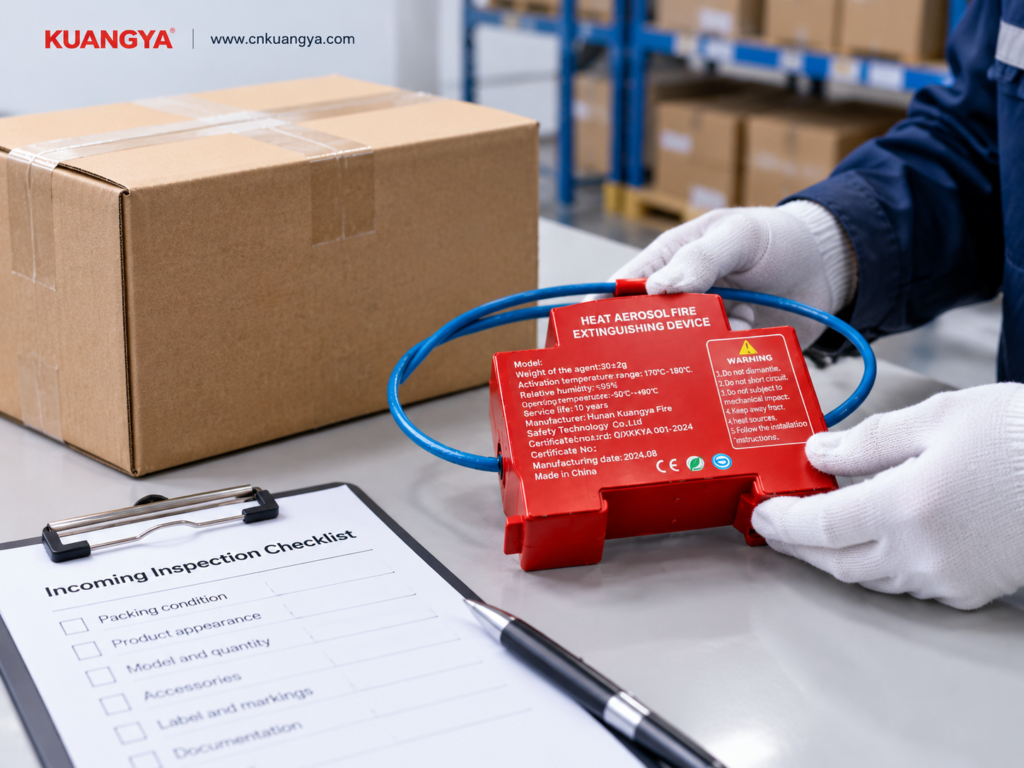
Packaging inspection is an important part of incoming quality control, particularly when products have traveled internationally or passed through multiple warehouses.
Start with the outer carton. Look for signs of crushing, punctures, water exposure, severe deformation, or evidence that the package has been opened or resealed.
Next, inspect the device itself according to the manufacturer’s instructions.
| Inspection item | What to look for | Azione raccomandata |
|---|---|---|
| Outer carton | Crushing, punctures, moisture, or damaged seals | Photograph and document the condition |
| Product housing | Dents, cracks, deformation, or unusual corrosion | Hold the affected unit for supplier assessment |
| Labels and markings | Peeling, illegible printing, or missing information | Compare with approved labeling requirements |
| Mounting bracket | Bending, cracks, or missing parts | Check against the approved parts list |
| Accessori | Missing or incorrect items | Record the discrepancy before installation |
Minor packaging damage does not automatically mean that the device itself is defective. Likewise, an undamaged carton does not prove that the contents are compliant.
The purpose of this inspection is to identify visible damage and determine whether further assessment is needed.
Importante: Do not dismantle the generator, open its housing, or manipulate its activation components as part of routine incoming inspection unless the manufacturer specifically authorizes the procedure.
If a unit is deformed, leaking material, unusually hot, or otherwise appears unsafe, isolate it from normal handling and obtain instructions from the manufacturer.
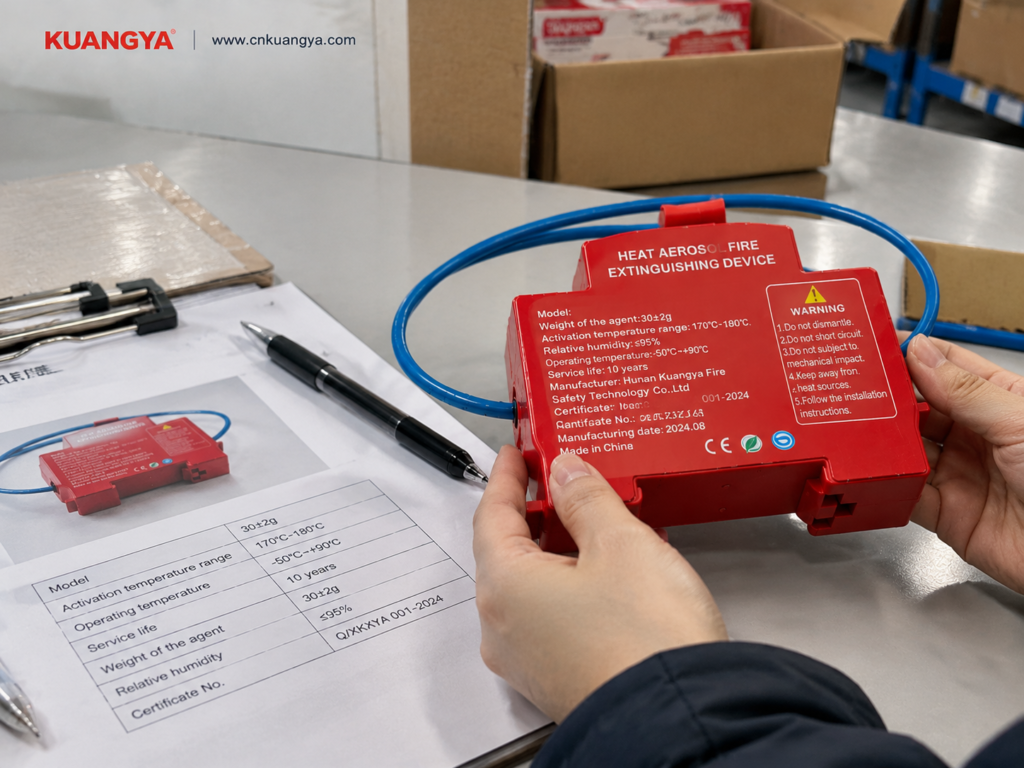
Product identification is essential for traceability, especially when an order contains multiple models or customer-specific versions.
A label should be checked against the approved drawing, product specification, and applicable project requirements.
Depending on the product and destination market, relevant information may include:
Not every product uses the same marking system. Some details may appear on the product itself, while others may be provided on the packaging or in accompanying documentation.
For OEM products, compare the delivered markings with the customer’s approved artwork. Check the brand name, model designation, technical information, language, and label position.
A label discrepancy should not be dismissed simply because the product looks correct. Incorrect identification can cause confusion during storage, installation, maintenance, or replacement.
If the label differs from the approved version, document the difference and obtain written clarification before releasing the product for installation.
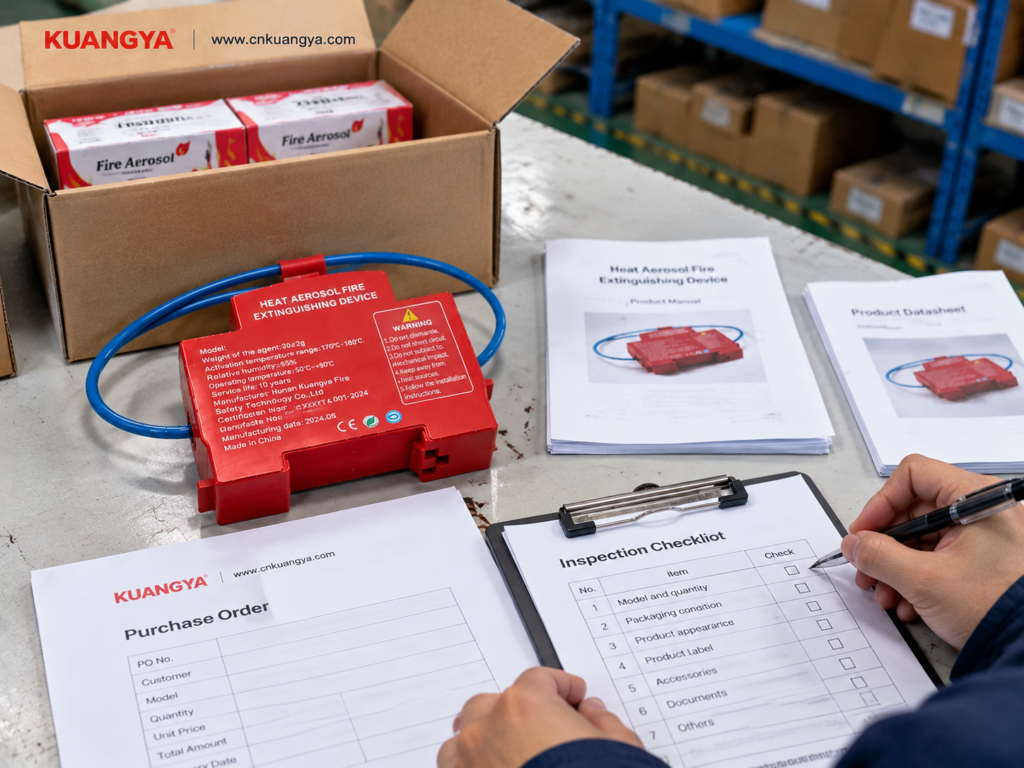
The next step is to confirm that the documentation required for the project has been supplied and corresponds to the actual product.
The documents required will depend on the product, destination market, application, and purchase agreement. A typical document review may include the following:
| Documento | What to verify |
|---|---|
| Scheda tecnica del prodotto | Model, dimensions, ratings, operating conditions, and application limits |
| Manuale di installazione | Mounting instructions, clearances, orientation, and installation restrictions |
| Operation and safety instructions | Handling precautions, activation hazards, and disposal guidance |
| Safety data sheet (SDS), where applicable | Relevant material hazards, handling, storage, and emergency measures |
| Certificate or conformity documentation, where required | Product identification, applicable standard, scope, and validity |
| Inspection or test records, where agreed | Model, batch, inspection scope, and recorded results |
| Packing list | Product descriptions and quantities delivered |
| Traceability records | Batch or serial identification, where applicable |
For condensed aerosol fire extinguishing systems, BS EN 15276 is a useful technical reference. Part 1 addresses requirements and test methods for components, while Part 2 covers system design, installation, and maintenance.
Riferimento: BSI — BS EN 15276, Condensed Aerosol Extinguishing Systems.
The existence of a standard does not automatically mean that every aerosol product is certified to it. Buyers should verify the actual certificate, its scope, the identified manufacturer and product, and the requirements applicable to the project.
Do not assume that a CE mark, a generic company certificate, or a document supplied for another model proves compliance for the device being received.
If the order specifies a particular certification, test report, or declaration of conformity, confirm that the document covers the relevant product and intended application.
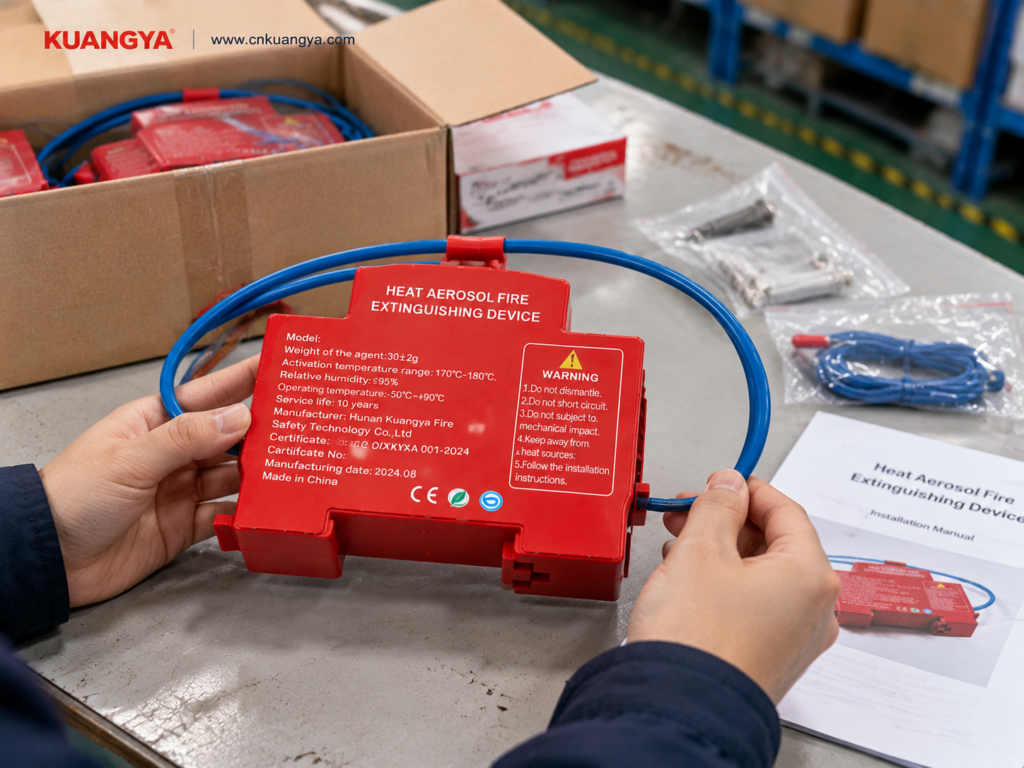
Aerosol fire extinguishing devices can use different activation arrangements. The inspection procedure must therefore match the specific model.
Before installation, verify the activation method stated in the datasheet and installation instructions.
For a thermally activated unit, check the externally accessible activation components for visible damage, displacement, or missing parts, where applicable.
For an electrically activated unit, verify the specified connector, wiring accessories, and control-system interfaces against the approved configuration. Any electrical testing must follow the manufacturer’s procedure and be performed by qualified personnel where required.
Check the supplied accessories against the packing list or approved bill of materials. Depending on the model, these may include mounting brackets, fasteners, connectors, or other specified components.
Never activate the device simply to test whether it works. A functional discharge test may consume the unit and create thermal, particulate, or other hazards. Do not apply voltage, heat, or other triggering conditions unless an explicitly approved test procedure calls for it.
If an activation component appears damaged or the configuration is unclear, stop the inspection and ask the supplier for written instructions.
For more information about system-level installation and maintenance requirements, consult the BSI reference for BS EN 15276-2.
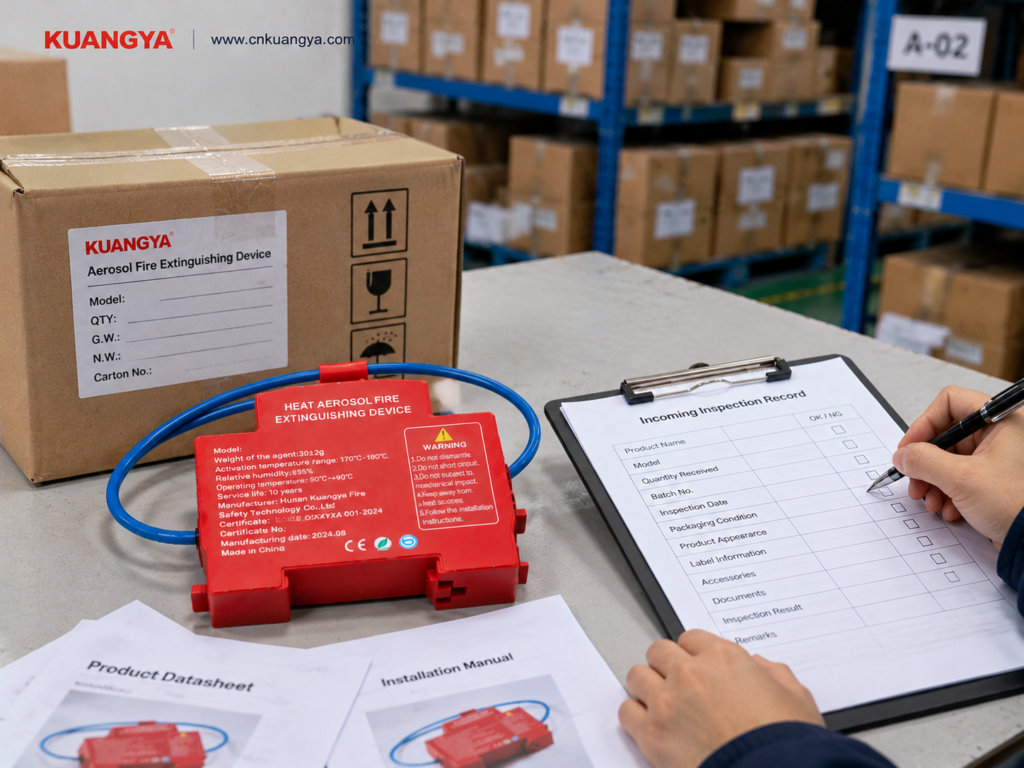
Incoming inspection should also establish whether the devices can be stored safely before installation.
Check the product documentation for the permitted storage temperature, humidity limits where specified, handling restrictions, and any special storage requirements.
Compare these requirements with the conditions experienced during transport and the conditions in the receiving warehouse.
If the shipment was exposed to extreme temperatures, flooding, prolonged moisture, or other potentially damaging conditions, do not assume the products remain acceptable simply because no visible damage is present. Ask the manufacturer whether further assessment is necessary.
Traceability is equally important for project procurement.
Where batch numbers, serial numbers, or manufacturing dates are provided, record them in the receiving inspection log. Keep the records associated with the purchase order, supplier, product model, and delivery date.
For projects involving multiple cabinets or installation locations, this information can help identify the affected products if a quality issue is reported later.
A basic receiving record may include:
These records provide a clear link between the products delivered and the products ultimately installed.
After completing the inspection, assign a clear disposition to the products.
Not every discrepancy requires rejection of the entire shipment. The appropriate action depends on the nature of the issue, the purchase agreement, and the manufacturer’s assessment.
| Inspection result | Recommended disposition |
|---|---|
| Product matches the order, with no identified issues | Accept according to the receiving procedure |
| Minor documentation discrepancy | Hold release until the required information is clarified |
| Missing accessory or incorrect quantity | Record the shortage and arrange resolution with the supplier |
| Label or model mismatch | Quarantine affected products pending verification |
| Visible housing damage or suspected activation-component damage | Prevent installation and request technical assessment |
| Evidence of unsafe storage or transport conditions | Hold the affected products until the manufacturer advises on their suitability |
| Required certification or test documentation is missing | Do not treat the requirement as satisfied until acceptable evidence is received |
If a problem is identified, send the supplier a concise report containing the purchase order number, product model, affected quantity, photographs, and a description of the discrepancy.
Ask for a written corrective action or technical disposition before installing affected products.
For an incoming inspection process, the goal is not to reject products unnecessarily. It is to ensure that products are released only after the specified acceptance requirements have been met.
Use the following checklist as a starting point for your purchasing or quality control procedure. Adapt it to the product datasheet, purchase order, applicable standards, and supplier instructions.
| No. | Inspection item | Risultato |
|---|---|---|
| 1 | Model and product quantity match the purchase order | Pass / Hold |
| 2 | Packaging has been checked for transport damage | Pass / Hold |
| 3 | Product housing has no visible damage requiring assessment | Pass / Hold |
| 4 | Product labels match the approved specification | Pass / Hold |
| 5 | Required accessories are present | Pass / Hold |
| 6 | Activation method and externally accessible components have been checked without triggering the device | Pass / Hold |
| 7 | Required technical documents have been received and reviewed | Pass / Hold |
| 8 | Applicable certification evidence has been checked, where required | Pass / Hold |
| 9 | Storage and handling requirements have been reviewed | Pass / Hold |
| 10 | Traceability and inspection records have been completed | Pass / Hold |
| 11 | Discrepancies have been documented and resolved or formally dispositioned | Pass / Hold |
| 12 | The product has been released for installation by the responsible person | Sì / No |
A completed checklist supports the receiving process, but it does not replace product-specific inspection instructions, required acceptance tests, or the formal approval procedures for a fire protection system.
No. Do not trigger or discharge a unit as a routine incoming inspection test. Follow the manufacturer’s approved inspection and testing instructions. Any required functional test should be planned around the specific design and safety requirements.
Place the affected products on hold, record the discrepancy, and contact the supplier. Confirm the correct model and approved marking requirements before installation. Do not assume that a different label is acceptable because the product looks similar.
Start with the product datasheet and installation manual. Depending on the purchase agreement and destination market, you may also need safety documentation, applicable certificates or declarations, inspection records, and traceability information. Confirm the exact requirements before ordering.
Possibly, but the condition of the product must be assessed. Photograph the packaging damage and inspect the device according to the manufacturer’s instructions. If the housing, activation components, or other critical parts may have been affected, hold the product until its suitability is confirmed.
Not necessarily. Check what the certificate actually covers, including the product or model, manufacturer, applicable standard, scope, and validity. A company-level quality management certificate is not automatically evidence that a particular aerosol generator meets every project requirement.
A structured incoming inspection helps purchasing teams, electrical cabinet manufacturers, and EPC contractors identify product discrepancies before installation begins.
By verifying the model, packaging, product markings, technical documents, activation configuration, storage conditions, and traceability records, buyers can reduce avoidable installation delays and improve procurement control.
The most important principle is to use the requirements for the actual product—not assumptions based on appearance or generic inspection practices.
At KUANGYA, we understand the importance of clear product identification and technical information for industrial electrical protection projects. If you are sourcing compact aerosol fire extinguishing devices for electrical cabinets or OEM applications, contact our team to discuss the required model, technical documentation, and project specifications.
Explore our aerosol fire extinguishing product information or visit KUANGYA to learn more about our electrical protection solutions.

