Zona industriale di WengYang Yueqing Wenzhou 325000
Orario di lavoro
Da lunedì a venerdì: dalle 7.00 alle 19.00
Fine settimana: 10.00 - 17.00
Zona industriale di WengYang Yueqing Wenzhou 325000
Orario di lavoro
Da lunedì a venerdì: dalle 7.00 alle 19.00
Fine settimana: 10.00 - 17.00

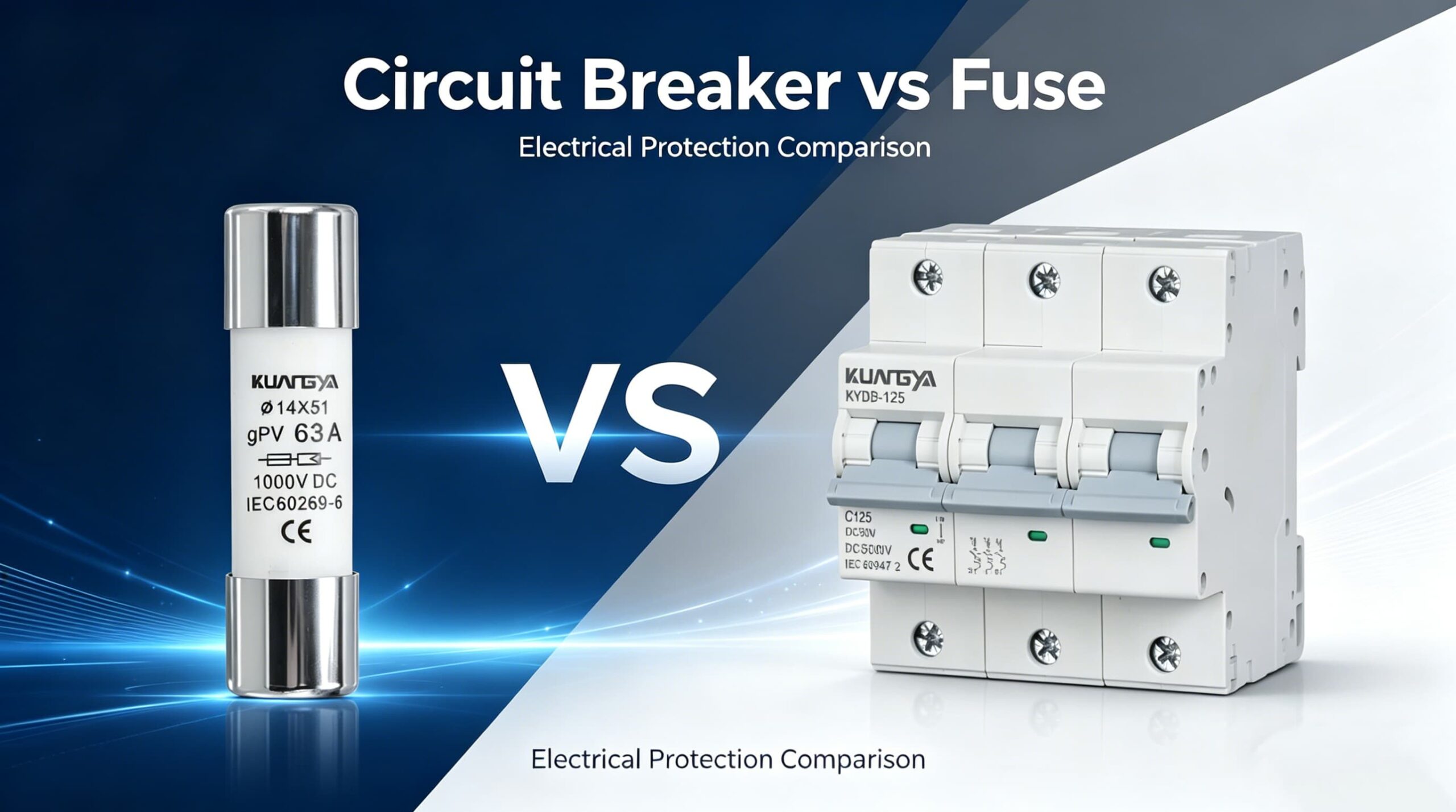
La comprensione degli interruttori automatici rispetto ai fusibili è importante per la progettazione di sistemi elettrici sicuri.
Un fusibile protegge i circuiti elettrici sciogliendosi in presenza di una corrente eccessiva, mentre un interruttore automatico interviene meccanicamente e può essere ripristinato. I fusibili sono più veloci ed economici, mentre gli interruttori automatici sono riutilizzabili e più convenienti per gli impianti elettrici moderni.
Quando si progetta un impianto elettrico, la scelta del giusto dispositivo di protezione è fondamentale per la sicurezza e l'affidabilità.
Due delle opzioni più comuni sono gli interruttori e i fusibili.
Ma quali sono le reali differenze tra i due e quale è il migliore per la vostra applicazione?
In questa guida, mettiamo a confronto gli interruttori automatici e i fusibili in termini di qualità:
per aiutarvi a scegliere la giusta soluzione di protezione.
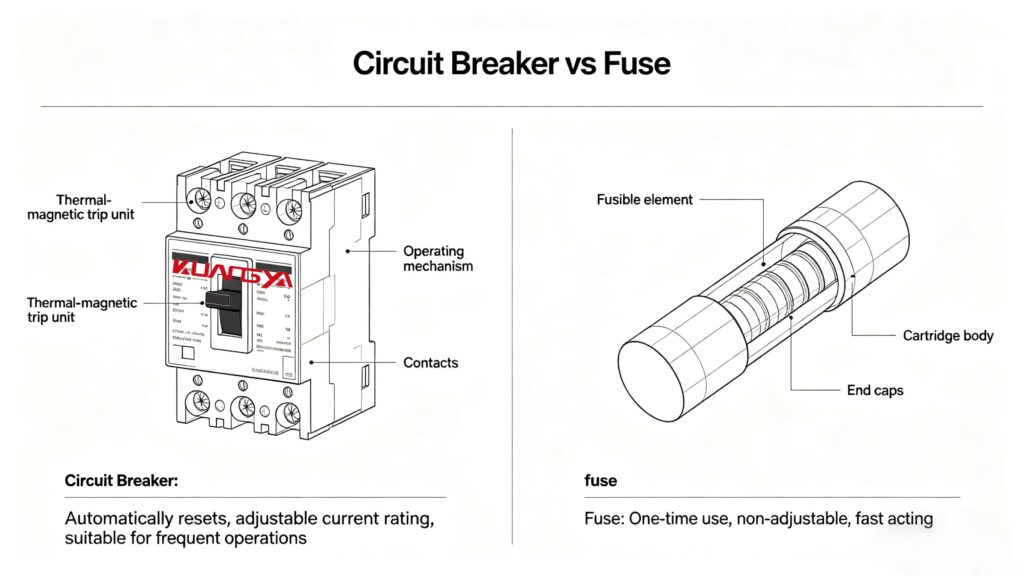
Il fusibile è un dispositivo di protezione da sovracorrenti sacrificali progettato per proteggere i circuiti elettrici da una corrente eccessiva.
Contiene un elemento metallico o un filo che si scioglie quando la corrente supera un limite specifico. Una volta fuso l'elemento del fusibile, il circuito si apre e si interrompe il flusso di corrente.
I fusibili fotovoltaici sono ampiamente utilizzati nei sistemi di energia solare per fornire una protezione da sovracorrente rapida e affidabile.
Per saperne di più sulle nostre soluzioni di fusibili CC, visitate il sito Kuangya Sito web ufficiale
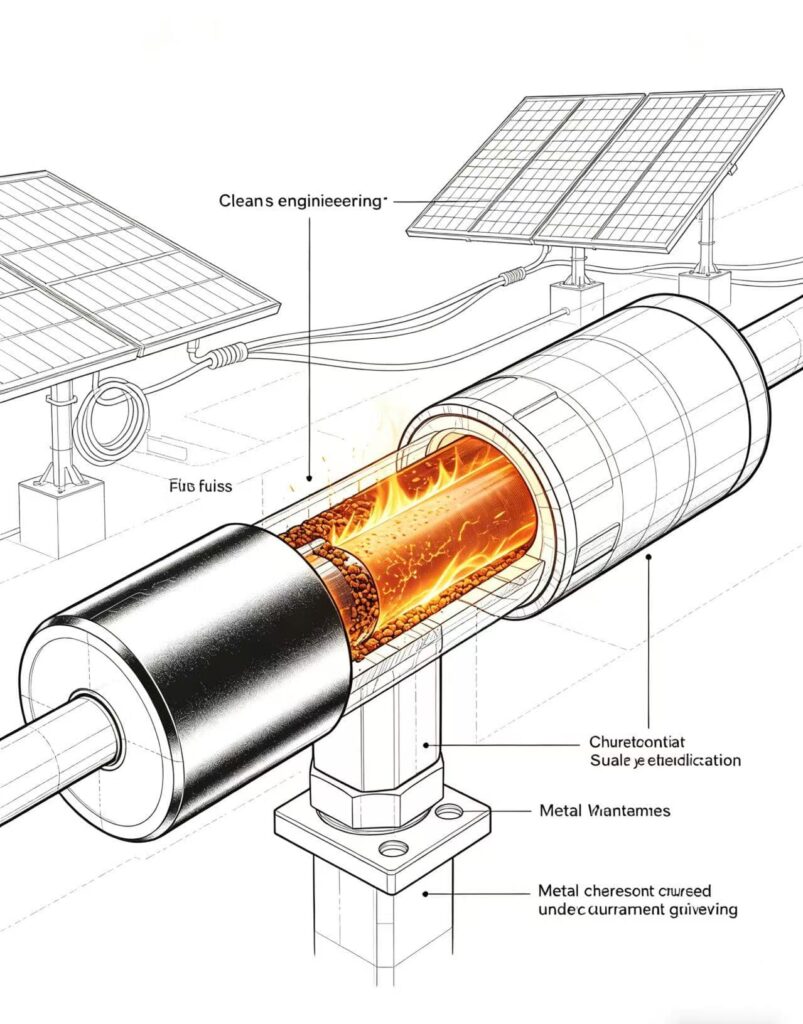
Quando una corrente anomala attraversa il circuito:
Il fusibile deve quindi essere sostituito manualmente prima che il sistema possa funzionare di nuovo.
I fusibili sono ampiamente utilizzati in:
L'interruttore automatico è un interruttore elettrico che protegge i circuiti da sovraccarichi e cortocircuiti.
A differenza di un fusibile, un interruttore automatico non deve essere sostituito dopo il funzionamento. Può essere semplicemente ripristinato e riutilizzato.
Gli interruttori automatici CC sono essenziali per i sistemi di accumulo di energia solare e a batteria.
Esplorate i nostri prodotti di interruzione del circuito su Kuangya Sito web ufficiale
Molti interruttori moderni sono progettati secondo gli standard IEC 60947-2 per le apparecchiature di comando e controllo a bassa tensione.
Per ulteriori informazioni, visitare il sito ufficiale Sito web IEC.
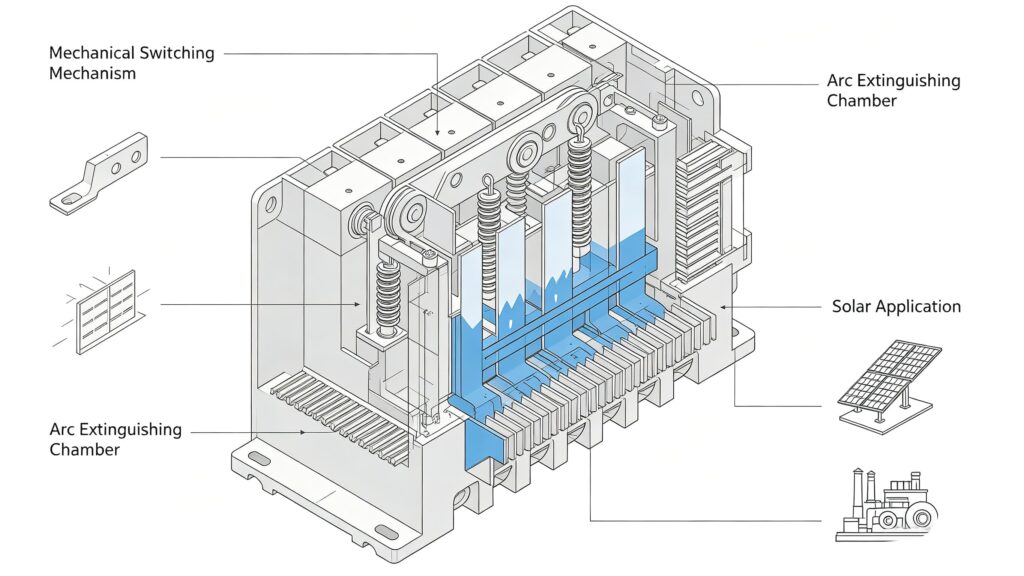
Un interruttore automatico rileva una corrente anomala utilizzando meccanismi termici o magnetici.
Quando si verifica una sovracorrente:
Gli interruttori automatici sono comunemente utilizzati in:
| Caratteristica | Fusibile | Interruttore automatico |
|---|---|---|
| Principio di funzionamento | Si scioglie in caso di sovracorrente | Scatto meccanico |
| Riutilizzabilità | Singolo uso | Riutilizzabile |
| Capacità di reset | No | Sì |
| Sostituzione necessaria | Sì | No |
| Velocità di risposta | Molto veloce | Veloce |
| Manutenzione | Richiede la sostituzione | Bassa manutenzione |
| Costo iniziale | Più basso | Più alto |
| Costo a lungo termine | Maggiore a causa della sostituzione | Più basso nel tempo |
| Caratteristiche di sicurezza | Protezione di base | Protezione avanzata |
| Funzionamento a distanza | Non disponibile | Disponibile in alcuni modelli |
| Controllo dell'arco | Limitato | Migliore soppressione dell'arco elettrico |
| Adatto per l'automazione | No | Sì |
I fusibili reagiscono con estrema rapidità ai cortocircuiti e alle condizioni di sovracorrente più severe.
I fusibili sono generalmente più economici degli interruttori automatici.
Nessuna parte meccanica in movimento.
Può gestire correnti di guasto molto elevate.
Design semplice e stabile.
Deve essere sostituito dopo la soffiatura.
La sostituzione richiede tempo.
Nessun monitoraggio o controllo remoto.
Una classificazione errata può causare problemi di sicurezza.
Può essere ripristinato dopo l'intervento.
Include molteplici funzioni di protezione.
Non è necessario sostituirlo.
Supporta l'IoT e i sistemi intelligenti.
Visualizzazione ON / OFF / TRIP.
Più costoso in anticipo.
Le parti interne possono invecchiare.
Rispetto ai fusibili a semiconduttore.
È necessario un test periodico.
Nei sistemi fotovoltaici, entrambi i dispositivi sono ampiamente utilizzati.
Un'adeguata protezione dalle sovratensioni è importante anche nei sistemi fotovoltaici.
Per saperne di più sui dispositivi di protezione SPD solari, consultare il sito Kuangya Sito web ufficiale
Gli impianti fotovoltaici richiedono dispositivi di protezione contro le sovracorrenti affidabili, progettati per applicazioni in corrente continua ad alta tensione.
I sistemi elettrici sono spesso progettati in base a standard quali Codice elettrico nazionale NFPA 70.
Negli impianti solari fotovoltaici, la scelta tra interruttore automatico e fusibile influisce sia sulla sicurezza che sull'affidabilità.
I sistemi a corrente continua sono più difficili perché l'estinzione dell'arco è più difficile.
Molti impianti fotovoltaici utilizzano entrambi insieme per ottenere la migliore protezione.
Sì.
Configurazione tipica:
Molti combinatori solari integrano entrambi.
Scoprite le nostre soluzioni di combinatori fotovoltaici su Kuangya Sito web ufficiale
Non sempre. Dipende dall'applicazione.
In alcuni casi, sì.
Gli interruttori durano più a lungo perché sono riutilizzabili.
Sì, ampiamente utilizzato nei sistemi industriali e solari.
Negli impianti solari fotovoltaici, la scelta tra interruttore automatico e fusibile influisce sia sulla sicurezza che sull'affidabilità.
La scelta tra un interruttore automatico e un fusibile non è solo una questione di prezzo.
Si tratta di:
Nei moderni impianti fotovoltaici, entrambe le tecnologie sono spesso combinate per ottenere la massima protezione.
Kuangya fornisce soluzioni affidabili di protezione CC e CA per applicazioni solari e industriali.
✅ Consulenza gratuita sul prodotto
Servizio OEM e ODM
✅ Assistenza rapida per i preventivi
Garanzia di 5 anni
Esperienza di esportazione globale
📩 Email: export@cnkuangya.com
Seguiteci per ulteriori approfondimenti sulla protezione solare ed elettrica.
🎥 TikTok: @kuangya3
▶ YouTube: @elainesun-m3t3j
📸 Instagram: @cnkuangya6
📘 Facebook: CNkuangya
Volete una guida completa a:
📩 Contattateci per ricevere la vostra guida tecnica GRATUITA in PDF.

