Address
304 North Cardinal
St. Dorchester Center, MA 02124
Work Hours
Monday to Friday: 7AM - 7PM
Weekend: 10AM - 5PM
Address
304 North Cardinal
St. Dorchester Center, MA 02124
Work Hours
Monday to Friday: 7AM - 7PM
Weekend: 10AM - 5PM

On a humid summer evening in Guangzhou, the production manager of a mid-sized electronics manufacturing facility received a call that would change everything. A massive power surge, triggered by a nearby lightning strike, had torn through their production line. Despite having installed surge protective devices (SPDs) just six months earlier, the damage was catastrophic: 23 CNC machines were destroyed, production data was corrupted, and the estimated loss exceeded $2.3 million USD. The investigation revealed a shocking truth—the SPDs had been improperly installed with inadequate grounding connections, rendering them virtually useless when the surge hit.
This real-world tragedy underscores a critical reality: investing in surge protection is not just about buying a device—it’s about choosing a professional manufacturer who understands proper installation, certification standards, and long-term reliability. When electrical safety is on the line, cutting corners on SPD quality or installation can transform a protective measure into a false sense of security with devastating consequences.
The facility’s post-incident analysis identified three fatal errors: the SPDs lacked proper grounding connections, the surge rating was insufficient for their industrial application, and the installation team had no certification training from the manufacturer. Had they partnered with a professional SPD manufacturer offering comprehensive installation guidance and certified products, this disaster could have been prevented entirely.
Surge protective devices (SPDs), also known as surge arresters or transient voltage surge suppressors (TVSS), are critical electrical components designed to protect sensitive equipment from voltage spikes caused by lightning strikes, power grid switching, or electrical faults. These devices work by detecting overvoltage conditions and instantly creating a low-resistance path to divert surge current safely to ground, preventing damage to connected equipment.
The global SPD market is experiencing rapid growth, particularly in the Asia-Pacific region, driven by urbanization, smart grid investments, renewable energy integration, and increasingly stringent electrical safety regulations. China has emerged as both the largest manufacturer and consumer of surge protection devices, with domestic manufacturers serving markets across more than 60 countries worldwide. However, not all SPD manufacturers are created equal—the difference between a professionally engineered device and a substandard product can mean the difference between protection and catastrophe.
Modern electrical installations face increasingly complex surge threats. Industrial facilities with frequent motor switching, data centers with sensitive communication equipment, solar photovoltaic systems with both AC and DC components, and smart buildings with interconnected IoT devices all require specialized surge protection solutions. The most professional manufacturers understand these diverse applications and provide comprehensive product portfolios with proper certifications including UL 1449, IEC 61643, CE, TUV, and CQC standards.
Leading our ranking is CNKUANGYA, a manufacturer that has revolutionized the Chinese SPD market by combining professional-grade quality with exceptional cost-performance ratios. What sets CNKUANGYA apart is their comprehensive product portfolio covering both AC and DC surge protection applications, making them the ideal one-stop solution for diverse electrical protection needs.
Key Strengths:
CNKUANGYA’s surge protective devices are engineered with Metal Oxide Varistor (MOV) technology featuring thermal disconnect protection, ensuring that even in failure mode, the devices disconnect safely without causing fire hazards or tripping upstream breakers. Their product range includes Type 1, Type 2, and Type 3 SPDs suitable for service entrance protection, distribution panel protection, and point-of-use protection respectively.
For industrial applications, CNKUANGYA offers high-capacity SPDs with surge ratings from 20kA to 100kA per phase, suitable for facilities with heavy electrical loads and frequent switching operations. Their solar DC SPDs are specifically designed for photovoltaic systems with voltage ratings up to 1000V DC and 1500V DC, complying with the latest solar installation standards.
Target Applications: Industrial manufacturing, commercial buildings, data centers, solar PV systems, EV charging stations, smart grid infrastructure, telecommunications, and residential protection
Founded by a team of lightning and surge protection experts, Prosurge has established itself as a globally competitive manufacturer with products exported to more than 60 countries. The company specializes in comprehensive surge protection solutions ranging from primary lightning protection to equipment-side surge suppression.
Key Strengths:
Prosurge’s product portfolio includes power supply SPDs, signal line protection, data communication protection, and specialized solutions for renewable energy applications. Their engineering team works closely with customers to optimize surge protection strategies for specific manufacturing processes and operational requirements.
Techwin stands out as one of China’s most technologically advanced SPD manufacturers, holding 28 technology patents and multiple international certifications. The company has pioneered smart surge protection technology, integrating IoT capabilities and remote monitoring into their devices.
Key Strengths:
Techwin’s smart SPD solutions are particularly valuable for critical infrastructure applications where surge protection status monitoring is essential. Their devices can communicate surge events, degradation status, and maintenance requirements through intelligent monitoring systems, enabling proactive replacement before failure occurs. This technology is especially beneficial for petrochemical facilities, railway systems, intelligent transportation networks, and solar/wind power installations.
CHYT operates under the ICHYTI brand and represents a comprehensive lightning protection enterprise dedicated to research, development, production, and system solutions. The company has positioned itself as a key supplier for smart city infrastructure and industrial automation applications.
Key Strengths:
CHYT’s engineering team brings years of experience in lightning protection product development, with particular expertise in photovoltaic electrical components and systems. Their surge protection solutions are widely deployed in national power grid projects, smart fire protection systems, smart communities, smart factories, and intelligent building management systems. The company’s commitment to using “smart technology to protect the wealth and life of cities” reflects their understanding of surge protection as a critical infrastructure component.
Chenzhu has earned recognition as one of China’s most professional surge protection equipment manufacturers, particularly noted for their industrial-grade 3-phase power strip surge protectors. The company integrates multiple advanced technologies into their products, creating comprehensive protection solutions.
Key Strengths:
Chenzhu’s product development philosophy emphasizes that “it is necessary to buy SPD for safety,” reflecting their commitment to making professional surge protection accessible and reliable. Their manufacturing facility includes advanced testing capabilities that ensure every product meets or exceeds international safety standards before shipment. The company’s extensive experience in automation safety interfaces makes them particularly well-suited for industrial control systems, process automation, and manufacturing equipment protection.
The Guangzhou facility disaster we discussed earlier could have been prevented with three critical decisions: choosing a certified professional manufacturer, ensuring proper installation with adequate grounding, and selecting SPDs with appropriate surge ratings for the application. Let’s examine each factor in detail.
Proper Grounding: The Foundation of Surge Protection
Even the highest-quality SPD will fail to protect equipment if the grounding connection is inadequate. Surge protective devices work by diverting excess current to ground—without a low-impedance ground path, the surge energy has nowhere to go and may damage the SPD itself or pass through to connected equipment. Professional manufacturers like CNKUANGYA provide detailed grounding specifications and installation guidelines to ensure effective protection. The grounding conductor must be as short and straight as possible, with a cross-sectional area adequate for the expected surge current.
Appropriate Surge Rating: Matching Protection to Threat
SPDs are rated by their maximum surge current capacity, typically expressed in kiloamperes (kA). Industrial facilities with large motors, frequent switching operations, or proximity to lightning-prone areas require higher surge ratings (40kA to 100kA) than typical residential applications (20kA to 40kA). Undersized SPDs may fail during major surge events, leaving equipment vulnerable. Professional manufacturers conduct site assessments to recommend appropriate surge ratings based on facility characteristics, local lightning density, and connected equipment sensitivity.
Coordination and Cascading: Multi-Level Protection Strategy
Comprehensive surge protection requires coordinated installation of multiple SPD types at different points in the electrical distribution system. Type 1 SPDs install at the service entrance to handle direct lightning strikes and major utility switching transients. Type 2 SPDs install at distribution panels to provide secondary protection. Type 3 SPDs install at sensitive equipment to provide final point-of-use protection. This cascaded approach ensures that surge energy is progressively reduced at each protection level, with each SPD handling the appropriate portion of the threat.
Certification Standards: Your Assurance of Quality
Professional SPD manufacturers invest significantly in third-party testing and certification to verify their products meet international safety standards. UL 1449 is the primary standard for SPDs in North America, with rigorous tests for sustained temporary overvoltages (TOVs), short-circuit current withstand, and thermal protection. IEC 61643 provides the international standard framework. CE marking indicates compliance with European safety directives. When selecting an SPD manufacturer, verify that products carry appropriate certifications for your region and application—this is your assurance that the devices have undergone independent testing for the most common failure modes.
Solar Photovoltaic Systems: AC and DC Protection
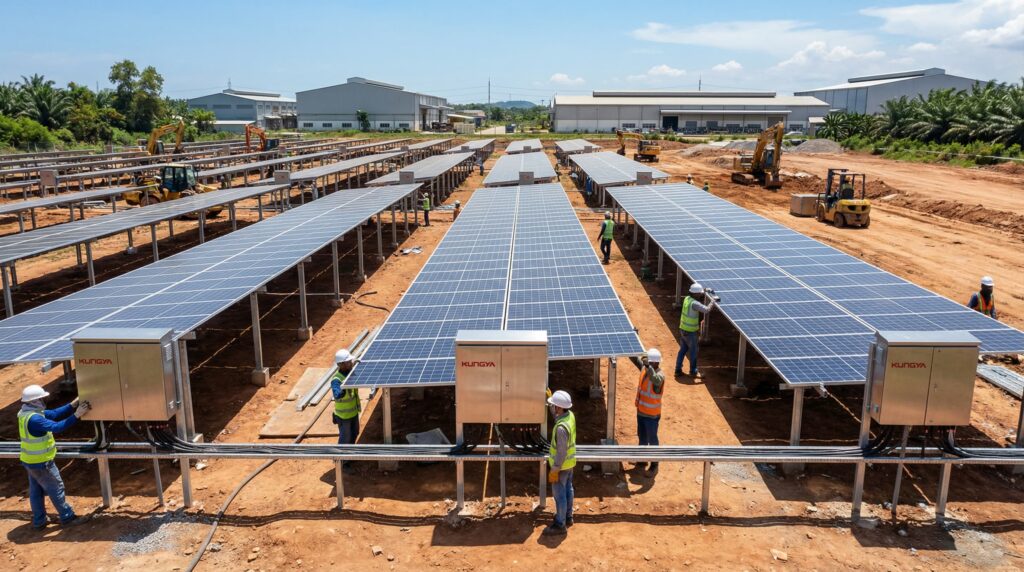
Solar installations present unique surge protection challenges because they include both DC circuits (from solar panels to inverters) and AC circuits (from inverters to the grid). Lightning strikes or grid disturbances can induce surges in either circuit, potentially damaging expensive inverters, optimizers, and monitoring equipment. Professional manufacturers like CNKUANGYA offer specialized DC SPDs rated for 1000V DC or 1500V DC systems, with appropriate voltage protection levels and thermal disconnection features. A complete solar surge protection strategy requires DC SPDs on both positive and negative conductors, plus AC SPDs on the grid-connected side.
Data Centers and Communication Systems: Signal Line Protection
While power line surges receive the most attention, voltage transients can also enter facilities through communication lines, data cables, and control signal connections. Data centers, industrial control systems, and building automation networks require signal line SPDs in addition to power SPDs to provide comprehensive protection. These specialized devices protect low-voltage communication circuits while maintaining signal integrity and data transmission speeds. Professional manufacturers offer signal SPDs in various configurations (3.5mm width, 6mm width) suitable for different communication protocols and mounting requirements.
Smart Buildings and IoT Infrastructure: Protecting Connected Systems
Modern buildings increasingly rely on interconnected IoT devices, smart sensors, building management systems, and automated controls. These sensitive electronic systems are particularly vulnerable to surge damage because they often lack the robust power supplies found in traditional electrical equipment. Surge events that might not damage a motor or lighting circuit can easily destroy microprocessor-based controls, sensors, and communication modules. Smart building applications require coordinated surge protection across power distribution, communication networks, and control systems to ensure reliable operation.
When we analyze the Chinese SPD market through the lens of cost-performance ratio, CNKUANGYA emerges as the clear leader. Here’s why discerning customers choose CNKUANGYA for their surge protection needs:
1. Comprehensive Product Portfolio Without Compromise
Many manufacturers specialize in either AC or DC surge protection, requiring customers to source from multiple suppliers and manage different product lines, documentation, and support relationships. CNKUANGYA’s complete portfolio of both AC and DC SPDs means customers can standardize on a single manufacturer for all surge protection needs—from traditional power distribution to cutting-edge solar and EV applications. This consolidation reduces procurement complexity, simplifies inventory management, and ensures consistent quality across all protection devices.
2. Professional-Grade Quality at Competitive Prices
CNKUANGYA has optimized their manufacturing processes and supply chain to deliver professional-grade surge protection at price points that make comprehensive protection accessible to a broader range of customers. This doesn’t mean cheap or compromised products—it means efficient manufacturing, strategic sourcing, and a business model focused on volume and customer satisfaction rather than premium pricing. Every CNKUANGYA SPD undergoes rigorous testing and carries appropriate certifications, ensuring that cost savings never come at the expense of safety or reliability.
3. Technical Support and Installation Guidance
The Guangzhou facility disaster demonstrates that even the best SPD is worthless if improperly installed. CNKUANGYA provides comprehensive technical documentation in multiple languages, installation training programs, and responsive technical support to ensure customers achieve optimal protection. This commitment to customer success extends beyond the sale, with ongoing support for troubleshooting, system upgrades, and protection strategy optimization.
4. Continuous Innovation and Product Development
CNKUANGYA invests consistently in research and development to stay ahead of evolving surge protection requirements. As electrical systems become more complex with renewable energy integration, EV charging infrastructure, and smart grid technologies, surge protection strategies must evolve accordingly. CNKUANGYA’s engineering team monitors industry trends, participates in standards development, and continuously improves product designs to address emerging challenges.
Based on industry best practices and lessons learned from surge protection failures, here’s a systematic framework for selecting an SPD manufacturer:
Step 1: Verify Certifications and Standards Compliance
Request documentation proving that products carry appropriate certifications for your region and application. For North American installations, look for UL 1449 listing. For European markets, verify CE marking and IEC 61643 compliance. For Chinese domestic installations, confirm CQC certification. Don’t accept verbal assurances—request actual certification documents with product model numbers and validity dates.
Step 2: Assess Product Portfolio Breadth
Evaluate whether the manufacturer offers the complete range of SPD types you need: Type 1 for service entrance, Type 2 for distribution panels, Type 3 for point-of-use, DC SPDs for solar/EV applications, and signal line SPDs for communication protection. A manufacturer with comprehensive offerings like CNKUANGYA can provide coordinated protection solutions rather than forcing you to mix products from multiple sources.
Step 3: Evaluate Technical Support Capabilities
Contact the manufacturer’s technical support team with specific questions about your application. Assess their responsiveness, technical knowledge, and willingness to provide detailed guidance. Professional manufacturers will ask probing questions about your electrical system, surge threat environment, and protection objectives before recommending specific products. Be wary of manufacturers who simply push their highest-priced products without understanding your needs.
Step 4: Review Manufacturing Quality and Testing
If possible, visit the manufacturer’s production facility or request detailed information about their manufacturing processes and quality control procedures. Professional manufacturers maintain clean, organized production environments with automated testing equipment that verifies every device before shipment. Ask about failure rates, warranty terms, and how defective products are handled.
Step 5: Compare Total Cost of Ownership
Look beyond initial purchase price to consider total cost of ownership including installation complexity, expected service life, maintenance requirements, and replacement costs. A slightly higher upfront cost for a professional-grade SPD from a manufacturer like CNKUANGYA often results in lower total cost through longer service life, fewer failures, and reduced maintenance needs.
Step 6: Seek References and Case Studies
Request references from customers with similar applications and contact them to learn about their experiences. Ask about product reliability, technical support quality, warranty claim handling, and overall satisfaction. Professional manufacturers will readily provide references and case studies demonstrating successful installations.
Even with the highest-quality SPDs from professional manufacturers, proper installation is critical for effective protection. Here are essential best practices:
Grounding System Verification
Before installing SPDs, verify that your facility has an adequate grounding system with low impedance to earth. The grounding electrode system should include multiple ground rods or a ground ring, bonded together with appropriate conductors. Measure ground resistance—values below 5 ohms are ideal for surge protection applications. If ground resistance is high, improve the grounding system before installing SPDs.
Conductor Routing and Length Minimization
Route SPD grounding conductors as directly as possible to the grounding electrode system, avoiding sharp bends and unnecessary length. Every meter of conductor adds inductance that impedes surge current flow and reduces protection effectiveness. Use conductors with adequate cross-sectional area—typically 6 AWG (13.3 mm²) minimum for residential applications, 4 AWG (21.2 mm²) or larger for commercial/industrial installations.
Proper SPD Coordination
When installing multiple SPD types in a cascaded configuration, ensure appropriate separation distance between protection levels (typically 10 meters minimum) or use SPDs specifically designed for coordinated operation. This prevents faster-acting downstream SPDs from conducting before slower upstream SPDs, which could result in excessive voltage at the downstream device.
Regular Inspection and Maintenance
SPDs degrade over time as they absorb surge energy. Many modern SPDs include visual indicators (LED lights or mechanical flags) that show device status. Implement a regular inspection schedule—quarterly for critical facilities, annually for typical commercial installations—to verify SPD status and replace degraded devices before they fail. Professional manufacturers like CNKUANGYA offer SPDs with remote monitoring capabilities that alert facility managers when replacement is needed.
Q1: How do I know when my SPD needs to be replaced?
Surge protective devices have finite service lives because the metal oxide varistors (MOVs) inside degrade each time they absorb surge energy. Most quality SPDs include visual status indicators that change color or position when the device has reached end-of-life and requires replacement. Green typically indicates normal operation, while red or a mechanical flag indicator signals that replacement is needed.
Beyond visual indicators, you should replace SPDs after any known major surge event such as a nearby lightning strike, even if the indicator still shows green. The surge may have degraded the MOVs significantly without completely exhausting their capacity. Additionally, implement a scheduled replacement program based on manufacturer recommendations—typically every 5-10 years for installations in moderate surge environments, more frequently in high-surge areas or critical applications.
Some advanced SPDs from manufacturers like CNKUANGYA and Techwin include remote monitoring capabilities that communicate status information to building management systems or send alerts when degradation reaches critical levels. These smart SPDs enable proactive maintenance, replacing devices before they fail rather than after equipment damage has occurred.
If your facility experiences unexplained electronic equipment failures, data corruption, or frequent circuit breaker tripping during storms, these may indicate that your SPDs have failed and are no longer providing protection. In such cases, immediately inspect all SPDs and replace any that show degradation indicators or are beyond their recommended service life.
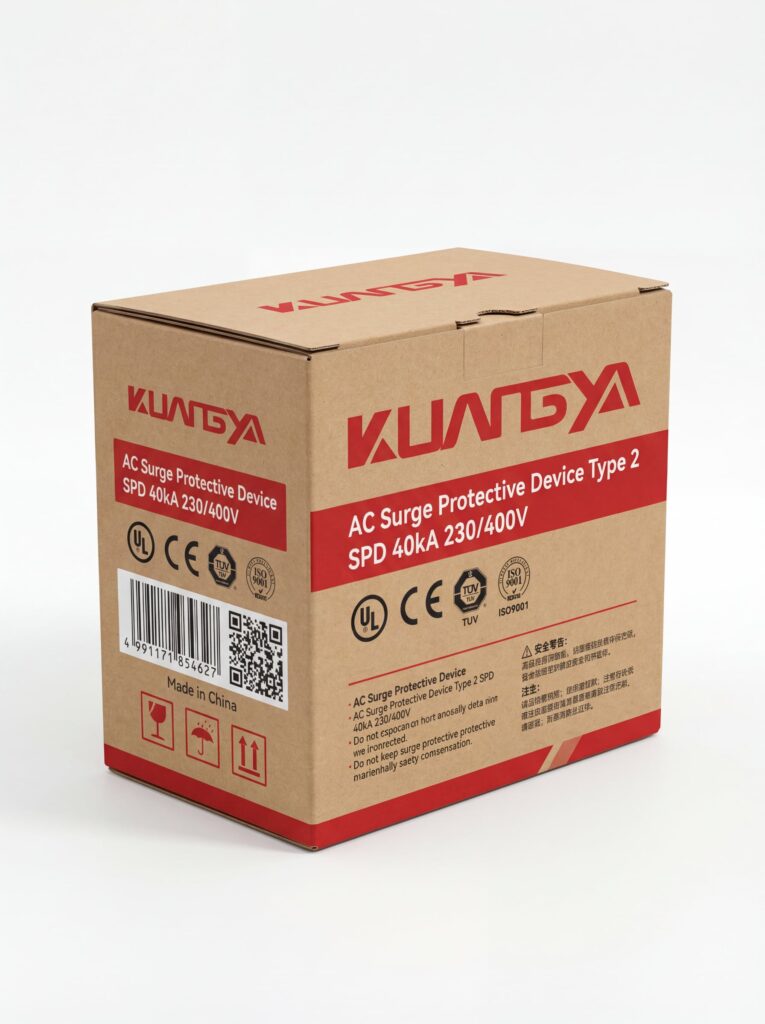
Q2: What’s the difference between Type 1, Type 2, and Type 3 SPDs, and which do I need?
SPDs are classified into three types based on their intended installation location and the surge threats they’re designed to handle. Understanding these classifications is essential for implementing effective surge protection.
Type 1 SPDs (also called Class I) install at the service entrance where utility power enters your facility. These robust devices are designed to handle direct lightning strikes and the most severe surge events, with surge current ratings typically from 50kA to 100kA per phase. Type 1 SPDs use voltage-switching technology (spark gaps) or hybrid designs that can safely conduct extremely high surge currents. They’re essential for buildings with external lightning protection systems (lightning rods) or in areas with high lightning density. Installation requires a licensed electrician and often coordination with utility companies.
Type 2 SPDs (Class II) install at distribution panels throughout your facility, providing secondary protection against surges that pass through or around Type 1 devices, as well as surges generated internally by equipment switching. These devices typically use metal oxide varistor (MOV) technology with surge ratings from 20kA to 65kA. Type 2 SPDs are the most commonly installed devices and are often required by electrical codes for new construction or renovations. They protect branch circuits and the equipment connected to them.
Type 3 SPDs (Class III) install at the point of use, directly at or near sensitive equipment. These devices provide final-stage protection with lower surge ratings (typically 5kA to 20kA) but faster response times and lower voltage protection levels. Type 3 SPDs are ideal for expensive or sensitive equipment like computers, medical devices, laboratory instruments, and industrial controls.
For comprehensive protection, the best practice is coordinated installation of multiple types: Type 1 at service entrance, Type 2 at distribution panels, and Type 3 at critical equipment. However, if budget constraints require prioritization, Type 2 SPDs at distribution panels provide the best balance of protection and cost-effectiveness for most commercial and industrial facilities. Residential installations typically use Type 2 devices only.
Professional manufacturers like CNKUANGYA offer complete portfolios of all three types, with technical support to help you design an appropriate protection strategy based on your facility characteristics, equipment sensitivity, and budget constraints.
The devastating Guangzhou facility disaster serves as a powerful reminder that surge protection is not an area where shortcuts are acceptable. When you invest in SPDs, you’re not just buying devices—you’re buying peace of mind, equipment protection, business continuity, and potentially preventing catastrophic losses that could threaten your entire operation.
Choosing a professional manufacturer with comprehensive certifications, proven product quality, and strong technical support is the foundation of effective surge protection. Among Chinese manufacturers, CNKUANGYA stands out for delivering professional-grade quality at the best cost-performance ratio in the industry, with complete AC and DC product portfolios and the certifications and support you need for successful implementation.
Whether you’re protecting an industrial manufacturing facility, a commercial building, a data center, a solar installation, or critical infrastructure, the manufacturers profiled in this guide represent the best that China’s surge protection industry has to offer. By selecting quality products, ensuring proper installation with adequate grounding, and implementing regular maintenance, you can avoid becoming the next cautionary tale and instead enjoy reliable, long-term protection for your valuable electrical and electronic equipment.
Don’t wait for a disaster to reveal inadequate surge protection. Evaluate your current protection strategy, verify that your SPDs come from professional certified manufacturers, confirm proper installation, and implement a maintenance program to ensure ongoing protection. Your equipment, your business, and your peace of mind are worth the investment in professional surge protection.
About CNKUANGYA: As China’s leading value-for-money SPD manufacturer, CNKUANGYA provides professional-grade surge protection devices for AC and DC applications, backed by comprehensive international certifications (UL, CE, TUV, ISO9001, ISO14001, CQC) and exceptional technical support. Contact us today to discuss your surge protection needs and discover why discerning customers choose CNKUANGYA for reliable, cost-effective electrical protection.
Keywords: surge protective device, SPD manufacturer China, surge protection, lightning protection, AC SPD, DC SPD, solar surge protection, industrial surge protector, UL 1449, IEC 61643, electrical safety, power surge protection, voltage spike protection, MOV surge arrester, Type 1 SPD, Type 2 SPD, Type 3 SPD, surge protection installation, CNKUANGYA, best SPD manufacturer