WengYang Industrial Zone Yueqing Wenzhou 325000
Work Hours
Monday to Friday: 7AM - 7PM
Weekend: 10AM - 5PM
WengYang Industrial Zone Yueqing Wenzhou 325000
Work Hours
Monday to Friday: 7AM - 7PM
Weekend: 10AM - 5PM

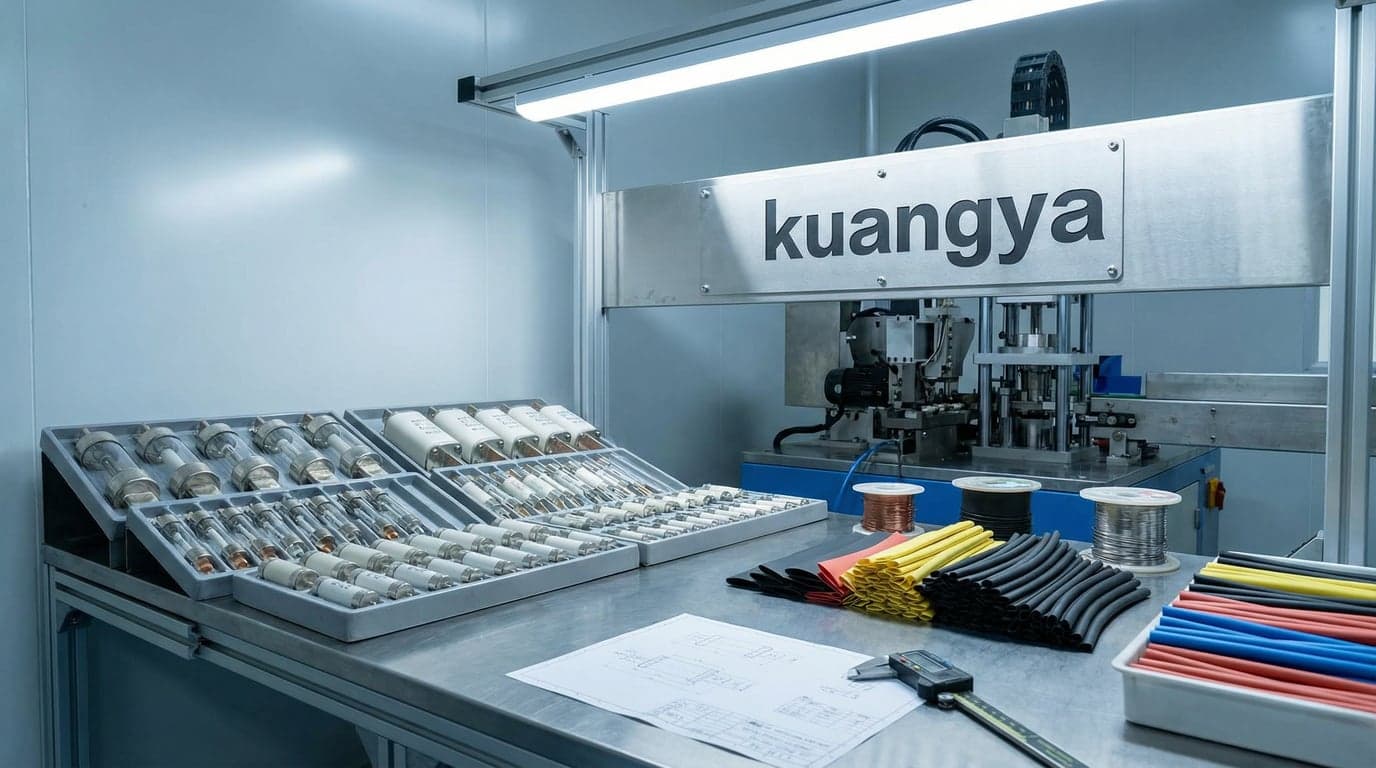
In the complex world of industrial electrical protection, the correct selection and sizing of fuse links are paramount for system safety and reliability. Whether designing for renewable energy systems, electric vehicle infrastructure, or traditional industrial power distribution, understanding the nuances of Fuse Link AC/DC Applications is critical for engineers and procurement specialists alike.
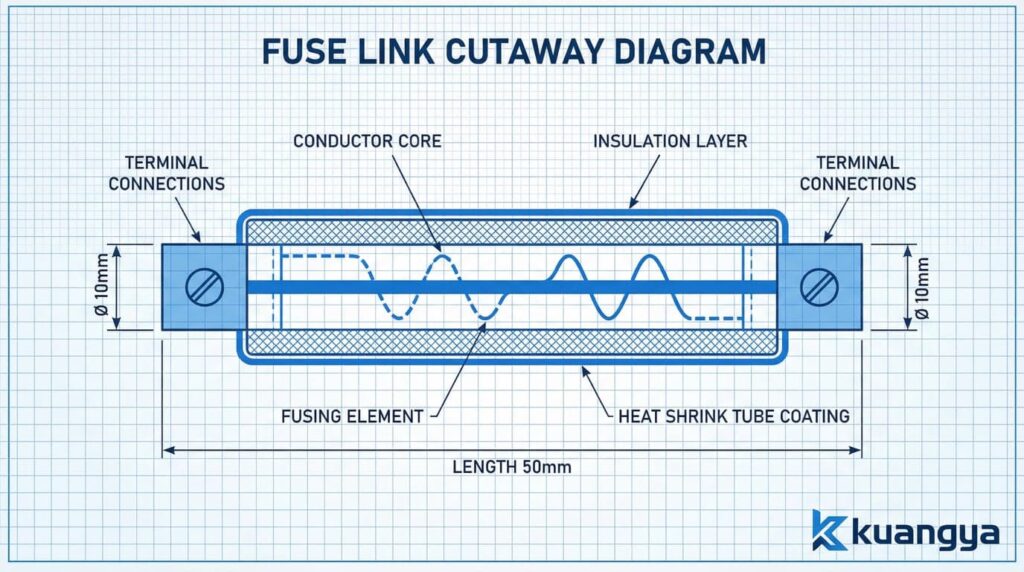
A fuse link is a sacrificial device designed to protect electrical circuits from overcurrent conditions. It consists of a metal strip or wire fuse element, often enclosed in a housing, that melts when current exceeds a specific value for a determined duration.
In modern industrial applications, fuse links are not standalone components. They are often integrated with busbars and require robust insulation protection—typically provided by high-quality heat shrink tubing—to prevent environmental corrosion and accidental arcing.
One of the most common errors in electrical design is assuming AC and DC fuses are interchangeable. While some fuse links are dual-rated, the physics of interrupting Alternating Current (AC) versus Direct Current (DC) differs significantly.
| Feature | AC Application | DC Application |
|---|---|---|
| Current Flow | Oscillating (Sine wave) | Continuous / Unidirectional |
| Arc Extinction | Easier due to zero-crossing | Difficult; requires active suppression |
| Voltage Rating | Standard RMS rating | Often requires higher rating than circuit voltage |
| Size/Construction | Standard dimensions | Often larger to accommodate arc suppression |
| Typical Use | Grid power, Motors, Lighting | Solar PV, EV Batteries, UPS Systems |
Proper sizing involves more than matching the ampere rating. It requires a calculation that accounts for voltage, ambient temperature, and the specific load characteristics.
The fuse voltage rating must be greater than or equal to the circuit voltage.
The current rating represents the current the fuse can carry continuously without deteriorating.
This is the maximum current the fuse can safely interrupt without exploding.
When selecting fuse links for AC/DC applications, environmental factors play a crucial role. A fuse operating in a hot enclosure will blow faster than one in a cool room.
Fuses are typically rated at 25°C (77°F). If the operating temperature is higher, the fuse must be “derated” (upsized) to avoid nuisance blowing.
General Derating Formula:
$$I_{fuse} \geq \frac{I_{load}}{K_t \times K_a}$$
| Application Type | Load Current (A) | Recommended Fuse Rating (A) | Cable Insulation |
|---|---|---|---|
| Motor Circuit (AC) | 100A | 150A – 175A (Time-Delay) | PVC / XLPE |
| Battery Bank (DC) | 200A | 250A – 300A (Fast-Acting) | Heat Shrink Protected |
| Solar PV String (DC) | 15A | 20A (gPV Class) | UV Resistant |
| Control Transformer | 2A | 3A – 4A | Standard |
Even the perfectly sized fuse can fail if installed incorrectly. The interface between the fuse link and the system is a critical point of failure.
Loose connections create resistance, generating excess heat that can cause the fuse to blow prematurely or damage the fuse holder. Always use a calibrated torque wrench.
In high-power AC/DC applications, exposed terminals are a risk.
Regularly inspect fuse links for signs of thermal stress, such as discoloration on the metal caps or brittleness in the surrounding heat shrink insulation.
| Industry | Primary Concern | Recommended Fuse Type | Protection Strategy |
|---|---|---|---|
| Solar / PV | High DC Voltages (1000V-1500V) | gPV (Photovoltaic) | UV-resistant heat shrink on connectors |
| Electric Vehicles | Cyclic Loads & Vibration | High-Speed DC (aR) | Heavy-wall adhesive-lined tubing for vibration resistance |
| Industrial Motors | Inrush Current | Time-Delay (Dual Element) | Color-coded busbar tubing for phase identification |
| Telecom Power | Reliability & Low Voltage Drop | TPL / TPN | Flame-retardant insulation materials |
Generally, no. Unless the fuse is specifically dual-rated (marked with both AC and DC voltage ratings), using an AC fuse in a DC circuit is dangerous because it may not be able to extinguish the DC arc, leading to fire or explosion.
Heat shrink tubing itself does not affect the internal melting point of the fuse element. However, it provides essential external insulation. By preventing accidental bridging and corrosion, it ensures the fuse operates only when an internal fault occurs, not due to external environmental factors.
Fast-acting fuses blow almost instantly when an overcurrent occurs, protecting sensitive electronics. Time-delay fuses allow a temporary surge (like a motor starting up) without blowing, but will still open if the overload persists.
Battery banks have massive short-circuit potential. You must select a fuse with a DC Interrupting Rating higher than the battery’s total short-circuit current. The ampere rating should be roughly 125-150% of the maximum continuous discharge current.
At high altitudes, air is thinner, which reduces its cooling capacity. This means the fuse gets hotter for the same amount of current. Therefore, fuses often need to be derated (upsized) for applications above 2,000 meters.
Breaking capacity (or interrupting rating) is the maximum fault current the fuse can safely stop. If a fault delivers 50,000 Amps, but your fuse is only rated for 10,000 Amps, the fuse casing may rupture physically.
At Kuangya Electric, we understand that reliable circuit protection goes beyond just the fuse link itself. As a leading B2B manufacturer specializing in electrical insulation solutions, we provide the high-performance heat shrink tubing and busbar insulation necessary to ensure your AC/DC fuse applications are safe, compliant, and durable. Whether you are engineering next-generation EV charging stations or industrial power distribution units, our technical expertise ensures your connections remain secure and insulated against the harshest environments.

