WengYang Industrial Zone Yueqing Wenzhou 325000
Work Hours
Monday to Friday: 7AM - 7PM
Weekend: 10AM - 5PM
WengYang Industrial Zone Yueqing Wenzhou 325000
Work Hours
Monday to Friday: 7AM - 7PM
Weekend: 10AM - 5PM

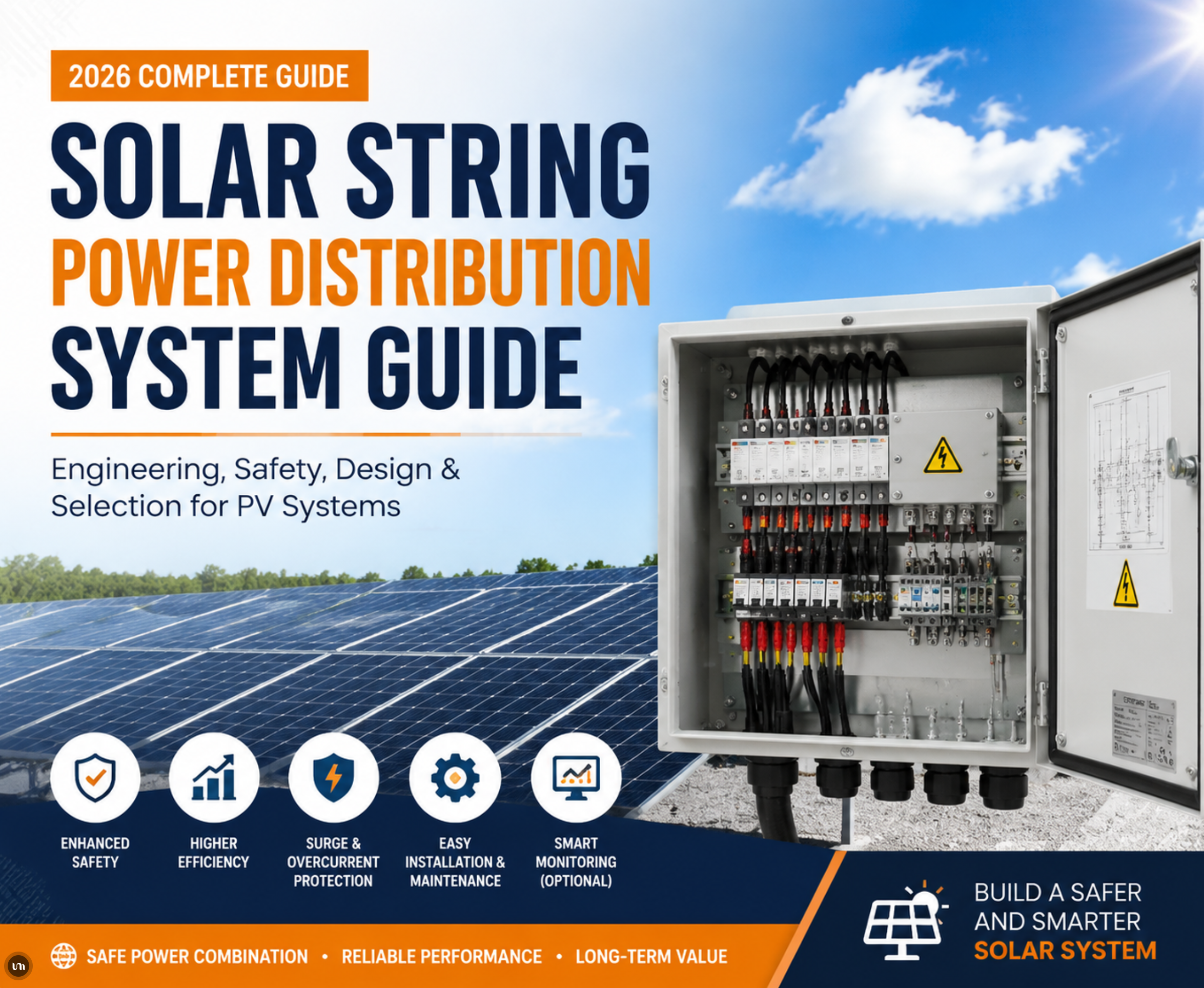
In modern photovoltaic (PV) power plants, electrical safety and energy efficiency are no longer optional considerations. They are essential design requirements that directly affect system performance, operational reliability, and long-term return on investment. As solar installations continue to expand globally, the need for structured DC power aggregation and protection becomes increasingly important.
A central component in this architecture is a device commonly used to combine multiple solar strings into a single output while integrating protection, monitoring, and safety mechanisms. This guide explains everything from basic principles to advanced engineering considerations, helping engineers, EPC contractors, and system designers understand how this critical component functions in real-world applications.
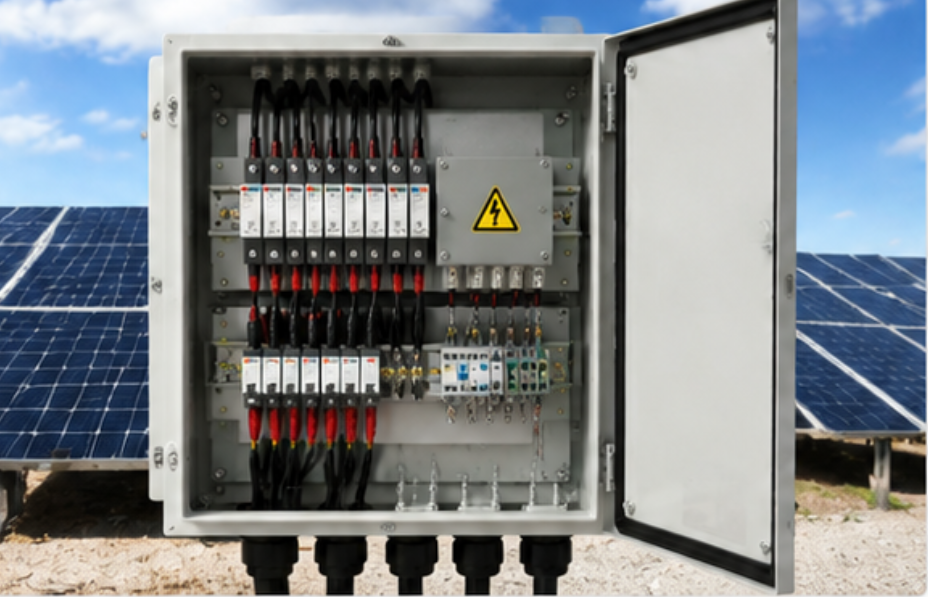
In a photovoltaic installation, each solar string generates DC electricity independently. Without a structured method of combining these outputs, system design becomes inefficient, difficult to maintain, and potentially unsafe. This is why PV systems rely on centralized aggregation units to manage multiple input strings.
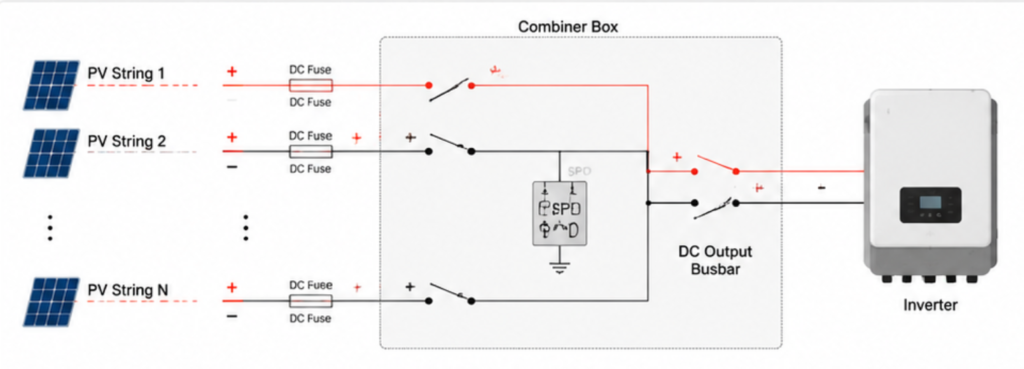
A typical solar string power distribution system consolidates several DC inputs into one or more outputs directed toward the inverter. This improves wiring efficiency, reduces installation complexity, and enhances overall system safety. In addition, it provides a centralized point for overcurrent protection and surge suppression.
From an engineering standpoint, this system acts as both a management hub and a safety barrier, ensuring that faults in one string do not propagate across the entire PV array.
As photovoltaic systems scale up in size, the electrical risks associated with DC circuits increase dramatically. Unlike AC systems, DC power does not naturally cross zero voltage, which makes arc suppression more difficult and increases the severity of electrical faults.
According to global industry standards, proper surge protection and DC circuit management must be implemented in all utility-scale solar installations to ensure system safety and compliance.
👉 IEC reference standard:
IEC 61643 Surge Protective Devices Standard
https://webstore.iec.ch/en/publication/61643
Each of these issues can lead to significant downtime and financial loss if not properly managed.
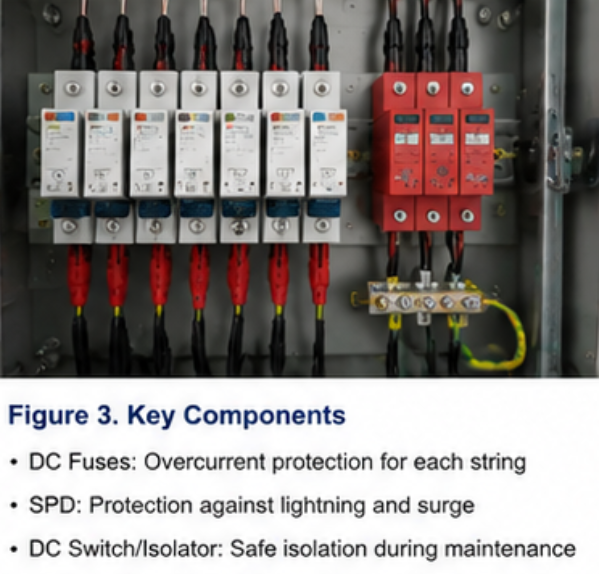
A PV string aggregation system consists of multiple integrated components designed to manage electrical flow and ensure system safety.
The input section receives power from multiple photovoltaic strings. Each input line typically includes:
Each string operates independently before merging into the main system.
Surge protection devices are critical in preventing lightning-induced damage. They divert excess voltage safely to the grounding system, protecting inverters and downstream equipment.
https://webstore.iec.ch/en/publication/61643
Without SPDs, even small voltage spikes can cause major system failures.
The busbar system aggregates total DC current and delivers it to the inverter. A well-designed busbar ensures:
Poor design can lead to overheating and energy loss.
Advanced systems include real-time monitoring features such as:
This enables predictive maintenance and system optimization.
Small-scale installations with basic protection and simplified wiring.
Medium-scale installations requiring stronger protection and monitoring.
Large solar farms operating at 1000V–1500V DC.
Incorrect voltage selection can lead to system failure.
Proper thermal management ensures long-term reliability through:
It combines multiple PV strings into a single output while providing protection and monitoring.
It is essential for commercial and utility-scale systems.
It increases the risk of damage significantly.
Typically 10–25 years depending on environment and quality.
Yes. Regular checks on fuses, SPD status, and connections are required.
Negligible power consumption in properly designed systems.
Small systems or microinverter-based designs may not require it.
Poor connections, thermal stress, and surge damage.
Caused by imbalance or overload. Solution: rebalance strings.
Caused by lightning or aging. Solution: replace modules.
Caused by loose connections. Solution: tighten and re-crimp.
AI-based predictive maintenance and cloud monitoring.
1500V DC becoming the global standard.
Combining protection, monitoring, and distribution in one system.
Stricter global regulations for PV system safety.
To rank well on Google:
Solar string power distribution systems are a critical part of modern photovoltaic infrastructure. They directly affect system safety, efficiency, maintenance cost, and long-term reliability. As solar systems continue to grow in scale, these components will remain essential for stable and efficient energy production.

