WengYang Industrial Zone Yueqing Wenzhou 325000
Work Hours
Monday to Friday: 7AM - 7PM
Weekend: 10AM - 5PM
WengYang Industrial Zone Yueqing Wenzhou 325000
Work Hours
Monday to Friday: 7AM - 7PM
Weekend: 10AM - 5PM

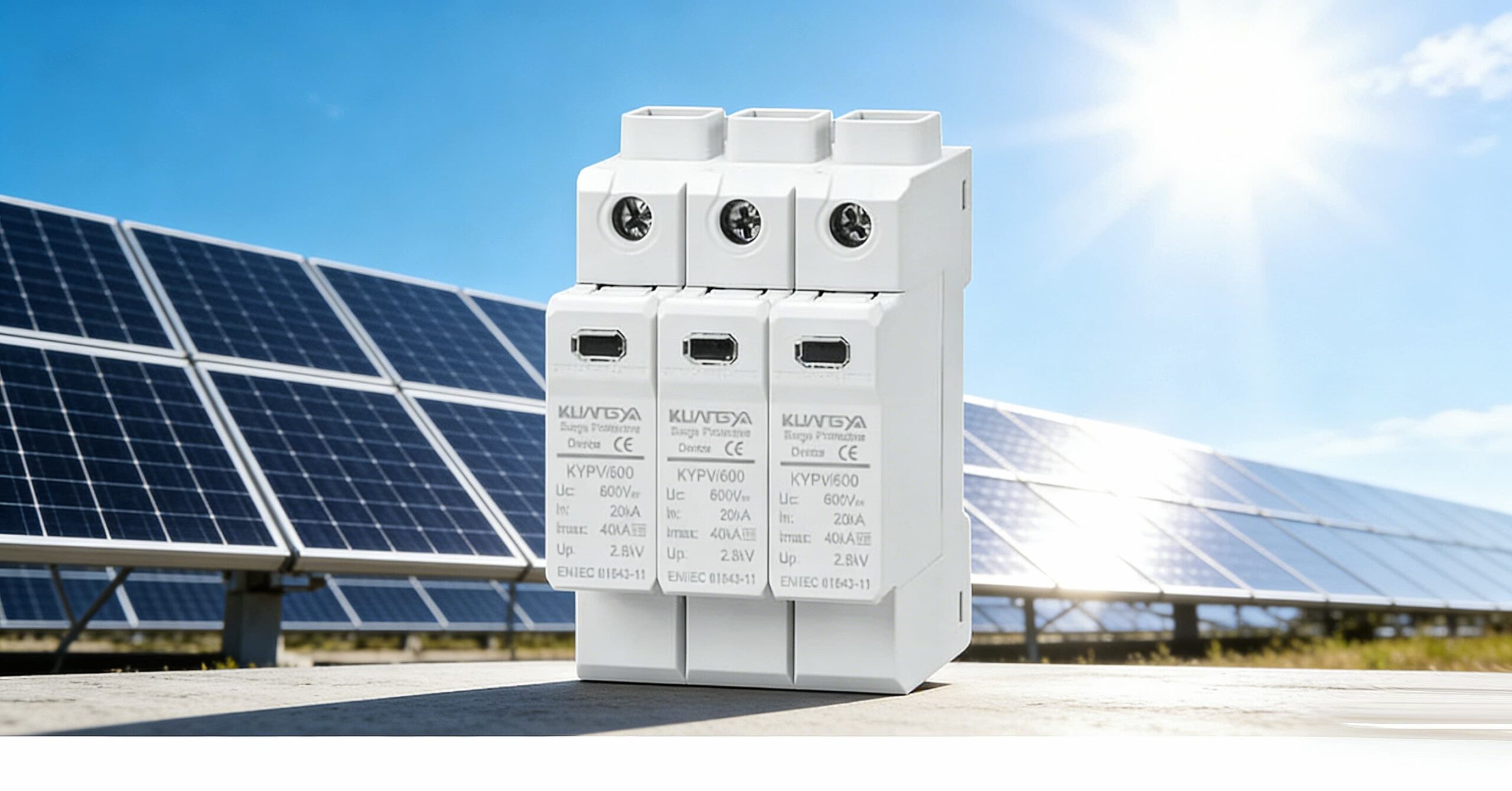
The global photovoltaic (PV) industry is booming, with installed capacity growing at a double-digit rate year over year. As PV systems become more widespread—from residential rooftops to utility-scale solar farms—ensuring the safety and reliability of every component is critical.
Among these components, the DC Surge Protection Device (DC SPD) plays an irreplaceable role. It diverts transient overvoltages caused by lightning, grid switching, or inductive loads, protecting sensitive PV equipment such as inverters, combiner boxes, and solar panels from irreversible damage.
However, DC SPD failure is a common issue that plagues many PV projects. It leads to equipment burnout, system downtime, reduced power generation, and even fire hazards.
In fact, industry statistics show that DC SPD failures account for nearly 30% of all PV system electrical faults, resulting in millions of dollars in losses annually. This blog will systematically analyze the most common causes of DC SPD failure in PV systems, provide practical solutions to avoid these pitfalls, and introduce KUANGYA’s high-reliability DC SPD solutions—engineered specifically to address the unique challenges of PV environments and minimize failure risks.
Before diving into failure causes, it’s essential to clarify the core function of DC SPD in PV systems. Unlike AC SPDs, which are designed for alternating current circuits, DC SPDs are tailored to the high-voltage, low-frequency characteristics of PV DC-side circuits.
Solar panels generate continuous direct current, and long cable runs increase the risk of surge-induced damage. A high-quality DC SPD acts as a “safety valve”: when a transient overvoltage (such as a lightning strike or grid switching surge) occurs, it quickly conducts the excess current to the ground.
This limits the voltage across PV equipment to a safe level. Without a reliable DC SPD, even a small surge can destroy expensive inverters, damage PV modules, or trigger electrical fires.
Notably, DC SPDs in PV systems must comply with strict international standards to ensure effectiveness. The latest IEC 61643-41:2025 standard is specifically developed for DC low-voltage power system surge protection.
It sets rigorous requirements for DC SPD performance, including surge current handling, voltage protection level, and thermal stability—critical factors that directly impact failure rates.
KUANGYA’s DC SPD series fully complies with IEC 61643-41:2025 and IEC 61643-31 (the dedicated standard for PV system SPDs), ensuring compatibility and reliability in all PV scenarios.
Offical Standard Link: IEC 61643-41:2025 Official Standard
DC SPD failure in PV systems is rarely random; it is almost always caused by a combination of improper selection, installation, maintenance, or environmental factors. Below are the 6 most common causes, supported by real-world project cases and technical analysis.
The most frequent and costly mistake in PV projects is using the wrong type of SPD or selecting one with mismatched parameters. Many installers mistakenly use AC SPDs in DC circuits, or choose DC SPDs with voltage ratings, surge current capacity, or protection levels that do not match the PV system’s requirements.
AC SPDs are designed to handle alternating current, which has natural zero-crossing points that help extinguish arcs—something DC circuits lack. Using an AC SPD in a PV DC circuit will cause it to fail rapidly.
It cannot handle the continuous DC voltage or the arc generated by surge currents.
Another common parameter mismatch is the maximum continuous operating voltage (Uₙ) of the DC SPD. PV systems operate at high open-circuit voltages (Voc), which can reach 1500V DC for utility-scale projects.
If the DC SPD’s Uₙ is lower than the system’s maximum Voc, it will experience continuous overvoltage stress. This leads to premature aging of internal components (such as metal oxide varistors, MOVs) and eventual failure.
Similarly, if the SPD’s surge current capacity (Iₙ) is insufficient to handle the expected surge energy (e.g., from lightning strikes in high-risk areas), it will be destroyed during a surge event.
Real-World Example: A 10MW utility-scale PV project in Southeast Asia installed AC SPDs on the DC side of combiner boxes to cut costs. Within 3 months, 12 out of 50 combiner boxes experienced SPD failures, leading to inverter damage and 2 weeks of system downtime. The root cause was the use of AC SPDs, which could not handle the 1500V DC voltage and failed to extinguish arcs during minor surges.
Even the highest-quality DC SPD will fail if installed incorrectly. Common installation mistakes include improper wiring, poor grounding, and incorrect placement.
All of these undermine the SPD’s ability to divert surge currents effectively.
First, wiring errors: DC SPDs require correct polarity (positive and negative connections) to function properly. Reversing the polarity will cause the SPD to malfunction.
It may either fail to trigger during a surge or conduct continuously, leading to overheating and burnout. Additionally, using undersized or low-quality cables for SPD wiring increases resistance.
This limits the surge current diversion and causes the SPD to overheat.
Second, poor grounding: DC SPDs rely on a low-impedance ground connection to divert surge currents to the earth. If the ground resistance is too high (exceeding 4Ω, as recommended by IEC standards), surge energy cannot be dissipated quickly.
This leads to voltage buildup and SPD failure. In many PV projects, installers cut corners by using inadequate grounding conductors or failing to connect the SPD to the system’s main ground network.
Third, incorrect placement: DC SPDs should be installed as close as possible to the equipment they protect (e.g., within 1 meter of combiner boxes or inverter DC inputs). Long cable runs between the SPD and protected equipment increase inductive voltage.
This allows surge energy to bypass the SPD and damage the equipment—rendering the SPD useless. A cascaded installation (Type 1 + Type 2 SPDs) is often required for large PV systems.
But many projects skip this step, leaving critical equipment unprotected.
Authority Link: GRL: Why PV Systems Fail With SPDs Installed
PV systems are typically installed outdoors, exposing DC SPDs to extreme temperatures, humidity, UV radiation, dust, and corrosion. All of these factors accelerate component aging and failure.
Most low-quality DC SPDs are not designed to withstand these harsh conditions, leading to premature failure.
Extreme temperatures are a major culprit: high temperatures (above 60°C) reduce the lifespan of MOVs, the core component of DC SPDs. Low temperatures (below -25°C) increase the SPD’s response time, making it unable to trigger quickly during a surge.
Humidity and moisture can seep into the SPD’s housing, causing internal short circuits and corrosion of metal components. UV radiation degrades the SPD’s plastic housing, leading to cracks and water ingress.
In coastal areas, salt spray corrosion further damages the SPD’s terminals and internal circuits.
Real-World Example: A residential PV project in a coastal region used unprotected DC SPDs without corrosion-resistant housing. After 1 year of exposure to salt spray, 80% of the SPDs failed due to terminal corrosion, leading to intermittent system shutdowns and reduced power generation.
DC SPDs are not “set-it-and-forget-it” components. Over time, their internal components (MOVs, gas discharge tubes) degrade due to repeated surge events and environmental stress.
Without regular maintenance and inspection, degraded SPDs will fail to provide protection when needed most. However, many PV project owners and operators overlook this critical step, leading to unexpected failures.
Common maintenance oversights include: failing to check the SPD’s status indicator (green = normal, red = failed), not testing the SPD’s leakage current and voltage protection level, and ignoring signs of physical damage (e.g., bulging, scorching, or cracks).
Additionally, dust and debris buildup on the SPD’s terminals can cause poor contact and overheating, further accelerating failure.
DC SPDs must work in harmony with other PV components, such as fuses, circuit breakers, and inverters. Incompatibility between these components can lead to SPD failure or ineffective protection.
For example, if the DC SPD is not coordinated with the system’s fuses, the fuse may blow before the SPD can divert the surge current—leaving the equipment unprotected.
Alternatively, if the SPD’s response time is slower than the inverter’s surge tolerance, the inverter may be damaged before the SPD triggers.
To reduce project costs, some installers choose low-quality, uncertified DC SPDs. These SPDs use inferior components (e.g., low-grade MOVs, thin copper conductors) and do not undergo rigorous testing to meet international standards.
As a result, they have shorter lifespans, higher failure rates, and cannot provide reliable protection during surge events. In the long run, the cost of replacing failed SPDs, repairing damaged equipment, and lost power generation far exceeds the initial savings from using low-quality products.
The following table summarizes the common DC SPD failure causes, their risks, and practical prevention measures—including tips for selecting and using KUANGYA DC SPDs to minimize failure.
| Common Failure Cause | Potential Risks | Prevention Measures | KUANGYA Protection Tips |
|---|---|---|---|
| Incorrect type/parameter selection | SPD burnout, equipment damage, system downtime | Use DC-specific SPDs; match Uₙ to system Voc; select Iₙ based on surge risk | KUANGYA DC SPDs offer Uₙ ratings from 600V to 1500V DC, Iₙ up to 40kA, fully matching PV system requirements |
| Poor installation/wiring | Ineffective surge diversion, overheating, short circuits | Follow polarity requirements; use proper grounding; install close to protected equipment | KUANGYA DC SPDs feature clear polarity labels, standard DIN-rail mounting, and compact design for easy, correct installation |
| Harsh environmental conditions | Component aging, water ingress, corrosion | Choose SPDs with wide temperature range, IP20+ protection, and UV/corrosion resistance | KUANGYA DC SPDs operate from -25°C to +70°C, with IP20 protection, UV-resistant housing, and corrosion-resistant terminals |
| Lack of maintenance | Degraded performance, unexpected failure | Monthly indicator checks; quarterly leakage current testing; annual inspection | KUANGYA DC SPDs have clear status indicators and are compatible with smart monitoring systems for real-time health checks |
| Component incompatibility | Ineffective protection, equipment damage | Ensure coordination with fuses/inverters; follow IEC 61643-41 standards | KUANGYA DC SPDs are tested for compatibility with major PV inverters and fuses, complying with IEC 61643-41/31 |
| Low-quality SPDs | High failure rate, unreliable protection, safety hazards | Choose certified, high-quality SPDs from reputable manufacturers | KUANGYA DC SPDs are IEC, CE, and TÜV certified, using high-grade MOVs and strict quality control |
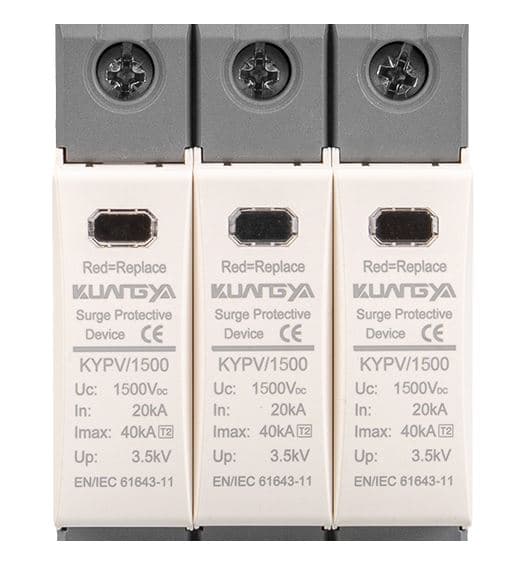
As a leading manufacturer of electrical protection solutions for renewable energy, KUANGYA has engineered a dedicated series of DC SPDs. These SPDs are designed to address the unique challenges of PV systems—minimizing failure risks and ensuring long-term reliability.
Our DC SPDs are built based on years of industry experience, strict compliance with international standards, and a deep understanding of PV system requirements.
KUANGYA DC SPDs are built to avoid the common failure causes outlined above, with the following key features:
KUANGYA DC SPDs are suitable for all PV system DC-side applications, including:
(Product Image Placeholder: High-resolution image of KUANGYA DC SPD, showcasing its compact design, status indicators, terminal connections, and certification logos (IEC, CE, TÜV). Include a close-up of the polarity labels and DIN-rail mounting design.)
A 50MW utility-scale PV project in Northern China faced frequent DC SPD failures. The issues stemmed from harsh winter temperatures (-30°C) and summer heat (+60°C).
After replacing low-quality SPDs with KUANGYA DC SPDs (1500V DC, 40kA Iₙ), the failure rate dropped from 28% to less than 2% over 2 years.
The project also reported a 15% reduction in maintenance costs and no equipment damage from surge events—proving the reliability of KUANGYA’s solution.
Below are the most frequently asked questions about DC SPD failure. They include practical answers and KUANGYA-specific tips to help PV project owners and operators avoid pitfalls.
A1: The easiest way is to check the SPD’s status indicator: green means the SPD is working normally, while red indicates failure. For more precise verification, use a multimeter or SPD tester to measure leakage current and voltage protection level.
Normal leakage current for DC SPDs should be ≤1mA. If the leakage current exceeds 5mA or the voltage protection level deviates from the nominal value by ±10%, the SPD is degraded and should be replaced.
KUANGYA DC SPDs feature clear, easy-to-see status indicators and are compatible with smart testers for quick diagnosis.
A2: No. AC SPDs are not designed for DC circuits and will fail quickly. DC circuits lack the zero-crossing points that AC SPDs rely on to extinguish arcs.
This leads to continuous conduction, overheating, and burnout. Using an AC SPD in a PV DC circuit also violates IEC standards and may void equipment warranties.
KUANGYA DC SPDs are competitively priced and offer long-term cost savings by reducing failure and maintenance costs.
A3: We recommend the following maintenance schedule:
– Monthly: Check the status indicator and ensure terminals are tight and free of dust/corrosion.
– Quarterly: Test leakage current and voltage protection level using a dedicated SPD tester.
– Annually: Inspect the SPD’s housing for cracks, water ingress, or physical damage; check grounding continuity and resistance (should be ≤4Ω).
– Before thunderstorm season: Conduct a full inspection and replace any degraded SPDs. KUANGYA provides maintenance guides and technical support to help operators implement this schedule efficiently.
A4: Follow these steps:
1. Determine your PV system’s maximum open-circuit voltage (Voc) and select a DC SPD with Uₙ ≥ 1.1 × Voc (e.g., 1500V DC system → Uₙ = 1650V DC).
2. Assess the surge risk (e.g., high thunderstorm areas need Iₙ ≥ 40kA; low-risk areas can use Iₙ = 10-20kA).
3. Match the SPD’s pole configuration (2P/4P) to your system’s DC circuit (2P for single-string, 4P for three-phase DC).
4. Choose optional features (e.g., remote alarm) based on your monitoring needs. KUANGYA’s technical team can provide personalized selection recommendations based on your project details.
A5: Yes. KUANGYA DC SPDs feature standard DIN-rail mounting and compact design, making them easy to retrofit into existing combiner boxes and inverter enclosures.
Retrofitting with KUANGYA DC SPDs improves system safety, ensures compliance with IEC standards, and reduces failure risks.
We provide retrofitting guidance and technical support to minimize downtime during installation.
DC SPD failure is a preventable issue that costs PV project owners millions of dollars annually. The losses come from equipment damage, downtime, and lost power generation.
The key to avoiding these failures lies in three core steps: selecting the right DC SPD (DC-specific, parameter-matched, certified), installing it correctly (proper wiring, grounding, placement), and implementing regular maintenance.
By avoiding the common pitfalls outlined in this blog, you can ensure your PV system’s DC SPDs provide reliable protection for years to come.
KUANGYA’s DC SPD series is engineered to address the unique challenges of PV systems. It features strict compliance to international standards, harsh environment resistance, and optimized performance.
Our products are designed to minimize failure risks, reduce maintenance costs, and protect your PV investment.
Whether you’re building a new PV project or retrofitting an existing one, KUANGYA DC SPDs are the reliable choice for safe, efficient, and long-lasting surge protection.
Don’t let DC SPD failure derail your PV project. Choose KUANGYA—your trusted partner for PV electrical protection.

