Address
304 North Cardinal
St. Dorchester Center, MA 02124
Work Hours
Monday to Friday: 7AM - 7PM
Weekend: 10AM - 5PM
Address
304 North Cardinal
St. Dorchester Center, MA 02124
Work Hours
Monday to Friday: 7AM - 7PM
Weekend: 10AM - 5PM

A DC SPD detects surges and diverts excess energy, protecting DC systems from voltage spikes and equipment damage with fast, bidirectional action.
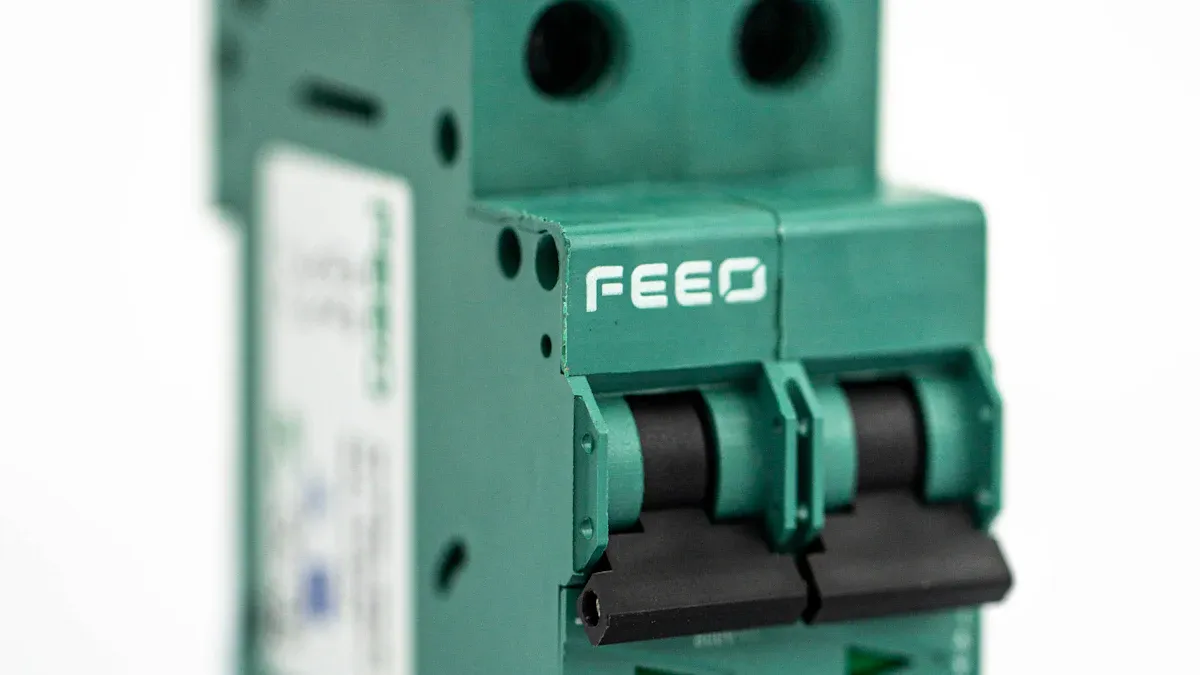
A dc spd is very important for your DC systems. It finds a surge and quickly sends extra energy away from parts that can break. You need this help because voltage surges can happen in many ways:
Telecommunications equipment can get hurt by lightning or grid problems.
Battery energy storage systems can stop working when surges hit.
Electric vehicle charging stations can have trouble from high-voltage changes.
You use bidirectional protection to keep both positive and negative lines safe. This helps your system work well in tough places.
DC SPDs keep your systems safe from voltage surges. They stop damage to important equipment. Surges can happen from lightning, problems with the grid, or switching. This is why surge protection is very important. Pick the right SPD for your system. Use Type 1 for main panels. Use Type 2 for sub-panels. Use Type 3 for sensitive devices. Check and take care of your DC SPDs often. This helps them work well and keep protecting you. Look for important details like Maximum Continuous Operating Voltage (MCOV). Also check the Voltage Protection Rating (VPR) when picking an SPD. Use MOVs, GDTs, and diodes together in your surge protection devices. This gives the best protection from surges. Put SPDs close to the equipment they protect. This makes them work faster and keeps things safer. Always follow industry rules for putting in and taking care of SPDs. This helps keep your DC systems safe.
You use a dc spd to keep your DC systems safe from voltage surges. This device watches your circuit for sudden jumps in voltage. When it finds a surge, it sends extra energy away from parts that can break. This stops damage and keeps your system working well. DC SPDs protect both positive and negative lines. This is important for new DC systems in tough places.
Note: In solar power systems, DC surge protection devices keep photovoltaic panels, inverters, and charge controllers safe from voltage surges. Surges can happen from lightning, grid changes, or switching. Without protection, you could lose expensive equipment and have system problems.
DC systems can have many risks. Voltage surges can happen at any time. Surges may come from lightning, grid problems, or switching. If you do not use a DC SPD, your equipment can get damaged and become unsafe.
Voltage surges from lightning
Grid changes that cause problems
Switching that makes voltage spikes
Using surge protection lowers the chance of fire and electric shock. The table below shows the main risks you fix with DC SPDs:
Risk Type | Description |
|---|---|
Voltage Surges | Caused by lightning, grid changes, and switching. |
Damage to Equipment | Can break sensitive equipment. |
Safety Risks | Can cause fire or electric shock. |
Many industries use DC SPDs. Solar PV systems use them to keep panels, inverters, and batteries safe. Wind turbines need surge protection for their electrical parts. Electric vehicle charging stations use DC SPDs to protect vehicles and chargers. Telecommunications equipment, like cell towers and data centers, need surge protection to keep working. Industrial DC power systems use DC SPDs to protect motors, drives, and PLCs.
Application/Industry | Description |
|---|---|
Solar PV Systems | Keeps solar panels, inverters, charge controllers, and batteries safe from voltage surges. |
Wind Turbines | Protects turbine electrical parts from surges caused by lightning or grid problems. |
Electric Vehicle Charging Stations | Keeps charging equipment and vehicles safe from surges during charging. |
Telecommunications Equipment | Protects cell towers, data centers, and network equipment from voltage surges. |
Industrial DC Power Systems | Keeps DC motors, drives, and PLCs safe from surge damage in factories. |
The global market for DC SPDs is growing fast. It was about $1.2 billion in 2023. It may reach $2.6 billion by 2032. Solar energy and the need for good surge protection help this growth. More industries will use DC SPDs as DC technology spreads.
A DC SPD watches your system for sudden voltage changes. It checks many electrical details all the time to find surges fast. These details show when something is wrong with your system.
Nominal Discharge Current (In): Tells the highest current during a surge.
Impulse Current (Iimp): Shows the top current and energy in a surge.
Voltage Protection Level (Up): Shows how well the SPD stops high voltage.
Limiting Voltage (Um): Records the highest voltage between SPD ends.
Maximum Continuous Operative Voltage (Uc): Sets the safe voltage for normal use.
Nominal System Voltage (Un): Tells the usual voltage for your system.
Transient Overvoltage Test Value (UT): Tests how the system handles quick voltage jumps.
Residual Voltage (Ures): Measures voltage across SPD ends during a surge.
Rated Short-circuit Current (ISCCR): Shows the biggest short-circuit current.
Follow Current (If): Tracks current after a surge is gone.
You use these details to spot surges and keep your equipment safe. The DC SPD acts quickly when voltage spikes happen, so your system stays protected.
When a surge makes voltage too high, your DC SPD turns on. Normally, the SPD lets current move without stopping it. If voltage gets too high, the SPD works and sends extra energy to the ground. This keeps your equipment safe from quick voltage jumps. You need this fast action to keep your system working and avoid expensive fixes.
You need safety for both positive and negative DC lines. The DC SPD finds voltage jumps on either line and sends extra energy away from important parts. The main part, the Metal Oxide Varistor (MOV), changes how much it resists current during a surge. This lets surge current go through the MOV and protects your system. Your SPD also has a tripping part and a device that disconnects. These break the current path and stop arcs, which is important because DC systems do not have zero-crossings. You get more safety and can see problems with remote signals and arc isolation.
DC SPDs can fail in two main ways during surges: open-circuit and short-circuit failures. Open-circuit failures happen when the SPD stops working because its disconnectors turn on, often without you knowing, which can leave your system unprotected. Short-circuit failures can happen from long high voltage or faults, and may cause fires. To help, DC SPDs use disconnectors inside, thermal protection, follow IEC rules, and use extra overcurrent devices outside.
You should pick DC SPDs with these safety parts to stop dangerous failures and keep your system safe.

Metal Oxide Varistors, or MOVs, are the main part of your surge protective device. MOVs are made from zinc oxide mixed with other metal oxides. This mix makes a resistor that does not act the same all the time. When things are normal, MOVs have high resistance. If a surge happens, MOVs quickly change to low resistance. This lets them take in extra voltage and keep it safe. MOVs move the extra energy away from your important equipment. They work fast and go back to normal after the surge is gone. You can find MOVs in solar power, battery storage, and telecom equipment.
Tip: MOVs protect best when you put them close to what you want to keep safe. This helps stop damage from voltage spikes.
Gas Discharge Tubes, or GDTs, give you more protection in your surge device. GDTs are inside a glass tube filled with special gas. When voltage gets higher than what the MOV can handle, GDTs turn on. They let current flow during a surge and send it away from your circuit. GDTs help with bigger surges and keep your system safe.
GDTs are a second clamp for voltage.
They work after MOVs reach their limit.
The gas inside lets current flow during a surge.
You use GDTs where you think strong surges might happen, like outside or in big DC systems.
Suppression diodes protect your equipment because they react very fast to surges. These diodes work almost right away when voltage jumps. Their quick action stops damage to your equipment. Suppression diodes clamp and limit voltage by working in a special way. You see them as the last part in circuits with many levels. TVS diodes, a special kind, work faster than spark gaps or GDTs. This speed is important for protecting sensitive electronics.
Note: Diodes work well with MOVs and GDTs. Using all these parts together gives you better protection from surges.
You pick the right mix of MOVs, GDTs, and diodes to make a surge device that fits your system. Each part helps keep your DC equipment safe from surges.
In standby mode, your DC SPD is always ready. It watches your system for any strange voltage changes. The SPD does not change how current moves in normal times. It just waits for a surge or a quick jump in voltage. Inside, the MOVs, GDTs, and diodes all have high resistance. This means your equipment works as usual with no problems.
Tip: Check your SPD’s status lights often. These lights tell you if it is waiting or if it has seen a surge.
If a surge happens, the SPD quickly changes to surge diversion mode. It reacts fast when voltage jumps up. The MOVs lower their resistance and send extra energy to the ground. If the surge is very strong, GDTs may also turn on. Diodes hold the voltage down to keep electronics safe.
This fast action keeps your equipment from getting hurt. The SPD moves the surge away from important parts. You save money and time because things do not break.
Here is a simple table that shows what each part does during a surge:
Component | Action During Surge Diversion |
|---|---|
MOV | Lowers resistance, diverts surge |
GDT | Activates for high-energy surges |
Diode | Clamps voltage, protects electronics |
When the surge is gone, the SPD goes back to recovery mode. It returns to high resistance again. Your DC system works like normal. The SPD gets ready for the next surge or voltage jump. Some SPDs can check themselves and warn you if they need fixing.
Look at your SPD after a big surge.
Change it if you see damage or wear.
Take care of your SPD so it keeps working well.
Note: Recovery mode is key for keeping your system safe from more surges. Make sure your SPD is in good shape so it can protect you again.
You need to know about MCOV when picking a DC SPD. MCOV means Maximum Continuous Operating Voltage. This is the highest RMS voltage your surge device can handle all the time. If you pick an SPD with MCOV lower than your system’s voltage, it might shut down or break. Always look at the MCOV rating before you install the SPD. This helps stop problems from sudden voltage changes and keeps your equipment safe.
Term | Definition |
|---|---|
MCOV | The highest RMS voltage an SPD can handle all the time without damage or turning off by mistake. |
Importance | The MCOV should be higher than your system’s normal voltage. If it is too low, the SPD might trip or get damaged. |
Tip: Choose an MCOV rating that matches or is a bit higher than your system’s voltage. This gives you good protection from sudden voltage changes.
Voltage Protection Rating, or VPR, shows how well your DC SPD stops high voltage during a surge. You test VPR by sending a set surge voltage and current into the SPD. Then you measure the highest voltage that gets through. For industrial DC SPDs, you use a 6000-volt surge with a fast rise and short duration. You also use a 3000-amp surge current with a quick rise and short time. An oscilloscope records the voltage that passes the SPD. You do this test three times and find the average. The final VPR is rounded up to the next 100 volts, following UL 1449 rules.
Measurement Aspect | Description |
|---|---|
Surge Voltage Applied | 6000 volts with a fast rise and short duration (1.2 X 50 waveform) |
Surge Current Applied | 3000 Amps with a quick rise and short duration (8 X 20 waveform) |
Measurement Tool | An oscilloscope records and measures the voltage that gets through the SPD |
Averaging Process | Three surges are used, and the voltage values are averaged |
VPR Selection | The average is rounded up to the next 100V using the UL 1449 table |
Example of VPR Assignment | If the average is 405 volts, the VPR is 500V after rounding up |
Note: A lower VPR means your equipment is better protected during a surge.
Surge current ratings show how much energy your DC SPD can take during a surge. There are two main ratings: nominal discharge current (In) and maximum discharge current (Imax). Type 2 SPDs, used near inverters in solar systems, work at voltages from 600V to 1500V. These SPDs have a nominal discharge current of 20kA and can take a maximum of 40kA. You need to pick a surge current rating that fits your area. Places with more risk need SPDs with higher ratings for better safety.
Type 2 SPD protects important parts near the inverter.
They work at 600V to 1500V.
Nominal discharge current (In) is 20kA.
Maximum discharge current (Imax) can be up to 40kA.
Type of SPD | Nominal Discharge Current (In) | Maximum Discharge Current (Imax) |
|---|---|---|
Type 2 SPD | 20 kA | up to 40 kA |
Surge Current Rating (kA) | Description |
|---|---|
20 | Good for places with medium surges, giving solid protection. |
40 | Best for high-risk spots, giving stronger protection and lasting longer. |
⚡ Always check the surge current rating before you install the SPD. This helps keep your system safe from strong voltage surges.
It is important to know how fast your DC SPD reacts to a surge. Response time shows how quickly the device starts to protect your system. Most DC SPDs work in less than one nanosecond. This is very fast. Fast response is important because surges can hurt electronics right away. If your SPD is slow, your equipment could get damaged.
You should look at the response time in the product datasheet before you install a DC SPD. Companies usually write this as “<1 ns” or “fast-acting.” MOVs and suppression diodes are the fastest. GDTs are a little slower but can handle bigger surges. Using all these parts together gives you the best protection.
Tip: A faster response time means your DC system is safer. Always pick SPDs with the lowest response time for important equipment.
You can test response time with a surge generator and an oscilloscope. You send a surge through the SPD and see how long it takes to clamp the voltage. If it is slow, you might need a better SPD or to check your setup.
Component | Typical Response Time | Best Use Case |
|---|---|---|
MOV | <1 nanosecond | General DC surge protection |
Suppression Diode | <1 nanosecond | Sensitive electronics |
GDT | 100 nanoseconds – 1 μs | High-energy surges |
You should put SPDs close to the equipment you want to protect. Short wires help keep response time fast. If SPDs are far away, protection may be slower and risk goes up.
Your DC SPD will not last forever. Every surge it stops brings it closer to end-of-life. You need to know when your SPD should be replaced. If you miss end-of-life signs, your system could lose protection and get damaged.
There are different ways to check if your SPD still works:
Detection Method | What to Look For | Required Tools |
|---|---|---|
Visual Inspection | Color indicators, physical damage | None, just visual check |
Voltage Measurement | Abnormal readings across terminals | Multimeter |
Thermal Imaging | Hot spots indicating overload | Infrared camera |
System Monitoring | Unusual data patterns | Monitoring software |
Protection Testing | Verify surge response | Specialized SPD tester |
Some SPDs have alarms that make noise when there is a problem.
Some have dry contacts for real-time alerts in your monitoring system.
Remote monitoring helps you check SPD status in big systems. Manual checks are hard in these places.
You should check your SPD often. Look for color changes in the indicator window. If you see burn marks or cracks, replace the SPD right away. Use a multimeter to check voltage across the terminals. Strange readings mean the SPD may not work. Infrared cameras can find hot spots that show damage.
Note: Always follow the maker’s rules for end-of-life checks. Change your SPD after a big surge or if you see warning signs. This keeps your DC system safe and working well.
You protect your equipment by checking and caring for your DC SPDs. Finding problems early keeps your system safe from future surges.

When you build a DC system, you need to pick the right surge protection devices for each part. There are three main types: Type 1, Type 2, and Type 3. Each type works best in a certain spot and handles different amounts of surge energy.
Type 1 surge protection devices go at the main electrical panel. They protect your system from big surges that come from outside, like lightning or grid faults. Type 1 devices can handle a lot of energy, usually between 25kA and 100kA. You put them before the main breaker, so they stop surges before they reach your equipment.
Type 1 surge protective device is your first shield. It keeps your whole DC system safe from the strongest surges. You see these devices in places like commercial buildings, solar farms, and big battery storage systems.
Tip: Always put Type 1 devices where power comes into your DC system. This gives you the best protection from outside surges.
Type 2 surge protection devices work at sub-panels or branch circuits. You use them to protect your equipment from medium surges that come from outside or from switching inside your building. These devices handle energy from 20kA to 75kA. You install Type 2 devices after the main breaker, closer to your sensitive equipment.
Type 2 devices give ongoing protection in places with lots of switching or moderate surge risks. They keep your inverters, controllers, and other electronics safe. Type 2 devices are common in solar setups, factories, and telecom sites.
Type 2 devices protect against surges that Type 1 might miss.
You use them to shield branch circuits and important loads.
Type 3 surge protection devices give point-of-use protection. You put them right next to the equipment you want to keep safe, like computers, sensors, or communication devices. These devices handle smaller surges, usually from 6kV to 20kV. Type 3 devices react fast to small surges inside your system.
You pick Type 3 devices for sensitive electronics that need extra care. They work well with Type 1 and Type 2 devices, giving you layers of protection. You often see Type 3 devices in offices, control rooms, and data centers.
Note: For the best safety, use all three types together. This way, you get full protection from surges of every size.
Here is a table that shows the main differences between Type 1, Type 2, and Type 3 surge protection devices:
SPD Type | Classification | Energy Handling Capacity | Installation Location | Surge Type |
|---|---|---|---|---|
Type 1 | Class B | 25kA to 100kA | Main electrical panel | Big surges from outside sources |
Type 2 | Class C | 20kA to 75kA | Sub-panel or branch circuit | Medium surges from outside sources |
Type 3 | Class D | 6kV to 20kV | Point-of-use protection | Small surges from inside sources |
You need to pick the right surge protection devices for each part of your DC system. This helps you avoid broken equipment and keeps your system working well.
You need to know about three main classes of surge protection devices. Each class gives a different level of safety and fits a certain spot in your system. The classes are not the same in how much surge current they can handle or where you put them.
Class I surge protection devices stop the biggest surges. You use them where lightning might hit, like between the utility transformer and where power enters your building. These devices can take a lot of energy. They keep your main system safe from big damage. You should put Class I devices where power comes into your building.
Class II surge protection devices give medium protection. You use them after the main service panel. These devices catch leftover surges that get past the first protection. Class II devices are good for branch circuits and important equipment inside your system. You should use them where switching or smaller surges can happen.
Class III surge protection devices protect sensitive electronics. You put them close to the equipment you want to keep safe. These devices can only handle small surges. They react fast to little voltage jumps and keep things like computers and sensors safe. You need Class III devices for places with delicate equipment that cannot take even small spikes.
Here is a table that shows how each class is different:
Class Type | Surge Current Capacity | Application Scenario |
|---|---|---|
Class I | High (direct lightning strikes) | Between utility transformer and service entrance |
Class II | Moderate (residual surges) | Load side of main service panel |
Class III | Low (fine protection) | Close to sensitive equipment at point of use |
Tip: You get the best safety when you use all three classes together. This way, big surges stop early and small ones do not reach your sensitive equipment.
You should always pick the right class for the risk and spot in your system. This keeps your DC system safe and helps you avoid expensive problems.
When you pick a surge protective device, do not just look at price. Think about the total cost, including setup, care, and how well it protects. You get the best safety when the device fits your system’s needs.
Here are important things to check:
Voltage protection level: Lower is better, but it must fit your system.
Energy handling: Check how much energy it can take each time and over its life.
Follow-current interruption: This matters most for Type 1 devices.
Failure mode: Pick from fail-safe, fail-short, or fail-open types.
Status indication and monitoring: Look for clear lights and remote alerts.
Product lifespan and warranty: Longer means more trust.
Certification: Make sure it meets industry rules.
Manufacturing quality and reputation: Choose brands people trust.
A surge protective device with strong clamping and good monitoring can save you money later. This is true if your equipment is valuable.
Good installation helps your dc spd work right. Put SPDs at main entry, panels, and near sensitive equipment. Keep wires short, under 18 inches, to lower resistance and stop voltage spikes. Use wires that can handle the surge current. Always tighten terminals to stop heat.
Tip: Connect the SPD ground terminal to its own grounding bus or rod with the lowest resistance. Do not share grounds with neutral wires. This can cause ground loops and make protection weaker.
Follow local rules like the NEC for grounding. Use boxes that keep out dust, water, and other things. After you install, test the SPD and check if it works right. Do not use AC-rated devices on DC circuits. Do not use small grounding wires or long leads. Use more than one SPD for full protection from voltage jumps.
Common Mistake | What Happens | What To Do |
|---|---|---|
Using AC-rated SPDs on DC circuits | Device breaks | Use DC-rated SPDs |
Long SPD wires | More voltage stress | Keep wires short |
Bad grounding | Surge not discharged | Ground the right way |
You keep your system safe by checking your SPDs often. How often you check depends on your risk and where you are.
Risk Level | What To Do | How Often |
|---|---|---|
High Risk | Look every month, test every year | Monthly and Yearly |
Medium Risk | Look every 3-6 months, test every 2-3 years | Every 3-6 Months and Every 2-3 Years |
Low Risk | Look once a year | Yearly |
At home or in offices, check every 6-12 months. In factories or places with lots of lightning, check every 3-6 months. Write down what you find and follow maker’s rules. Change any SPD that looks damaged or fails a test. Regular checks help your system stay safe from sudden voltage jumps.
You keep your DC systems safe when you know how a dc spd works. It helps to learn about its main parts and how well it performs. Always make sure the device matches your system’s voltage. Pick the right type for where you will install it. Use this table to help you choose:
Key Factor | Description |
|---|---|
Voltage Matching | Make sure the SPD fits your system voltage. |
Type Selection | Choose the right Type for each spot you install it. |
Coordination | Make sure all SPDs work together for full safety. |
Compliance | Follow IEC/UL rules for safety and good quality. |
Remember: Solar panels can get very hot, so plan carefully. You need special Type 1 and Type 2 devices for some jobs. Check your system often and install everything the right way to keep it safe.
You use DC SPDs for direct current systems. AC SPDs protect alternating current circuits. DC SPDs handle constant voltage and do not rely on zero-crossings. Always choose the correct type for your system.
You check the indicator window for color changes. You look for burn marks or cracks. Some SPDs send alerts. Replace the device after a big surge or if you see warning signs.
You should let a qualified technician install your DC SPD. Proper installation needs correct wiring, grounding, and placement. Mistakes can lower protection or damage equipment.
You risk device failure and poor protection. AC SPDs may not clamp DC surges correctly. Always use DC-rated SPDs for direct current circuits.
You match the SPD’s MCOV to your system voltage. You check surge current ratings and protection level. You pick the right type and class for each location.
You inspect your DC SPD often. You test it yearly in high-risk areas. You replace damaged units. Regular checks keep your system safe from voltage surges.
You use DC SPDs with fast response times and low VPR. These devices clamp voltage spikes quickly. Sensitive electronics stay safe from sudden surges.
You look for devices that follow IEC and UL standards. Certified SPDs give you reliable protection and meet industry safety rules.

