WengYang Industrial Zone Yueqing Wenzhou 325000
Work Hours
Monday to Friday: 7AM - 7PM
Weekend: 10AM - 5PM
WengYang Industrial Zone Yueqing Wenzhou 325000
Work Hours
Monday to Friday: 7AM - 7PM
Weekend: 10AM - 5PM

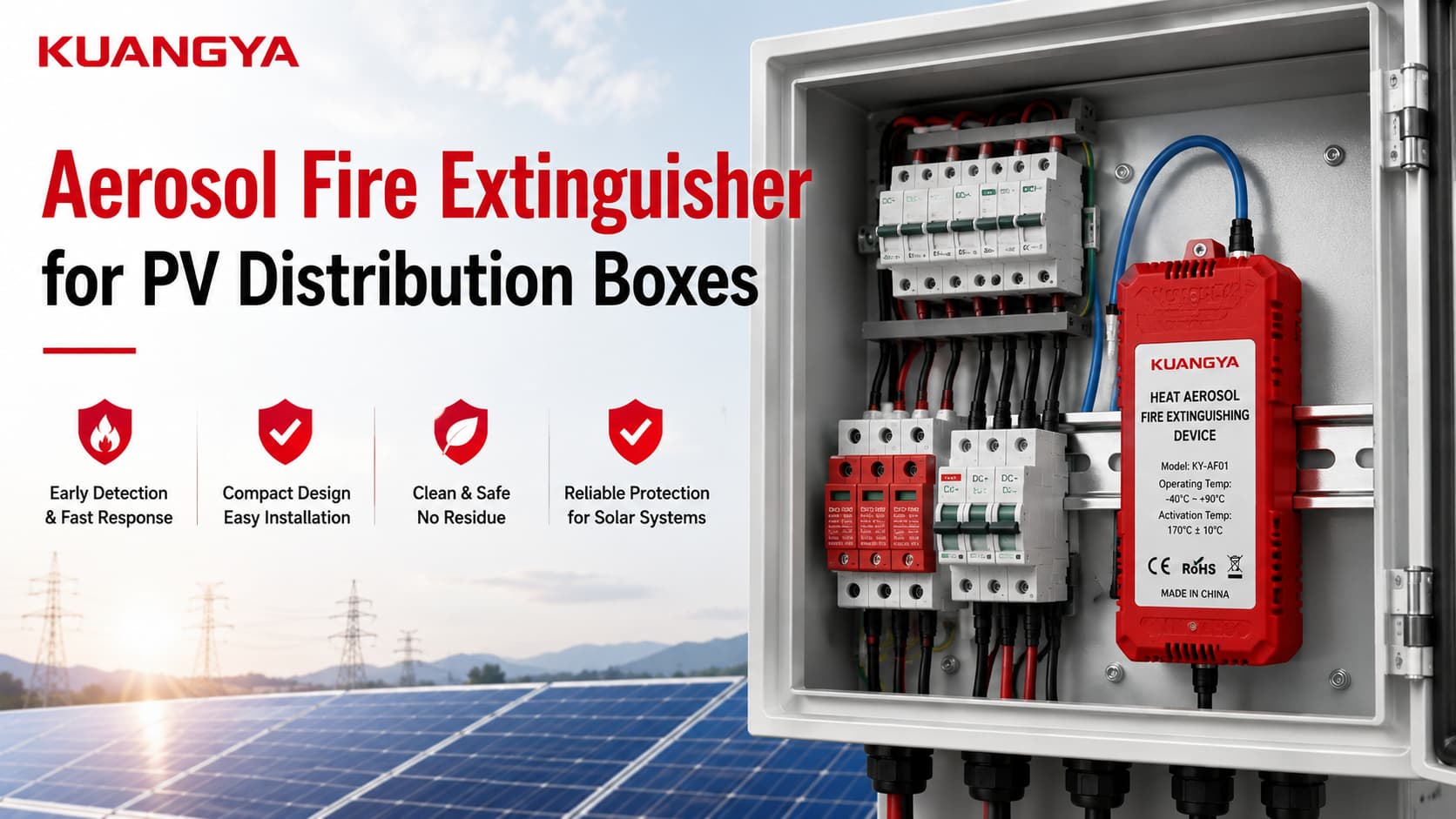
As solar photovoltaic (PV) installations continue to expand worldwide, system safety has become just as important as energy generation efficiency. Modern solar power systems contain numerous electrical components that operate under high DC voltages and currents, making proper fire protection an essential part of system design.
One area that deserves special attention is the PV distribution box. This enclosure serves as a critical connection point within the solar power system, housing protective devices, switching equipment, and wiring connections. Although these components are designed for reliable operation, electrical faults can still occur due to aging equipment, loose connections, environmental influences, or installation issues.
A fire that starts inside a distribution box can quickly spread to adjacent components, causing equipment damage, system downtime, and significant financial losses. Traditional fire extinguishers are useful during emergencies, but they rely on human intervention and often react only after the fire has already developed.
For this reason, many solar installers and system integrators are adopting the Aerosol Fire Extinguisher for PV Box applications. These compact automatic fire suppression devices can detect and suppress fires directly inside the enclosure before the situation escalates.
In this article, we will explore the fire risks associated with PV distribution boxes, explain how thermal aerosol technology works, and discuss why it is becoming one of the most effective solutions for solar electrical cabinet fire protection.
A PV distribution box performs several critical functions within a solar power system. It distributes electrical power, protects downstream equipment, and provides isolation during maintenance or emergency situations.
Depending on the system design, a PV distribution box may contain:
Since all of these components operate within a relatively compact enclosure, any abnormal condition can create excessive heat and potentially lead to fire.
Many PV systems also rely on DC Surge Protective Devices to reduce lightning-related damage and improve electrical safety.
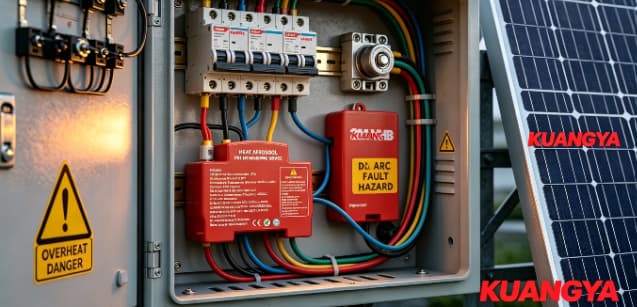
| Fire Risk | Typical Cause | Potential Consequence |
|---|---|---|
| Loose Electrical Connections | Improper tightening or vibration | Localized overheating |
| DC Arc Faults | Damaged cables or poor connectors | High-temperature ignition source |
| Component Failure | Aging devices or overload conditions | Electrical fire |
| Lightning Surges | Indirect or direct lightning strikes | Equipment overheating |
| Dust Accumulation | Poor maintenance environment | Increased combustion risk |
| Moisture Ingress | Failed sealing or condensation | Short circuits and insulation failure |
Even a small electrical fault can create temperatures exceeding several hundred degrees Celsius. Because the fire starts inside the enclosure, it may remain unnoticed until significant damage has already occurred.
This is particularly concerning for:
In these environments, immediate manual firefighting may not be possible.
Many facility owners assume that a portable fire extinguisher is sufficient protection for electrical equipment. While portable extinguishers remain an important safety measure, they have several limitations when protecting enclosed electrical systems.
According to the National Fire Protection Association (NFPA), electrical equipment failures remain a significant cause of fire incidents, highlighting the need for automatic fire suppression solutions in critical electrical enclosures.
Traditional extinguishers require someone to detect the fire and manually activate the device.
By the time smoke becomes visible, sensitive components may already be severely damaged.
PV distribution boxes are often installed:
Accessing these locations quickly during an emergency can be difficult.
A small fire can destroy:
Even after the fire is extinguished, replacing damaged components can result in significant downtime and maintenance costs.
Most electrical cabinet fires begin as localized overheating events.
Traditional firefighting methods typically respond only after visible flames have already developed.
For solar installations that require continuous operation and high reliability, a faster response method is needed.
An Aerosol Fire Extinguisher for PV Box is an automatic fire suppression device specifically designed to protect enclosed electrical spaces from fire hazards.
Unlike conventional extinguishers, aerosol units are permanently installed inside the enclosure and remain on standby around the clock.
When a fire occurs, the device automatically activates and releases a fine aerosol agent throughout the protected space.
The aerosol particles interrupt the chemical chain reactions that sustain combustion, rapidly extinguishing the fire before it spreads.
| Feature | Description |
|---|---|
| Activation Method | Automatic thermal activation |
| External Power Supply | Not required |
| Installation Location | Inside the enclosure |
| Maintenance Requirement | Minimal |
| Response Time | Seconds after activation |
| Fire Suppression Method | Interrupts combustion reactions |
| Suitable Applications | PV boxes, electrical cabinets, battery cabinets |
Because PV distribution boxes are enclosed environments with limited internal volume, aerosol suppression technology is particularly effective in these applications.
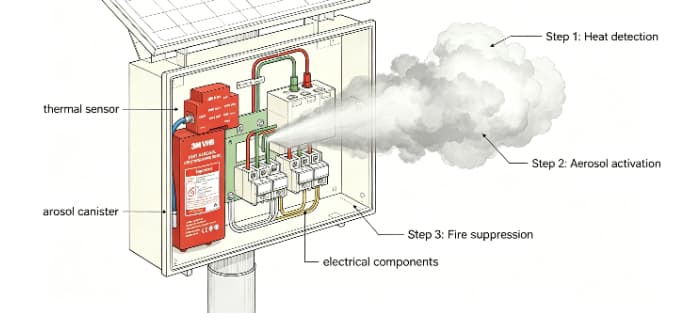
A Thermal Aerosol Fire Extinguisher uses a heat-sensitive activation mechanism that allows it to operate automatically without external power or manual intervention.
The process consists of four key stages.
An electrical fault begins to generate excessive heat.
Common causes include:
As the temperature increases inside the enclosure, the fire suppression device continuously responds to the changing conditions.
Once the activation temperature is reached, the aerosol generator automatically initiates.
This process requires:
The self-contained design makes it ideal for remote solar installations.
The internal compound rapidly converts into a fire-suppressing aerosol cloud.
The aerosol fills the enclosure and reaches critical fire zones within seconds.
The aerosol particles interrupt the combustion process at the molecular level.
Instead of cooling the fire like water or covering it like foam, the aerosol stops the chemical reactions required for flames to continue burning.
As a result, the fire is extinguished quickly while minimizing damage to surrounding equipment.
Solar PV systems demand reliable, fast-acting fire suppression solutions. Aerosol Fire Extinguishers for PV Box applications provide several advantages over traditional methods, especially in compact electrical enclosures.
Aerosol devices are thermally activated, meaning they respond immediately once a preset temperature threshold is reached. Unlike manual extinguishers, which rely on human detection, aerosol systems can suppress a fire in seconds, preventing escalation.
PV distribution boxes are often limited in space. The compact design of aerosol fire extinguishers allows them to be installed without occupying significant volume, maintaining accessibility for other components.
Once installed, these units require minimal maintenance. Unlike gas cylinders or powder systems, they do not require frequent inspections or refills. Their reliability over time ensures consistent protection for critical electrical equipment.
Aerosol fire suppression agents do not conduct electricity and leave minimal residue. This is critical for electrical cabinets where powder-based extinguishers could damage sensitive components. Furthermore, aerosol agents have lower environmental impact compared to halon or other chemical gases.
These devices are versatile and can protect:
The ability to handle diverse cabinet types reduces the need for multiple suppression technologies.
| Benefit | Description |
|---|---|
| Rapid Activation | Fires are suppressed within seconds without human intervention |
| Compact Size | Fits inside small enclosures while leaving room for equipment |
| Maintenance-Free | No regular refilling or complex inspections required |
| Electrical Safety | Non-conductive agent protects sensitive components |
| Environmental Friendly | Minimal impact on environment, non-toxic residue |
| Versatile Applications | Effective for PV boxes, battery cabinets, telecom enclosures |
Correct placement of aerosol fire extinguishers is essential for maximum effectiveness. Several key factors must be considered when selecting the installation location:
| Component Area | Recommended Placement |
|---|---|
| DC Fuses | Directly above or beside the fuse block |
| Circuit Breakers | Close proximity to breaker terminals |
| SPD Modules | Near surge protector devices for fast response |
| Wiring Terminals | Above high-current connections |
| Battery Interface (if present) | Near positive/negative bus bars |
| General Enclosure | Ceiling or top section for aerosol distribution |
It is useful to compare aerosol devices with other popular fire suppression systems used in electrical enclosures: dry powder and gas-based systems (CO₂, FM-200, Novec 1230).
| Feature | Aerosol Fire Extinguisher | Dry Powder | Gas-Based Systems |
|---|---|---|---|
| Activation | Automatic thermal | Manual | Manual or sensor-based |
| Response Time | Seconds | Minutes | Seconds |
| Residue | Minimal | High (requires cleanup) | Minimal |
| Electrical Safety | Non-conductive | Conductive | Non-conductive |
| Maintenance | Low | Medium | High |
| Installation Complexity | Simple | Simple | Complex (piping and storage) |
| Cost | Moderate | Low | High |
| Ideal Cabinet Type | Small to medium enclosures | Medium enclosures | Large or critical enclosures |
Insights:
Many solar system integrators are moving towards aerosol solutions due to:
By choosing aerosol fire suppression, installers can offer clients higher system reliability and faster risk mitigation, reducing potential losses from fire-related downtime.In addition, photovoltaic systems should be designed in accordance with relevant standards developed by the International Electrotechnical Commission (IEC), which provide guidance on electrical safety, equipment protection, and system reliability.
| Aspect | Aerosol Solution Advantage |
|---|---|
| Activation | Fast, automatic |
| Coverage | Entire enclosure, even corners |
| Electrical Safety | Non-conductive, protects electronics |
| Maintenance | Minimal; long service life |
| Installation | Simple, compact, flexible |
| Environmental | Low impact, clean agent |
| Cost Efficiency | Moderate, high ROI for risk mitigation |
In conclusion, Aerosol Fire Extinguishers for PV Box applications are an essential fire protection solution for modern solar energy systems. An Aerosol Fire Extinguisher for PV Box provides automatic protection against electrical fires inside solar distribution boxes, helping prevent equipment damage and costly downtime.PV distribution boxes, which contain critical electrical components such as DC fuses, breakers, surge protective devices, and monitoring equipment, are inherently vulnerable to fire hazards caused by loose connections, arc faults, or environmental stress.
Unlike traditional fire extinguishers that require human intervention, aerosol fire extinguishers are automatically activated, fast-acting, and compact, making them ideal for enclosed electrical spaces. The thermal aerosol agent works at a molecular level to suppress combustion quickly, minimizing damage to sensitive components while reducing downtime.
The benefits are clear:
Industry organizations such as the Solar Energy Industries Association (SEIA) continue to promote best practices for solar system safety and reliability.
For solar system designers, installers, and facility managers, integrating aerosol fire extinguishers into PV distribution boxes ensures a higher level of fire safety, regulatory compliance, and operational reliability.
Yes. Aerosol fire extinguishers are specifically designed for enclosed electrical cabinets, including PV distribution boxes. Their compact size and automatic thermal activation make them ideal for protecting sensitive solar equipment.
No. The thermal aerosol agents are non-conductive and leave minimal residue, ensuring that components like fuses, DC breakers, surge protective devices, and monitoring systems are not harmed during activation.
Most aerosol devices have a service life ranging from 5 to 10 years, depending on the manufacturer and operating conditions. Regular visual inspection is recommended to ensure the unit is intact and ready for use.
Yes. Many units are designed to operate in a wide range of temperatures and environmental conditions. It is important to select a device with the appropriate activation temperature for your specific installation environment.
Select the unit based on enclosure volume, fire risk level, and installation position. Larger enclosures or higher-risk setups may require multiple devices to ensure complete coverage.
For solar system installers, electrical contractors, and facility managers seeking reliable fire protection solutions:
Protect your PV distribution boxes today with KUANGYA aerosol fire extinguishers.
Compact, automatic, and maintenance-free, our devices safeguard your critical solar equipment from unexpected fires.
Contact us to receive a consultation, product catalog, and installation guidance tailored to your system.

