WengYang Industrial Zone Yueqing Wenzhou 325000
Work Hours
Monday to Friday: 7AM - 7PM
Weekend: 10AM - 5PM
WengYang Industrial Zone Yueqing Wenzhou 325000
Work Hours
Monday to Friday: 7AM - 7PM
Weekend: 10AM - 5PM

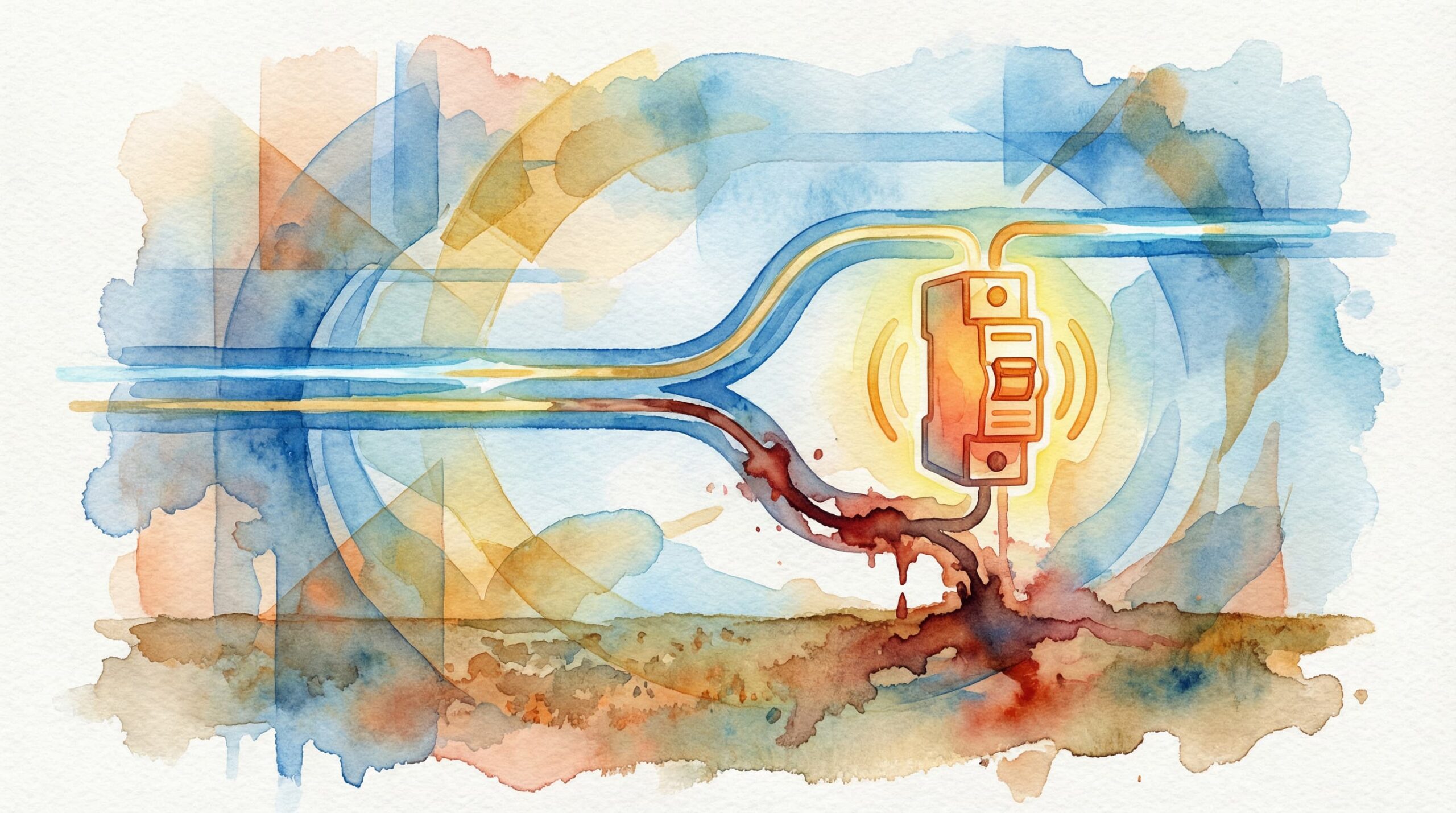
On a damp Tuesday morning, a commercial kitchen buzzed with the familiar clatter of prep work. A long-serving, stainless-steel mixer suddenly fell silent. A young kitchen hand, attempting to restart it, felt a powerful jolt as his hand touched the machine’s casing. He collapsed, the victim of a severe electric shock. The subsequent investigation revealed a catastrophic failure: years of use had worn down the mixer’s internal wiring insulation, causing its metal chassis to become live. The building’s electrical panel had circuit breakers for overloads, but the one device that could have saved his life—an earth leakage protection device—was absent.

This tragedy, like countless others on construction sites, in workshops, and even in homes, was entirely preventable. The small, unseen current that leaked from the faulty appliance to the ground through the victim’s body was a silent killer. This incident serves as a stark reminder of a fundamental principle of electrical safety: protecting against overloads is not enough. This is where earth leakage protection transitions from a technical specification to a life-saving necessity. It is the critical safety layer designed to detect the very type of fault that led to this preventable death, disconnecting power in milliseconds, long before a lethal dose of electricity can be delivered.
To appreciate the solution, one must first fully grasp the problem. Earth leakage is a subtle but perilous electrical phenomenon that occurs when current escapes its intended path and flows to the earth. In a safe and healthy electrical system, this should never happen.
At the heart of any alternating current (AC) system is a simple principle of balance, governed by Kirchhoff’s Current Law. In a single-phase circuit, current flows from the power source to the load (e.g., an appliance or light) through the live (or phase) conductor. It then returns to the source through the neutral conductor. In a perfectly balanced and insulated system, the current flowing through the live conductor is precisely equal to the current returning through the neutral conductor. Their magnetic fields are equal and opposite, effectively canceling each other out. This equilibrium is the signature of a safe, functioning circuit. The protective earth (or ground) conductor is present purely as a safety measure and should carry no current under normal operating conditions.
An earth leakage fault occurs when this delicate balance is broken. A portion of the current finds an alternative, unintended path to the earth, “leaking” out of the primary circuit. This dangerous diversion means that the current returning via the neutral conductor is now less than the current supplied by the live conductor. This imbalance can be caused by several factors, often related to degradation or damage:
The danger of earth leakage lies in its stealth. A current as low as 30 milliamperes (0.030 amps) passing through the human torso can trigger ventricular fibrillation—a chaotic quivering of the heart that is the leading cause of death from electric shock. Standard circuit breakers, designed to trip at 10, 20, or even 100 amps to protect against overloads and short circuits, are completely blind to these small, lethal leakage currents.
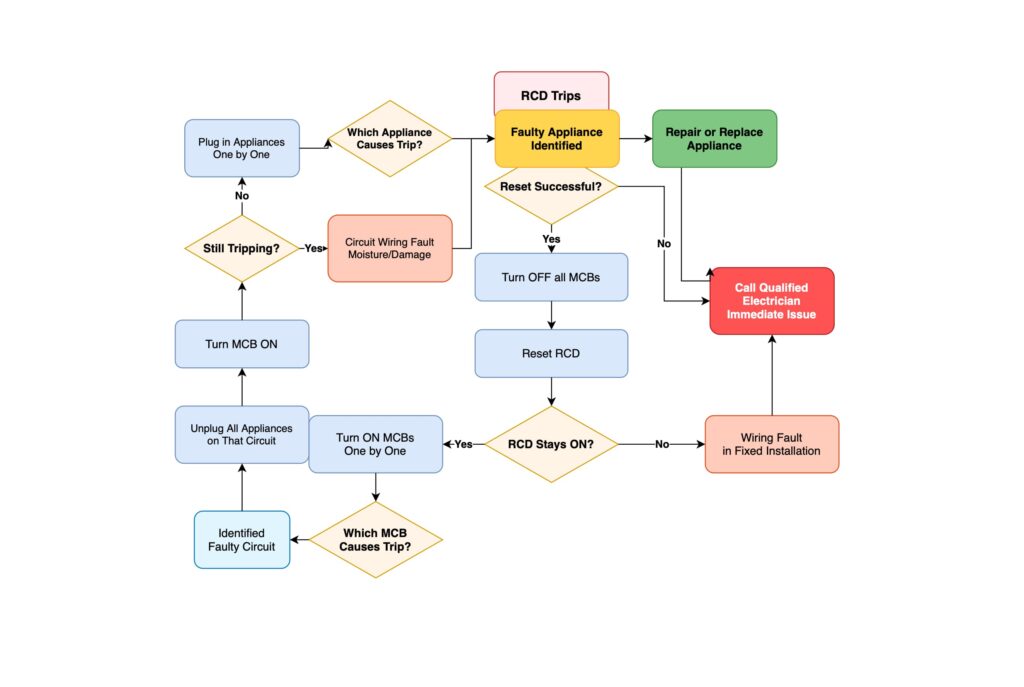
Fig. 1: A visual comparison of current flow in a healthy system (left) versus a system with an active earth leakage fault (right).
The dedicated solution for mitigating the risks of earth leakage is the Residual Current Device (RCD). Known by various names globally (e.g., Ground Fault Circuit Interrupter or GFCI in North America), its function remains the same. An RCD is an intelligent safety switch that continuously monitors the balance of current between the live and neutral conductors.
Its fundamental purpose is to detect the tiny, dangerous imbalances caused by earth leakage currents. When it senses a discrepancy that exceeds its predefined trip threshold (e.g., 30mA), it disconnects the power supply almost instantly—typically within 30 milliseconds. This rapid response is fast enough to prevent a fatal electric shock. A closely related device, the Residual Current Circuit Breaker with Overcurrent Protection (RCBO), integrates this life-saving capability with the functions of a traditional circuit breaker, providing a complete protection solution in a single unit.
The genius of the RCD lies in its elegant and reliable operating principle, which revolves around a component called a Core Balance Current Transformer (CBCT), also known as a Zero-sequence Current Transformer (ZCT). Understanding how this works is key to appreciating the effectiveness of earth leakage protection.
The CBCT is a small, ring-shaped transformer through which both the live and neutral conductors of the circuit pass. Here is a step-by-step breakdown of its operation:
This entire process, from detection to disconnection, happens in a fraction of a second, providing robust protection against electric shock.
Fig. 2: The operating principle of an RCD, showing how a current imbalance in the primary conductors induces a tripping current in the sensing coil.
[Image: A high-quality photo of a panel-mounted 4-pole Type B RCD, showing the test button and terminals.]
While the core principle is consistent, not all earth leakage protection devices are created equal. Selecting the appropriate device for the application is critical for ensuring both safety and system reliability. The first major decision is between an RCD and an RCBO.
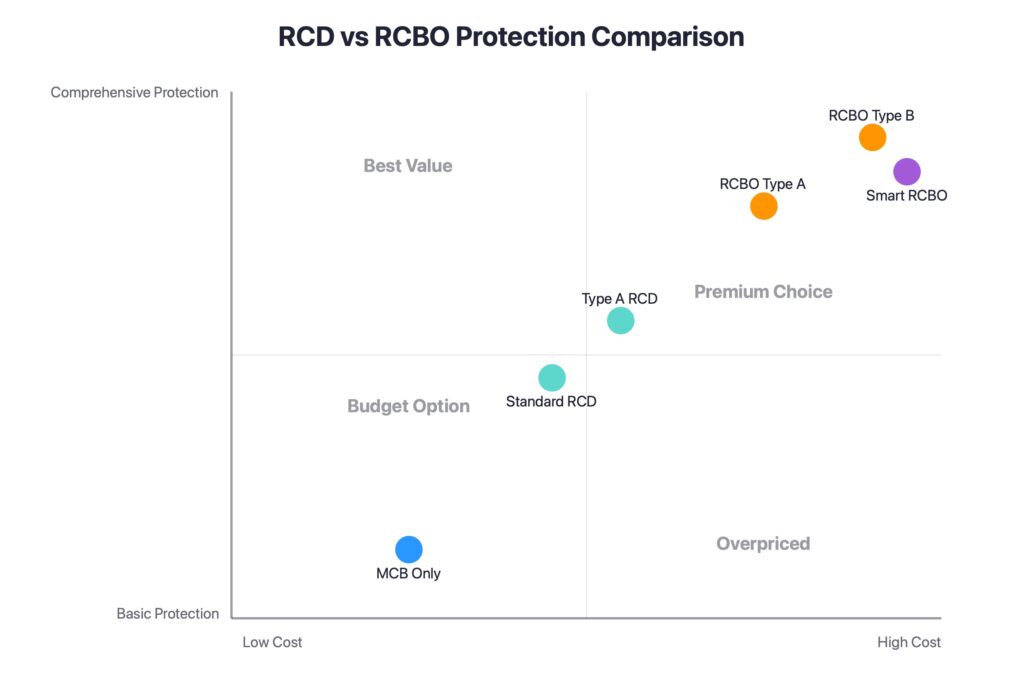
The primary distinction lies in their scope of protection. An RCD is a specialist device; its sole function is to provide earth leakage protection. It is completely unaware of overcurrents from overloads or short circuits. Therefore, an RCD must always be used in conjunction with a separate overcurrent protection device, such as a Miniature Circuit Breaker (MCB) or a fuse.
An RCBO, on the other hand, is a composite device. It integrates the functions of both an RCD and an MCB into a single, compact unit. This means it provides comprehensive protection against all three major electrical hazards: earth leakage (shock protection), overloads (fire risk), and short circuits (fire and explosion risk).
Here is a direct comparison:
| Feature | RCD (Residual Current Device) | RCBO (Residual Current Circuit Breaker with Overcurrent) |
|---|---|---|
| Primary Function | Earth Leakage Protection | Earth Leakage + Overcurrent Protection |
| Protection Scope | Protects against electric shock from earth faults. | Protects against shock, overload, and short circuits. |
| Physical Size | Typically 2 modules wide on a DIN rail. | Typically 1 or 2 modules wide (single module is common). |
| Wiring | Requires wiring in series with a separate MCB for overcurrent protection. | Self-contained, simplifying wiring and reducing connections. |
| Cost | Generally lower per unit. | Generally higher per unit, but can be more cost-effective than an RCD + MCB combo. |
| Application | Often used for group protection, where one RCD protects several circuits, each with its own MCB. | Ideal for individual circuit protection, preventing a fault on one circuit from tripping others. |
Fig. 3: An RCBO combines both residual current sensing and overcurrent detection mechanisms in a single device.
[Image: A DIN rail with a compact single-module RCBO installed next to a standard MCB for size comparison.]
Choosing the wrong type of RCD can be as dangerous as omitting one entirely. Modern electrical and electronic loads can generate complex leakage currents that older RCD types cannot detect. This can lead to two critical problems: nuisance tripping (the device trips without a genuine fault) or, far worse, failure to trip during a real fault. RCDs are classified by the type of residual current they are designed to detect.
| RCD Type | Symbol | Detects | Typical Application |
|---|---|---|---|
| Type AC | ~ | AC sinusoidal leakage only. | Now largely obsolete for most applications. Suitable only for simple, resistive loads like incandescent lighting and basic electric heaters. |
| Type A | ~ and pulsating DC component | AC and pulsating DC leakage. | The standard for modern residential and commercial installations. Suitable for single-phase loads with electronics, such as PCs, servers, washing machines, and Class 1 electronic appliances. |
| Type F | ~ and mixed frequency component | All capabilities of Type A, plus high-frequency AC and pulsating DC leakage. | For loads with single-phase variable speed drives (VFDs), such as modern high-efficiency washing machines, heat pumps, and some air conditioning units. |
| Type B | ~ and smooth DC component | All capabilities of Type F, plus smooth DC leakage. | Essential for three-phase electronic equipment, such as EV chargers, solar panel inverters, medical imaging equipment (MRI, CT scanners), and industrial VFDs. |
In addition to type, RCDs have a sensitivity rating, denoted as IΔn (rated residual operating current). This defines the leakage current threshold at which the device will trip.
The selection and implementation of earth leakage protection vary significantly depending on the environment and the risks involved.
In modern homes, safety is paramount. Regulations in most countries mandate 30mA earth leakage protection on all socket outlets, as well as circuits supplying bathrooms and outdoor equipment. The best practice is to use RCBOs for individual circuits. This ensures that a fault on the downstairs ring main doesn’t plunge the upstairs lighting into darkness. Using RCBOs on critical circuits like a home office computer, freezer, or security system provides enhanced reliability, preventing data loss or food spoilage due to a nuisance trip elsewhere in the house.
The complexity of loads in commercial and industrial environments demands careful specification. The proliferation of Variable Frequency Drives (VFDs) in motors, HVAC systems, and industrial machinery necessitates the use of Type B RCDs. A standard Type A RCD may be “blinded” by the DC leakage currents produced by these drives and fail to operate. A hierarchical or coordinated protection scheme is common, where a time-delayed, less sensitive (e.g., 300mA Type S) RCD at the main distribution board provides fire protection and backup, while individual 30mA RCBOs downstream provide personnel protection for final circuits. This ensures discrimination, meaning only the device closest to the fault trips.
In environments where the risk of electrical shock is elevated, requirements are even stricter. On construction sites, the combination of temporary wiring, heavy-duty portable tools, and wet conditions creates a perfect storm for electrical accidents. The mandatory use of 30mA RCDs or RCBOs on all circuits, combined with a strict regime of regular testing, is non-negotiable.
Medical locations have their own unique and complex requirements. In areas like operating theaters, “body-protected” and “cardiac-protected” electrical areas use isolated power systems (IPS) with Line Isolation Monitors (LIMs) instead of standard RCDs to ensure continuity of supply for life-support equipment while still monitoring for the first earth fault.
While RCDs and RCBOs are life-savers, they can sometimes be a source of frustration when they trip for no apparent reason. This “nuisance tripping” is disruptive, but it’s important to remember that the device is often doing its job by detecting a subtle or intermittent fault. A qualified electrician should always conduct fault-finding, but understanding the process is valuable.
The following flowchart outlines a systematic approach to identifying the cause of an RCD trip.
Fig. 4: A systematic approach to identifying the source of an RCD trip.
Here is an elaboration of the troubleshooting steps:
A common cause of nuisance tripping in modern installations is the cumulative effect of small, normal leakage currents from many electronic devices (PCs, servers, TVs). Each device may have a tiny leakage current well below 30mA, but when many are on the same circuit, their cumulative leakage can exceed the RCD’s threshold. In this case, the solution is to split the loads across more RCD-protected circuits.
From the tragic story that opened this guide to the technical intricacies of its operation, the message is clear: earth leakage protection is a non-negotiable pillar of modern electrical safety. It is the only technology specifically designed to protect human life from the silent and invisible danger of small earth fault currents. RCDs and RCBOs are not just components in a circuit board; they are vigilant guardians that stand ready to act in milliseconds to prevent a fault from becoming a fatality.
As a professional, your responsibility extends beyond installation to advocacy and education. This means urging clients and colleagues to conduct regular testing of their RCDs—a simple press of the “T” or “Test” button monthly is a best practice—to ensure they are functional. It means insisting on the correct type of device for the load and never cutting corners. And above all, it means reinforcing that the selection, installation, and troubleshooting of these life-saving devices must always be performed by a qualified and licensed electrician.

