WengYang Industrial Zone Yueqing Wenzhou 325000
Work Hours
Monday to Friday: 7AM - 7PM
Weekend: 10AM - 5PM
WengYang Industrial Zone Yueqing Wenzhou 325000
Work Hours
Monday to Friday: 7AM - 7PM
Weekend: 10AM - 5PM

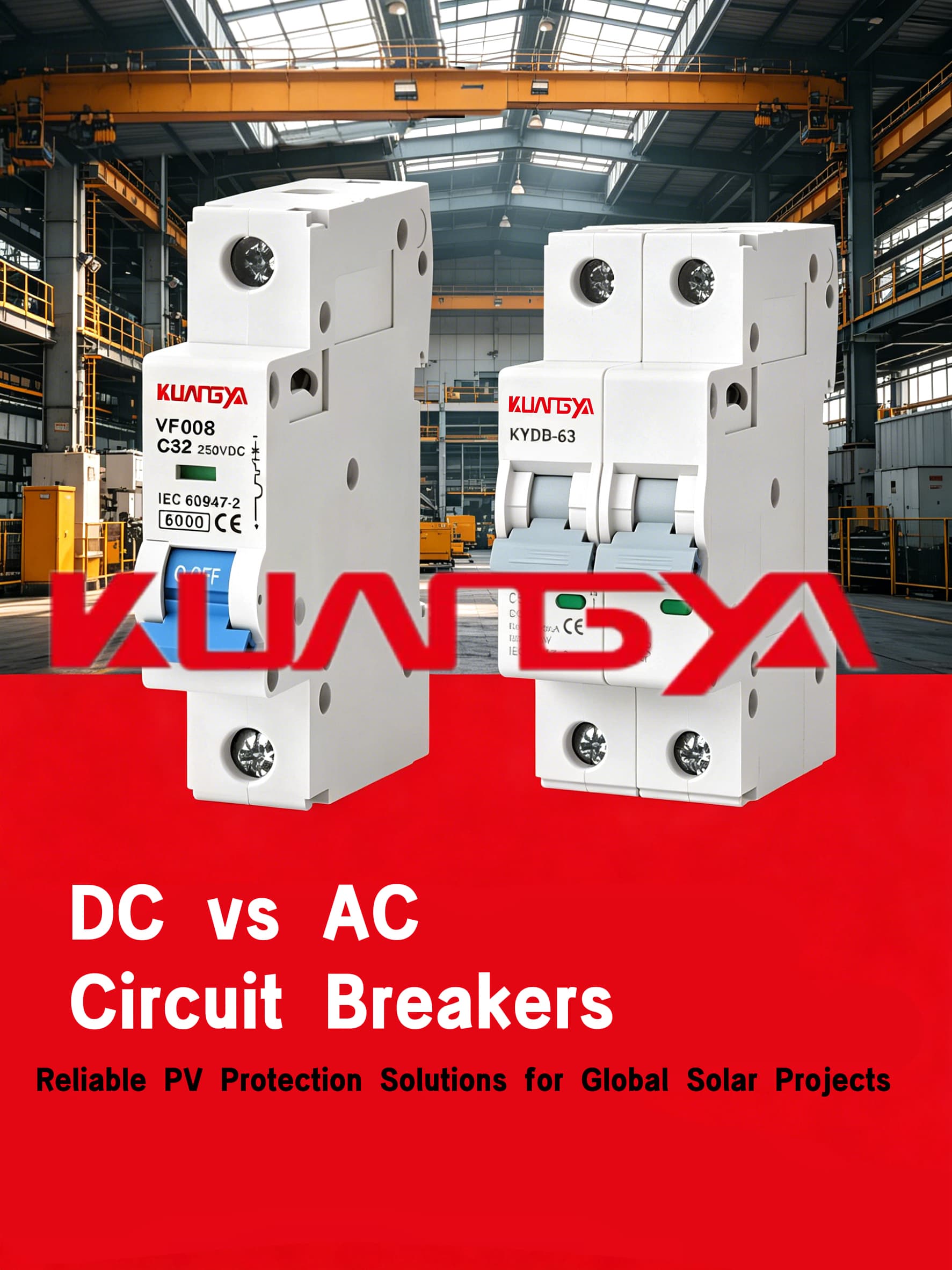
In the world of electrical systems, circuit breakers are crucial for safety, protecting the wiring and components from faults such as short circuits or overloads. However, not all circuit breakers are created equal. There are distinct differences between the breakers used for Direct Current (DC) systems and those used for Alternating Current (AC) systems.
This post will explore the differences between DC and AC circuit breakers, particularly in the context of solar energy systems, and provide insights on why the right circuit protection is essential to prevent potential hazards.
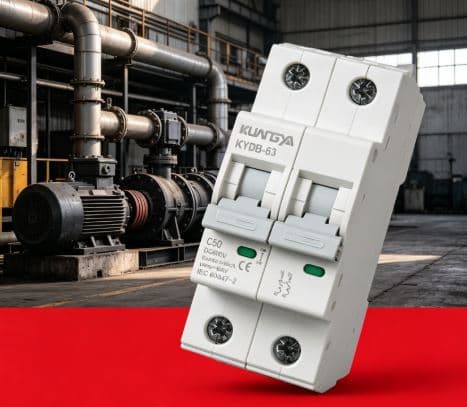
A DC circuit breaker is a device designed specifically to protect electrical systems that use direct current (DC). These systems are commonly found in solar power installations, battery storage, and other renewable energy technologies. The main characteristic of DC is that the current flows in one direction, from the negative to the positive terminal.
In a typical DC-powered system, like a solar panel, the current generated is unidirectional. This flow of electricity presents unique challenges in terms of circuit protection. DC systems are more prone to arc faults, making it crucial for the circuit breaker to handle these more effectively than its AC counterpart.
The function of a DC circuit breaker is to interrupt the flow of current when it exceeds safe levels. It is especially important in solar installations, where DC current is generated from the photovoltaic (solar) panels. If an issue arises, such as a short circuit or overload, the breaker must act fast to prevent damage to the system or create a fire risk due to persistent arcs.
Learn more about DC circuit breakers for solar systems from the International Electrotechnical Commission (IEC).
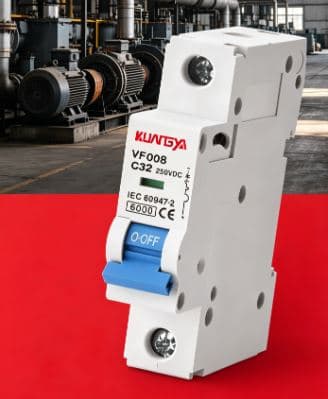
An AC circuit breaker is designed for protecting electrical systems that use alternating current (AC). AC systems are common in household appliances, grid power distribution, and large industrial systems.
AC systems differ from DC in that the current changes direction periodically. This phenomenon, known as the “zero crossing” of current, happens multiple times per second depending on the frequency of the AC source. This natural reversal of current direction makes arc extinction easier because when the current passes through zero, the arc extinguishes by itself.
AC circuit breakers are designed to interrupt current flow during an overload or fault condition, but their design takes advantage of the inherent properties of AC power, making arc quenching simpler compared to DC systems. These breakers are ideal for applications such as home electrical circuits, industrial systems, and grid power, where alternating current is the standard.
Learn more about the role of AC Circuit Breakers on Energy.gov.
Below is a comparison of the key features that differentiate DC and AC circuit breakers, specifically in the context of their use in solar power systems and other electrical applications:
| Feature | DC Circuit Breaker | AC Circuit Breaker |
|---|---|---|
| Current Flow | One direction | Alternating |
| Arc Extinguishing | Difficult | Easier |
| Application | Solar, batteries | Home, grid |
| Voltage Range | Up to 1500V+ | Typically lower |
| Breaker Type | Usually specialized for high voltage and arc management | More common, standard design |
| Safety Requirements | Must adhere to rigorous DC-specific standards (UL, IEC, etc.) | Standardized for household and commercial AC systems |
In solar energy systems, the generation of direct current is a fundamental aspect. Solar panels convert sunlight into DC electricity, which is then either stored in batteries or converted to AC for use in homes and businesses. However, the nature of DC creates specific challenges for circuit protection.
Learn more about UL 1077 Certification for DC breakers.
Selecting the right DC circuit breaker for a solar power system is critical to ensuring the safety and longevity of the system. When choosing a breaker, several factors need to be considered:
No, an AC circuit breaker is not suitable for DC systems. AC breakers are designed to interrupt alternating current, which has natural zero-crossing points. DC breakers, on the other hand, are designed to deal with the continuous flow of current and the more persistent arcs that can form. Using an AC breaker in a DC system would not provide the required protection, and it could pose a serious safety risk.
DC arcs are inherently more dangerous than AC arcs because DC current does not pass through a zero point, making it more difficult to extinguish the arc when the circuit is opened. In DC circuits, the arc can continue to burn even after the breaker has attempted to open the circuit. This can lead to severe damage to the components or cause a fire if not addressed quickly.
Understanding the key differences between DC and AC circuit breakers is essential for ensuring the safety and reliability of solar power systems. As solar energy systems continue to grow in popularity, the need for specialized protection devices like DC circuit breakers becomes increasingly important.
Whether you’re designing a small residential solar installation or a large commercial system, selecting the right circuit protection can make the difference between a safe, efficient system and a hazardous one. By choosing the appropriate DC circuit breaker based on voltage rating, current, and system requirements, you can ensure that your solar system operates safely and efficiently for years to come.
Click our official website link for more information:https://cnkuangya.com/dc-mcb/(Kuangya)

