WengYang Industrial Zone Yueqing Wenzhou 325000
Work Hours
Monday to Friday: 7AM - 7PM
Weekend: 10AM - 5PM
WengYang Industrial Zone Yueqing Wenzhou 325000
Work Hours
Monday to Friday: 7AM - 7PM
Weekend: 10AM - 5PM

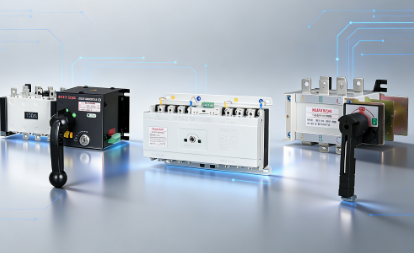
The Automatic Transfer Switch (ATS) is a critical component in electrical power distribution systems, ensuring uninterrupted power delivery to critical loads.
Within electrical power distribution and emergency backup systems, the automatic transfer switch serves as a core control component that ensures uninterrupted power delivery to critical electrical loads. This technical guide covers its full form, core definition, operating principles, classification, practical applications, and common technical FAQs in a standardized, professional format, suitable for engineering reference and daily technical consultation.
The full form of ATS in electrical engineering is Automatic Transfer Switch.
It is a self-operated switchgear device designed to continuously monitor the main power supply status and initiate automatic power source switching when a failure or abnormality is detected. This equipment is commonly paired with standby generators, UPS systems, or other emergency power supplies to maintain power for critical loads during grid outages.
An automatic transfer switch is a specialized electrical switching device built to sustain uninterrupted power for critical loads. It performs two core simultaneous tasks: monitoring the main utility power for faults including total outages, under-voltage, over-voltage, phase loss, and frequency fluctuations, and switching the connected load to a backup power source immediately upon main supply failure.
Once the main grid power is restored and stabilized, the device will transfer the load back to the main supply, initiate a cool-down cycle for the backup generator, and then shut down the backup unit. This automated operation eliminates manual intervention and minimizes unplanned downtime for critical applications.
An automatic transfer switch is a specialized electrical switching device dedicated to maintaining uninterrupted power for critical loads. It performs two primary functions simultaneously: monitoring the main utility power for faults such as total outages, under-voltage, over-voltage, phase loss, and frequency fluctuations, and switching the load to a backup power source immediately when the main supply fails.
Once the main grid power is restored and stabilized, the unit will switch the load back to the main supply and trigger a cool-down cycle for the backup generator before shutting it down. The device eliminates manual operation and reduces downtime, making it essential for critical power-reliant setups.
A standard automatic transfer switch follows a fixed, safety-compliant operating sequence with these key functions:
Automatic transfer switches are categorized by transition mode and pole configuration, with tailored specifications for residential, commercial, and industrial use. The table below outlines common types, core technical features, and recommended application scenarios:
| ATS Type | Core Technical Feature | Recommended Application Scenarios |
|---|---|---|
| Open Transition ATS | Disconnects one power source fully before connecting the alternate; no parallel operation between mains and backup supply | Residential buildings, small commercial spaces, non-sensitive electrical loads |
| Closed Transition ATS | Brief controlled parallel connection for zero-interruption load transfer, ideal for sensitive equipment | Data centers, hospitals, telecom equipment, precision electronic devices |
| 3-Pole ATS | Designed for 3-phase 3-wire electrical systems, no dedicated neutral pole | Industrial machinery, small manufacturing facilities |
| 4-Pole ATS | Designed for 3-phase 4-wire systems, with neutral pole protection and isolation function | Large commercial buildings, healthcare facilities, industrial complexes |
This automatic switching device is widely deployed in scenarios requiring consistent, reliable power across residential, commercial, and industrial sectors:
A: An ATS operates automatically without human intervention, executing power source switching instantly when main power fails. A manual transfer switch requires physical human operation, causing delays and making it unsuitable for critical loads.
A: Yes, standard ATS units are fitted with mechanical and electrical interlocks that prevent simultaneous operation of the main grid and backup power source, fully eliminating back-feeding risks to personnel and equipment.
A: No. Portable generators for temporary, occasional use can operate with manual switches, while standby generators for fixed critical loads require an ATS for automatic and timely power transfer.
A: Most ATS models feature adjustable delays: 3–10 seconds for generator startup and stabilization, 1–5 minutes for main power verification before re-transfer, and 2–5 minutes for generator cool-down prior to shutdown.
A: No. A UPS provides instant, short-term backup power for brief outages, while an ATS is a switching device for long-term backup generator connection. The two are often used together to ensure complete power continuity for critical equipment.
The automatic transfer switch (ATS) is a critical component in modern electrical power systems, delivering safe, automated power source switching to maintain uninterrupted power for critical loads. It reduces unplanned downtime, enhances overall power system safety, and protects electrical equipment from damage caused by sudden power failures. Selecting the appropriate ATS type ensures stable, reliable power supply for residential, commercial, and industrial applications.
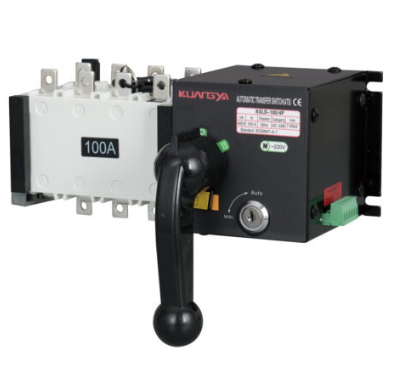
WENZHOUKUANGYA TECHNOLOGY CO.,LTD
The Automatic Transfer Switch (ATS) stands as an irreplaceable pillar of modern electrical power systems, engineered to deliver seamless, reliable power continuity for critical loads across residential, commercial, and industrial environments. By automating the transfer between utility grid and backup power sources, ATS eliminates the need for manual intervention, minimizes costly unplanned downtime, and mitigates risks of equipment damage, data loss, or operational disruption during grid outages. This makes it an essential safeguard for any setup where even a momentary power failure can lead to severe consequences.
Available in diverse configurations—from open-transition models ideal for non-sensitive residential and small commercial loads to closed-transition variants tailored for sensitive applications like data centers, hospitals, and telecom infrastructure—ATS ensures both operational safety and performance alignment with specific system requirements. Its built-in mechanical and electrical interlock mechanisms prevent dangerous back-feeding, protecting utility workers and equipment, while configurable delay settings optimize generator longevity and overall system stability.
For businesses and critical infrastructure operators, investing in the right ATS is not merely a technical decision but a strategic one. It safeguards core operations, protects valuable assets, and upholds the reliability that modern power-dependent systems demand. As global reliance on continuous power grows, ATS will remain a vital component in building resilient, future-proof power systems, ensuring that critical services stay online, data remains secure, and operations run without interruption, even in the face of unexpected grid failures.
WELCOME TO OUR KUANGYA https://cnkuangya.com/automatic-transfer-switch/

