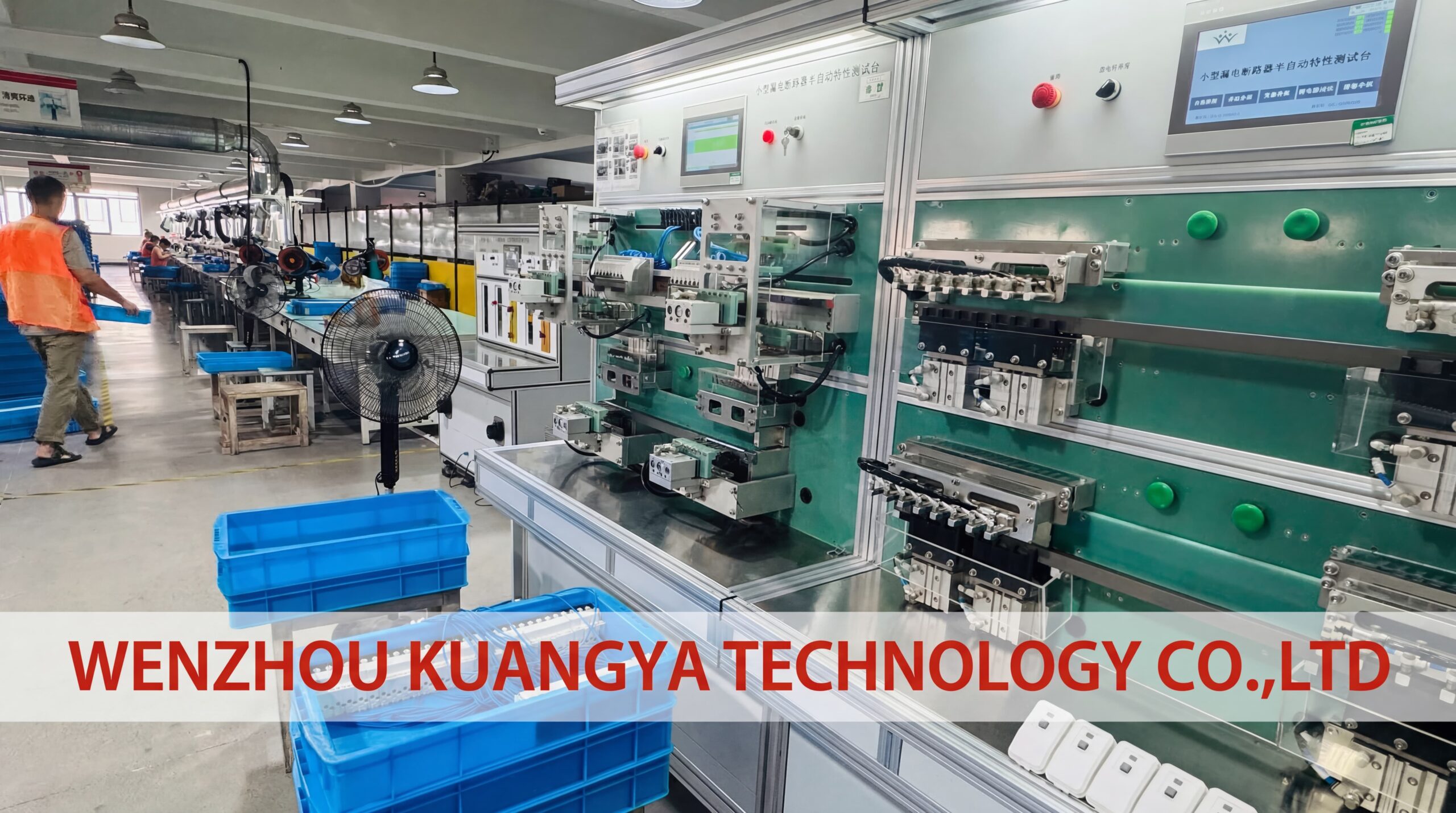
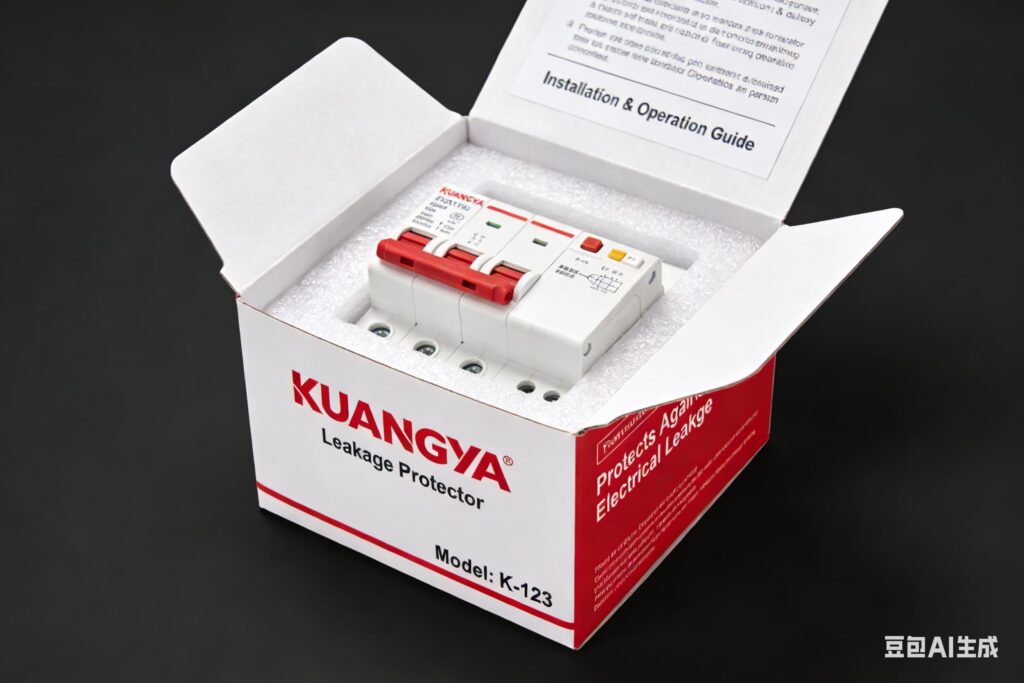
As a procurement manager developing new energy electrical products, partnering with the right OEM/ODM manufacturer is critical to your project’s success. CNKUANGYA Electrical Equipment Supply brings 25 years of expertise in DC photovoltaic protection, AC isolation systems, and circuit breakers, serving over 500 global customers across 2,000+ new energy projects.
This comprehensive checklist guides you through the entire customization journey—from initial concept to mass production—ensuring your product meets market demands while maintaining the highest quality standards.
About CNKUANGYA: Your Trusted OEM/ODM Partner
Company Profile:
Established: 25+ years in electrical equipment manufacturing
Global Reach: 500+ customers worldwide
Product Portfolio: 128+ DC product models
Project Experience: 2,000+ new energy projects delivered
Part 1: Product Selection Guide for Procurement Managers
Understanding Your Project Requirements
Before initiating customization, procurement managers must clearly define their project scope. The following framework helps identify the optimal product category and customization level needed.
Customer involvement: On-site inspection recommended (or video documentation)
6.2 Pilot Run Checklist
[ ] Production speed and efficiency meet targets
[ ] Quality yield rate >98% achieved
[ ] Packaging process validated (inner box + master carton)
[ ] Labeling and branding accuracy verified
[ ] Random sample testing confirms specifications
[ ] Documentation and certificates complete
[ ] Customer approval obtained for mass production
Phase 7: Mass Production & Delivery (Week 15+)
7.1 Production Planning
Production Schedule Coordination:
Order Quantity
Production Time
Lead Time (Ex-Works)
Recommended Order Frequency
1,000 – 5,000 units
1-2 weeks
3-4 weeks
Quarterly
5,000 – 20,000 units
2-4 weeks
4-6 weeks
Bi-annually
20,000+ units
4-6 weeks
6-8 weeks
Annually with rolling forecast
7.2 Logistics & Delivery
Shipping Options:
Sea Freight: Most economical for large volumes (20ft/40ft container)
Air Freight: Fast delivery for urgent orders or samples
Express Courier: Small quantities, samples, or urgent replacements
CNKUANGYA Logistics Support:
FOB, CIF, DDP terms available
Coordination with customer’s freight forwarder
Proper export documentation and customs clearance support
Packaging optimized for container loading efficiency
7.3 After-Sales Support
[ ] Technical support hotline (multilingual)
[ ] Warranty management (standard 2-5 years depending on product)
[ ] Spare parts availability
[ ] Product training for customer’s sales/technical teams
[ ] Continuous improvement feedback loop
Part 3: Customization Examples with CNKUANGYA Branding
Example 1: Residential Solar System Package
Customer Profile: European solar installation company, 5,000 residential systems annually
Product Bundle:
DC Surge Protector (Type 1+2, 1000V)
DC Miniature Circuit Breaker (KYDB-63, 2P, 32A)
PV Combiner Box (4-string)
Customization Applied:
Appearance:
Housing Color: Customer brand blue (Pantone 2935C) for all three products
Handle Color: Safety orange (RAL 2009) for high visibility
Logo Placement:
CNKUANGYA logo on side panel (white, 20mm x 60mm)
Customer logo on front panel (full color, 25mm x 75mm)
Packaging:
Inner Box: White box with customer’s brand blue stripe, product photo, 4-language specifications (EN/DE/FR/NL)
Master Carton: Brown corrugated with customer logo on all sides, “Solar Components – Handle with Care” marking
Timeline: 10 weeks from initial contact to first shipment\ MOQ: 1,000 units per product (3,000 total)\ Result: Cohesive brand identity across entire solar protection system
Example 2: Industrial ESS Cabinet Components
Customer Profile: US energy storage system integrator, 200 large-scale projects annually
Product Requirements:
High-current DC switch disconnectors (400A, 1500V)
gPV fuse holders and fuse links (14x85mm)
Custom labeling for arc flash warnings
Customization Applied:
Technical Modifications:
Extended terminal blocks for large-gauge cables (up to 240mm²)
Modified mounting bracket for specific cabinet rail system
Integrated auxiliary contacts for remote monitoring
Branding:
Housing: Standard black (cost optimization)
Custom Labels: High-visibility arc flash warning labels with customer’s safety color scheme
Laser Engraving: Customer part numbers and asset tags on each unit
Packaging:
Heavy-Duty Cartons: 7-layer corrugated for weight (each unit 8kg)
Anti-Static Protection: ESD bags for sensitive auxiliary components
Documentation: Detailed torque specifications and connection diagrams in customer’s format
Timeline: 12 weeks (included extended testing for UL certification)\ MOQ: 500 units (high-value product)\ Result: Seamless integration into customer’s ESS cabinets, passed UL field evaluation
Standard AC circuit breakers (MCB, 6kA breaking capacity)
Minimal customization to control costs
Customization Applied:
Branding Only:
Housing: Standard gray (no custom color)
Handle: Standard white (no custom color)
Logo: Pad-printed customer logo on front (1-color, black)
Packaging: Standard white inner box with custom label sticker (customer logo + Arabic text)
Cost Optimization:
Used existing molds and tooling
Simplified packaging design (sticker labels instead of full printing)
Larger order quantity for better unit pricing
Timeline: 6 weeks (no tooling development needed)\ MOQ: 5,000 units (higher volume for lower unit cost)\ Result: 30% cost savings vs. full customization, maintained brand presence
Part 4: Cost Structure & MOQ Guidelines
Customization Cost Breakdown
Understanding cost drivers helps procurement managers make informed decisions:
Customization Element
Cost Impact
MOQ Impact
Notes
Standard Product (No Customization)
Baseline
500-1,000 units
Lowest cost, fastest delivery
Logo Printing Only
+3-5%
1,000 units
Pad printing or label application
Custom Color (Housing)
+8-12%
2,000 units
Material and process change
Custom Color (Multi-component)
+15-20%
3,000 units
Housing + handle + covers
Modified Dimensions
+20-30%
5,000 units
New tooling required
Custom Packaging (Inner Box)
+5-8%
1,000 units
Printing plates and setup
Custom Packaging (Full)
+10-15%
2,000 units
Inner + outer carton customization
Technical Modifications
+25-50%
Varies
Engineering and testing costs
MOQ Negotiation Strategies
For New Customers:
Start with pilot order (500-1,000 units) using minimal customization
Gradually increase customization level as volume grows
Combine multiple products to reach MOQ thresholds
For Established Partners:
Annual volume commitments can reduce MOQ requirements
Blanket orders with scheduled releases improve pricing
Tooling cost amortization over multiple orders
Part 5: Timeline & Project Management
Standard OEM/ODM Project Timeline
Week 1-2:   Requirements Definition & Product Selection
Week 3-5:   Design Development (Appearance, Packaging, Branding)
Week 4-6:   Packaging Design & Approval
Week 5-8:   Engineering & Prototyping
Week 9-12:  Tooling Development & Manufacturing Prep
Week 13-14: Pilot Production & Validation
Week 15+:   Mass Production & Delivery
Total Time to Market: 15-18 weeks for fully custom products\ Fast-Track Option: 8-10 weeks for logo/packaging customization only
Critical Path Management
Longest Lead Time Items:
Custom tooling development (4-6 weeks)
International certification testing (4-8 weeks)
Custom color material sourcing (2-3 weeks)
Procurement Manager’s Action Items:
Provide design approvals promptly (within 3-5 business days)
Coordinate certification requirements early in the process
Maintain clear communication channel with CNKUANGYA project manager
FAQ Section
FAQ 1: Customization & Branding
Q1: What is the minimum order quantity for custom color housing?
A: The MOQ for custom color housing depends on the complexity:
Single-component color change (housing only): 2,000 units
Multi-component color change (housing + handle): 3,000 units
Complete color customization (housing + handle + covers): 5,000 units
For orders below these thresholds, we recommend using our standard color options (gray, black, white) with custom logo printing to maintain your brand identity while controlling costs.
Q2: Can I use my own Pantone or RAL color code?
A: Yes, absolutely. CNKUANGYA accepts both Pantone and RAL color specifications. We recommend:
Provide the exact Pantone/RAL code during the design phase
Send a physical color swatch or sample if available
We will produce color samples on actual production material for your approval
Color matching accuracy: Delta E < 2.0 (industry standard for excellent match)
Note: Some colors may require special UV-stabilized pigments for outdoor applications, which may slightly affect the final shade. We will discuss any limitations during the design review.
Q3: How many logo placement positions can I customize?
A: Logo placement depends on the product type and available surface area:
Standard placement: Front panel (primary logo position)
Additional placements: Side panels, top cover, or terminal cover
Typical configuration: Customer logo (front) + CNKUANGYA logo (side)
For products with limited surface area (like miniature circuit breakers), we recommend prioritizing the most visible surface. Our design team will provide mockups showing optimal logo placement for maximum brand visibility.
Q4: What logo application methods do you recommend for durability?
A: For new energy electrical products that may be exposed to harsh environments, we recommend:
Outdoor/Industrial Applications:
Screen printing or laser engraving for maximum durability (5-10 years)
Q5: Can I see a physical sample before committing to mass production?
A: Yes, this is a standard part of our OEM/ODM process:
Design mockup: Digital 3D rendering of your customized product (Week 3-4)
Appearance prototype: Physical sample with custom colors and logo (Week 6-7)
Functional prototype: Fully working unit for performance testing (Week 7-8)
Pre-production sample: Final sample from pilot run for approval (Week 13)
Samples are typically provided at cost ($50-$200$ per unit depending on product complexity), which can be credited back against your first production order.
FAQ 2: Packaging & Logistics
Q6: Can you design the packaging for me, or do I need to provide artwork?
You provide: Print-ready artwork files (AI, PDF, or EPS format)
We provide: Technical review and production
Best for: Customers with established brand design teams
Timeline: 1 week for technical review
Option 3 – Collaborative Design:
Combination of customer concepts and CNKUANGYA design execution
Most common approach for balanced control and efficiency
Our design team has extensive experience in electrical product packaging and can ensure your design meets both aesthetic and functional requirements (barcode placement, regulatory information, shipping durability).
Q7: What information must be included on the packaging?
A: Packaging must include both regulatory and practical information:
Destination and consignee information (for export)
Optional but Recommended:
Installation quick guide or diagram
Technical specifications table
Customer service contact information
Sustainability/recycling information
CNKUANGYA will provide a packaging content checklist during the design phase to ensure compliance with your target markets.
Q8: How is the packaging designed to protect products during international shipping?
A: Our packaging engineering considers the entire logistics chain:
Inner Box Protection:
Corner foam protectors or custom-fit foam inserts
Anti-vibration cushioning for sensitive components
Product secured to prevent movement within box
Master Carton Protection:
5-layer corrugated cardboard (standard) or 7-layer (heavy products/long-distance shipping)
Compression strength tested to withstand stacking (up to 4 cartons high)
Moisture-resistant coating for sea freight
Testing & Validation:
Drop test from 1.2 meters (simulates handling accidents)
Vibration test per ISTA 3A standard (simulates truck/ship transport)
Compression test (simulates warehouse stacking)
For particularly fragile or high-value products, we can implement additional protection such as:
Desiccant packets for moisture control
Anti-static bags for electronic components
Wooden crate packaging for extra-large or heavy items
Q9: Can I customize the packaging for different regional markets?
A: Yes, multi-market packaging customization is common for international distributors:
Approach 1 – Multi-Language Packaging:
Single packaging design with multiple languages (e.g., English + Arabic, English + Spanish)
Most cost-effective for products sold across multiple regions
Typical configuration: English (primary) + 2-3 regional languages
Approach 2 – Market-Specific Packaging:
Separate packaging designs for each major market
Allows for region-specific certifications, languages, and cultural considerations
Requires higher MOQ per market (typically 1,000-2,000 units per variant)
Approach 3 – Base Packaging + Regional Labels:
Standard multilingual base packaging
Market-specific information added via labels or stickers
Most flexible for diverse, smaller-volume markets
Lower MOQ (can be as low as 500 units per market)
Regional Considerations We Can Address:
Language translation and localization
Regional certification marks (CE for Europe, UL for North America, SASO for Saudi Arabia)
Voltage/frequency specifications for different electrical systems
Cultural color preferences and symbolism
Local distributor contact information
Q10: What is the typical packaging cost as a percentage of total product cost?
A: Packaging costs vary based on customization level:
Standard Packaging:
Inner box: 2-3% of product cost
Master carton: 1-2% of product cost
Total: 3-5% of product cost
Custom Printed Packaging:
Inner box (full-color printing): 4-6% of product cost
Master carton (2-color printing): 2-3% of product cost
Total: 6-9% of product cost
Premium Packaging:
Inner box (rigid box, special finishes): 8-12% of product cost
Master carton (full-color, heavy-duty): 3-5% of product cost
Custom foam inserts: 2-3% of product cost
Total: 13-20% of product cost
For cost optimization, we recommend:
Use standard packaging for pilot orders and initial market testing
Invest in custom packaging once product-market fit is established
Consider packaging as part of your brand positioning strategy (premium products justify premium packaging)
Conclusion: Your Success is Our Priority
CNKUANGYA’s 25 years of experience in electrical equipment manufacturing, combined with our comprehensive OEM/ODM services, makes us the ideal partner for your new energy product development journey. From initial concept to mass production, we provide:
✓ Technical Expertise: 128+ product models and 2,000+ projects delivered\ ✓ Quality Assurance: IEC, CE, RoHS certified manufacturing\ ✓ Customization Flexibility: From simple logo printing to complete product redesign\ ✓ Global Support: Serving 500+ customers worldwide with multilingual service\ ✓ Competitive Pricing: Factory-direct supply with transparent cost structure
Ready to Start Your OEM/ODM Project?
Contact CNKUANGYA today to discuss your specific requirements:
Head of Marketing at Kuangya, focused on the global promotion of electrical protection and power distribution solutions.● Core Areas: Brand building in the PV, energy storage, and industrial power markets. ● Professional Products: Fuses, Surge Protective Devices (SPD), Miniature Circuit Breakers (MCB), and transfer switches. ● Value Proposition: Serving the global renewable energy market with "Safety, Reliability, and Innovation" as our cornerstones.Welcome to connect and collaborate to jointly advance the progress of intelligent power distribution technology.