WengYang Industrial Zone Yueqing Wenzhou 325000
Work Hours
Monday to Friday: 7AM - 7PM
Weekend: 10AM - 5PM
WengYang Industrial Zone Yueqing Wenzhou 325000
Work Hours
Monday to Friday: 7AM - 7PM
Weekend: 10AM - 5PM

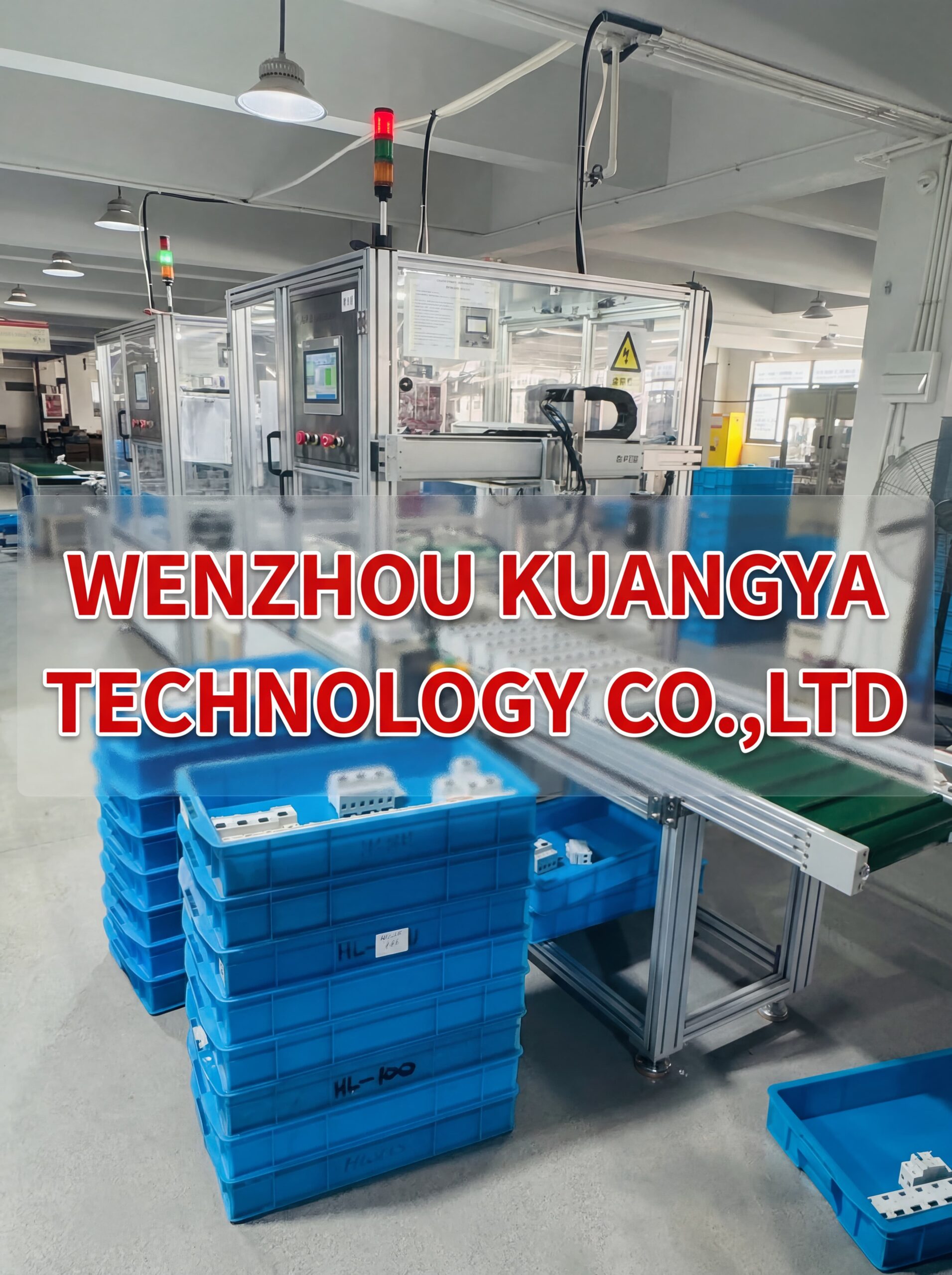
Africa stands at a historic crossroads in its energy transformation journey. This continent, blessed with 40% of the world’s developable solar resources, currently has solar installations accounting for merely 1.5% of its energy mix. This massive supply-demand imbalance has catalyzed unprecedented market opportunities. As solar photovoltaic (PV) industry accelerates across Africa, DC power protection equipment—including DC Miniature Circuit Breakers (MCBs), DC Moulded Case Circuit Breakers (MCCBs), DC Fuses, and DC Surge Protective Devices (SPDs)—are experiencing remarkable growth prospects. This comprehensive analysis examines the technical characteristics of these core protection products, market demand dynamics, and commercial opportunities for Chinese enterprises in the African market.
Africa’s energy market is undergoing profound transformation. Statistics reveal that 580 million Africans remain without access to reliable electricity, representing over 80% of the global electricity access gap. Annual per capita electricity consumption stands at merely 500 kWh, less than 14% of the global average. This severe energy shortage paradoxically creates enormous development space for solar PV industry. citation
According to the Global Solar Council’s (GSC) “Africa Market Outlook for Solar PV 2025-2028” report, Africa’s annual solar capacity additions reached 2.403 GW in 2024. More encouragingly, projections indicate that between 2025 and 2028, African PV installations will experience explosive growth, with cumulative new installations reaching 23 GW and a compound annual growth rate (CAGR) of approximately 30%. citation
South Africa, as Africa’s largest PV market, is projected to grow from 8.75 GW in 2025 to 15.25 GW by 2030, representing a CAGR of 11.75%. Egypt, Morocco, Nigeria, and other nations are also rolling out ambitious renewable energy development plans, injecting powerful momentum into the PV industry.
Africa’s rapid solar market growth stems from multiple converging factors:
Strengthened Policy Support: Multiple governments have incorporated renewable energy development into national strategies. Morocco has set a target of 52% renewable energy in total electricity generation by 2030, encouraging large-scale PV projects through land incentives and tax reductions. Egypt has approved renewable energy projects totaling over 12 GW of installed capacity. citation
Continuous Technology Cost Reduction: Dramatic declines in PV module prices have made solar power one of the most economically viable electricity sources. According to DNV (Det Norske Veritas) predictions, the Middle East and North Africa region will add 860 GW of solar PV capacity by 2040, with solar becoming the lowest-cost and fastest-deploying dominant energy source.
Rapid Distributed PV Development: Facing grid instability, commercial, industrial parks, and agricultural sectors are increasingly adopting “PV + storage” combination systems to achieve electricity self-sufficiency or peak shaving. In 2025, Africa’s new energy market reached $180 billion, with distributed PV share doubling to 35%. citation
Solar PV systems generate direct current (DC), fundamentally different from traditional alternating current (AC) systems. DC electricity produces persistent arcing when disconnected, which is significantly harder to extinguish than AC arcing, necessitating specially designed DC protection equipment. Below is a comprehensive analysis of core protection products’ technical characteristics and application scenarios.
Technical Characteristics
DC Miniature Circuit Breakers are overcurrent protection devices specifically designed for DC control circuit applications, featuring compact size and rapid response. Compliant with IEC 60947-2:2016 international standards, they offer rated voltages up to DC 1000V, rated current ranges typically from 6A to 125A, and breaking capacities generally between 6kA to 10kA.
DC MCBs employ thermal-magnetic trip mechanisms, providing dual protection against overload and short-circuit faults. Their internal design incorporates specialized arc-chute devices that effectively extinguish DC arcs, preventing fire hazards. Unlike traditional fuses, DC MCBs can be manually reset after tripping without component replacement, significantly reducing maintenance costs and downtime.
Application Scenarios
DC MCBs are primarily deployed in residential and small commercial PV systems, particularly suitable for:
Market Demand Analysis
With Africa’s rapid distributed PV development, particularly the proliferation of off-grid solar products, DC MCB market demand exhibits explosive growth. United Nations Environment Programme data shows that off-grid solar product sales in Africa reached 7.4 million units in 2021, becoming the world’s largest market. East Africa recorded the highest sales at 4 million units, with Kenya leading at 1.7 million units.
Technical Characteristics
When current requirements exceed residential scale and enter commercial and industrial (C&I) levels, DC MCCBs become essential standard equipment. DC MCCB rated current ranges typically span 63A to 1600A, with breaking capacities reaching 20kA to 50kA, far exceeding DC MCB performance specifications.
A significant advantage of DC MCCBs is their adjustable trip settings, allowing fine-tuning according to specific application requirements, whereas DC MCBs typically have fixed settings. Their rated voltages reach DC 600V to 1000V, making them particularly suitable for large-scale PV power stations and industrial-grade energy storage systems.
Application Scenarios
DC MCCBs primarily serve medium to large-scale PV projects and high-power applications:
Market Demand Analysis
Large-scale PV projects in Africa are accelerating deployment. Utility-scale PV power station construction in South Africa, Egypt, Morocco, and other countries is entering fast-track development, with projects typically featuring tens or even hundreds of megawatts of installed capacity, creating massive demand for DC MCCBs. For example, Morocco’s Noor Solar Power Plant Phase III project, with 400 MW installed capacity and expected commercial operation in 2026, requires thousands of DC MCCBs for this single project alone.
Technical Characteristics
DC fuses are one-time overcurrent protection devices that interrupt circuits through fuse element melting during overcurrent conditions. Their advantages include simple structure, low cost, extremely fast response (typically millisecond-level), and exceptionally high breaking capacity, capable of handling short-circuit currents up to 100kA.
DC fuses typically employ ceramic or glass tube encapsulation with internal arc-quenching media such as quartz sand. Rated voltages reach DC 1000V to 1500V, with rated currents ranging from several amperes to several hundred amperes. In PV systems, common specifications include DC 1000V 32A, DC 1000V 63A, etc.
Application Scenarios
DC fuses play important backup protection roles in PV systems:
Market Demand Analysis
DC fuses possess broad application prospects in the African market due to their cost advantages. Particularly in budget-constrained small to medium-scale PV projects, DC fuses often serve as the preferred economical protection solution. As Africa’s PV combiner box market expands, DC fuse demand will continue growing.
Technical Characteristics
DC Surge Protective Devices (also called DC lightning arresters) are specialized equipment designed to protect PV systems from lightning strikes and surge damage. Many African regions experience frequent thunderstorm activity, and PV systems are typically installed in open areas or rooftops, making them highly susceptible to lightning strikes.
DC SPDs employ Metal Oxide Varistor (MOV) or Gas Discharge Tube (GDT) technology, capable of clamping surge voltages to safe levels within nanoseconds. Their rated voltages typically reach DC 1000V or 1500V, with maximum discharge currents reaching 20kA to 40kA (8/20μs waveform). DC SPDs are typically classified into T1, T2, and T3 grades, corresponding to different protection requirements.
Application Scenarios
DC SPDs are indispensable protection components in PV systems:
Market Demand Analysis
Africa’s climatic characteristics determine rigid demand for DC SPDs. Sub-Saharan Africa is one of the world’s most frequent thunderstorm activity regions. Without effective surge protection, PV systems face serious equipment damage risks. As African PV installed capacity rapidly grows, the DC SPD market will expand synchronously.
Technical Characteristics
DC isolator switches are manually operated switching devices used to safely isolate portions of PV systems during maintenance or inspection. Unlike circuit breakers, isolator switches lack automatic tripping functionality and cannot disconnect circuits under load conditions.
DC isolator switches typically feature visible disconnection points, allowing operators to visually confirm circuit disconnection. Their rated voltages reach DC 1000V to 1500V, with rated currents ranging from 16A to 630A. Compliant with IEC 60947-3 standards, they feature IP65 or higher protection ratings, suitable for outdoor installation.
Application Scenarios
To more clearly demonstrate the positioning and demand characteristics of various DC protection products in the African market, we have organized key information into the following comparative tables:
| Product Type | Rated Voltage | Rated Current Range | Breaking Capacity | Primary Function | Price Range |
|---|---|---|---|---|---|
| DC MCB | DC 500-1000V | 6A-125A | 6kA-10kA | Overload & short-circuit protection, resettable | Low |
| DC MCCB | DC 600-1000V | 63A-1600A | 20kA-50kA | High current protection, adjustable trip | Medium-High |
| DC Fuse | DC 1000-1500V | 2A-630A | 50kA-100kA | Fast short-circuit protection, one-time use | Very Low |
| DC SPD | DC 1000-1500V | – | 20kA-40kA discharge | Surge & lightning protection | Medium |
| DC Isolator | DC 1000-1500V | 16A-630A | No breaking capacity | Safety isolation, visible disconnect | Low |
| System Type | Installed Capacity | DC MCB | DC MCCB | DC Fuse | DC SPD | DC Isolator |
|---|---|---|---|---|---|---|
| Residential Off-Grid | 1-5kW | ✓✓✓ | – | ✓✓ | ✓✓✓ | ✓ |
| Commercial Rooftop | 50-500kW | ✓✓ | ✓✓✓ | ✓✓ | ✓✓✓ | ✓✓ |
| Industrial Grid-Tied | 1-10MW | ✓ | ✓✓✓ | ✓✓✓ | ✓✓✓ | ✓✓✓ |
| Large Ground Station | 10MW+ | – | ✓✓✓ | ✓✓✓ | ✓✓✓ | ✓✓✓ |
Note: ✓✓✓ indicates core demand, ✓✓ indicates important demand, ✓ indicates optional demand
| Country/Region | Projected New Capacity (GW) | Market Characteristics | Key Product Demand | Market Maturity |
|---|---|---|---|---|
| South Africa | 6-8 | Utility-scale + distributed balanced | DC MCCB, DC SPD | High |
| Egypt | 4-6 | Large ground stations dominant | DC MCCB, DC Fuse | Medium-High |
| Morocco | 2-3 | Strong policy support | Full product range | Medium-High |
| Nigeria | 1.5-2 | Rapid off-grid system growth | DC MCB, DC SPD | Medium |
| Kenya | 1-1.5 | Leading off-grid market | DC MCB, DC Fuse | Medium |
| Other Countries | 8-10 | Markets in startup phase | DC MCB primary | Low-Medium |
As a leading Chinese DC power protection equipment manufacturer, CNKuangya possesses a complete product portfolio and deep technical expertise. The company’s product range covers the full spectrum of PV protection components including DC MCBs, DC MCCBs, DC Fuses, DC SPDs, and DC Isolators, compliant with international certification standards such as IEC, CE, and TUV, offering reliable quality and outstanding cost-performance ratios.
In the African market, CNKuangya’s core competitive advantages are manifested in:
Strong Technical Adaptability: Products specifically designed for harsh environments including high temperature, high humidity, and dusty conditions, with operating temperature ranges from -25°C to +70°C and IP65 protection ratings, fully adapted to African climate conditions.
Significant Cost Advantages: Leveraging China’s comprehensive supply chain system and large-scale production capabilities, CNKuangya products are priced 30%-50% lower than European and American brands, offering significant competitive advantages in the price-sensitive African market.
Strong Delivery Capabilities: With ample production capacity reserves and flexible production scheduling capabilities, the company can rapidly respond to large-volume order demands, with delivery cycles 20% shorter than industry averages.
Localized Services: Plans to establish regional warehousing and technical support centers in key markets including South Africa, Egypt, and Nigeria, providing rapid-response after-sales services.
Tier-1 Target Markets: South Africa, Egypt, Morocco
These three countries are Africa’s PV market leaders, with high market maturity, large project scales, and strong payment capabilities. CNKuangya will adopt a dual-track strategy of “direct cooperation + channel distribution”:
Tier-2 Target Markets: Nigeria, Kenya, Ghana, Tanzania
These countries’ PV markets are in rapid growth phases, with vigorous demand for off-grid and small grid-tied systems. CNKuangya will focus on developing distribution channels:
Tier-3 Target Markets: Other Sub-Saharan African Countries
These emerging markets are in startup phases. CNKuangya will adopt an “opportunity-oriented” strategy, gradually establishing market presence through participation in international aid projects and coordination with Chinese PV enterprises’ overseas expansion.
CNKuangya cordially invites capable distributors, system integrators, and EPC contractors across African countries to join our partner network and jointly explore this promising blue ocean market. We offer the following cooperation models and support policies:
Exclusive Agency Model
Project Cooperation Model
Joint Development Model
Support Policies
We warmly welcome partners committed to developing in Africa’s PV market to contact us and jointly seize the historic opportunities brought by solar energy transformation.
CNKuangya Electric International Business Department
We look forward to partnering with you to contribute to Africa’s energy transformation and create a prosperous future together!
This is an extremely important safety question. DC and AC electricity exhibit fundamentally different behaviors when disconnected:
Different Arc Characteristics: AC electricity experiences 50 or 60 zero-crossing points per second (moments when voltage drops to zero), providing opportunities for natural arc extinction. However, DC electricity is constant unidirectional current without zero-crossing points. Once an arc forms, it continues burning and is extremely difficult to extinguish.
Different Arc Extinction Mechanisms: AC circuit breaker arc chutes are designed based on AC zero-crossing characteristics, relying on natural arc extinction at zero-crossing points. However, in DC circuits, this design completely fails. DC circuit breakers must employ special arc extinction devices (such as extended arc chutes, magnetic blow-out coils, etc.), forcibly elongating and cooling arcs through physical methods to ultimately extinguish them.
Different Voltage Levels: PV system DC voltages typically range between 600V to 1500V, far exceeding household AC voltages (220V or 110V). High voltages produce stronger arcs, imposing higher requirements on circuit breaker insulation and breaking capabilities.
Safety Risks: If AC circuit breakers are mistakenly used in PV systems, they may fail to effectively extinguish arcs when disconnecting circuits, causing continuous internal burning and ultimately triggering fires. Multiple such incidents have occurred in practical applications.
Therefore, PV systems must use specially designed and certified DC circuit breakers (such as products compliant with IEC 60947-2 standards and bearing PV application markings). This is not merely a technical requirement but a safeguard for life and property safety.
Selecting appropriate protection equipment parameters is crucial for ensuring safe and reliable PV system operation, requiring comprehensive consideration of multiple factors:
Rated Current Selection
Rated current should be based on the circuit’s maximum continuous operating current with appropriate margin:
Rated Voltage Selection
Rated voltage must exceed the system’s maximum open-circuit voltage:
Breaking Capacity Selection
Breaking capacity (also called short-circuit breaking capacity) must exceed the prospective short-circuit current at the installation point:
Prospective short-circuit current calculation is relatively complex, involving PV array configuration, cable length, battery capacity, and other factors. General recommendations:
Practical Selection Recommendations
If you have selection questions, consult professional PV system design engineers or equipment supplier technical support teams. CNKuangya provides free technical selection consultation services, recommending the most suitable product solutions based on your specific project parameters. citation
Africa stands at the forefront of energy transformation, with the rapid development of solar PV industry bringing unprecedented opportunities to the DC power protection equipment market. From residential off-grid systems to large ground stations, from distributed commercial rooftops to industrial parks, every PV project depends on reliable protection equipment. Products such as DC MCBs, DC MCCBs, DC Fuses, and DC SPDs are not merely technical components ensuring system safety but important infrastructure promoting clean energy proliferation across Africa.
For Chinese enterprises, the African market represents both challenges and opportunities. Here exists enormous market space and rapid growth rates, but also faces realities including cultural differences, logistics challenges, and payment risks. CNKuangya is willing to advance hand-in-hand with all partners committed to the African market, jointly exploring this promising blue ocean market through quality products, professional services, and flexible cooperation models.
Together, let us illuminate Africa’s clean energy future with the power of Chinese manufacturing!

