WengYang Industrial Zone Yueqing Wenzhou 325000
Work Hours
Monday to Friday: 7AM - 7PM
Weekend: 10AM - 5PM
WengYang Industrial Zone Yueqing Wenzhou 325000
Work Hours
Monday to Friday: 7AM - 7PM
Weekend: 10AM - 5PM


When it comes to electrical safety in modern homes and commercial buildings, Arc Fault Detection Devices (AFDDs) have become an essential component of protection systems. However, one question continues to concern electricians, homeowners, and facility managers alike: Are AFDDs prone to nuisance tripping? This comprehensive guide explores the reality behind AFDD false alarms, their causes, and practical solutions to ensure reliable arc fault protection without unnecessary interruptions.
Arc Fault Detection Devices represent a significant advancement in electrical safety technology. Unlike traditional circuit breakers that only respond to overcurrent conditions, AFDDs continuously monitor electrical circuits for the distinctive signatures of dangerous arcing faults. These devices analyze current and voltage waveforms in real-time, searching for random, unpredictable yet persistent patterns that indicate hazardous electrical arcs capable of igniting fires.
The sophisticated detection algorithms employed by modern AFDDs are designed with high sensitivity to ensure maximum protection. According to IEC 62606 international standards, when arc energy exceeds 100 joules, an AFDD should trip rapidly, with detection and tripping times for high-current arcs required to be less than 120 milliseconds. This ultra-fast response capability is crucial for preventing electrical fires before they can develop.
However, this same sensitivity that makes AFDDs so effective at detecting genuine arc faults can also make them susceptible to nuisance tripping. The challenge lies in distinguishing between dangerous arcing conditions and normal electrical operations that produce similar waveform characteristics. Understanding this balance is essential for anyone specifying, installing, or maintaining AFDD protection systems.

\
State-of-the-art AFDD manufacturing facility where precision engineering meets quality control
The straightforward answer is yes—AFDDs can experience nuisance tripping, but the frequency and severity depend heavily on several controllable factors. Research and field experience have identified that nuisance tripping is not an inherent flaw in AFDD technology itself, but rather a consequence of specific conditions that can be understood, predicted, and mitigated.
Equipment Compatibility Issues represent the most common trigger for AFDD nuisance tripping. Many household and commercial appliances generate electrical signatures that closely resemble dangerous arc faults. Common culprits include vacuum cleaners, hair dryers, treadmills, and televisions. These devices often incorporate switching power supplies, electronic ballasts, or motor controls that create rapid current fluctuations during normal operation.
Modern LED lighting systems, despite their energy efficiency benefits, can be particularly problematic. LED drivers and dimmer circuits produce high-frequency switching patterns that AFDD algorithms may interpret as arc fault signatures. Similarly, devices with brushed motors—such as power tools, kitchen appliances, and HVAC equipment—generate brief arcing at the brush contacts during normal operation, which can trigger sensitive AFDD units.
Installation and Wiring Problems constitute another significant category of nuisance tripping causes. Improper wiring configurations, particularly in multi-wire circuits where neutral conductors are shared, can create current imbalances that AFDDs interpret as fault conditions. Loose terminal connections, whether at the AFDD itself or at downstream outlets and junction boxes, may produce intermittent arcing that triggers the protection device.
Damaged or deteriorating cable insulation represents a legitimate safety concern that will rightfully cause AFDD activation. However, this highlights an important distinction: not all AFDD trips are “nuisance” events. When an AFDD responds to actual wiring degradation, rodent damage, or insulation breakdown, it is performing exactly as designed. The challenge for installers and maintenance personnel is distinguishing between false alarms and genuine protective actions.
Environmental Factors also play a role in AFDD performance. Excessive moisture, dust accumulation, and temperature extremes can affect both the AFDD unit itself and the circuits it protects. In environments with high humidity, condensation may create unintended current paths that produce small arcing events. Industrial settings with significant airborne particulates may experience dust buildup in electrical enclosures, leading to tracking and minor arcing that triggers AFDD protection.

\
Common causes of AFDD nuisance tripping and their relationships
The electrical industry has made substantial progress in addressing AFDD nuisance tripping through both technological innovation and improved installation practices. Understanding these solutions enables specifiers and installers to design systems that provide robust arc fault protection while minimizing operational disruptions.
One of the most promising developments in AFDD technology involves firmware-updateable devices that can adapt to evolving electrical loads. Leading manufacturers now offer smart AFDD units with WiFi connectivity, allowing algorithm updates that refine detection parameters based on real-world performance data. As new appliances and electronic devices enter the market, firmware updates can teach AFDDs to recognize their normal operating signatures, distinguishing them from genuine arc faults.
This adaptive approach represents a fundamental shift in arc fault protection philosophy. Rather than relying on fixed detection parameters that may become outdated as electrical loads evolve, updateable AFDDs can continuously improve their discrimination capabilities. For commercial and industrial installations with diverse or frequently changing equipment, this flexibility provides significant value in reducing false trips while maintaining safety performance.
Strategic circuit design plays a crucial role in minimizing AFDD nuisance tripping. Separating problematic loads onto dedicated circuits can prevent the cumulative effect of multiple devices creating arc-like signatures simultaneously. For example, designating specific circuits for LED lighting, another for motor-driven appliances, and separate circuits for sensitive electronic equipment allows each AFDD to optimize its detection parameters for a more homogeneous load profile.
Load balancing across phases in three-phase installations helps prevent the neutral current imbalances that can trigger AFDD protection. Ensuring that multi-wire branch circuits are properly configured, with all conductors from the same circuit passing through the same AFDD, eliminates false trips caused by neutral current detection anomalies.
\
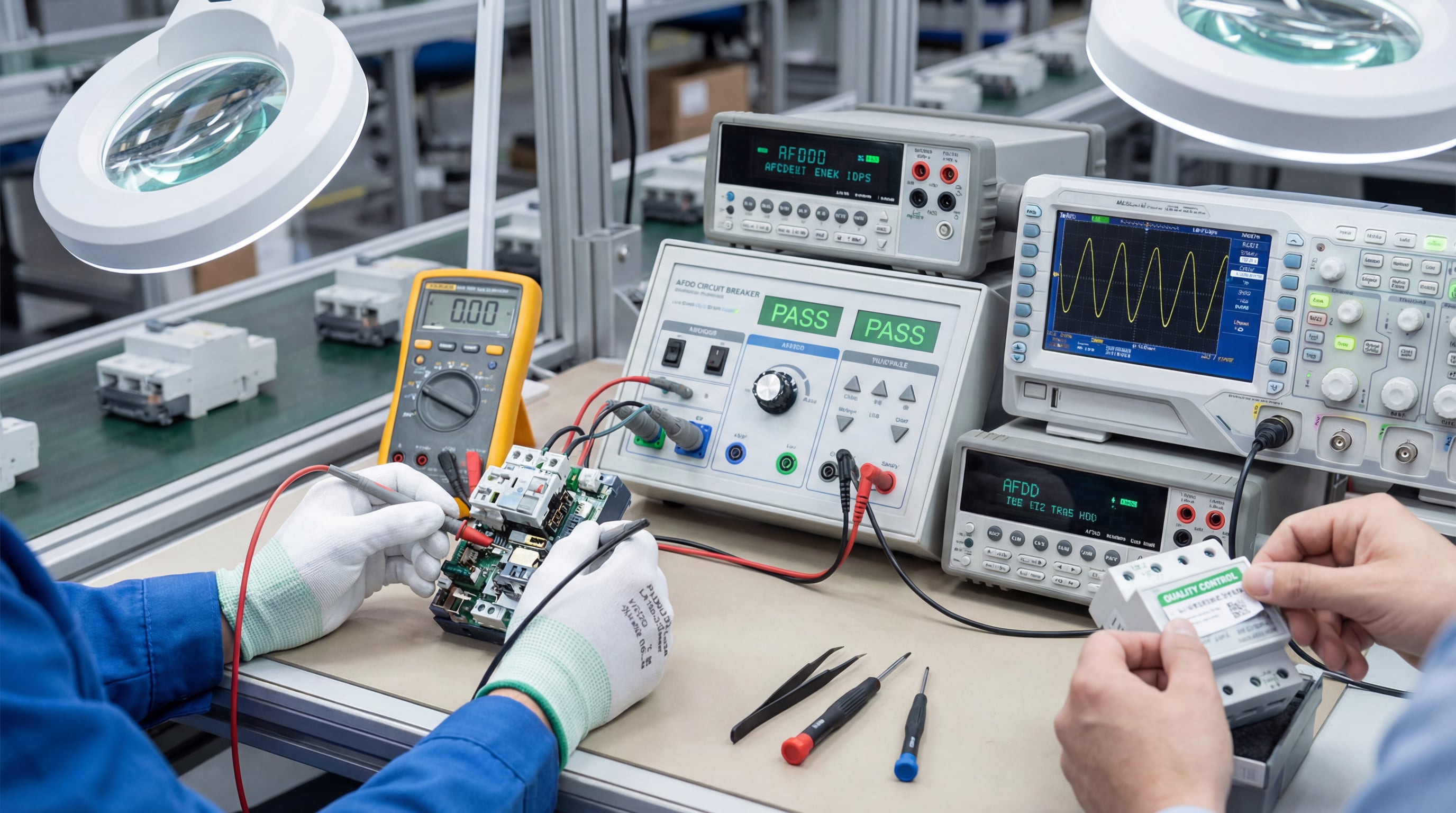
Rigorous quality control testing ensures every AFDD meets international safety standards
Successful AFDD implementation requires attention to detail throughout the installation process and ongoing maintenance procedures. Following industry best practices significantly reduces the likelihood of nuisance tripping while ensuring optimal protection performance.
Professional Installation Standards form the foundation of reliable AFDD operation. All connections must be made according to manufacturer specifications, with proper torque applied to terminal screws to ensure secure, low-resistance contacts. Loose connections are a leading cause of both nuisance tripping and genuine arc fault conditions, making careful installation essential.
Wire routing within electrical panels should minimize electromagnetic interference between circuits. Maintaining adequate separation between high-current feeders and AFDD-protected branch circuits reduces the possibility of induced currents triggering false trips. Using proper cable management techniques, including appropriate bundling and support, prevents mechanical stress that could damage insulation over time.
Systematic Testing and Commissioning procedures help identify potential nuisance tripping issues before systems enter service. After installation, each AFDD-protected circuit should be tested under realistic load conditions, including the operation of all connected appliances and equipment. This commissioning process allows installers to verify proper operation and identify any loads that may require circuit reconfiguration or AFDD parameter adjustment.
When AFDDs experience repeated false trips, a methodical diagnostic approach yields the best results. The process begins with verifying that the AFDD itself is functioning correctly by testing the device according to manufacturer procedures. Most AFDDs include a test button that simulates an arc fault condition; failure to trip when tested indicates a defective unit requiring replacement.
If the AFDD tests properly, attention shifts to the protected circuit and connected loads. A systematic elimination process involves disconnecting all loads and then reconnecting them individually while monitoring for trips. This technique identifies specific appliances or equipment that trigger nuisance trips, allowing targeted solutions such as relocating the device to a different circuit or replacing it with a more compatible model.
Thermal imaging surveys can reveal hidden problems such as loose connections or overloaded conductors that may contribute to nuisance tripping. Infrared cameras detect temperature anomalies at terminals, splices, and connection points, allowing corrective action before minor issues escalate into genuine arc fault conditions or equipment failures.
The European market has seen widespread adoption of AFDD technology, driven by updated electrical safety regulations and growing awareness of arc fault fire risks. Understanding how AFDDs perform in typical European residential applications provides valuable insights for homeowners, electricians, and property managers.
\
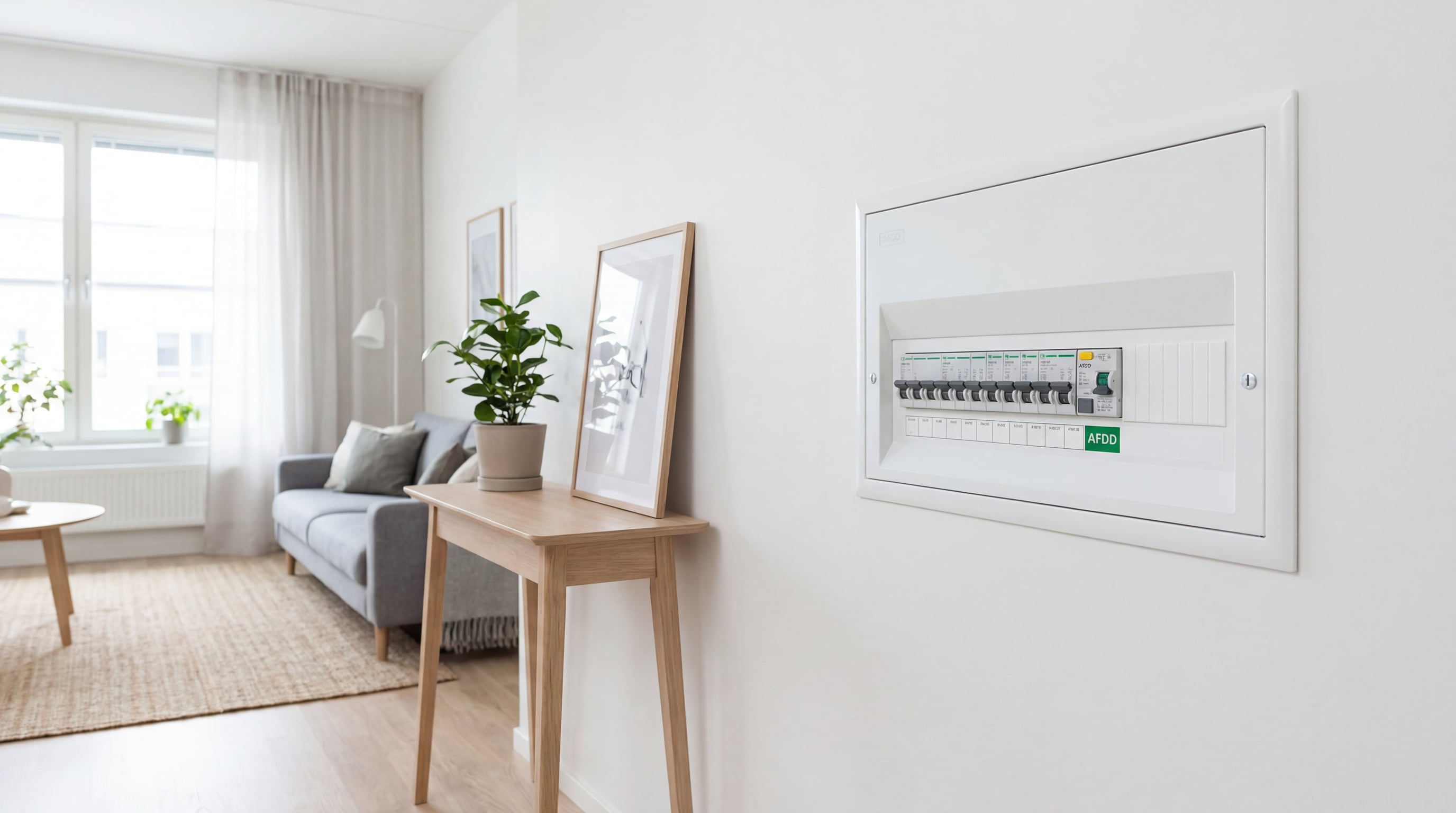
Modern European apartment with professionally installed AFDD protection for enhanced electrical safety
European residential electrical systems typically operate at 230V single-phase, with consumer units (distribution boards) serving multiple circuits throughout the dwelling. AFDD protection is increasingly specified for circuits supplying bedrooms, living areas, and other spaces where electrical fires pose significant life safety risks. The compact design of modern AFDDs allows integration into standard consumer units without requiring extensive modifications.
In apartment buildings and multi-family dwellings, AFDD installation presents unique challenges and opportunities. Shared electrical infrastructure, diverse appliance loads, and varying maintenance standards across individual units can affect AFDD performance. Property managers implementing AFDD protection across multiple units benefit from standardizing on high-quality devices with proven track records of reliable operation and minimal nuisance tripping.
European electrical appliances generally comply with strict electromagnetic compatibility (EMC) standards that limit electrical noise and interference. This regulatory framework helps reduce AFDD nuisance tripping by ensuring that appliances do not generate excessive electrical disturbances during normal operation. However, older appliances predating current EMC requirements may still produce arc-like signatures that trigger AFDD protection.
The harmonization of European electrical standards, including IEC 62606 for AFDD performance requirements, ensures consistent protection levels across member states. This standardization benefits both manufacturers and end users by establishing clear performance criteria and testing procedures that balance sensitivity with nuisance trip resistance.
When specifying arc fault detection devices for residential, commercial, or industrial applications, the quality and reliability of the AFDD manufacturer directly impacts system performance and user satisfaction. cnkuangya.com has established itself as a trusted supplier of premium AFDD solutions engineered to provide robust arc fault protection while minimizing nuisance tripping.
The production facilities at cnkuangya.com employ advanced manufacturing processes and rigorous quality control procedures to ensure every AFDD meets or exceeds international safety standards. Automated production lines maintain consistent manufacturing tolerances, while comprehensive testing protocols verify proper operation before devices leave the factory. This commitment to quality translates directly into reliable field performance and reduced nuisance tripping incidents.
Each AFDD undergoes multiple verification stages during production, including:
cnkuangya.com AFDDs incorporate sophisticated detection algorithms developed through extensive research and field testing. These algorithms employ multi-parameter analysis, examining not just current waveforms but also voltage characteristics, frequency content, and temporal patterns to distinguish genuine arc faults from normal electrical operations. This comprehensive approach significantly reduces false trips compared to simpler detection methods.
Adjustable sensitivity settings available on select cnkuangya.com AFDD models allow installers to optimize performance for specific applications. While maintaining full compliance with safety standards, these adjustments enable fine-tuning of detection parameters to accommodate challenging loads or environments prone to nuisance tripping. Technical support from cnkuangya.com assists installers in selecting appropriate settings for optimal results.
Recognizing that proper installation and configuration are essential for minimizing nuisance trips, cnkuangya.com provides extensive technical resources to support electrical contractors and system designers. Detailed installation manuals, troubleshooting guides, and application notes address common challenges and offer proven solutions. Technical support specialists are available to assist with complex installations or persistent nuisance tripping issues, ensuring successful project outcomes.
The cnkuangya.com website offers additional resources including:
Examining actual AFDD installations provides valuable insights into nuisance tripping patterns and effective mitigation strategies. The following examples illustrate common scenarios and their solutions.
A comprehensive electrical upgrade in a 1980s-era home included AFDD protection on all branch circuits. Initial operation revealed frequent nuisance tripping on the kitchen circuit, occurring primarily when the microwave oven operated simultaneously with the refrigerator compressor. Investigation revealed that the microwave’s switching power supply generated high-frequency noise that, combined with the refrigerator’s motor starting current, created a signature resembling an arc fault.
The solution involved two complementary approaches: relocating the microwave to a dedicated circuit and updating the kitchen circuit AFDD firmware to better discriminate between appliance signatures and genuine arc faults. Following these modifications, nuisance tripping ceased entirely while maintaining full arc fault protection. This case demonstrates the importance of both proper circuit design and leveraging advanced AFDD technology.
A modern office building underwent LED lighting retrofits across all floors, replacing legacy fluorescent fixtures with energy-efficient LED panels. Shortly after completion, multiple AFDD-protected lighting circuits experienced nuisance tripping, particularly during morning startup when multiple zones energized simultaneously. The LED drivers’ inrush characteristics and switching frequencies collectively created conditions that triggered AFDD protection.
Working with cnkuangya.com technical support, the electrical contractor implemented a phased startup sequence using the building automation system, staggering the energization of different lighting zones by several seconds. Additionally, upgrading to the latest AFDD firmware version specifically optimized for LED compatibility resolved the remaining nuisance trips. The building now enjoys both energy-efficient lighting and reliable arc fault protection without operational disruptions.
An industrial training facility equipped with numerous power tools and welding equipment initially experienced frequent AFDD nuisance trips that disrupted training activities. The high-current, rapidly varying loads from angle grinders, circular saws, and welding machines created challenging conditions for arc fault detection.
The solution involved careful circuit segregation, dedicating specific circuits to welding equipment (which was ultimately exempted from AFDD protection per applicable codes) while maintaining AFDD protection on circuits serving general-purpose outlets and fixed equipment. Selecting cnkuangya.com AFDD models specifically rated for motor loads and equipped with enhanced discrimination algorithms further reduced nuisance trips. The facility now operates reliably with appropriate arc fault protection tailored to its unique electrical environment.
Distinguishing between nuisance trips and legitimate arc fault protection events requires careful observation and systematic investigation. Genuine arc faults often produce visible signs such as burn marks, melted insulation, or damaged conductors at the fault location. If an AFDD trips and you can identify specific damage to wiring, connections, or equipment, the trip was likely a proper protective response.
Nuisance trips, conversely, typically occur repeatedly under similar conditions—such as when a specific appliance operates or during particular times of day—without any evidence of electrical damage. If resetting the AFDD immediately restores normal operation and the circuit functions properly until the same triggering condition recurs, you are likely experiencing a nuisance trip. However, never assume a trip is a nuisance event without proper investigation, as intermittent arc faults can also produce recurring trips without immediately visible damage.
The safest approach involves consulting a qualified electrician to perform comprehensive testing, including insulation resistance measurements, thermal imaging, and load analysis. Professional evaluation can definitively determine whether trips result from genuine arc faults requiring corrective action or nuisance conditions that can be addressed through circuit modifications or AFDD adjustments.
Replacing an AFDD with a conventional circuit breaker to eliminate nuisance tripping is strongly discouraged and may violate electrical codes. If AFDDs are required by applicable regulations for specific circuits—such as bedroom circuits in residential occupancies—removing arc fault protection creates serious safety and compliance issues. Electrical codes mandate AFDD protection based on documented fire risks; circumventing these requirements exposes occupants to preventable hazards.
The appropriate response to persistent nuisance tripping involves identifying and addressing the root cause rather than eliminating protection. This may include troubleshooting wiring issues, relocating problematic loads to different circuits, updating AFDD firmware, or replacing older AFDD models with advanced units featuring improved discrimination capabilities. Modern AFDDs from reputable manufacturers like cnkuangya.com incorporate sophisticated algorithms specifically designed to minimize nuisance trips while maintaining full protection.
If nuisance tripping persists despite proper troubleshooting, consult with the AFDD manufacturer’s technical support team and the local electrical inspector. In rare cases where specific loads prove incompatible with AFDD technology and code provisions allow, alternative protection strategies may be available. However, simply removing required arc fault protection is never an acceptable solution.
AFDDs are generally low-maintenance devices, but periodic testing and inspection help ensure reliable operation and minimize nuisance trips. Most manufacturers, including cnkuangya.com, recommend monthly testing using the device’s built-in test button. This simple procedure verifies that the AFDD’s detection and tripping mechanisms function properly. A device that fails to trip when tested should be replaced immediately, as it may not provide protection during an actual arc fault event.
Annual professional inspection of electrical panels should include examination of all AFDD units for signs of overheating, corrosion, or physical damage. Connections should be checked for tightness, as terminal screws can loosen over time due to thermal cycling. Loose connections not only increase the risk of nuisance tripping but can also create genuine arc fault conditions requiring protection.
Maintaining clean, dry conditions within electrical enclosures helps prevent nuisance trips caused by environmental factors. In dusty or humid environments, periodic cleaning of panel interiors removes conductive contaminants that might create unintended current paths. For installations in harsh environments, consider enclosures with appropriate ingress protection (IP) ratings to minimize exposure to moisture and particulates.
The electrical industry continues advancing arc fault detection technology, with ongoing research focused on further reducing nuisance trips while enhancing protection capabilities. Artificial intelligence and machine learning algorithms show particular promise, enabling AFDDs to learn the normal electrical signatures of connected loads and adapt their detection parameters accordingly.
Next-generation AFDDs may incorporate cloud connectivity, allowing aggregated performance data from thousands of installations to inform algorithm refinements. This collective intelligence approach could identify emerging nuisance trip patterns associated with new appliance models or electrical technologies, enabling proactive firmware updates before widespread issues develop.
Integration with smart home and building automation systems offers additional opportunities for reducing nuisance trips. AFDDs that communicate with other electrical devices could coordinate protection responses, distinguishing between simultaneous legitimate load changes and potential arc fault conditions. Such integration would provide context-aware protection that maintains safety while minimizing false alarms.
Are AFDDs prone to nuisance tripping? The answer is nuanced: while AFDD technology can experience false trips under certain conditions, understanding the causes and implementing proper solutions enables reliable arc fault protection without unacceptable operational disruptions. The key lies in selecting high-quality devices from reputable manufacturers, ensuring professional installation following best practices, and maintaining systems appropriately.
cnkuangya.com stands at the forefront of AFDD technology, offering products engineered to provide robust arc fault protection while minimizing nuisance tripping through advanced detection algorithms, quality manufacturing, and comprehensive technical support. Whether you are specifying AFDDs for new construction, retrofitting existing installations, or troubleshooting nuisance trip issues, cnkuangya.com provides the expertise and products needed for successful outcomes.
The investment in proper arc fault protection delivers substantial returns through enhanced electrical safety, reduced fire risks, and peace of mind for building occupants. By choosing quality AFDDs and following proven installation and maintenance practices, electrical professionals can deliver systems that protect lives and property reliably, day after day, without the frustration of frequent nuisance trips.
For more information about cnkuangya.com‘s comprehensive range of AFDD products, technical resources, and support services, visit cnkuangya.com today. Our team of electrical safety experts is ready to assist with product selection, application guidance, and troubleshooting support to ensure your arc fault protection systems deliver optimal performance.
Keywords: AFDD, Arc Fault Detection Device, nuisance tripping, false alarms, electrical safety, circuit breaker, arc fault protection, IEC 62606, residential electrical, commercial electrical, AFCI, electrical fire prevention, smart circuit breaker, firmware update, electrical installation, European electrical standards, cnkuangya.com

